Richard L. Kagan - Böcker
Visar alla böcker från författaren Richard L. Kagan. Handla med fri frakt och snabb leverans.
11 produkter
11 produkter
497 kr
Skickas inom 7-10 vardagar
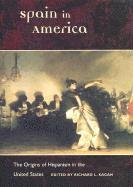
Setting aside the pastiche of bullfighters and flamenco dancers that has dominated the U.S. image of Spain for more than a century, this innovative volume uncovers the roots of Spanish studies to explain why the diversity, vitality, and complexity of Spanish history and culture have been reduced in U.S. accounts to the equivalent of a tourist brochure. Spurred by the complex colonial relations between the United States and Spain, the new field of Spanish studies offered a way for the young country to reflect a positive image of itself as a democracy, in contrast with perceived Spanish intolerance and closure. Spain in America investigates the political and historical forces behind this duality, surveying the work of the major nineteenth-century U.S. Hispanists in the fields of history, art history, literature, and music.A distinguished panel of contributors offers fresh examinations of the role of U.S. writers, especially Washington Irving and Henry Wadsworth Longfellow, in crafting a wildly romantic vision of Spain.They examine the views of such scholars as William H. Prescott and George Ticknor, who contrasted the "failure" of Spanish history with U.S. exceptionalism. Other essays explore how U.S. interests in Latin America consistently colored its vision of Spain and how musicology in the United States, dominated by German ÉmigrÉs, relegated Spanish music to little more than a footnote. Also included are profiles of the philanthropist Archer Mitchell Huntington and the pioneering art historians Georgiana Goddard King and Arthur Kingsley Porter, who spearheaded U.S. interest in the architecture and sculpture of medieval Spain. Providing a much-needed look at the development and history of Hispanism, Spain in America opens the way toward confronting and modifying reductive views of Spain that are frozen in another time.
262 kr
Skickas inom 7-10 vardagar
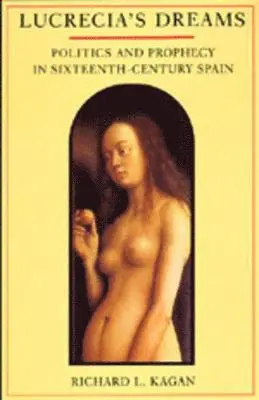
Branded by the Spanish Inquisition as an "evil dreamer," a "notorious mother of prophets," the teenager Lucrecia de Leon had hundreds of bleak but richly imaginative dreams of Spain's future that became the stuff of political controversy and scandal. Based upon surviving transcripts of her dreams and on the voluminous records of her trial before the Inquisition, Lucrecia's Dreams traces the complex personal and political ramifications of Lucrecia's prophetic career. This hitherto unexamined episode in Spanish history sheds new light on the history of women as well as on the history of dream interpretation. Charlatan or clairvoyant, sinner or saint, Lucrecia was transformed by her dreams into a cause celebre, the rebellious counterpart to that other extraordinary woman of Golden Age Spain, St. Theresa of Jesus. Her supporters viewed her as a divinely inspired seer who exposed the personal and political shortcomings of Philip II of Spain. In examining the relation of dreams and prophecy to politics, Richard Kagan pays particular attention to the activities of the streetcorner prophets and female seers who formed the political underworld of sixteenth-century Spain.
631 kr
Skickas inom 7-10 vardagar
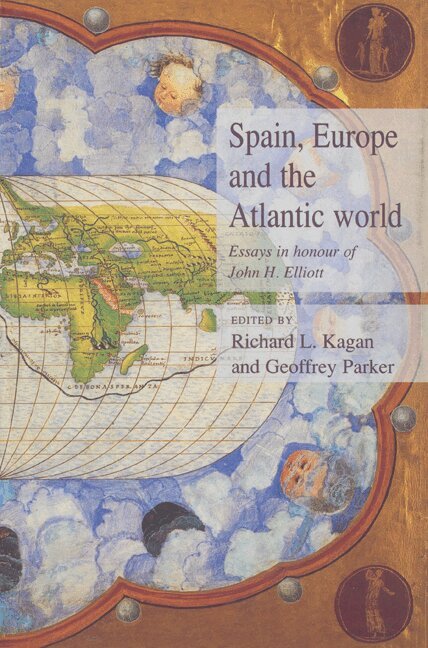
The idea of a dialogue - sometimes harmonious, sometimes divisive - between the centre and periphery of the early modern European state stands at the heart of much of John Elliott's historical writing. It is the fulcrum around which his Imperial Spain revolves, and it lies at the heart of his analysis of the causes of the revolt of the Catalans against the centralising policies of the Madrid government. His writings on the Americas, such as The Old World and the New, likewise stressed the relationship between centre and periphery. This collection of essays by a group of Elliott's former students examines different aspects of this important theme and develops them. Taken together with the 'personal appreciation' of Elliott (Regius Professor of Modern History at Oxford), it forms an important examination of the work of the greatest living historian of Spain as well as a major contribution to early modern European history.
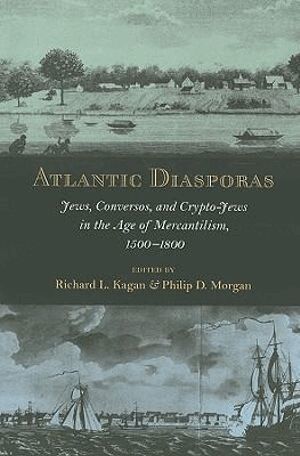
Atlantic Diasporas
Jews, Conversos, and Crypto-Jews in the Age of Mercantilism, 1500–1800
Inbunden, Engelska, 2009
652 kr
Tillfälligt slut
This wide-ranging narrative explores the role that Jews, Conversos, and Crypto-Jews played in settling and building the Atlantic world between 1500 and 1800. Through the interwoven themes of markets, politics, religion, culture, and identity, the essays here demonstrate that the world of Atlantic Jewry, most often typified by Port Jews involved in mercantile pursuits, was more complex than commonly depicted. The first section discusses the diaspora in relation to maritime systems, commerce, and culture on the Atlantic and includes an overview of Jewish history on both sides of the ocean. The second section provides an in-depth look at Jewish mercantilism, from settlements in Dutch America to involvement in building British, Portuguese, and other trading cultures to the dispersal of Sephardic merchants. In the third section, the chapter authors assess the roles of identity and religion in settling the Atlantic, looking closely at religious conversion; slavery; relationships among Jews, Christians, and Muslims; and the legacy of the lost tribes of Israel. A concluding commentary elucidates the fluidity of identity and boundaries in the formation of the Atlantic world.Featuring chapters by Jonathan Israel, Natalie Zemon Davis, Aviva Ben-Ur, Holly Snyder, and other prominent Jewish historians, this collection opens new avenues of inquiry into the Jewish diaspora and integrates Jewish trade and settlements into the broader narrative of Atlantic exploration.
Atlantic Diasporas
Jews, Conversos, and Crypto-Jews in the Age of Mercantilism, 1500–1800
Häftad, Engelska, 2009
478 kr
Skickas inom 5-8 vardagar
This wide-ranging narrative explores the role that Jews, Conversos, and Crypto-Jews played in settling and building the Atlantic world between 1500 and 1800. Through the interwoven themes of markets, politics, religion, culture, and identity, the essays here demonstrate that the world of Atlantic Jewry, most often typified by Port Jews involved in mercantile pursuits, was more complex than commonly depicted. The first section discusses the diaspora in relation to maritime systems, commerce, and culture on the Atlantic and includes an overview of Jewish history on both sides of the ocean. The second section provides an in-depth look at Jewish mercantilism, from settlements in Dutch America to involvement in building British, Portuguese, and other trading cultures to the dispersal of Sephardic merchants. In the third section, the chapter authors assess the roles of identity and religion in settling the Atlantic, looking closely at religious conversion; slavery; relationships among Jews, Christians, and Muslims; and the legacy of the lost tribes of Israel. A concluding commentary elucidates the fluidity of identity and boundaries in the formation of the Atlantic world.Featuring chapters by Jonathan Israel, Natalie Zemon Davis, Aviva Ben-Ur, Holly Snyder, and other prominent Jewish historians, this collection opens new avenues of inquiry into the Jewish diaspora and integrates Jewish trade and settlements into the broader narrative of Atlantic exploration.
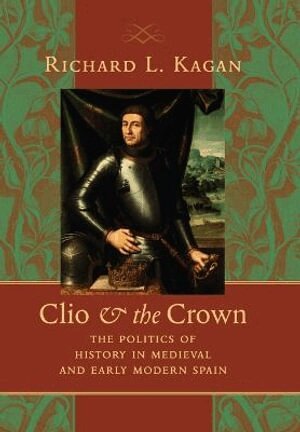
Clio and the Crown
The Politics of History in Medieval and Early Modern Spain
Inbunden, Engelska, 2009
789 kr
Skickas inom 5-8 vardagar
Monarchs throughout the ages have commissioned official histories that cast their reigns in a favorable light for future generations. These accounts, sanctioned and supported by the ruling government, often gloss over the more controversial aspects of a king's or queen's time on the throne. Instead, they present highly selective and positive readings of a monarch's contribution to national identity and global affairs. In Clio and the Crown, Richard L. Kagan examines the official histories of Spanish monarchs from medieval times to the middle of the 18th century. He expertly guides readers through the different kinds of official histories commissioned: those whose primary focus was the monarch; those that centered on the Spanish kingdom as a whole; and those that celebrated Spain's conquest of the New World. In doing so, Kagan also documents the life and work of individual court chroniclers, examines changes in the practice of official history, and highlights the political machinations that influenced the redaction of such histories.Just as world leaders today rely on fast-talking press officers to explain their sometimes questionable actions to the public, so too did the kings and queens of medieval and early modern Spain. Monarchs often went to great lengths to exert complete control over the official history of their reign, physically intimidating historians, destroying and seizing manuscripts and books, rewriting past histories, and restricting history writing to authorized persons. Still, the larger practice of history writing-as conducted by nonroyalist historians, various scholars and writers, and even church historians-provided a corrective to official histories. Kagan concludes that despite its blemishes, the writing of official histories contributed, however imperfectly, to the practice of historiography itself.
374 kr
Skickas inom 5-8 vardagar
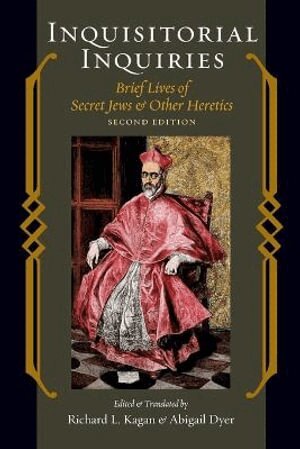
On the first day of Francisco de San Antonio's trial before the Spanish Inquisition in Toledo in 1625, his interrogators asked him about his parentage. His real name, he stated, was Abram Ruben, and he had been born in Fez of Jewish parents. How then, Inquisitors wanted to know, had he become a Christian convert? Why had a Hebrew alphabet been found in his possession? And what was his business at the Court in Madrid? "He was asked," according to his dossier, "for the story of his life." His response, more than ten folios long, is one of the many involuntary autobiographies created by the logic of the Inquisition that today provide rich insights into both the personal lives of the persecuted and the social, cultural, and political realities of the age. In the first edition of Inquisitorial Inquiries, Richard L. Kagan and Abigail Dyer collected, translated, and annotated six of these autobiographies from a diverse group of prisoners. Now they add the fascinating life story of another victim of the Inquisition: Esteban Jamete, a French sculptor accused of being a Protestant.Each of the autobiographies has been selected to represent a particular political or social issue, while at the same time raising more intimate questions about the religious, sexual, political, or national identities of the prisoners. Among them are a politically incendiary prophet, a self-proclaimed hermaphrodite, and a morisco, an Islamic convert to Catholicism.
709 kr
Skickas inom 7-10 vardagar
On the first day of Francisco de San Antonio's trial before the Spanish Inquisition in Toledo in 1625, his interrogators asked him about his parentage. His real name, he stated, was Abram Ruben, and he had been born in Fez of Jewish parents. How then, Inquisitors wanted to know, had he become a Christian convert? Why had a Hebrew alphabet been found in his possession? And what was his business at the Court in Madrid? "He was asked," according to his dossier, "for the story of his life." His response, more than ten folios long, is one of the many involuntary autobiographies created by the logic of the Inquisition that today provide rich insights into both the personal lives of the persecuted and the social, cultural, and political realities of the age. In the first edition of Inquisitorial Inquiries, Richard L. Kagan and Abigail Dyer collected, translated, and annotated six of these autobiographies from a diverse group of prisoners. Now they add the fascinating life story of another victim of the Inquisition: Esteban Jamete, a French sculptor accused of being a Protestant.Each of the autobiographies has been selected to represent a particular political or social issue, while at the same time raising more intimate questions about the religious, sexual, political, or national identities of the prisoners. Among them are a politically incendiary prophet, a self-proclaimed hermaphrodite, and a morisco, an Islamic convert to Catholicism.
525 kr
Skickas inom 7-10 vardagar
Originally published in 1974. The close connection between universities and bureaucratic institutions such as church and state was perhaps first noticed by Max Weber. Such institutions, he observed, require a dependable source of cadres to run them. Thus, the size and composition of university enrollments are often a function of bureaucratic needs. Richard Kagan examines the dynamics of this relationship historically by racing the growth and decline of the university system in Castile, the heart of the Spanish monarchy, between 1500 and 1809. This period marked the emergence of a strong Habsburg state and a militant Catholic church, both of which looked to the universities for "educated" men. Accordingly, the universities grew rapidly, and by 1600 Castile was perhaps the best-educated kingdom in Europe. But this did not last. Jobs were increasingly filled through nepotism, causing students to abandon the universities in search of other careers. By 1700, the universities were small, backward institutions. Kagan begins by examining the nature and position of primary, secondary, and university institutions in Hapsburg Spain, concentrating on the extent and purpose of literacy. In Part II, Kagan discusses the growth and development of the ruling hierarchies in the bureaucratic world and gives special consideration to the criteria used to recruit officials. The author concludes with an assessment of the impact of bureaucratic changes in church and state on the universities of Castile. The data he collects on changes in the curriculum, the professorate, and the social and geographical backgrounds of the students are used to support hypotheses about the spectacular rise and collapse of university education in Spain, the process of modernization, the development of bureaucracies, and the crisis of the Spanish monarchy. Students and Society in Early Modern Spain demonstrates that institutions of higher learning often collapse when they become over-professionalized and fail to respond to changing conditions. Thus, Kagan provides a study of education and social change—of why educational institutions are central to a society in one century but only peripheral to it in the next. The author casts new light not only on the short lived educational revolution of the sixteenth century but also on education in other societies, both past and present.
441 kr
Skickas inom 7-10 vardagar
The Spanish Craze is the compelling story of the centuries-long U.S. fascination with the history, literature, art, culture, and architecture of Spain. Richard L. Kagan offers a stunningly revisionist understanding of the origins of hispanidad in America, tracing its origins from the early republic to the New Deal.As Spanish power and influence waned in the Atlantic World by the eighteenth century, her rivals created the “Black Legend,” which promoted an image of Spain as a dead and lost civilization rife with innate cruelty and cultural and religious backwardness. The Black Legend and its ambivalences influenced Americans throughout the nineteenth century, reaching a high pitch in the Spanish-American War of 1898. However, the Black Legend retreated soon thereafter, and Spanish culture and heritage became attractive to Americans for its perceived authenticity and antimodernism.Although the Spanish craze infected regions where the Spanish New World presence was most felt-California, the American Southwest, Texas, and Florida-there were also early, quite serious flare-ups of the craze in Chicago, New York, and New England. Kagan revisits early interest in Hispanism among elites such as the Boston book dealer Obadiah Rich, a specialist in the early history of the Americas, and the writers Washington Irving and Henry Wadsworth Longfellow. He also considers later enthusiasts such as Angeleno Charles Lummis and the many writers, artists, and architects of the modern Spanish Colonial Revival in the United States in the late nineteenth and early twentieth centuries.Spain’s political and cultural elites understood that the promotion of Spanish culture in the United States and the Western Hemisphere in general would help overcome imperial defeats while uniting Spaniards and those of Spanish descent into a singular raza whose shared characteristics and interests transcended national boundaries.With elegant prose and verve, The Spanish Craze spans centuries and provides a captivating glimpse into distinct facets of Hispanism in monuments, buildings, and private homes; the visual, performing, and cinematic arts; and the literature, travel journals, and letters of its enthusiasts in the United States.
801 kr
Skickas inom 10-15 vardagar
The first comprehensive biography of Philadelphia's Henry C. Lea (1825–1909): historian, publisher, political activist, and reformerWriting in 1868, the Philadelphia publisher-cum-historian Henry Charles Lea informed a friend, "I am trying to collect the materials for a history of the Inquisition." The collecting of these materials—books, manuscripts, and copies of thousands of pages of documents housed in musty European archives and libraries—would occupy Lea (1825–1909) for the remainder of his life. It also led to publication of A History of the Inquisition of the Middle Ages (1884–87) and his acknowledged masterpiece, A History of the Inquisition of Spain (1906–7). Regarded as classics, these path-breaking books inaugurated better understanding of the history of an institution whose aims and methods troubled Lea and remain subjects of heated debate.The first biography of Lea since 1931, The Inquisition's Inquisitor offers the most comprehensive review to date of his writing on the history of the Catholic Church. Though Lea is generally regarded as a leading practitioner of "scientific" history, Richard L. Kagan examines the extent to which Lea's religious convictions compromised the ostensibly objective character of his work. Lea's extensive surviving correspondence also enables Kagan to examine other aspects of Lea's long and productive career as one of Philadelphia's most prominent citizens. Lea appears here a young literary critic; a businessman who skillfully transformed his family's publishing firm into the country's leading producer of medical books; a dogged political reformer; and a philanthropist whose largesse benefitted many of Philadelphia's cultural institutions. Newly discovered sources also allow for insights into Lea's private life, notably his controversial infatuation with his first cousin and future wife, Anna C. Jaudon, and the periodic breakdowns that required abandonment of his beloved "intellectual pursuits."The Inquisition's Inquisitor concludes with a survey of Lea's legacy with respect to current understanding of the Inquisition and to Philadelphia, where reminders of his accomplishments include an eponymous library at the University of Pennsylvania and public elementary school in nearby West Philadelphia.