Philip D. Morgan - Böcker
Visar alla böcker från författaren Philip D. Morgan. Handla med fri frakt och snabb leverans.
13 produkter
13 produkter
1 684 kr
Skickas inom 5-8 vardagar
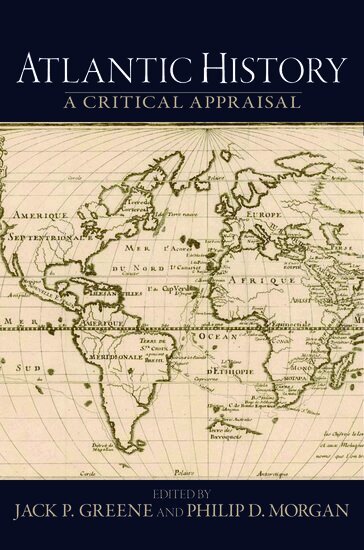
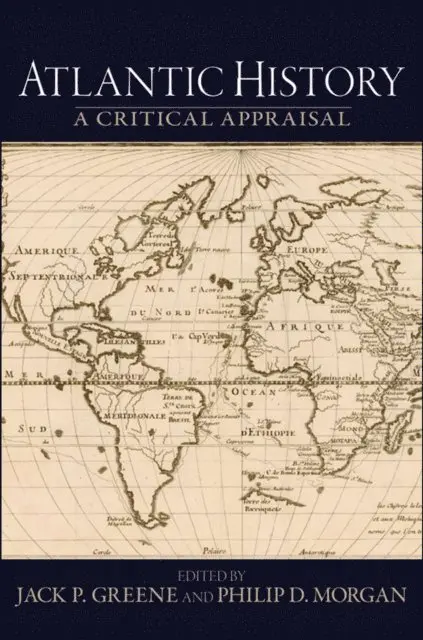
The second volume in the OUP/National History Center series, Reinterpreting History, this book offers an incisive look at how interpretations of the Atlantic world have changed over time and from a variety of national perspectives. Atlantic history, which developed in the 1970s and has become very popular in the past several years, looks at the transnational interconnections between Europe, North America, South America, and Africa, particularly in the early modern/colonial period, rather than understanding nations/states absent a broader global context. This volume discusses key areas of the Atlantic world, including the British, Dutch, French, Iberian, and African Atlantic, as well as the movement of ideas, peoples, and goods. It also offers critical perspectives of the concept itself, juxtaposing it with global and Continental history. The cast of contributors is stellar and international, including scholars who have been at the forefront of teaching and research in this area. Together they will create a volume that introduces inexperienced students and general readers to Atlantic history, as well as offers new perspectives for scholars. Atlantic history is taught as its own course at a variety of universities, and Atlantic perspectives are incorporated into courses on early modern Europe, British history, colonial America, colonial Latin America, and African history.
334 kr
Skickas inom 5-8 vardagar
The second volume in the OUP/National History Center series, Reinterpreting History, this book offers an incisive look at how interpretations of the Atlantic world have changed over time and from a variety of national perspectives. Atlantic history, which developed in the 1970s and has become very popular in the past several years, looks at the transnational interconnections between Europe, North America, South America, and Africa, particularly in the early modern/colonial period, rather than understanding nations/states absent a broader global context. This volume discusses key areas of the Atlantic world, including the British, Dutch, French, Iberian, and African Atlantic, as well as the movement of ideas, peoples, and goods. It also offers critical perspectives of the concept itself, juxtaposing it with global and Continental history. The cast of contributors is stellar and international, including scholars who have been at the forefront of teaching and research in this area. Together they will create a volume that introduces inexperienced students and general readers to Atlantic history, as well as offers new perspectives for scholars. Atlantic history is taught as its own course at a variety of universities, and Atlantic perspectives are incorporated into courses on early modern Europe, British history, colonial America, colonial Latin America, and African history.
1 375 kr
Skickas inom 7-10 vardagar
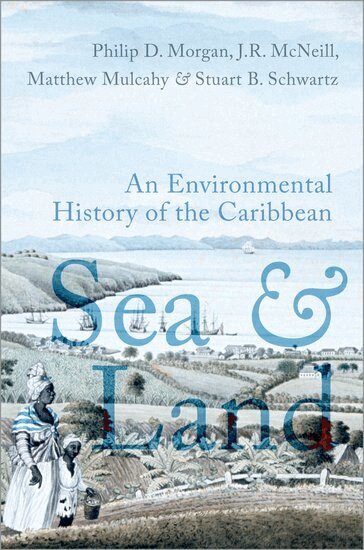
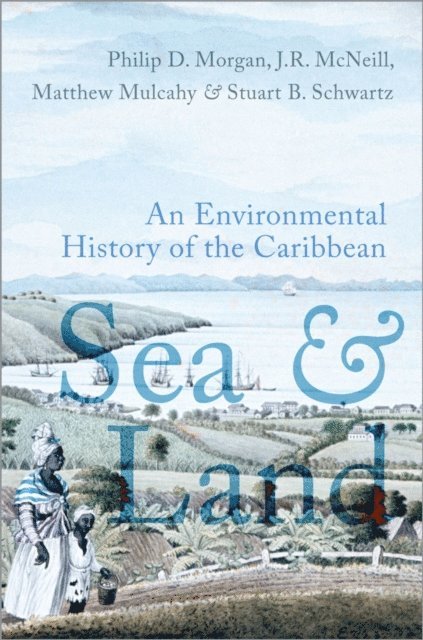
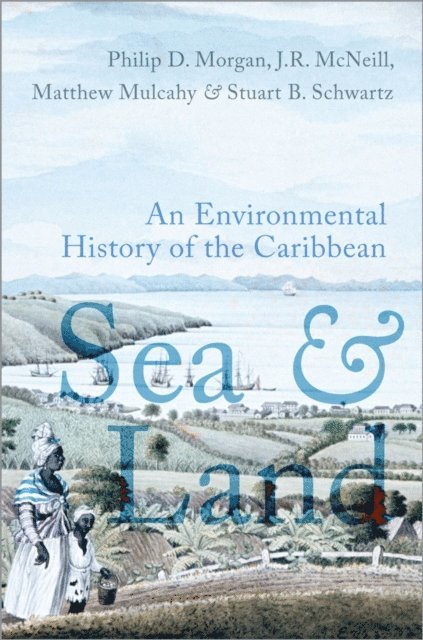
Sea and Land provides an in-depth environmental history of the Caribbean to ca 1850, with a coda that takes the story into the modern era. It explores the mixing, movement, and displacement of peoples and the parallel ecological mixing of animals, plants, microbes from Africa, Europe, elsewhere in the Americas, and as far away as Asia. It examines first the arrival of Native American to the region and the environmental transformations that followed. It then turns to the even more dramatic changes that accompanied the arrival of Europeans and Africans in the fifteenth century. Throughout it argues that the constant arrival, dispersal, and mingling of new plants and animals gave rise to a creole ecology. Particular attention is given to the emergence of Black slavery, sugarcane, and the plantation system, an unholy trinity that thoroughly transformed the region's demographic and physical landscapes and made the Caribbean a vital site in the creation of the modern western world. Increased attention to issues concerning natural resources, conservation, epidemiology, and climate have now made the environment and ecology of the Caribbean a central historical concern. Sea and Land is an effort to integrate that research in a new general environmental history of the region. Intended for scholars and students alike, it aims to foster both a fuller appreciation of the extent to which environmental factors shaped historical developments in the Caribbean, and the extent to which human actions have transformed the biophysical environment of the region over time.The combined work of eminent authors of environment and Latin American and Caribbean history, Sea and Land offers a unique approach to a region characterized by Edenic nature and paradisiacal qualities, as well as dangers, diseases, and disasters.
426 kr
Skickas
Sea and Land provides an in-depth environmental history of the Caribbean to ca 1850, with a coda that takes the story into the modern era. It explores the mixing, movement, and displacement of peoples and the parallel ecological mixing of animals, plants, microbes from Africa, Europe, elsewhere in the Americas, and as far away as Asia. It examines first the arrival of Native American to the region and the environmental transformations that followed. It then turns to the even more dramatic changes that accompanied the arrival of Europeans and Africans in the fifteenth century. Throughout it argues that the constant arrival, dispersal, and mingling of new plants and animals gave rise to a creole ecology. Particular attention is given to the emergence of Black slavery, sugarcane, and the plantation system, an unholy trinity that thoroughly transformed the region's demographic and physical landscapes and made the Caribbean a vital site in the creation of the modern western world. Increased attention to issues concerning natural resources, conservation, epidemiology, and climate have now made the environment and ecology of the Caribbean a central historical concern. Sea and Land is an effort to integrate that research in a new general environmental history of the region. Intended for scholars and students alike, it aims to foster both a fuller appreciation of the extent to which environmental factors shaped historical developments in the Caribbean, and the extent to which human actions have transformed the biophysical environment of the region over time.The combined work of eminent authors of environment and Latin American and Caribbean history, Sea and Land offers a unique approach to a region characterized by Edenic nature and paradisiacal qualities, as well as dangers, diseases, and disasters.
1 855 kr
Skickas inom 5-8 vardagar
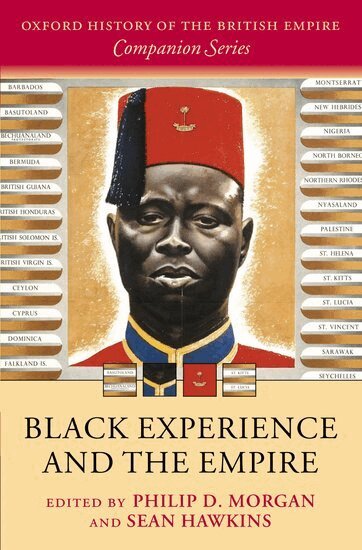
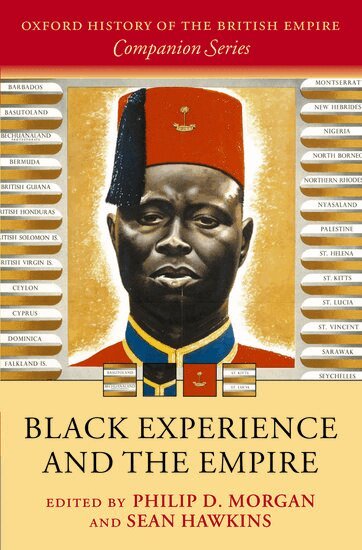
This work explores the lives of people of sub-Saharan Africa and their descendants, how they were shaped by empire, and how they in turn influenced the empire in everything from material goods to cultural style. The black experience varied greatly across space and over time. Accordingly, thirteen substantive essays and a scene-setting introduction range from West Africa in the sixteenth century, through the history of the slave trade and slavery down to the 1830s, to nineteenth- and twentieth-century participation of blacks in the empire as workers, soldiers, members of colonial elites, intellectuals, athletes, and musicians. No people were more uprooted and dislocated; or traveled more within the empire; or created more of a trans-imperial culture. In the crucible of the British empire, blacks invented cultural mixes that were precursors to our modern selves - hybrid, fluid, ambiguous, and constantly in motion. SERIES DESCRIPTIONThe purpose of the five volumes of the Oxford History of the British Empire was to provide a comprehensive study of the Empire from its beginning to end, the meaning of British imperialism for the ruled as well as the rulers, and the significance of the British Empire as a theme in world history. The volumes in the Companion Series carry forward this purpose by exploring themes that were not possible to cover adequately in the main series, and to provide fresh interpretations of significant topics.
661 kr
Skickas inom 5-8 vardagar
This work explores the lives of people of sub-Saharan Africa and their descendants, how they were shaped by empire, and how they in turn influenced the empire in everything from material goods to cultural style. The black experience varied greatly across space and over time. Accordingly, thirteen substantive essays and a scene-setting introduction range from West Africa in the sixteenth century, through the history of the slave trade and slavery down to the 1830s, to nineteenth- and twentieth-century participation of blacks in the empire as workers, soldiers, members of colonial elites, intellectuals, athletes, and musicians. No people were more uprooted and dislocated; or travelled more within the empire; or created more of a trans-imperial culture. In the crucible of the British empire, blacks invented cultural mixes that were precursors to our modern selves - hybrid, fluid, ambiguous, and constantly in motion. SERIES DESCRIPTIONThe purpose of the five volumes of the Oxford History of the British Empire was to provide a comprehensive study of the Empire from its beginning to end, the meaning of British imperialism for the ruled as well as the rulers, and the significance of the British Empire as a theme in world history. The volumes in the Companion Series carry forward this purpose by exploring themes that were not possible to cover adequately in the main series, and to provide fresh interpretations of significant topics
590 kr
Skickas inom 5-8 vardagar
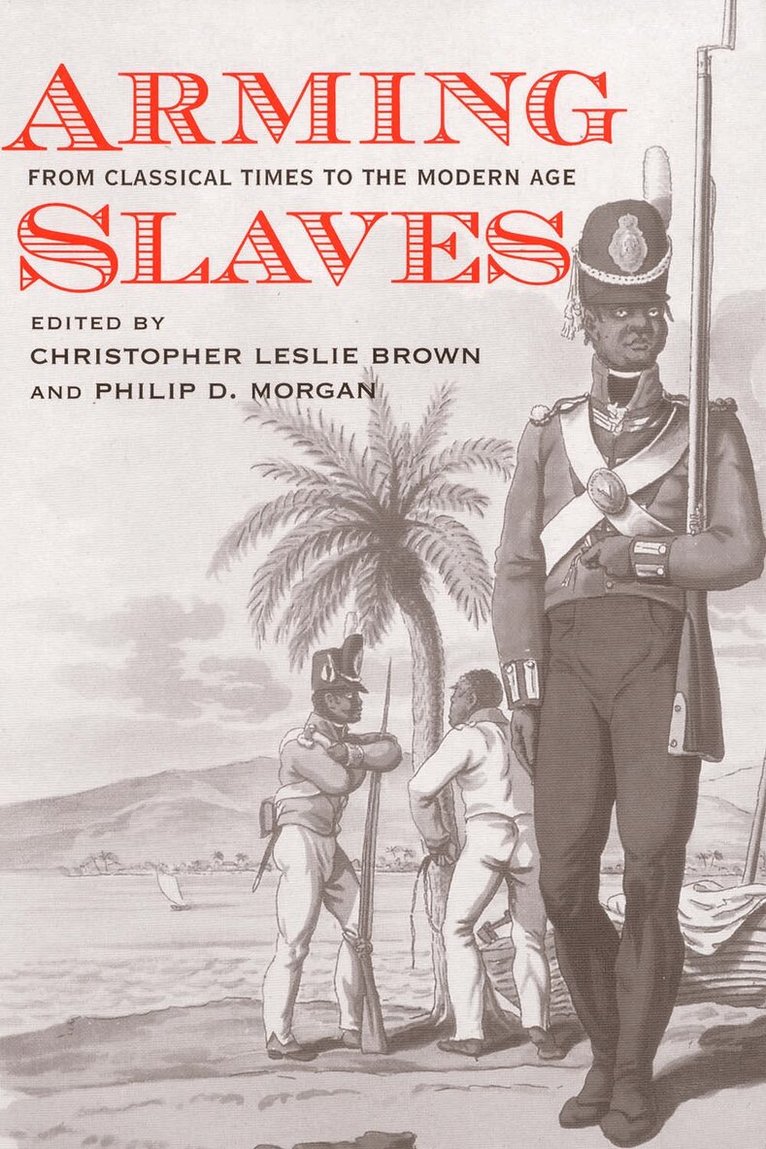
Arming slaves as soldiers is a counterintuitive idea. Yet throughout history, in many varied societies, slaveholders have entrusted slaves with the use of deadly force. This book is the first to survey the practice broadly across space and time, encompassing the cultures of classical Greece, the early Islamic kingdoms of the Near East, West and East Africa, the British and French Caribbean, the United States, and Latin America.To facilitate cross-cultural comparisons, each chapter addresses four crucial issues: the social and cultural facts regarding the arming of slaves, the experience of slave soldiers, the ideological origins and consequences of equipping enslaved peoples for battle, and the impact of the practice on the status of slaves and slavery itself. What emerges from the book is a new historical understanding: the arming of slaves is neither uncommon nor paradoxical but is instead both predictable and explicable.
1 110 kr
Skickas inom 10-15 vardagar
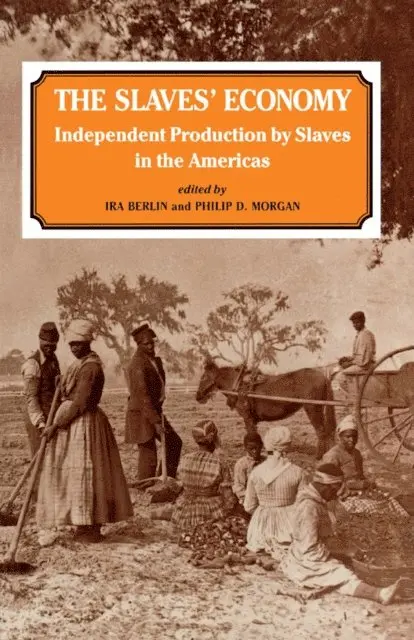
Slaves achieved a degree of economic independence, producing food, tending cash crops, raising livestock, manufacturing furnished goods, marketing their own products, consuming and saving the proceeds and bequeathing property to their descendants. The editors of this volume contend that the legacy of slavery cannot be understood without a full appreciation of the slaves' economy.
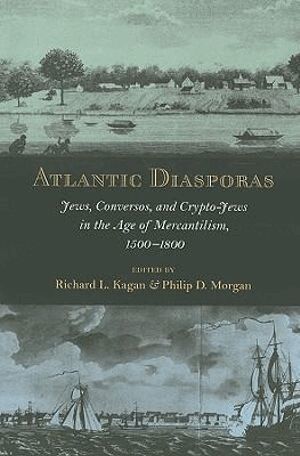
Atlantic Diasporas
Jews, Conversos, and Crypto-Jews in the Age of Mercantilism, 1500–1800
Inbunden, Engelska, 2009
652 kr
Tillfälligt slut
This wide-ranging narrative explores the role that Jews, Conversos, and Crypto-Jews played in settling and building the Atlantic world between 1500 and 1800. Through the interwoven themes of markets, politics, religion, culture, and identity, the essays here demonstrate that the world of Atlantic Jewry, most often typified by Port Jews involved in mercantile pursuits, was more complex than commonly depicted. The first section discusses the diaspora in relation to maritime systems, commerce, and culture on the Atlantic and includes an overview of Jewish history on both sides of the ocean. The second section provides an in-depth look at Jewish mercantilism, from settlements in Dutch America to involvement in building British, Portuguese, and other trading cultures to the dispersal of Sephardic merchants. In the third section, the chapter authors assess the roles of identity and religion in settling the Atlantic, looking closely at religious conversion; slavery; relationships among Jews, Christians, and Muslims; and the legacy of the lost tribes of Israel. A concluding commentary elucidates the fluidity of identity and boundaries in the formation of the Atlantic world.Featuring chapters by Jonathan Israel, Natalie Zemon Davis, Aviva Ben-Ur, Holly Snyder, and other prominent Jewish historians, this collection opens new avenues of inquiry into the Jewish diaspora and integrates Jewish trade and settlements into the broader narrative of Atlantic exploration.
Atlantic Diasporas
Jews, Conversos, and Crypto-Jews in the Age of Mercantilism, 1500–1800
Häftad, Engelska, 2009
478 kr
Skickas inom 5-8 vardagar
This wide-ranging narrative explores the role that Jews, Conversos, and Crypto-Jews played in settling and building the Atlantic world between 1500 and 1800. Through the interwoven themes of markets, politics, religion, culture, and identity, the essays here demonstrate that the world of Atlantic Jewry, most often typified by Port Jews involved in mercantile pursuits, was more complex than commonly depicted. The first section discusses the diaspora in relation to maritime systems, commerce, and culture on the Atlantic and includes an overview of Jewish history on both sides of the ocean. The second section provides an in-depth look at Jewish mercantilism, from settlements in Dutch America to involvement in building British, Portuguese, and other trading cultures to the dispersal of Sephardic merchants. In the third section, the chapter authors assess the roles of identity and religion in settling the Atlantic, looking closely at religious conversion; slavery; relationships among Jews, Christians, and Muslims; and the legacy of the lost tribes of Israel. A concluding commentary elucidates the fluidity of identity and boundaries in the formation of the Atlantic world.Featuring chapters by Jonathan Israel, Natalie Zemon Davis, Aviva Ben-Ur, Holly Snyder, and other prominent Jewish historians, this collection opens new avenues of inquiry into the Jewish diaspora and integrates Jewish trade and settlements into the broader narrative of Atlantic exploration.
584 kr
Skickas inom 10-15 vardagar
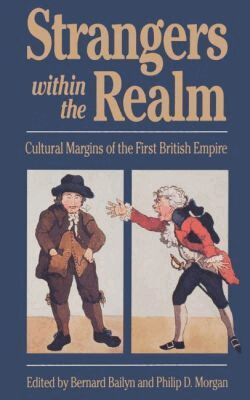
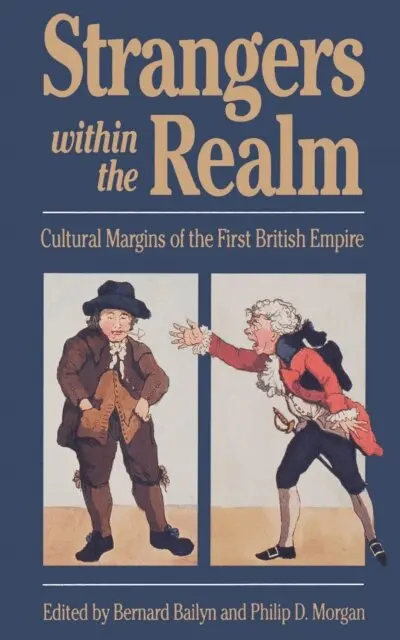
Shedding new light on British expansion in the seventeenth and eighteenth centuries, this collection of essays examines how the first British Empire was received and shaped by its subject peoples in Scotland, Ireland, North America, and the Caribbean. An introduction surveys British imperial historiography and provides a context for the volume as a whole. The essays focus on specific ethnic groups -- Native Americans, African-Americans, Scotch-Irish, and Dutch and Germans -- and their relations with the British, as well as on the effects of British expansion in particular regions -- Ireland, Scotland, Canada, and the West Indies. A conclusion assesses the impact of the North American colonies on British society and politics. Taken together, these essays represent a new kind of imperial history -- one that portrays imperial expansion as a dynamic process in which the oulying areas, not only the English center, played an important role in the development and character of the Empire. The collection interpets imperial history broadly, examining it from the perspective of common folk as well as elites and discussing the clash of cultures in addition to political disputes. Finally, by examining shifting and multiple frontiers and by drawing parallels between outlying provinces, these essays move us closer to a truly integrated story that links the diverse ethnic experiences of the first British Empire. The contributors are Bernard Bailyn, Philip D. Morgan, Nicholas Canny, Eric Richards, James H. Merrell, A. G. Roeber, Maldwyn A. Jones, Michael Craton, J. M. Bumsted, and Jacob M. Price.
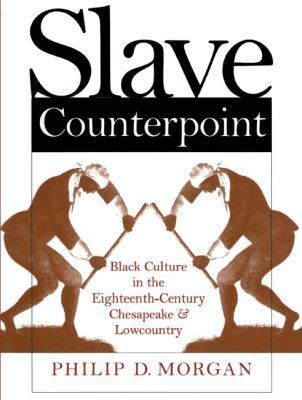
Slave Counterpoint
Black Culture in the Eighteenth-Century Chesapeake and Lowcountry
Häftad, Engelska, 1998
708 kr
Skickas inom 10-15 vardagar
On the eve of the American Revolution, nearly three-quarters of all African Americans in mainland British America lived in two regions: the Chesapeake, centered in Virginia, and the Lowcountry, with its hub in South Carolina. Here, Philip Morgan compares and contrasts African American life in these two regional black cultures, exploring the differences as well as the similarities. The result is a detailed and comprehensive view of slave life in the colonial American South. Morgan explores the role of land and labor in shaping culture, the everyday contacts of masters and slaves that defined the possibilities and limitations of cultural exchange, and finally the interior lives of blacks--their social relations, their family and kin ties, and the major symbolic dimensions of life: language, play, and religion. He provides a balanced appreciation for the oppressiveness of bondage and for the ability of slaves to shape their lives, showing that, whatever the constraints, slaves contributed to the making of their history. Victims of a brutal, dehumanizing system, slaves nevertheless strove to create order in their lives, to preserve their humanity, to achieve dignity, and to sustain dreams of a better future. |A detailed comparison of 18th-century slave life in the two areas where their population was centered: the Chesapeake region of Virginia and the South Carolina Lowcountry.
488 kr
Skickas inom 10-15 vardagar
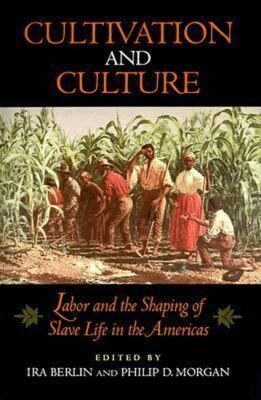
So central was labor in the lives of African-American slaves that it has often been taken for granted, with little attention given to the type of work that slaves did and the circumstances surrounding it. Cultivation and Culture brings together leading scholars of slavery - historians, anthropologists, and sociologists - to explore when, where, and how slaves labored in growing the New World's great staples and how this work shaped the institution of slavery and the lives of African-American slaves.Selected from a conference on comparative slavery at the University of Maryland that set the agenda for the next decades' research in this field, the essays focus on the inter-relationship between the demands of particular crops, the organisation of labour, the nature of the labour force and the character of agricultural technology. They reveal the full complexity of the institution of chattel bondage in the New World and suggest why and how slavery varied from place to place and time to time.What these scholars show is that although work in the slave owners' fields accounted for most of the slaves' labouring time, slaves also worked for themselves and their independent economic activities had far reaching consequences. By producing food for themselves and others, tending cash crops, raising livestock, manufacturing finished goods, marketing their own products, consuming and saving the proceeds, and bequething property to their descendents, slaves took control of a large part of their lives. In many ways their independent economic endeavours offered a foundation for their domestic and commuity life, determining the social structure of slave society and providing a material basis for their distinctive culture. In exploring both the work that slaves performed for their owners and the work they did for themselves, Cultivation and Culture sheds new light on the origins and development of African-American culture and provides a new understanding of the African-American experience in slavery.