Richard Parncutt – författare
Visar alla böcker från författaren Richard Parncutt. Handla med fri frakt och snabb leverans.
6 produkter
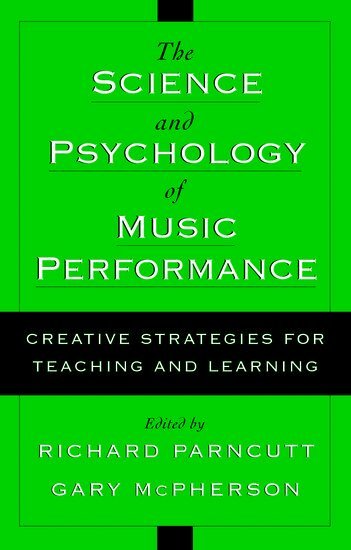
The Science and Psychology of Music Performance
Creative Strategies for Teaching and Learning
Av PARNCUTT, Richard Parncutt m. fl.
Inbunden, 2002
1809 kr
Lägg i varukorg
Music educators and practicing musicians have failed to benefit as much as they could from the past two decades of music psychology research. In this volume, Parncutt and McPherson propose to improve the situation by describing new approaches, informed by recent psychological research, to teaching …
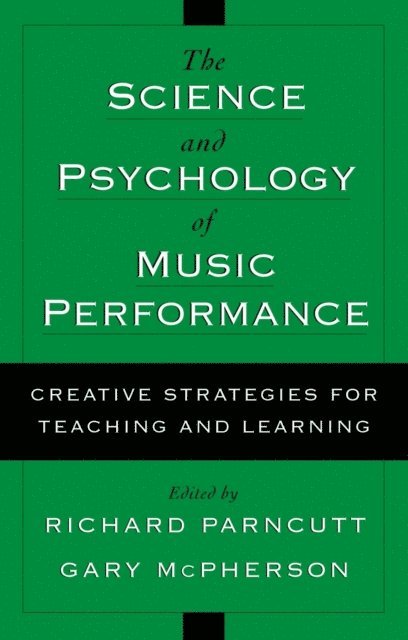
Science and Psychology of Music Performance
Creative Strategies for Teaching and Learning
Av Gary McPherson, Richard Parncutt
E-bok, 2002
1246 kr
Lägg i varukorg
What type of practice makes a musician perfect? What sort of child is most likely to succeed on a musical instrument? What practice strategies yield the fastest improvement in skills such as sight-reading, memorization, and intonation? Scientific and psychological research can offer answers to …
Science and Psychology of Music Performance
Creative Strategies for Teaching and Learning
Av Gary McPherson, Richard Parncutt
E-bok, 2002
1246 kr
Lägg i varukorg
What type of practice makes a musician perfect? What sort of child is most likely to succeed on a musical instrument? What practice strategies yield the fastest improvement in skills such as sight-reading, memorization, and intonation? Scientific and psychological research can offer answers to …
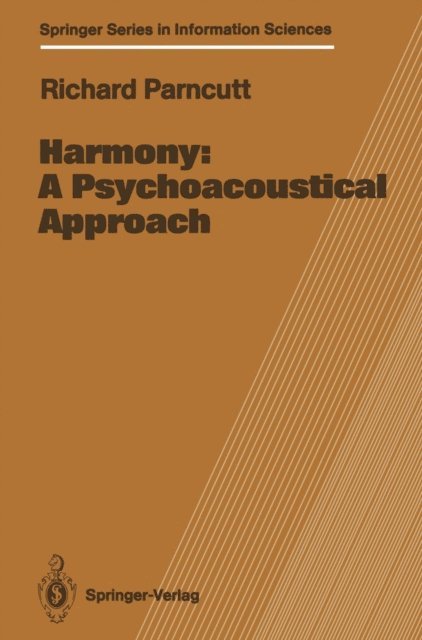
Harmony: A Psychoacoustical Approach
E-bok, 2012
1785 kr
Lägg i varukorg
My first encounter with the theory of harmony was during my last year at school (1975). This fascinating system of rules crystallized the intuitive knowledge of harmony I had acquired from years of piano playing, and facilitated memorization, transcription, arrangement and composition. For the next …
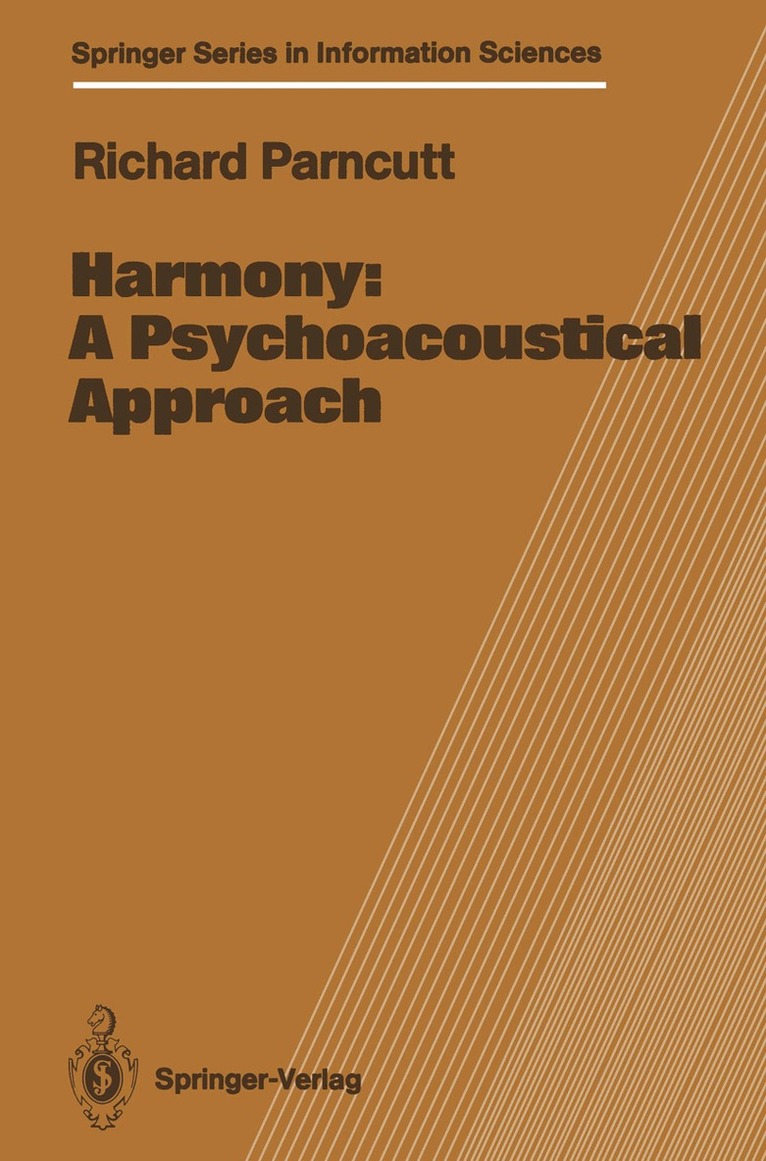
Harmony: A Psychoacoustical Approach
Häftad, 2011
1422 kr
Lägg i varukorg
My first encounter with the theory of harmony was during my last year at school (1975). This fascinating system of rules crystallized the intuitive knowledge of harmony I had acquired from years of piano playing, and facilitated memorization, transcription, arrangement and composition. For the next …