Richard Read – författare
Visar alla böcker från författaren Richard Read. Handla med fri frakt och snabb leverans.
5 produkter
5 produkter
Ljudbok
Engelska, 1989138 kr
Lyssna direkt efter köp
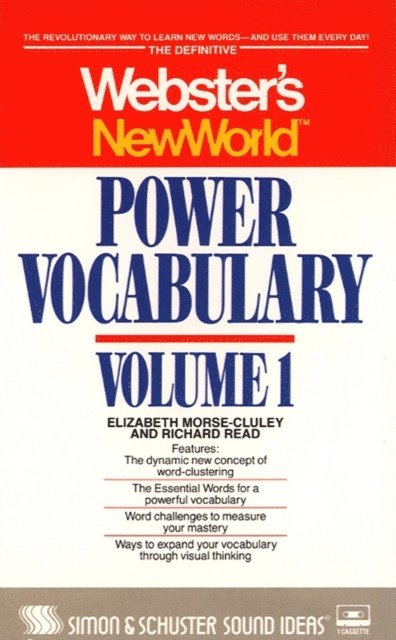
Carefully designed by leading experts in the field, here is a vocabulary building program that provides the inside edge on learning new words, understanding word usage and pronunciation and making a powerful vocabulary part of your everyday life. This program, Volume One of a four-part vocabulary building series, offers you: The building blocks of English words Dynamic visualization techniques for learning new words Self-challenges to make your new vocabulary last The words most often misused and mispronounced By concentrating on the fundamentals of English and offering effective, enjoyable word vocabulary exercises, Webster''s New World Power Vocabulary goes beyond simple memorization so that you are in full command of the language - and have the winning edge in communication skills!
Häftad, Engelska, 2020
302 kr
Skickas inom 11-20 vardagar
This volume of essays frames a comparative history of landscape painting in Australia and the United States through recent considerations of the Anthropocene, arguing that careful and deep analysis of specific nineteenth-century artworks reveals issues of environmental concern both past and present. Carefully drawn from two symposia held at the Art Gallery of Western Australia in Perth in 2016 and at the Ian Potter Museum of Art, University of Melbourne the following year, the volume includes eight essays and a conversation between artists. Colonization, Wilderness, and Spaces Between brings together the fresh insights of scholars and artists from Australia, the United Kingdom, and the United States and provides a resource for thinking critically about the historical, imperial, and environmental information that can be gleaned from looking closely at landscape paintings.
E-bok
Engelska, 2022275 kr
Läs direkt efter köp
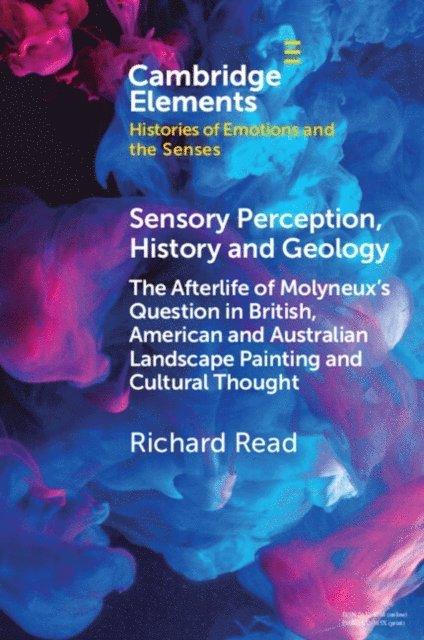
William Molyneux''s question to John Locke about whether a blind man restored to sight could name the difference between a cube and a sphere without touching them shaped fundamental conflicts in philosophy, theology and science between empirical and idealist answers that are radically alien to current ways of seeing and feeling but were born of colonizing ambitions whose devastating genocidal and ecocidal consequences intensify today. This Element demonstrates how landscape paintings of unfamiliar terrains required historical and geological subject matter to supply tactile associations for empirical recognition of space, whereas idealism conferred unmediated but no less coercive sensory access. Close visual and verbal analysis using photographs of pictorial sites trace vividly different responses to the question, from those of William Hazlitt and John Ruskin in Britain to those of nineteenth-century authors and artists in the United States and Australia, including Ralph Waldo Emerson, Thomas Cole, William Haseltine, Fitz Henry Lane and Eugene von Guérard.
E-bok
PDF, Engelska, 2022275 kr
Läs direkt efter köp
William Molyneux''s question to John Locke about whether a blind man restored to sight could name the difference between a cube and a sphere without touching them shaped fundamental conflicts in philosophy, theology and science between empirical and idealist answers that are radically alien to current ways of seeing and feeling but were born of colonizing ambitions whose devastating genocidal and ecocidal consequences intensify today. This Element demonstrates how landscape paintings of unfamiliar terrains required historical and geological subject matter to supply tactile associations for empirical recognition of space, whereas idealism conferred unmediated but no less coercive sensory access. Close visual and verbal analysis using photographs of pictorial sites trace vividly different responses to the question, from those of William Hazlitt and John Ruskin in Britain to those of nineteenth-century authors and artists in the United States and Australia, including Ralph Waldo Emerson, Thomas Cole, William Haseltine, Fitz Henry Lane and Eugene von Guérard.
Häftad, Engelska, 2022
230 kr
Skickas inom 7-10 vardagar
William Molyneux's question to John Locke about whether a blind man restored to sight could name the difference between a cube and a sphere without touching them shaped fundamental conflicts in philosophy, theology and science between empirical and idealist answers that are radically alien to current ways of seeing and feeling but were born of colonizing ambitions whose devastating genocidal and ecocidal consequences intensify today. This Element demonstrates how landscape paintings of unfamiliar terrains required historical and geological subject matter to supply tactile associations for empirical recognition of space, whereas idealism conferred unmediated but no less coercive sensory access. Close visual and verbal analysis using photographs of pictorial sites trace vividly different responses to the question, from those of William Hazlitt and John Ruskin in Britain to those of nineteenth-century authors and artists in the United States and Australia, including Ralph Waldo Emerson, Thomas Cole, William Haseltine, Fitz Henry Lane and Eugene von Guérard.