Richard S. Newman - Böcker
Visar alla böcker från författaren Richard S. Newman. Handla med fri frakt och snabb leverans.
9 produkter
9 produkter
320 kr
Skickas inom 5-8 vardagar
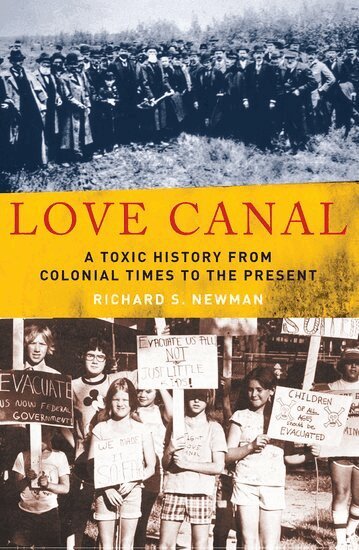
In the summer of 1978, residents of Love Canal, a suburban development in Niagara Falls, NY, began protesting against the leaking toxic waste dump in their midst-a sixteen-acre site containing 100,000 barrels of chemical waste that anchored their neighborhood. Initially seeking evacuation, area activists soon found that they were engaged in a far larger battle over the meaning of America's industrial past and its environmental future. The Love Canal protest movement inaugurated the era of grassroots environmentalism, spawning new anti-toxics laws and new models of ecological protest.Historian Richard S. Newman examines the Love Canal crisis through the area's broader landscape, detailing the way this ever-contentious region has been used, altered, and understood from the colonial era to the present day. Newman journeys into colonial land use battles between Native Americans and European settlers, 19th-century utopian city planning, the rise of the American chemical industry in the 20th century, the transformation of environmental activism in the 1970s, and the memory of environmental disasters in our own time.In an era of hydrofracking and renewed concern about nuclear waste disposal, Love Canal remains relevant. It is only by starting at the very beginning of the site's environmental history that we can understand the road to a hazardous waste crisis in the 1970s-and to the global environmental justice movement it sparked.
111 kr
Skickas inom 5-8 vardagar
The abolitionist movement launched the global human rights struggle in the 18th and 19th centuries and redefined the meaning of equality throughout the Atlantic world. Even in the 21st century, it remains a touchstone of democratic activism-a timeless example of mobilizing against injustice. As famed black abolitionist Frederick Douglass commented in the 1890s, the antislavery struggle constituted a grand army of activists whose labors would cast a long shadow over American history. This introduction to the abolitionist movement, written by African American and abolition expert Richard Newman, highlights the key people, institutions, and events that shaped the antislavery struggle between the American Revolutionary and Civil War eras as well as the major themes that guide scholarly understandings of the antislavery struggle. From early abolitionist activism in the Anglo American world and the impact of slave revolutions on antislavery reformers to the rise of black pamphleteers and the emergence of antislavery women before the Civil War, the study of the abolitionist movement has been completely reoriented during the past decade. Where before scholars focused largely on radical (white) abolitionists along the Atlantic seaboard in the years just before the Civil War, they now understand abolitionism via an ever-expanding roster of activists through both time and space. While this book will examine famous antislavery figures such as William Lloyd Garrison and Frederick Douglass, it will also underscore the significance of early abolitionist lawsuits, the impact of the Haitian Revolution on both black and white abolitionists in the United States, and women's increasingly prominent role as abolitionist editors, organizers, and orators. By drawing on the exciting insights of recent work on these and other themes, a very short introduction to the abolitionist movement will provide a compelling and up-to-date narrative of the American antislavery struggle
491 kr
Skickas inom 5-8 vardagar
In the spring of 1978, citizens of Love Canal, a suburban development in Niagara Falls, NY, began protesting against the leaking toxic waste dump -- a sixteen acre site containing 100,000 barrels of chemical waste -- upon which their homes, elementary school, and backyards stood. The Love Canal citizens' movement represented a different brand of environmental reform. Rather than focusing on resource conservation and preservation of natural spaces, Love Canal reformers advocated environmental justice. By the early 1980s, hundreds of local activists (many of them self-described "housewives-turned-activists") had forced two important initiatives from politicians and business leaders: government relocation of Love Canal families and government/industry remediation of the dump itself. Love Canal activists also spurred passage of the Superfund law at the federal level, "Right to Know" statutes at the state level, and a wave of copycat citizen-environmentalist groups in communities across the country (so-called NIMBYs: "Not In My Backyard" environmentalists). Nearly thirty years after making international headlines, Love Canal remains a watchword of hazardous waste reform and one of the most significant environmental disasters in American history. In this book, Richard S. Newman examines this oft-told event within the wider context of the landscape through five centuries. He begins with the conflicts that erupted between the resident Iroquois and French explorer Rene Lasalles' commercial development schemes in the Niagara Falls region. During the 18th and 19th century, the Love Canal landscape was transformed by successive generations of European and American entrepreneurs and industrialists. Love's Canal was the dream of William Love, a developer who in 1893 planned a massive industrial metropolis to be carved out of the Niagara region's lush farmland, capped by an artificial river with a waterfall higher than Niagara Falls. His scheme failed but not before digging of the canal had begun. The scheme attracted the interest of famous conservationists like John Muir, Theodore Roosevelt, and John Burroughs, who argued for preserving the falls from commercial and industrial overuse. Yet throughout the twentieth century the area supported massive industrial growth, including that of the Hooker Electrochemical Corporation, the company that dumped industrial chemicals into the abandoned Love Canal site. As the company grew, its efforts to handle disposal of its hazardous waste led to development of a new process of "in-ground disposal." Only by considering Love Canal land-use and alteration through successive stages of commercialization, industrialization, deindustrialization, and technological innovation can we understand the road to a hazardous waste nightmare in the 1970s--and the global environmental justice movement it sparked. A portrait of a charged landscape and the people who have continually redefined its meaning, this book will look at local land-use from long-term perspective.
2 039 kr
Skickas inom 10-15 vardagar
Building on Karabenick’s earlier volume on this topic and maintaining its high standards of scholarship and intellectual rigor, Help Seeking in Academic Settings: Goals, Groups, and Contexts brings together contemporary work that is theoretically as well as practically important. It highlights current trends in the area and gives expanded attention to applications to teaching and learning. The contributors represent an internationally recognized group of scholars and researchers who provide depth of analysis and breadth of coverage. Help seeking is currently considered an important learning strategy that is linked to students’ achievement goals and academic performance. This volume not only provides answers to who, why, and when learners seek help, but raises questions for readers to consider for future research. Chapters examine:*help seeking as a self-regulated learning strategy and its relationship to achievement goal theory;*help seeking in collaborative groups;*culture and help seeking in K-12 and college contexts;*help seeking and academic support services (such as academic advising centers);*help seeking in computer-based interactive learning environments;*help seeking in response to peer harassment at school; and*help seeking in non-academic settings such as the workplace.This book is intended for researchers, academic support personnel,and graduate students across the field of educational psychology, particularly those interested in student motivation and self-regulation.
695 kr
Skickas inom 10-15 vardagar
Building on Karabenick’s earlier volume on this topic and maintaining its high standards of scholarship and intellectual rigor, Help Seeking in Academic Settings: Goals, Groups, and Contexts brings together contemporary work that is theoretically as well as practically important. It highlights current trends in the area and gives expanded attention to applications to teaching and learning. The contributors represent an internationally recognized group of scholars and researchers who provide depth of analysis and breadth of coverage. Help seeking is currently considered an important learning strategy that is linked to students’ achievement goals and academic performance. This volume not only provides answers to who, why, and when learners seek help, but raises questions for readers to consider for future research. Chapters examine:*help seeking as a self-regulated learning strategy and its relationship to achievement goal theory;*help seeking in collaborative groups;*culture and help seeking in K-12 and college contexts;*help seeking and academic support services (such as academic advising centers);*help seeking in computer-based interactive learning environments;*help seeking in response to peer harassment at school; and*help seeking in non-academic settings such as the workplace.This book is intended for researchers, academic support personnel,and graduate students across the field of educational psychology, particularly those interested in student motivation and self-regulation.
463 kr
Skickas inom 10-15 vardagar
How abolitionism evolved from an elite and conservative movement to a radical, grassroots reform cause; Most accounts date the birth of American abolitionism to 1831, when William Lloyd Garrison began publishing his radical antislavery newspaper, The Liberator. In fact, however, the abolition movement had been born with the American Republic. In the decades following the Revolution, abolitionists worked steadily to eliminate slavery and racial injustice, and their tactics and strategies constantly evolved. Tracing the development of the abolitionist movement from the 1770s to the 1830s, Richard Newman focuses particularly on its transformation from a conservative lobbying effort into a fiery grassroots reform cause. What began in late-eighteenth-century Pennsylvania as an elite movement espousing gradual legal reform began to change in the 1820s as black activists, female reformers, and nonelite whites pushed their way into the antislavery movement. Centered in Massachusetts, these new reformers demanded immediate emancipation, and they revolutionized abolitionist strategies and tactics - lecturing extensively, publishing gripping accounts of life in bondage, and organizing on a grassroots level. Their attitudes and actions made the abolition movement the radical cause we think of it as today.
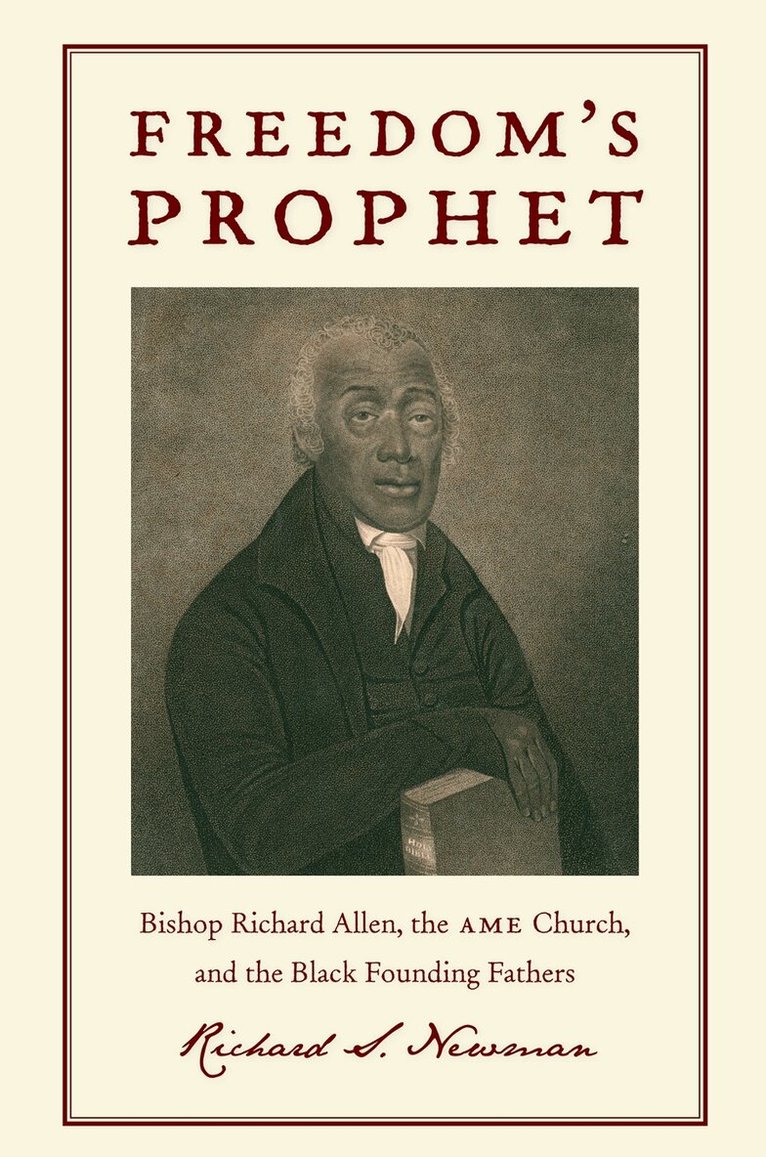
Freedom's Prophet
Bishop Richard Allen, the AME Church, and the Black Founding Fathers
Inbunden, Engelska, 2008
1 231 kr
Skickas inom 10-15 vardagar
Gold Winner of the 2008 Foreword Magazine Book of the Year Award, Biography CategoryBrings to life the inspiring story of one of America's Black Founding Fathers, featured in the forthcoming documentary The Black Church: This is Our Story, This is Our SongFreedom's Prophet is a long-overdue biography of Richard Allen, founder of the first major African American church and the leading black activist of the early American republic. A tireless minister, abolitionist, and reformer, Allen inaugurated some of the most important institutions in African American history and influenced nearly every black leader of the nineteenth century, from Douglass to Du Bois.Born a slave in colonial Philadelphia, Allen secured his freedom during the American Revolution, and became one of the nation's leading black activists before the Civil War. Among his many achievements, Allen helped form the African Methodist Episcopal (AME) Church, co-authored the first copyrighted pamphlet by an African American writer, published the first African American eulogy of George Washington, and convened the first national convention of Black reformers. In a time when most Black men and women were categorized as slave property, Allen was championed as a Black hero. In this thoroughly engaging and beautifully written book, Newman describes Allen's continually evolving life and thought, setting both in the context of his times. From Allen's early antislavery struggles and belief in interracial harmony to his later reflections on Black democracy and Black emigration, Newman traces Allen's impact on American reform and reformers, on racial attitudes during the years of the early republic, and on the Black struggle for justice in the age of Adams, Jefferson, Madison, and Washington. Whether serving as Americas first Black bishop, challenging slave-holding statesmen in a nation devoted to liberty, or visiting the President's House (the first Black activist to do so), this important book makes it clear that Allen belongs in the pantheon of Americas great founding figures. Freedom's Prophet reintroduces Allen to today's readers and restores him to his rightful place in our nation's history.
Freedom's Prophet
Bishop Richard Allen, the AME Church, and the Black Founding Fathers
Häftad, Engelska, 2009
428 kr
Skickas inom 7-10 vardagar
Gold Winner of the 2008 Foreword Magazine Book of the Year Award, Biography CategoryBrings to life the inspiring story of one of America's Black Founding Fathers, featured in the forthcoming documentary The Black Church: This is Our Story, This is Our SongFreedom's Prophet is a long-overdue biography of Richard Allen, founder of the first major African American church and the leading black activist of the early American republic. A tireless minister, abolitionist, and reformer, Allen inaugurated some of the most important institutions in African American history and influenced nearly every black leader of the nineteenth century, from Douglass to Du Bois.Born a slave in colonial Philadelphia, Allen secured his freedom during the American Revolution, and became one of the nation's leading black activists before the Civil War. Among his many achievements, Allen helped form the African Methodist Episcopal (AME) Church, co-authored the first copyrighted pamphlet by an African American writer, published the first African American eulogy of George Washington, and convened the first national convention of Black reformers. In a time when most Black men and women were categorized as slave property, Allen was championed as a Black hero. In this thoroughly engaging and beautifully written book, Newman describes Allen's continually evolving life and thought, setting both in the context of his times. From Allen's early antislavery struggles and belief in interracial harmony to his later reflections on Black democracy and Black emigration, Newman traces Allen's impact on American reform and reformers, on racial attitudes during the years of the early republic, and on the Black struggle for justice in the age of Adams, Jefferson, Madison, and Washington. Whether serving as Americas first Black bishop, challenging slave-holding statesmen in a nation devoted to liberty, or visiting the President's House (the first Black activist to do so), this important book makes it clear that Allen belongs in the pantheon of Americas great founding figures. Freedom's Prophet reintroduces Allen to today's readers and restores him to his rightful place in our nation's history.
987 kr
Skickas inom 10-15 vardagar
The Palgrave Environmental Reader explores America's evolving fascination with nature and environmental concerns.