Richard Strier - Böcker
Visar alla böcker från författaren Richard Strier. Handla med fri frakt och snabb leverans.
13 produkter
13 produkter
459 kr
Skickas inom 7-10 vardagar
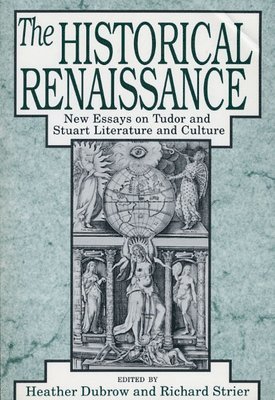
The Historical Renaissance both exemplifies and examines the most influential current in contemporary studies of the English Renaissance: the effort to analyze the interplay between literature, history, and politics. The broad and varied manifestations of that effort are reflected in the scope of this collection. Rather than merely providing a sampler of any single critical movement, The Historical Renaissance represents the range of ways scholars and critics are fusing what many would once have distinguished as "literary" and "historical" concernsThe volume includes studies of mid-Tudor culture as well as of Elizabethan and Stuart periods. The scope of the collection is also manifest in its list of contributors. They include historians and literary critics, and their work spans he spectrum from more traditional methods to those characteristic of what has been termed "New Historicism."One aim of the book is to investigate the apparent division between these older and more current approaches. Heather Dubrow and Richard Strier evaluate the contemporary interest in historical studies of the Renaissance, relating it to previous developments in the field, surveying its achievements and limitations, and suggesting new directions for future work.
229 kr
Skickas inom 7-10 vardagar
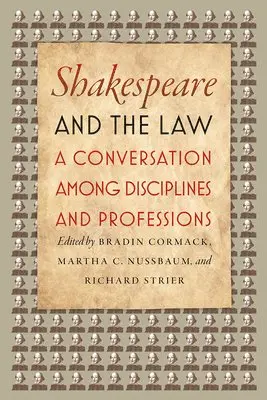
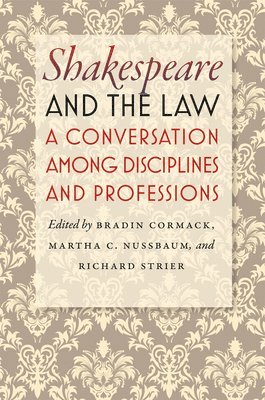
William Shakespeare is inextricably linked with the law. Legal documents make up most of the records we have of his life, and trials, lawsuits, and legal terms permeate his plays. Gathering an extraordinary team of literary and legal scholars, philosophers, and even sitting judges, Shakespeare and the Law demonstrates that Shakespeare’s thinking about legal concepts and legal practice points to a deep and sometimes vexed engagement with the law’s technical workings, its underlying premises, and its social effects.The book’s opening essays offer perspectives on law and literature that emphasize both the continuities and contrasts between the two fields. The second section considers Shakespeare’s awareness of common law thinking and common law practice, while the third inquires into Shakespeare’s general attitudes toward legal systems. The fourth part of the book looks at how law enters into conversation with issues of politics and community, whether in the plays, in Shakespeare’s world, or in our own world. Finally, a colloquy among Supreme Court Justice Stephen Breyer, Judge Richard Posner, Martha C. Nussbaum, and Richard Strier covers everything from the ghost in Hamlet to the nature of judicial discretion.
376 kr
Skickas inom 7-10 vardagar
342 kr
Kommande
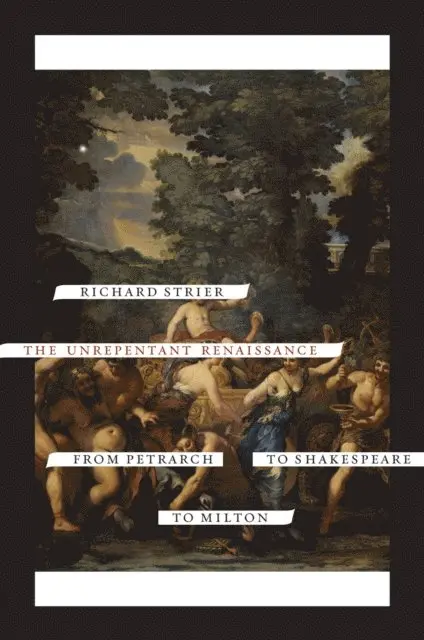
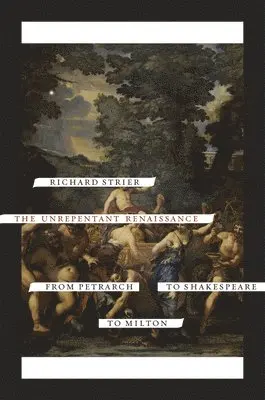
Dedicated to discussing writings of the European Renaissance that dissented from the dominant values of the period.Who during the Renaissance could have dissented from the values of reason and restraint, patience and humility, rejection of the worldly and the physical? These widely articulated values were part of the inherited Christian tradition and were reinforced by key elements in the Renaissance, especially the revival of Stoicism and Platonism. This book is devoted to those who did dissent from them. Richard Strier reveals that many long-recognized major texts did question the most traditional values and belong to a Renaissance far more unconstrained and affirmative than much recent scholarship has allowed.The Unrepentant Renaissance counters the prevalent view of the period as dominated by the regulation of bodies and passions; the book aims to reclaim the Renaissance as an era happily churning with surprising, worldly, and self-assertive energies. Reviving the perspective of Burckhardt and Nietzsche, Strier provides fresh and uninhibited readings of texts by Petrarch, Shakespeare (sonnets and plays), Loyola, Montaigne, Descartes, and Milton. Strier’s lively argument, expressed in lucid prose, is meant to stir debate throughout the field of Renaissance studies.
918 kr
Skickas inom 7-10 vardagar
William Shakespeare is inextricably linked with the law. Legal documents make up most of the records we have of his life, and trials, lawsuits, and legal terms permeate his plays. Gathering an extraordinary team of literary and legal scholars and even sitting judges, "Shakespeare and the Law" demonstrates that Shakespeare's thinking about legal concepts points to a deep engagement with the law's technical workings, its underlying premises, and its social effects. "Shakespeare and the Law" opens with three essays on law and literature that emphasize both the continuities and contrasts between the two fields. In its second section, the book considers Shakespeare's awareness of common law thinking and practice through examinations of Measure for Measure and Othella. Building on this question, in the third part a judge and a former solicitor general rule on Shylock's demand for enforcement of his odd contract, and two essays by literary scholars take contrasting views on whether Shakespeare could imagine a functioning legal system. The fourth section looks at how law enters into conversation with issues of politics and community, both in the plays and in our own world.The volume concludes with a freewheeling colloquy among Supreme Court Justice Stephen J. Breyer, Judge Richard A. Posner, Martha C. Nussbaum, and Richard Strier. Celebrating the sometimes fractious intellectual energy produced by scholars and practitioners tackling the question of Shakespeare and the law, this collection is a resource and provocation for further thinking and ongoing discussion.
Del 34 - New Historicism: Studies in Cultural Poetics
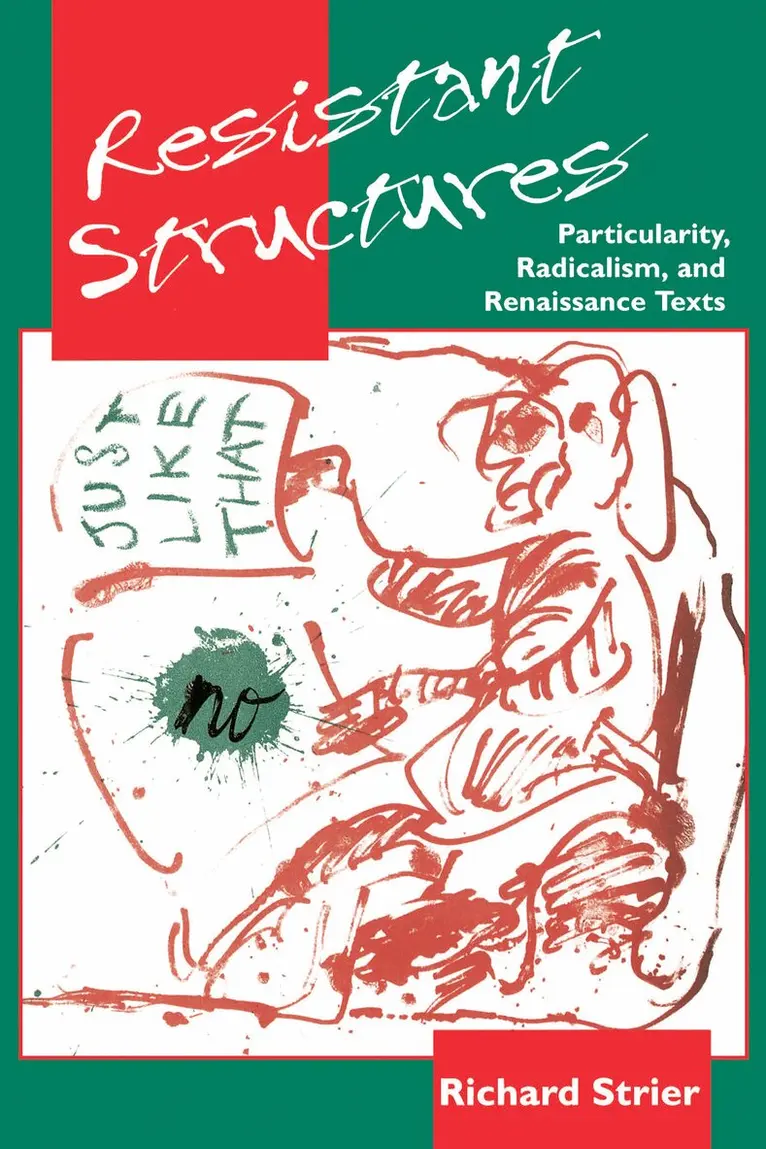
Resistant Structures
Particularity, Radicalism, and Renaissance Texts
Häftad, Engelska, 1997
663 kr
Skickas inom 3-6 vardagar
Taking Wittgenstein's "Don't think, but look" as his motto, Richard Strier argues against the application of a priori schemes to Renaissance (and all) texts. He argues for the possibility and desirability of rigorously attentive but "pre-theoretical" reading. His approach privileges particularity and attempts to respect the "resistant structures" of texts. He opposes theories, critical and historical, that dictate in advance what texts must--or cannot--say or do. The first part of the book, "Against Schemes," demonstrates, in discussions of Rosemond Tuve, Stephen Greenblatt, and Stanley Fish among others, how both historicist and purely theoretical approaches can equally produce distortion of particulars. The second part, "Against Received Ideas," shows how a variety of texts (by Shakespeare, Donne, Herbert, and others) have been seen through the lenses of fixed, mainly conservative ideas in ways that have obscured their actual, surprising, and sometimes surprisingly radical content.
550 kr
Skickas inom 7-10 vardagar
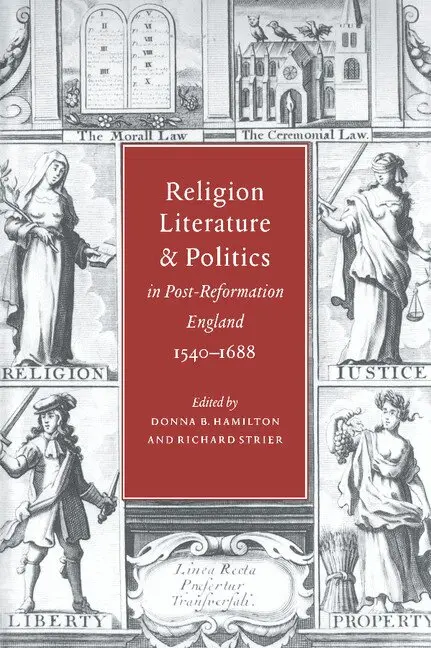
This collection of essays by historians and literary scholars treats English history and culture from the Henrician Reformation to the Glorious Revolution as a single coherent period in which religion is a dominant element in political and cultural life. It seeks to explore the centrality of the religion-politics nexus for this whole period through examining a wide variety of literary and non-literary texts, from plays and poems to devotional treatises, political treatises and histories. It breaks down normal distinctions between Tudor and Stuart, pre- and post-Restoration periods to reveal a coherent (though not all serene and untroubled) post-Reformation culture struggling with major issues of belief, practice and authority.
493 kr
Skickas inom 7-10 vardagar
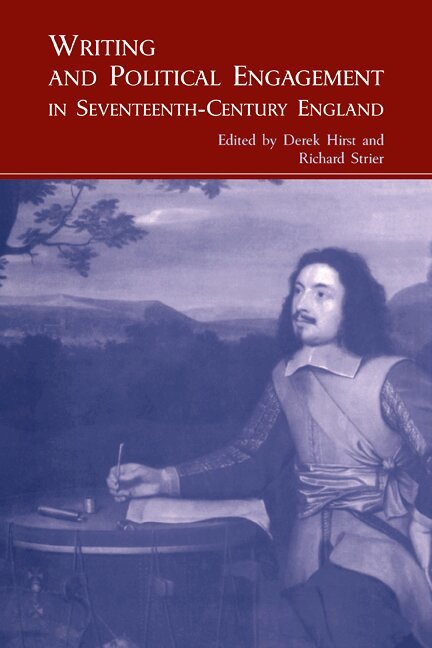
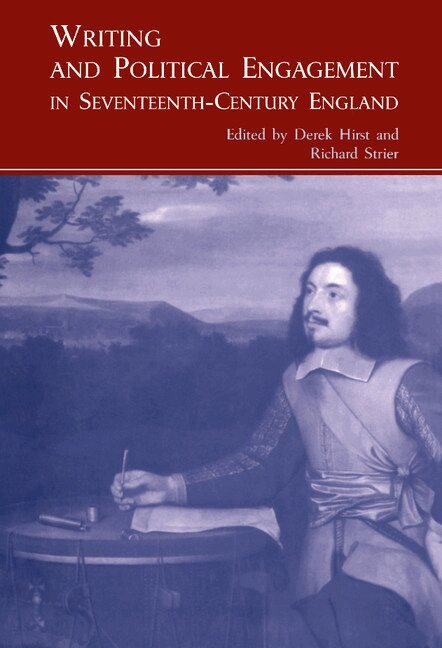
This volume, first published in 2000, focuses on the relationship between writing and public concerns in seventeenth-century England before, during and after the civil wars and revolution of the mid-century. The distinguished list of contributors represent a variety of disciplines - political scientists, social and political historians and literary critics. They share an intense concern with the relationship between the act of writing and the political and public issues of this extraordinary period. The essays suggest that in the seventeenth-century the private and the public intersected so thoroughly that ostensibly 'private' writing was engaged with public issues and public rhetoric, while on the other hand, political writing was deeply involved with questions of style and inward conscience. This volume illuminates the complex issues of 'public' and 'private', 'art' and 'conscience' in the period.
1 371 kr
Skickas inom 7-10 vardagar
This collection of essays by historians and literary scholars treats English history and culture from the Henrician Reformation to the Glorious Revolution as a single coherent period in which religion is a dominant element in political and cultural life. It seeks to explore the centrality of the religion-politics nexus for this whole period through examining a wide variety of literary and non-literary texts, from plays and poems to devotional treatises, political treatises and histories. It breaks down normal distinctions between Tudor and Stuart, pre- and post-Restoration periods to reveal a coherent (though not all serene and untroubled) post-Reformation culture struggling with major issues of belief, practice and authority.
441 kr
Skickas inom 7-10 vardagar
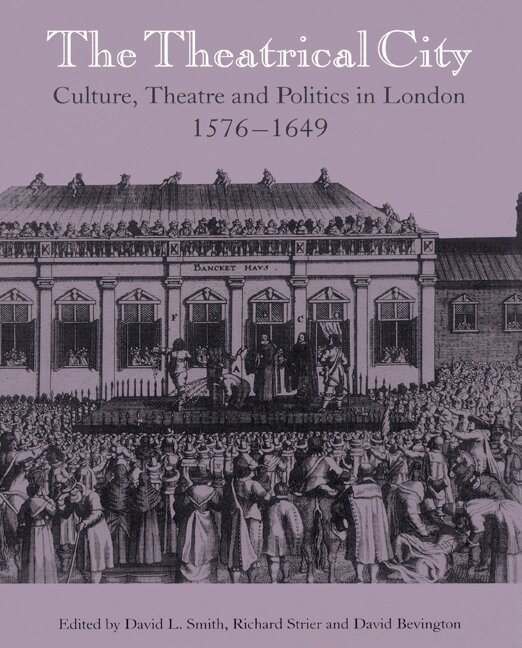
This collection of essays adopts a novel, interdisciplinary approach to a diverse group of texts composed in London during the Renaissance. Eight literary scholars and eight historians from two continents have been paired to write companion essays on each text. This original method opens up rich insights into London's social, political, and cultural life which would have eluded members of either discipline working in isolation. 'Theatrical' is taken to be a very flexible term, and is applied to the civic rituals and public spectacles of the capital (for example, the execution of King Charles I) as well as to the elite and popular theatre. The eight texts therefore include historical accounts, political documents and polemical works as well as plays.
1 371 kr
Skickas inom 7-10 vardagar
This volume, first published in 2000, focuses on the relationship between writing and public concerns in seventeenth-century England before, during and after the civil wars and revolution of the mid-century. The distinguished list of contributors represent a variety of disciplines - political scientists, social and political historians and literary critics. They share an intense concern with the relationship between the act of writing and the political and public issues of this extraordinary period. The essays suggest that in the seventeenth-century the private and the public intersected so thoroughly that ostensibly 'private' writing was engaged with public issues and public rhetoric, while on the other hand, political writing was deeply involved with questions of style and inward conscience. This volume illuminates the complex issues of 'public' and 'private', 'art' and 'conscience' in the period.
873 kr
Skickas inom 10-15 vardagar
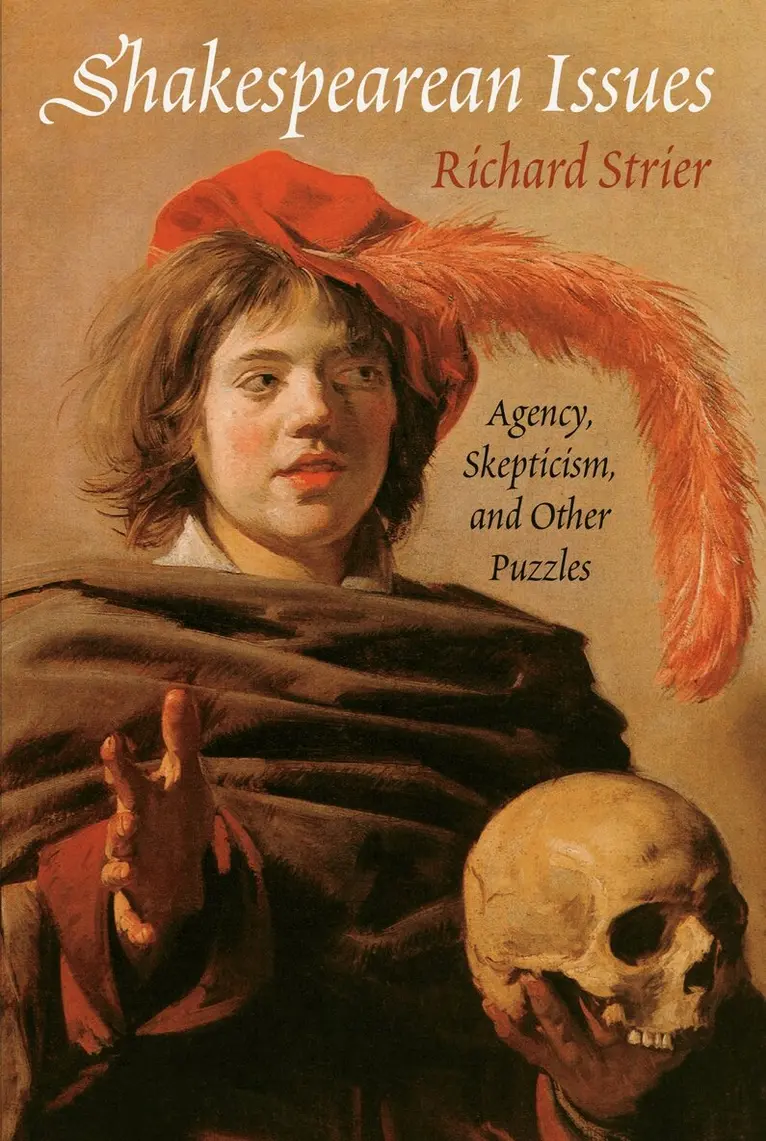
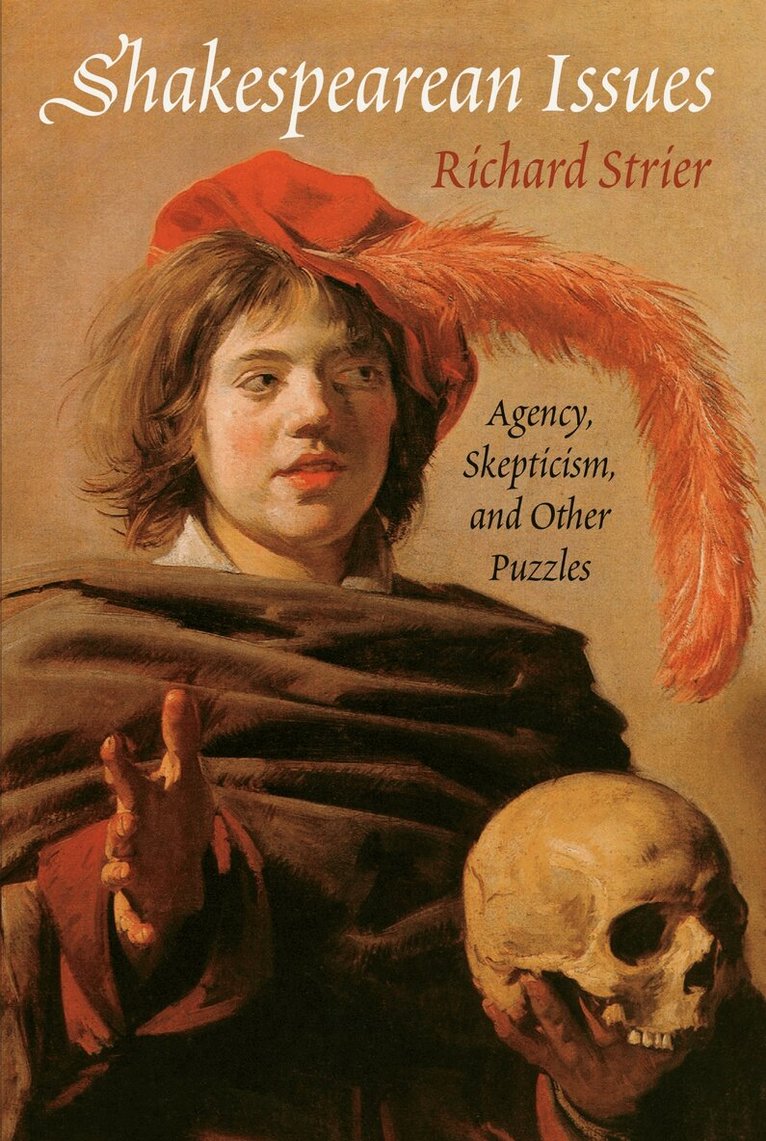
A collection of thought-provoking essays that treat the political, social, and philosophical themes of Shakespeare's playsIn Shakespearean Issues, Richard Strier has written a set of linked essays bound by a learned view of how to think about Shakespeare's plays and also how to write literary criticism on them. The essays vary in their foci—from dealing with passages and key lines to dealing with whole plays, and to dealing with multiple plays in thematic conversation with each other. Strier treats the political, social, and philosophical themes of Shakespeare's plays through recursive and revisionary close reading, revisiting plays from different angles and often contravening prevailing views.Part I focuses on characters. Moments of bad faith, of unconscious self-revelation, and of semi-conscious self-revelation are analyzed, along with the problem of describing characters psychologically and ethically. In an essay on "Happy Hamlet," the famous melancholy of the prince is questioned, as is the villainy of Rosencrantz and Guildenstern, while another essay asks the reader to reconsider moral judgments and negative assessments of characters who may be flawed but do not seem obviously wicked, such as Edgar and Gloucester in King Lear.Part II moves to systems, arguing that Henry IV, Measure for Measure, and The Merchant of Venice raise doubts about fundamental features of legal systems, such as impartiality, punishments, and respect for contracts. Strier reveals King Lear's radicalism, analyzing its concentration on poverty and its insistence on the existence and legitimacy of a material substratum to human life. Essays on The Tempest offer original takes on the play's presentation of coercive power, of civilization and its discontents, and of humanist ideals. Part III turns to religious and epistemological beliefs, with Strier challenging prevailing views of Shakespeare's relation to both.A culminating reading sees The Winter's Tale as ultimately affirming the mind's capacities, and as finding a place for something like religion within the world. Anyone interested in Shakespeare's plays will find Shakespearean Issues bracing and thought-provoking.
358 kr
Skickas inom 7-10 vardagar
A collection of thought-provoking essays that treat the political, social, and philosophical themes of Shakespeare's playsIn Shakespearean Issues, Richard Strier has written a set of linked essays bound by a learned view of how to think about Shakespeare's plays and also how to write literary criticism on them. The essays vary in their foci—from dealing with passages and key lines to dealing with whole plays, and to dealing with multiple plays in thematic conversation with each other. Strier treats the political, social, and philosophical themes of Shakespeare's plays through recursive and revisionary close reading, revisiting plays from different angles and often contravening prevailing views.Part I focuses on characters. Moments of bad faith, of unconscious self-revelation, and of semi-conscious self-revelation are analyzed, along with the problem of describing characters psychologically and ethically. In an essay on "Happy Hamlet," the famous melancholy of the prince is questioned, as is the villainy of Rosencrantz and Guildenstern, while another essay asks the reader to reconsider moral judgments and negative assessments of characters who may be flawed but do not seem obviously wicked, such as Edgar and Gloucester in King Lear.Part II moves to systems, arguing that Henry IV, Measure for Measure, and The Merchant of Venice raise doubts about fundamental features of legal systems, such as impartiality, punishments, and respect for contracts. Strier reveals King Lear's radicalism, analyzing its concentration on poverty and its insistence on the existence and legitimacy of a material substratum to human life. Essays on The Tempest offer original takes on the play's presentation of coercive power, of civilization and its discontents, and of humanist ideals. Part III turns to religious and epistemological beliefs, with Strier challenging prevailing views of Shakespeare's relation to both.A culminating reading sees The Winter's Tale as ultimately affirming the mind's capacities, and as finding a place for something like religion within the world. Anyone interested in Shakespeare's plays will find Shakespearean Issues bracing and thought-provoking.