Richard V. Ericson – författare
Visar alla böcker från författaren Richard V. Ericson. Handla med fri frakt och snabb leverans.
25 produkter
Crime in an Insecure World
Häftad, 2006
2,5 utav 5 stjärnor. Totalt antal röster: (2)
259 kr
Lägg i varukorg
Crime in an Insecure World investigates the alarming trend across Western societies of treating every imaginable source of harm as a crime. It locates this trend in the 21st century obsession with insecurity fostered by neo-liberal governments. It explains why selected issues of national security …
Policing the Risk Society
Av Richard V. Ericson, Kevin D. Haggerty
Inbunden, 1997
1177 kr
Lägg i varukorg
In this provocative new book, Richard Ericson and Kevin Haggerty contend that the police have become information brokers to institutions such as insurance companies and health and welfare organizations that operate based on a knowledge of risk. In turn, these institutions influence the ways that …
Policing the Risk Society
Av Richard V. Ericson, Kevin D. Haggerty
Häftad, 1997
773 kr
Lägg i varukorg
In this provocative new book, Richard Ericson and Kevin Haggerty contend that the police have become information brokers to institutions such as insurance companies and health and welfare organizations that operate based on a knowledge of risk. In turn, these institutions influence the ways that …
Crime in an Insecure World
Inbunden, 2006
713 kr
Lägg i varukorg
Crime in an Insecure World investigates the alarming trend across Western societies of treating every imaginable source of harm as a crime. It locates this trend in the 21st century obsession with insecurity fostered by neo-liberal governments. It explains why selected issues of national security …
New Politics of Surveillance and Visibility
Av Kevin D. Haggerty, Richard V. Ericson
Häftad, 2006
566 kr
Lägg i varukorg
Since the terrorist attacks of September 2001, surveillance has been put forward as the essential tool for the ‘war on terror,’ with new technologies and policies offering police and military operatives enhanced opportunities for monitoring suspect populations. The last few years have also seen the …
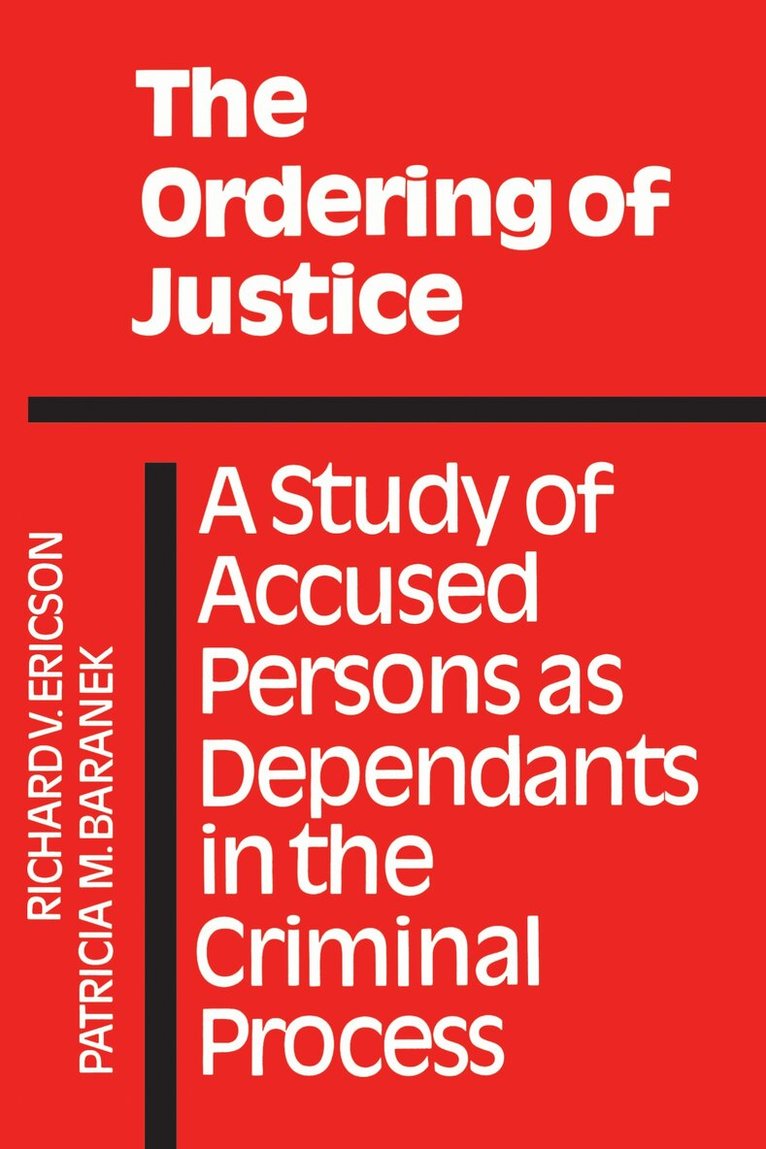
Ordering of Justice
A Study of Accused Persons As Dependants in the Criminal Process
Av Patricia M. Baranek, Richard V. Ericson
Häftad, 1982
379 kr
Lägg i varukorg
From the point of his arrest through to the final disposition of his case, the authors follow the accused as he proceeds through the criminal control system. They draw a picture of one who is dependent upon the orders and decisions of the police, crown attorney, defence lawyer, and judge and not a …
Uncertain Business
Risk, Insurance, and the Limits of Knowledge
Av Aaron Doyle, Richard V. Ericson
Inbunden, 2004
741 kr
Lägg i varukorg
We live in an age of increasing doubt about whether our institutions and technologies can provide security against risks, many of which they themselves have created. Uncertain Business is an unprecedented inquiry into insurance industry practices and what they tell us about risks and uncertainties …
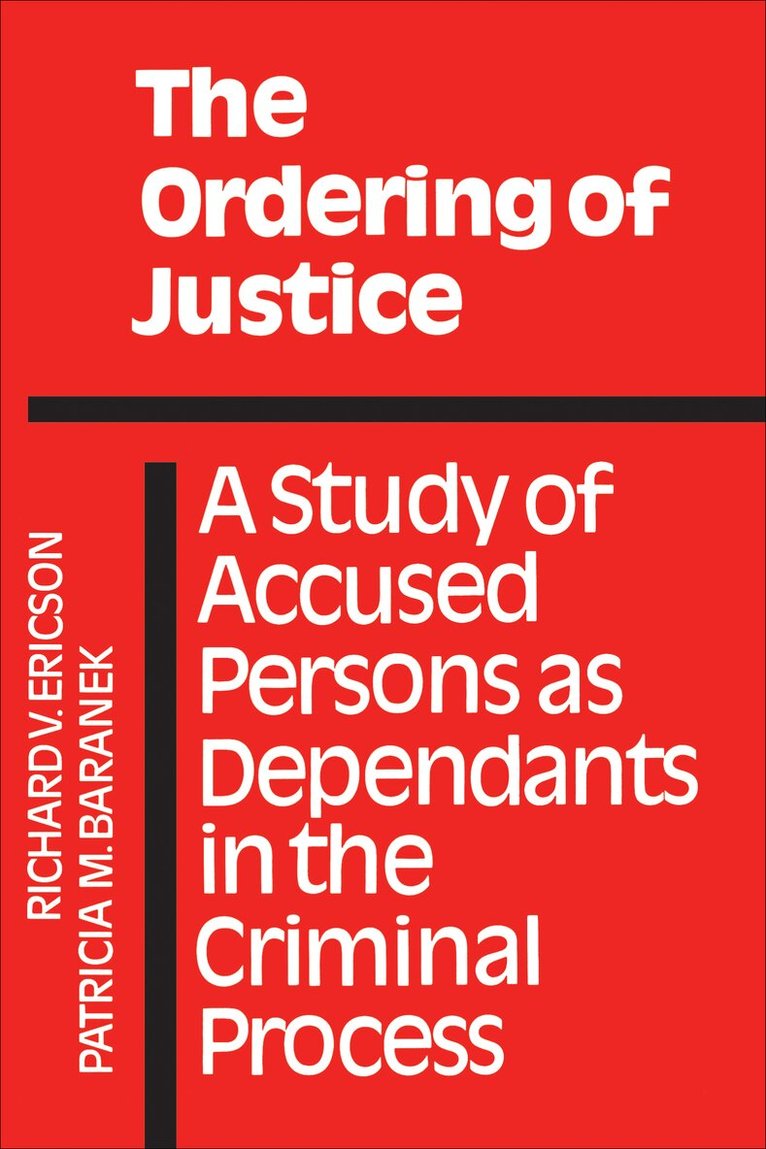
Ordering of Justice
A Study of Accused Persons As Dependants in the Criminal Process
Av Patricia M. Baranek, Richard V. Ericson
E-bok, 1982
465 kr
Lägg i varukorg
From the point of his arrest through to the final disposition of his case, the authors follow the accused as he proceeds through the criminal control system. They draw a picture of one who is dependent upon the orders and decisions of the police, crown attorney, defence lawyer, and judge and not a …
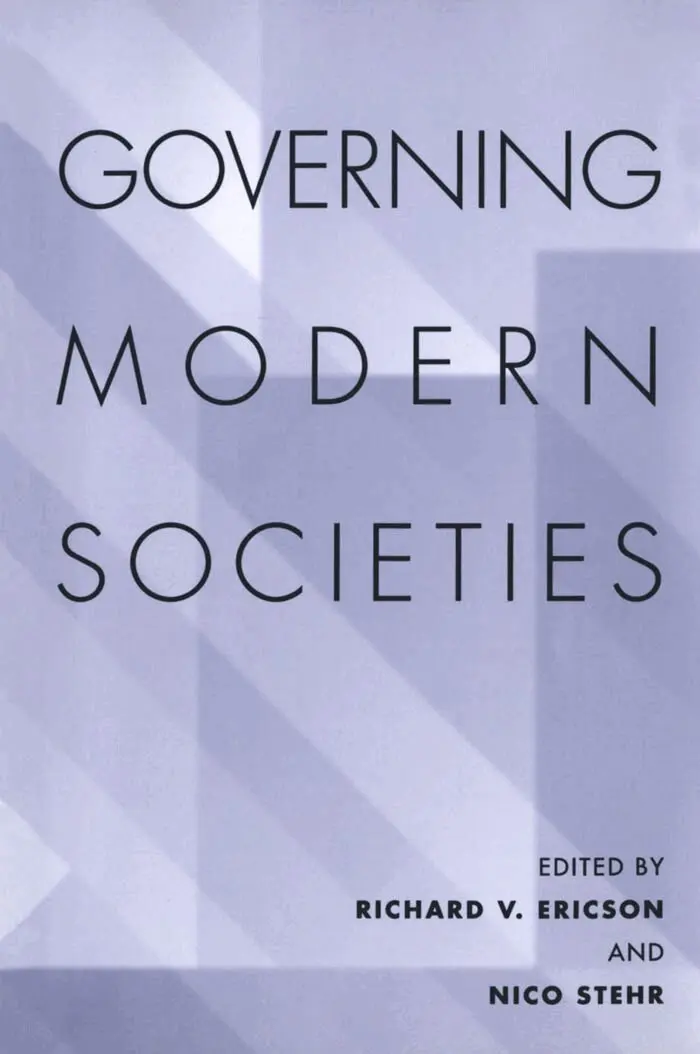
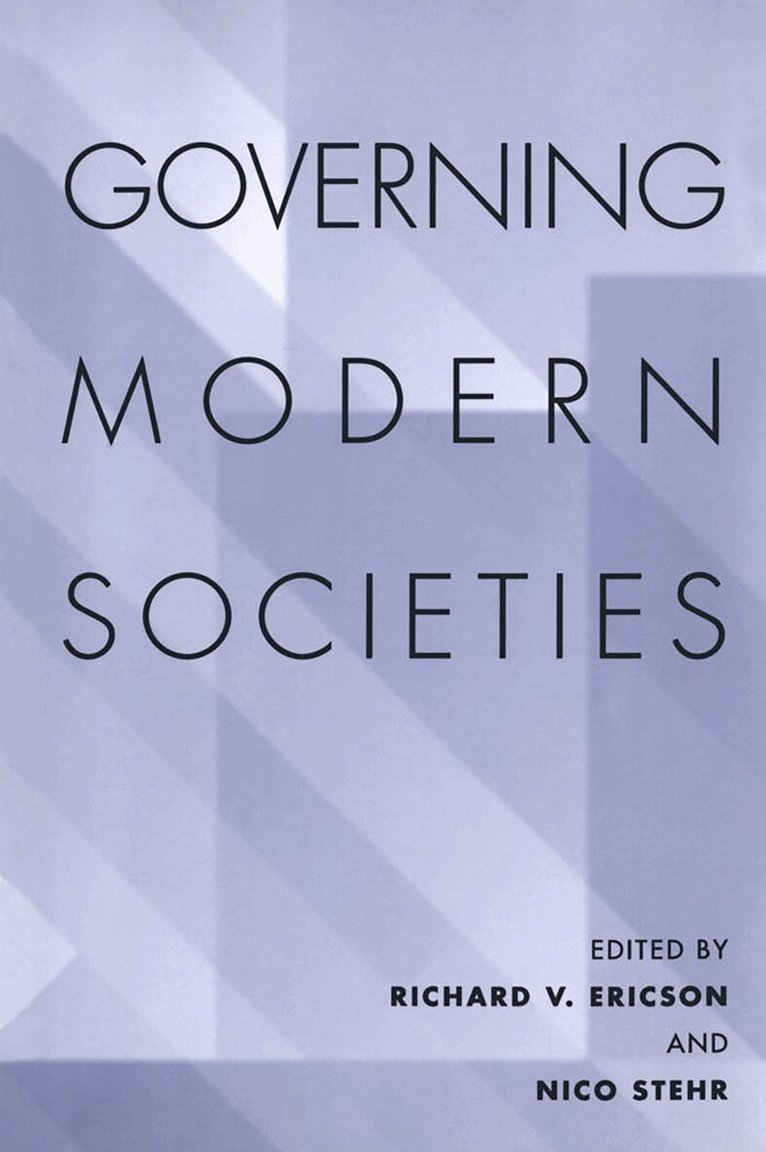
Governing Modern Societies
Av Richard V. Ericson, Nico Stehr
E-bok, 2000
620 kr
Lägg i varukorg
The essays collected in Governing Modern Societies arose from a lecture series of the same name held at Green College, University of British Columbia, in 1997 and 1998. Distinguished scholars in political science, philosophy, sociology, and economics from Canada, the United States, England, …
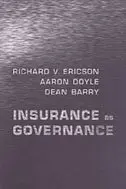
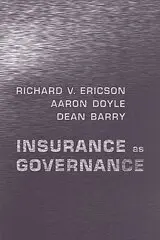
Insurance As Governance
Av Dean Barry, Aaron Doyle m. fl.
E-bok, 2003
1255 kr
Lägg i varukorg
Insurance as Governance is the first major sociological study of the insurance industry. It examines how the industry controls our institutions and daily lives in ways that are largely invisible, and how it thereby functions as a form of government beyond the state.Drawing on extensive ethnographic …
Ordering of Justice
A Study of Accused Persons As Dependants in the Criminal Process
Av Patricia M. Baranek, Richard V. Ericson
E-bok, 1989
426 kr
Lägg i varukorg
From the point of his arrest through to the final disposition of his case, the authors follow the accused as he proceeds through the criminal control system. They draw a picture of one who is dependent upon the orders and decisions of the police, crown attorney, defence lawyer, and judge and not a …
Policing the Risk Society
Av Richard V. Ericson, Kevin D. Haggerty
E-bok, 1997
571 kr
Lägg i varukorg
The information age has left few of us untouched; individuals and institutions alike have undergone radical transformations in the race to get the most out of new technologies. The police are no exception. Policing the Risk Society introduces us to a shocking new vision of police work in which …
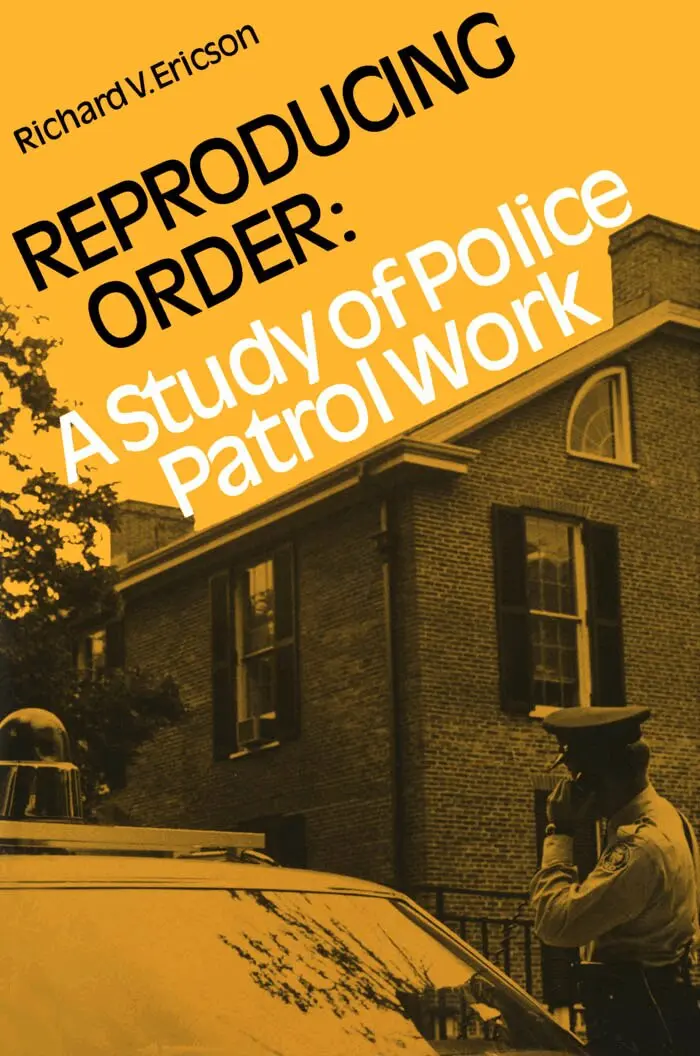
Reproducing Order
A Study of Police Patrol Work
E-bok, 1991
620 kr
Lägg i varukorg
Professor Ericson and his colleagues followed the work of patrol officers in a large Canadian regional police force. From their direct observations comes a wealth of information, quantitatively assembled and qualitatively discussed, with insights into the nature of policing.This book reveals that …
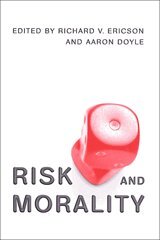
Risk and Morality
Av Aaron Doyle, Richard V. Ericson
E-bok, 2003
701 kr
Lägg i varukorg
Risk and Morality examines how decisions about risk and uncertainty relate to moral principles and ethical conduct. Editors Richard Ericson and Aaron Doyle have brought together in this volume a selection of original essays on the topic by renowned scholars in the disciplines of philosophy, …
New Politics of Surveillance and Visibility
Av Kevin D. Haggerty, Richard V. Ericson
E-bok, 2006
734 kr
Lägg i varukorg
Since the terrorist attacks of September 2001, surveillance has been put forward as the essential tool for the ‘war on terror,’ with new technologies and policies offering police and military operatives enhanced opportunities for monitoring suspect populations. The last few years have also seen the …
Uncertain Business
Risk, Insurance, and the Limits of Knowledge
Av Aaron Doyle, Richard V. Ericson
E-bok, 2004
946 kr
Lägg i varukorg
We live in an age of increasing doubt about whether our institutions and technologies can provide security against risks, many of which they themselves have created. Uncertain Business is an unprecedented inquiry into insurance industry practices and what they tell us about risks and uncertainties …
Culture and Power of Knowledge
Inquiries into Contemporary Societies
Av Nico Stehr, Richard V. Ericson
Inbunden, 1992
1718 kr
Lägg i varukorg
No detailed description available for "The Culture and Power of Knowledge".
Culture and Power of Knowledge
Inquiries into Contemporary Societies
Av Richard V. Ericson, Nico Stehr
E-bok, 2013
1525 kr
Lägg i varukorg
No detailed description available for "e;The Culture and Power of Knowledge"e;.
Insurance As Governance
Av Dean Barry, Aaron Doyle m. fl.
Inbunden, 2003
943 kr
Tillfälligt slut
Insurance as Governance is the first major sociological study of the insurance industry. It examines how the industry controls our institutions and daily lives in ways that are largely invisible, and how it thereby functions as a form of government beyond the state.Drawing on extensive ethnographic …
Reproducing Order
A Study of Police Patrol Work
Häftad, 1982
412 kr
Tillfälligt slut
Professor Ericson and his colleagues followed the work of patrol officers in a large Canadian regional police force. From their direct observations comes a wealth of information, quantitatively assembled and qualitatively discussed, with insights into the nature of policing.This book reveals that …
Governing Modern Societies
Av Richard V. Ericson, Nico Stehr
Häftad, 2000
426 kr
Tillfälligt slut
The essays collected in Governing Modern Societies arose from a lecture series of the same name held at Green College, University of British Columbia, in 1997 and 1998. Distinguished scholars in political science, philosophy, sociology, and economics from Canada, the United States, England, …
Uncertain Business
Risk, Insurance, and the Limits of Knowledge
Av Aaron Doyle, Richard V. Ericson
Häftad, 2004
482 kr
Tillfälligt slut
We live in an age of increasing doubt about whether our institutions and technologies can provide security against risks, many of which they themselves have created. Uncertain Business is an unprecedented inquiry into insurance industry practices and what they tell us about risks and uncertainties …
Risk and Morality
Av Aaron Doyle, Richard V. Ericson
Häftad, 2003
538 kr
Tillfälligt slut
Risk and Morality examines how decisions about risk and uncertainty relate to moral principles and ethical conduct. Editors Richard Ericson and Aaron Doyle have brought together in this volume a selection of original essays on the topic by renowned scholars in the disciplines of philosophy, …
Insurance As Governance
Av Dean Barry, Aaron Doyle m. fl.
Häftad, 2003
538 kr
Tillfälligt slut
Insurance as Governance is the first major sociological study of the insurance industry. It examines how the industry controls our institutions and daily lives in ways that are largely invisible, and how it thereby functions as a form of government beyond the state.Drawing on extensive ethnographic …
Risk and Morality
Av Aaron Doyle, Richard V. Ericson
Inbunden, 2003
998 kr
Tillfälligt slut
Risk and Morality examines how decisions about risk and uncertainty relate to moral principles and ethical conduct. Editors Richard Ericson and Aaron Doyle have brought together in this volume a selection of original essays on the topic by renowned scholars in the disciplines of philosophy, …