Rino Falcone – författare
Visar alla böcker från författaren Rino Falcone. Handla med fri frakt och snabb leverans.
17 produkter
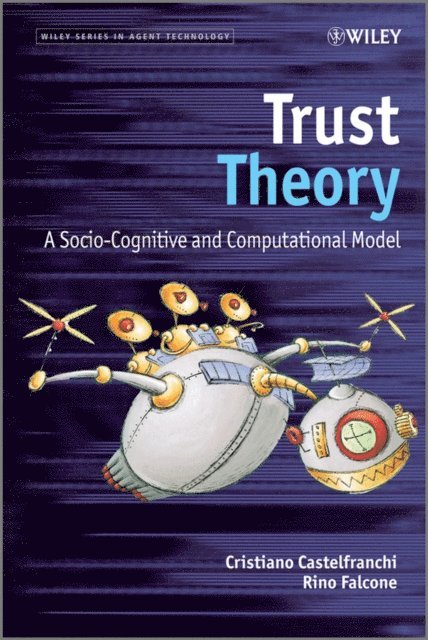
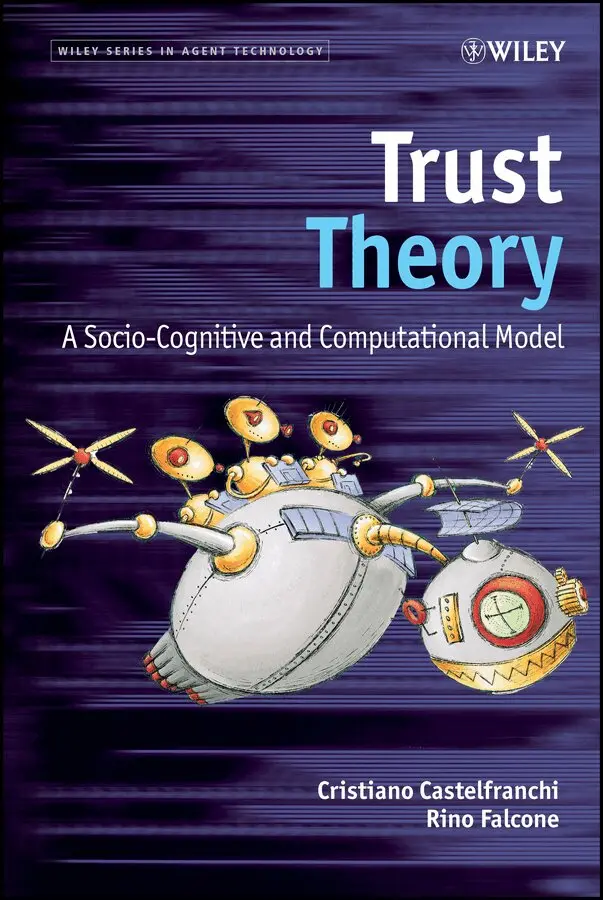
Trust Theory
A Socio-Cognitive and Computational Model
Av Christiano Castelfranchi, Rino Falcone
Inbunden, 2010
1369 kr
Lägg i varukorg
This book provides an introduction, discussion, and formal-based modelling of trust theory and its applications in agent-based systems This book gives an accessible explanation of the importance of trust in human interaction and, in general, in autonomous cognitive agents including autonomous …
Trust Theory
A Socio-Cognitive and Computational Model
Av Rino Falcone, Christiano Castelfranchi
E-bok, 2010
1562 kr
Lägg i varukorg
This book provides an introduction, discussion, and formal-based modelling of trust theory and its applications in agent-based systems This book gives an accessible explanation of the importance of trust in human interaction and, in general, in autonomous cognitive agents including autonomous …
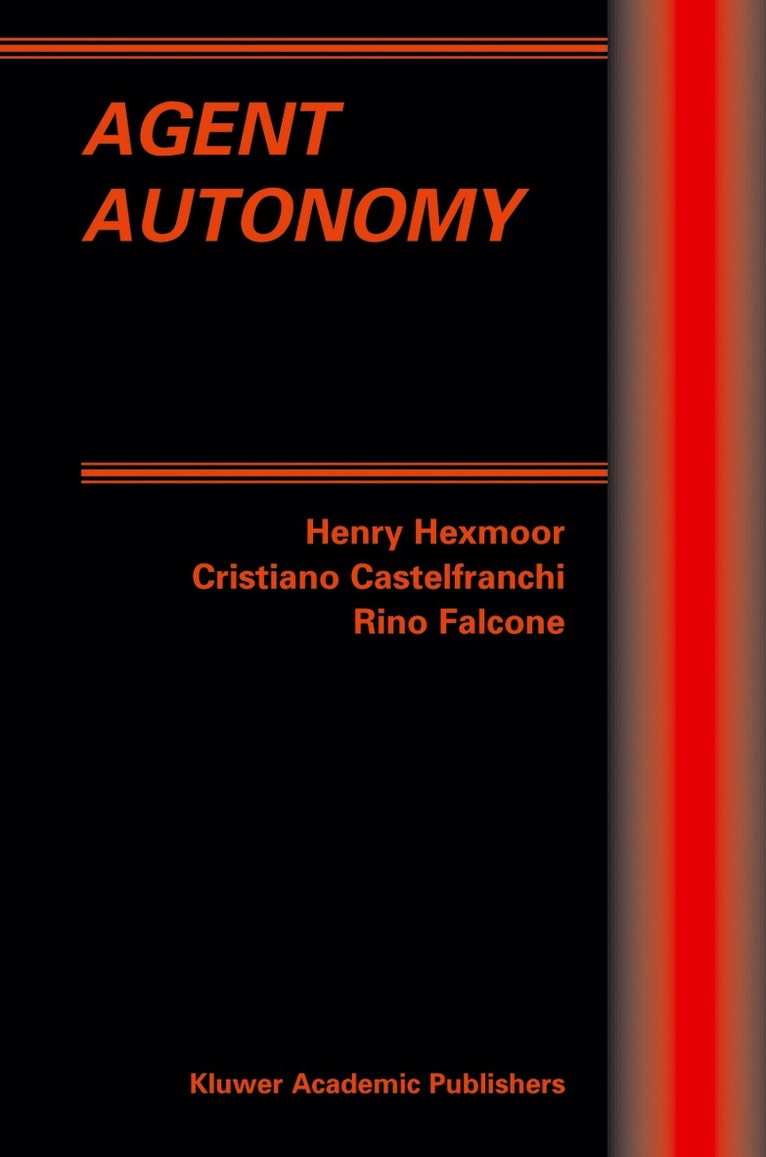
Agent Autonomy
Av Henry Hexmoor, Cristiano Castelfranchi m. fl.
Inbunden, 2003
1128 kr
Lägg i varukorg
Autonomy is a characterizing notion of agents, and intuitively it is rather unambiguous. The quality of autonomy is recognized when it is perceived or experienced, yet it is difficult to limit autonomy in a definition. The desire to build agents that exhibit a satisfactory quality of autonomy …
Agent Autonomy
Av Rino Falcone, Cristiano Castelfranchi m. fl.
E-bok, 2012
1470 kr
Lägg i varukorg
Autonomy is a characterizing notion of agents, and intuitively it is rather unambiguous. The quality of autonomy is recognized when it is perceived or experienced, yet it is difficult to limit autonomy in a definition. The desire to build agents that exhibit a satisfactory quality of autonomy …
Agent Autonomy
Av Henry Hexmoor, Cristiano Castelfranchi m. fl.
Häftad, 2012
1128 kr
Lägg i varukorg
Autonomy is a characterizing notion of agents, and intuitively it is rather unambiguous. The quality of autonomy is recognized when it is perceived or experienced, yet it is difficult to limit autonomy in a definition. The desire to build agents that exhibit a satisfactory quality of autonomy …
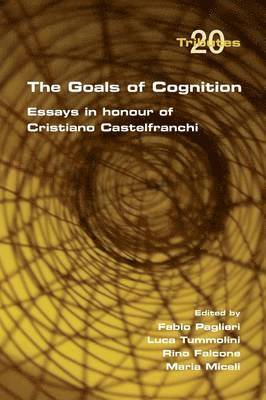
Goals of Cognition. Essays in Honour of Cristiano Castelfranchi
Av Fabio Paglieri, Luca Tummolini m. fl.
Häftad, 2012
378 kr
Lägg i varukorg
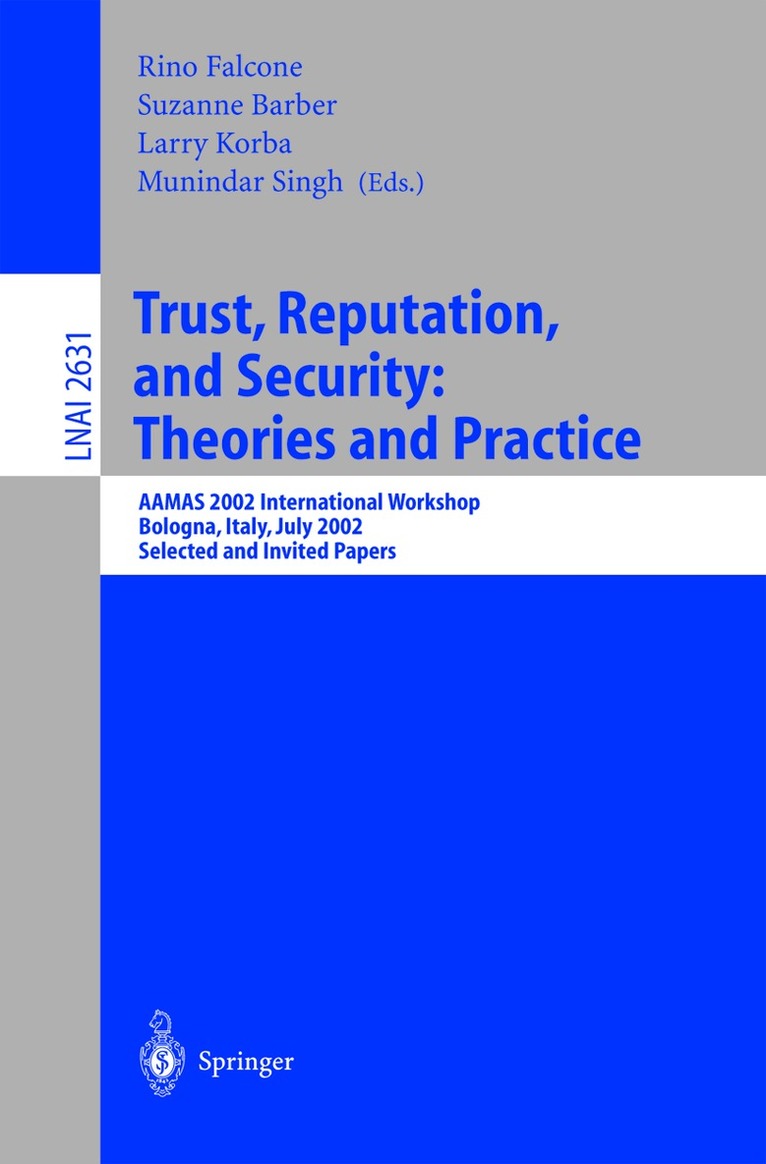
Trust, Reputation, and Security: Theories and Practice
AAMAS 2002 International Workshop, Bologna, Italy, July 15, 2002. Selected and Invited Papers
Av Rino Falcone, Suzanne Barber m. fl.
Häftad, 2003
567 kr
Lägg i varukorg
This special issue is the result of the workshop Deception, Fraud and Trust in Agent Societies, held in Bologna on July 15, 2002 as part of the Autonomous Agents and Multi-Agent Systems 2002 Conference (AAMAS2002), organized by Rino Falcone, Suzanne Barber, Larry Korba, and Munindar Singh. The …
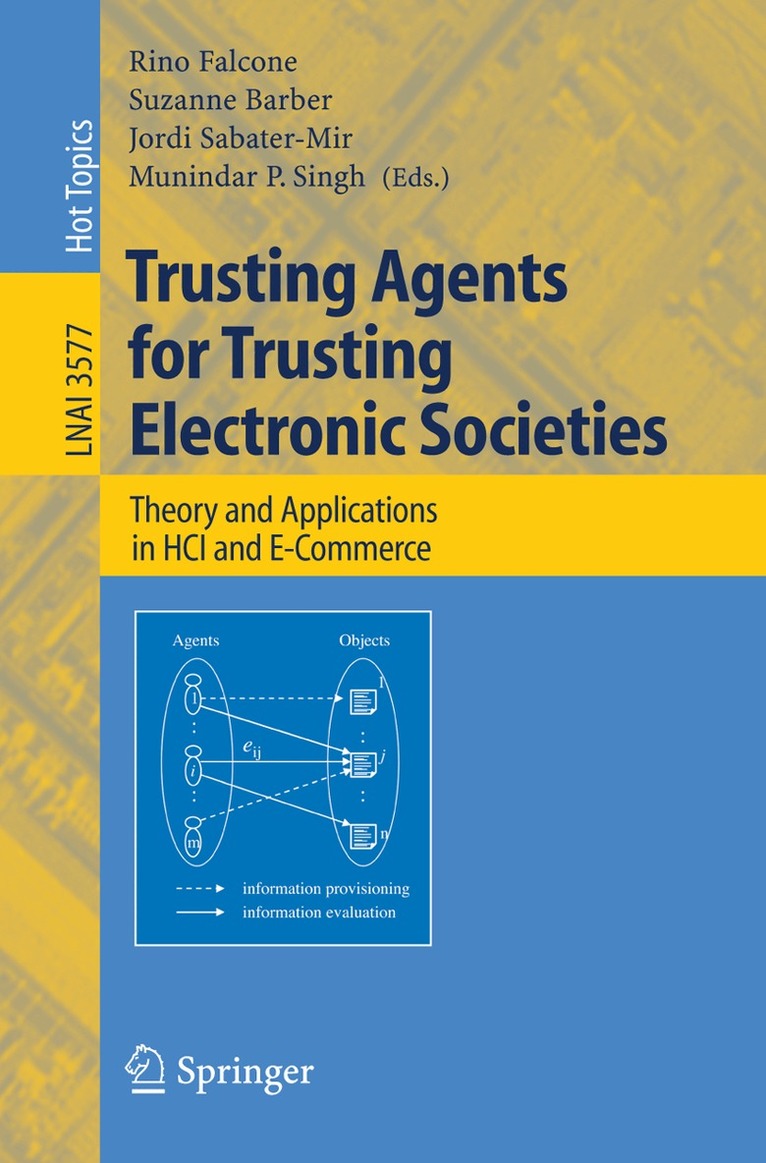
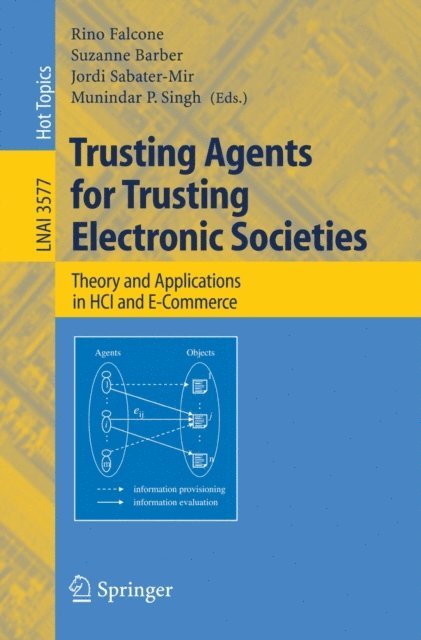
Trusting Agents for Trusting Electronic Societies
Theory and Applications in HCI and E-Commerce
Av Rino Falcone, Suzanne Barber m. fl.
Häftad, 2005
567 kr
Lägg i varukorg
Based on two international workshops on trust in agent societies, held at AAMAS 2003 and AAMAS 2004, this book draws together carefully revised papers on trust, reputation, and security in agent society. Besides workshop papers, several contributions from leading researchers in this …
Trusting Agents for Trusting Electronic Societies
Theory and Applications in HCI and E-Commerce
Av Munindar Singh, Jordi Sabater-Mir m. fl.
E-bok, 2005
734 kr
Lägg i varukorg
Based on two international workshops on trust in agent societies, held at AAMAS 2003 and AAMAS 2004, this book draws together carefully revised papers on trust, reputation, and security in agent society. Besides workshop papers, several contributions from leading researchers in this …
Trust, Reputation, and Security: Theories and Practice
AAMAS 2002 International Workshop, Bologna, Italy, July 15, 2002. Selected and Invited Papers
Av Munindar Singh, Larry Korba m. fl.
E-bok, 2003
712 kr
Lägg i varukorg
Trust in Cyber-societies
Integrating the Human and Artificial Perspectives
Av Rino Falcone, Munindar Singh m. fl.
Häftad, 2001
551 kr
Lägg i varukorg
This book is the result of the workshop “Deception, Fraud, and Trust in Agent Societies”, held in Barcelona on June 4, 2000 as part of the Autonomous Agents 2000 Conference, and organized by Rino Falcone, Munindar Singh, and Yao-Hua Tan. The aim of the workshop was to bring together researchers …
Trust in Cyber-societies
Integrating the Human and Artificial Perspectives
Av Yao-Hua Tan, Munindar Singh m. fl.
E-bok, 2003
734 kr
Lägg i varukorg
This book is the result of the workshop “Deception, Fraud, and Trust in Agent Societies”, held in Barcelona on June 4, 2000 as part of the Autonomous Agents 2000 Conference, and organized by Rino Falcone, Munindar Singh, and Yao-Hua Tan. The aim of the workshop was to bring together researchers …
Challenge of Anticipation
A Unifying Framework for the Analysis and Design of Artificial Cognitive Systems
Av Giovanni Pezzulo, Martin V. Butz m. fl.
Häftad, 2008
567 kr
Lägg i varukorg
The general idea that brains anticipate the future, that they engage in prediction, and that one means of doing this is through some sort of inner model that can be run of?ine,hasalonghistory. SomeversionoftheideawascommontoAristotle,aswell as to many medieval scholastics, to Leibniz and Hume, and …
Challenge of Anticipation
A Unifying Framework for the Analysis and Design of Artificial Cognitive Systems
Av Rino Falcone, Cristiano Castelfranchi m. fl.
E-bok, 2008
734 kr
Lägg i varukorg
The general idea that brains anticipate the future, that they engage in prediction, and that one means of doing this is through some sort of inner model that can be run of?ine,hasalonghistory. SomeversionoftheideawascommontoAristotle,aswell as to many medieval scholastics, to Leibniz and Hume, and …
Trust in Agent Societies
11th International Workshop, TRUST 2008, Estoril, Portugal, May 12 -13, 2008. Revised Selected and Invited Papers
Av Rino Falcone, K. Suzanne Barber m. fl.
Häftad, 2008
567 kr
Lägg i varukorg
This special issue is the result of the selection and re-submission of advanced and revised versions of papers from the workshop on "Trust in Agent Societies" (11th edition), held in Estoril (Portugal) on May 10, 2008 as part of the Autonomous Agents and Multi-Agent Systems 2008 Conference (AAMAS …
Trust in Agent Societies
11th International Workshop, TRUST 2008, Estoril, Portugal, May 12 -13, 2008. Revised Selected and Invited Papers
Av Munindar P. Singh, Jordi Sabater-Mir m. fl.
E-bok, 2008
755 kr
Lägg i varukorg
This special issue is the result of the selection and re-submission of advanced and revised versions of papers from the workshop on "Trust in Agent Societies" (11th edition), held in Estoril (Portugal) on May 10, 2008 as part of the Autonomous Agents and Multi-Agent Systems 2008 Conference (AAMAS …
Trust Theory – A Socio–Cognitive and Computational Model
Av Christiano Castelfranchi, Rino Falcone
2010
1198 kr
Tillfälligt slut
This book provides an introduction, discussion, and formal-based modelling of trust theory and its applications in agent-based systems This book gives an accessible explanation of the importance of trust in human interaction and, in general, in autonomous cognitive agents including autonomous …