R.M.W. Dixon - Böcker
Visar alla böcker från författaren R.M.W. Dixon. Handla med fri frakt och snabb leverans.
14 produkter
14 produkter
Del 1 - Explorations in Language and Space C
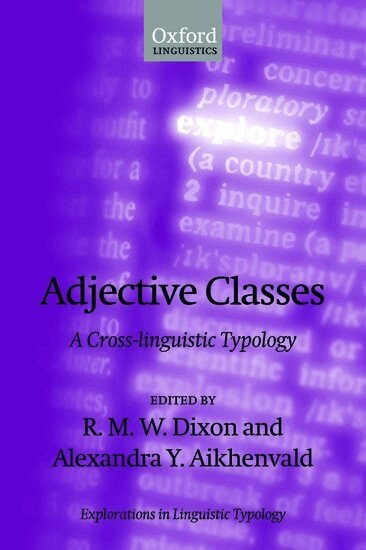
Adjective Classes
A Cross-linguistic Typology
Häftad, Engelska, 2006
930 kr
Skickas inom 5-8 vardagar
This book shows that every language has an adjective class and how such classes vary. The opening chapter considers current generalizations about the nature and classification of adjectives and sets out the cross-linguistic parameters of their variation. Thirteen chapters then explore adjective classes in languages from North, Central and South America, Europe, Africa, Asia and the Pacific. Studies of well-known languages such as Russian, Japanese, Korean and Lao are juxtaposed with the languages of small hunter-gatherer and slash-and-burn agriculturalist groups. All are based on fine-grained field research. The nature and typology of adjective classes is then reconsidered in the conclusion. The authors reveal that the grammatical properties of the adjective class may be similar to nouns or verbs or both or neither; that some languages have two kinds of adjectives, one hard to distinguish from nouns and the other from verbs; and that the adjective class can sometimes be large and open, and in other cases small and closed. The book will interest scholars and advanced students of language typology and of the syntax and semantics of adjectives. 'Dixon's introductory chapter, "Adjectival classes in typological perspective", is clearly destined to be a classic in the field.... This volume will clearly be useful to anyone interested in adjectives and the nature of linguistic categorization.' Gary Holton, Linguist List
Del 4 - Explorations in Linguistic Typology
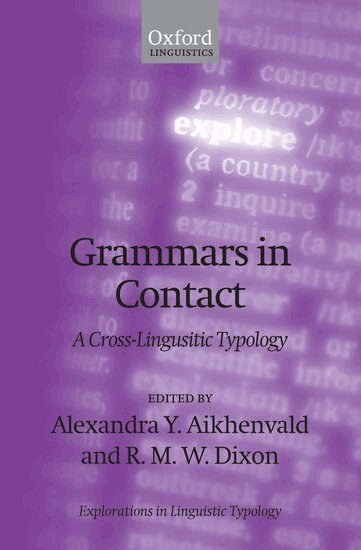
Grammars in Contact
A Cross-Linguistic Typology
Inbunden, Engelska, 2007
1 464 kr
Skickas inom 7-10 vardagar
Languages can be similar in many ways - they can resemble each other in categories, constructions and meanings, and in the actual forms used to express these. A shared feature may be based on common genetic origin, or result from geographic proximity and borrowing. Some aspects of grammar are spread more readily than others. The question is - which are they? When languages are in contact with each other, what changes do we expect to occur in their grammatical structures? Only an inductively based cross-linguistic examination can provide an answer. This is what this volume is about.The book starts with a typological introduction outlining principles of contact-induced change and factors which facilitate diffusion of linguistic traits. It is followed by twelve studies of contact-induced changes in languages from Amazonia, East and West Africa, Australia, East Timor, and the Sinitic domain. Set alongside these are studies of Pennsylvania German spoken by Mennonites in Canada in contact with English, Basque in contact with Romance languages in Spain and France, and language contact in the Balkans. All the studies are based on intensive fieldwork, and each cast in terms of the typological parameters set out in the introduction. The book includes a glossary to facilitate its use by graduates and advanced undergraduates in linguistics and in disciplines such as anthropology.
790 kr
Skickas inom 5-8 vardagar
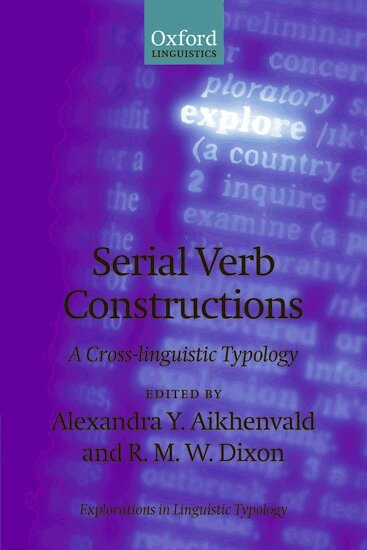
This volume of new work explores the forms and functions of serial verbs. The introduction sets out the cross-linguistic parameters of variation, and the final chapter draws out a set of conclusions. These frame fourteen explorations of serial verb constructions and similar structures in languages from Asia, Africa, North, Central and South America, and the Pacific. Chapters on well-known languages such as Cantonese and Thai are set alongside the languages of small hunter-gatherer and slash-and-burn agriculturalist groups. A serial verb construction (sometimes just called serial verb) is a sequence of verbs which acts together as one. Each describes what can be conceptualized as a single event. They are monoclausal; their intonational properties are those of a monoverbal clause; they generally have just one tense, aspect, mood, and polarity value; and they are an important tool in cognitive packaging of events. Serial verb constructions are a pervasive feature of isolating languages of Asia and West Africa, and are also found in the languages of the Pacific, South, Central and North America, most of them endangered.Serial verbs have been a subject of interest among linguists for some time. This outstanding book is the first to study the phenomenon across languages of different typological and genetic profiles. The authors, all experienced linguistic fieldworkers, follow a unified typological approach and avoid formalisms. The book will interest students, at graduate level and above, of syntax, typology, language universals, information structure, and language contact, in departments of linguistics and anthroplogy.
1 146 kr
Skickas inom 7-10 vardagar
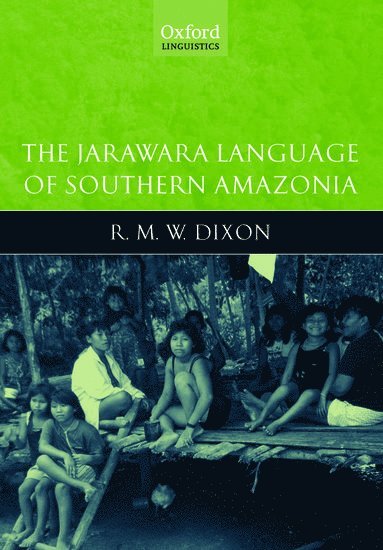
This is the first account of Jarawara, a Southern Amazonia language of great complexity and unusual interest, and now spoken by less than two hundred people. It has only two open lexical classes, noun and verb, and a closed adjective class with fourteen members which can only modify a noun. Verbs have a complex structure with three prefix and some twenty-five suffix slots. There is an eleven-term tense-modal system with an evidentiality contrast (eyewitness/non-eyewitness) in the three past tenses. Of the two genders, feminine and masculine, feminine is unmarked. There are at least eight types of subordinate clause constructions, including complement clauses, relative clauses, coreferential dependent clauses, and 'when', 'if', 'due to the lack of' and 'because of' clauses.There are only eleven consonants and four vowels but an extensive set of ordered phonological rules of lenition, vowel assimilation and unstressed syllable omission. There are four imperative inflections (with different meanings) and three explicit interrogative suffixes within the mood system. The book is entirely based on field work by the authors.
2 886 kr
Skickas inom 5-8 vardagar
This book shows that every language has an adjective class and examines how these vary in size and character. The opening chapter considers current generalizations about the nature and classification of adjectives and sets out the cross-linguistic parameters of their variation. Thirteen chapters then explore adjective classes in languages from North, Central and South America, Europe, Africa, Asia, and the Pacific. Studies of well-known languages such as Russian, Japanese, Korean and Lao are juxtaposed with the languages of small hunter-gatherer and slash-and-burn agriculturalist groups. All are based on fine-grained field research. The nature and typology of adjective classes are then reconsidered in the conclusion. This pioneering work shows, among other things, that the grammatical properties of the adjective class may be similar to nouns or verbs or both or neither; that some languages have two kinds of adjectives, one hard to distinguish from nouns and the other from verbs; that the adjective class can sometimes be large and open, and in other cases small and closed. The book will interest scholars and advanced students of language typology and of the syntax and semantics of adjectives. Each book in this series focuses on an aspect of language that is of current theoretical interest and for which there has not previously or recently been any full-scale cross-linguistic study. The series is for typologists, fieldworkers, and theory developers at graduate level and above. The books will be suited for use as the basis for advanced seminars and courses. The subjects of next three volumes will be serial verb constructions, complementation, and grammars in contact.
2 890 kr
Skickas inom 5-8 vardagar
This volume of new work explores the forms and functions of serial verbs. The introduction sets out the cross-linguistic parameters of variation, and the final chapter draws out a set of conclusions. These frame fourteen explorations of serial verb constructions and similar structures in languages from Asia, Africa, North, Central and South America, and the Pacific. Chapters on well-known languages such as Cantonese and Thai are set alongside the languages of small hunter-gatherer and slash-and-burn agriculturalist groups. A serial verb construction (sometimes just called serial verb) is a sequence of verbs which acts together as one. Each describes what can be conceptualized as a single event. They are monoclausal; their intonational properties are those of a monoverbal clause; they generally have just one tense, aspect, mood, and polarity value; and they are an important tool in cognitive packaging of events. Serial verb constructions are a pervasive feature of isolating languages of Asia and West Africa, and are also found in the languages of the Pacific, South, Central and North America, most of them endangered.Serial verbs have been a subject of interest among linguists for some time. This outstanding book is the first to study the phenomenon across languages of different typological and genetic profiles. The authors, all experienced linguistic fieldworkers, follow a unified typological approach and avoid formalisms. The book will interest students, at graduate level and above, of syntax, typology, language universals, information structure, and language contact. in departments of linguistics and anthroplogy.
Del 3 - Explorations in Linguistic Typology
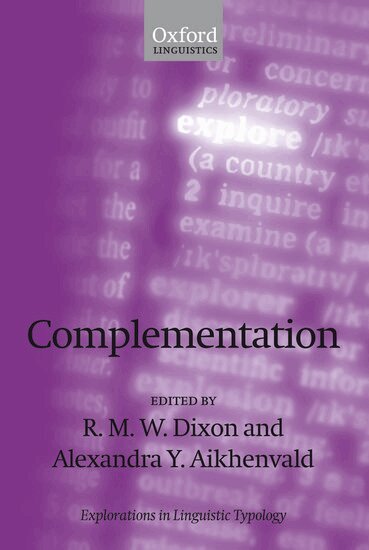
Complementation
A Cross-Linguistic Typology
Inbunden, Engelska, 2006
1 150 kr
Skickas inom 3-6 vardagar
A complement clause is used instead of a noun phrase; for example one can say either I heard [the result] or I heard [that England beat France]. Languages differ in the grammatical properties of complement clauses, and the types of verbs which take them. Some languages lack a complement clause construction but instead employ other construction types to achieve similar ends; these are called complementation strategies. The book explores the variety of types of complementation found across the languages of the world, their grammatical properties and meanings. Detailed studies of particular languages, including Akkadian, Israeli, Jarawara, and Pennsylvania German, are framed by R. M. W. Dixon's introduction, which sets out the range of issues, and his conclusion, which draws together the evidence and the arguments. This book will interest scholars of typology, language universals, syntax, information structure, and language contact in departments of linguistics and anthropology, as well as advanced and graduate students taking courses in these subjects.
Del 4 - Explorations in Linguistic Typology
Grammars in Contact
A Cross-Linguistic Typology
Häftad, Engelska, 2008
659 kr
Skickas inom 5-8 vardagar
Languages can be similar in many ways - they can resemble each other in categories, constructions and meanings, and in the actual forms used to express these. A shared feature may be based on common genetic origin, or result from geographic proximity and borrowing. Some aspects of grammar are spread more readily than others. The question is - which are they? When languages are in contact with each other, what changes do we expect to occur in their grammatical structures? Only an inductively based cross-linguistic examination can provide an answer. This is what this volume is about.The book starts with a typological introduction outlining principles of contact-induced change and factors which facilitate diffusion of linguistic traits. It is followed by twelve studies of contact-induced changes in languages from Amazonia, East and West Africa, Australia, East Timor, and the Sinitic domain. Set alongside these are studies of Pennsylvania German spoken by Mennonites in Canada in contact with English, Basque in contact with Romance languages in Spain and France, and language contact in the Balkans. All the studies are based on intensive fieldwork, and each cast in terms of the typological parameters set out in the introduction. The book includes a glossary to facilitate its use by graduates and advanced undergraduates in linguistics and in disciplines such as anthropology.
Del 3 - Explorations in Linguistic Typology
Complementation
A Cross-Linguistic Typology
Häftad, Engelska, 2008
659 kr
Skickas inom 5-8 vardagar
This book explores the variety of types of complementation found across the languages of the world and their grammatical properties and meanings. It shows how languages differ in the grammatical properties of complement clauses and in the types of verbs which take them, and explores the complement strategies deployed by languages which lack a complement clause construction. The book includes detailed studies of particular languages, including Akkadian, Israeli, Jarawara, and Pennsylvania German. These are framed by R. M. W. Dixon's introduction, which sets out the range of issues, and his conclusion, which draws together the evidence and the arguments.
935 kr
Skickas inom 7-10 vardagar
This is the first account of Jarawara, a Southern Amazonia language of great complexity and unusual interest, and now spoken by less than two hundred people. It has only two open lexical classes, noun and verb, and a closed adjective class with fourteen members which can only modify a noun. Verbs have a complex structure with three prefix and some twenty-five suffix slots. There is an eleven-term tense-modal system with an evidentiality contrast (eyewitness/non-eyewitness) in the three past tenses. Of the two genders, feminine and masculine, feminine is unmarked. There are at least eight types of subordinate clause constructions, including complement clauses, relative clauses, coreferential dependent clauses, and 'when', 'if', 'due to the lack of' and 'because of' clauses.There are only eleven consonants and four vowels but an extensive set of ordered phonological rules of lenition, vowel assimilation and unstressed syllable omission. There are four imperative inflections (with different meanings) and three explicit interrogative suffixes within the mood system. The book is entirely based on field work by the authors.
262 kr
Skickas inom 5-8 vardagar
Living in a reed hut on Taveuni--the "garden isle" of Fiji--the author studied the native language and carefully observed their traditions until he was accepted as a (somewhat unusual) member of the village.Despite five cyclones the summer of 1985, daily life was idyllic. Cannibalism has been abandoned, reluctantly, at the behest of the new Christian God. But the old religion survived beneath the facade and priests danced naked on the beach beneath the full moon. The village pulsated with factions and feuds, resolved by the stern but benevolent chief, whose word was law. Legends told of a princess born as a bird, who was killed and thus became a comely maiden--but the murderer had to be cooked and eaten.
2 924 kr
Skickas inom 5-8 vardagar
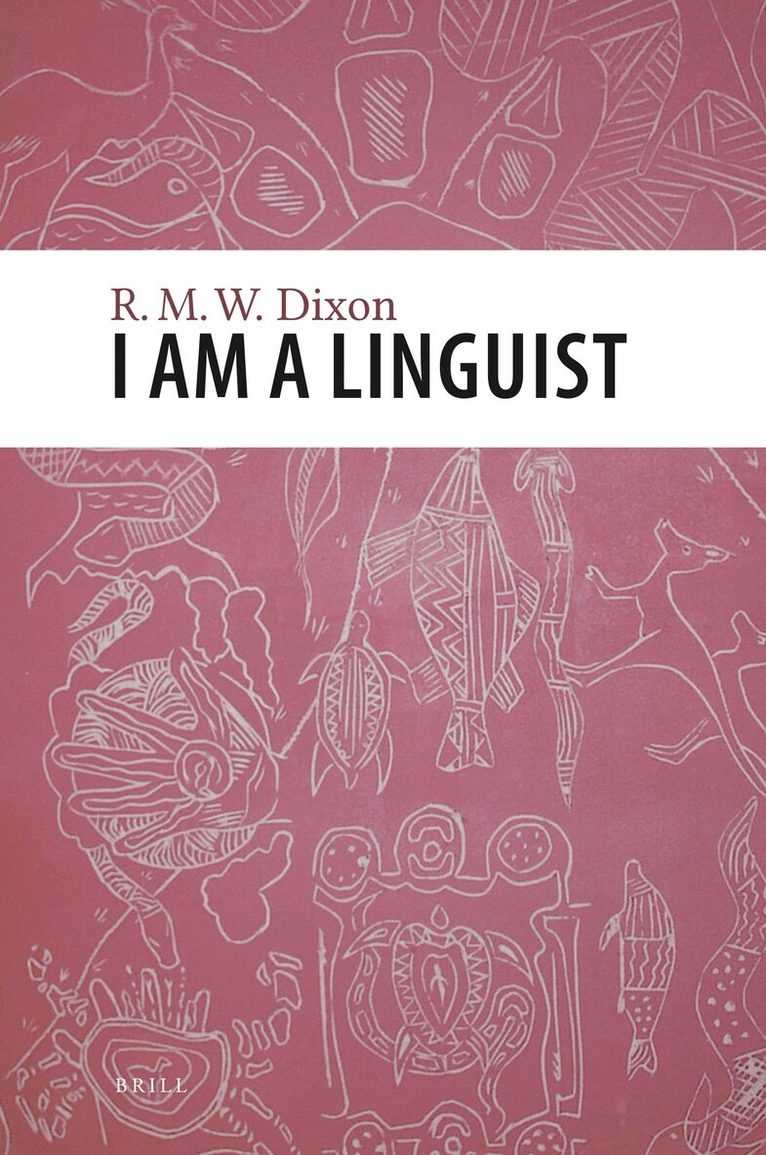
I am a Linguist provides a fascinating account of the academic adventures of multi-faceted linguist, R.M.W. (Bob) Dixon. There is fieldwork (and lengthy grammars) on Dyirbal, Yidiñ and other Aboriginal languages of Australia, the Boumaa dialect of Fijian, and Jarawara from the dense jungles of Amazonia. Theoretical studies include adjective classes, ergativity and complement clauses. There are also detective novels, science fiction stories, and pioneering work on blues and gospel discography. Interspersed with the autobiographical narrative are explanations of how linguistics is a scientific discipline, of the development of universities, of diminishing academic standards, and of the treatment of Aboriginal people in Australia. The book is written in an easy, accessible style with numerous illustrative anecdotes. It will be an inspiration to young linguists and of interest to the general reader curious about what a scientific linguist does.
1 436 kr
Skickas inom 5-8 vardagar
I am a Linguist provides a fascinating account of the academic adventures of multi-faceted linguist, R.M.W. (Bob) Dixon. There is fieldwork (and lengthy grammars) on Dyirbal, Yidiñ and other Aboriginal languages of Australia, the Boumaa dialect of Fijian, and Jarawara from the dense jungles of Amazonia. Theoretical studies include adjective classes, ergativity and complement clauses. There are also detective novels, science fiction stories, and pioneering work on blues and gospel discography. Interspersed with the autobiographical narrative are explanations of how linguistics is a scientific discipline, of the development of universities, of diminishing academic standards, and of the treatment of Aboriginal people in Australia. The book is written in an easy, accessible style with numerous illustrative anecdotes. It will be an inspiration to young linguists and of interest to the general reader curious about what a scientific linguist does.
679 kr
Skickas inom 5-8 vardagar
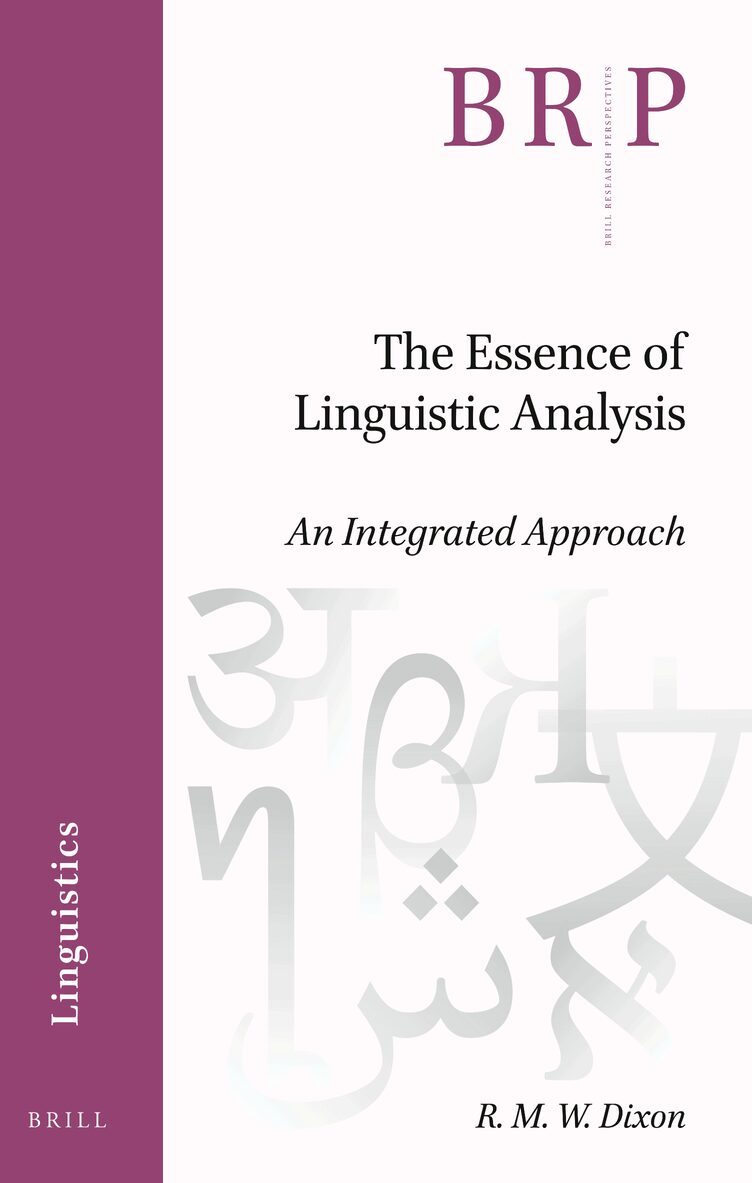
Many works on linguistic typology deal in some detail with one or more particular grammatical topics without clearly demonstrating how these relate to other categories or construction types. The Essence of Linguistic Analysis by R. M. W. Dixon presents a framework which connects individual topics in a cogent and coherent way, showing their dependencies and locating each in its place within the overall tapestry of a language.A clear distinction is made between semantic roles and syntactic functions. And it is held that the basic constituents of a language are lexical elements. Grammatical items serve to link together lexical units. At every level of analysis, the central units are lexical with grammar providing ancillary indicators.