366 kr
Skickas
366 kr
Skickas
422 kr
Skickas
1 228 kr
Skickas inom 5-8 vardagar
The franchise bargain that once divided Canadian political parties into separate spheres of authority – with members on the ground and elites at the centre – has been displaced. Renegotiating the Bargain explains why parties have reformed their internal decision-making structures and shows how the new arrangement operates. Rob Currie-Wood draws on in-depth interviews with current and former party officials, party governance documents, and election financing reports to trace organizational change within Canadian political parties since the end of the twentieth century. Rank-and-file members now possess the same participatory rights as long-time activists and elected officials, but the central apparatus now also has capacity to regulate membership participation in key areas of policy-making, leadership selection, candidate nominations, and campaigning. Renegotiating the Bargain demonstrates that parties remain meaningful sites of civic participation in Canada's democratic life. Its findings reveal not only the evolution of power-sharing arrangements within parties but also how party democracy works.
409 kr
Skickas inom 5-8 vardagar
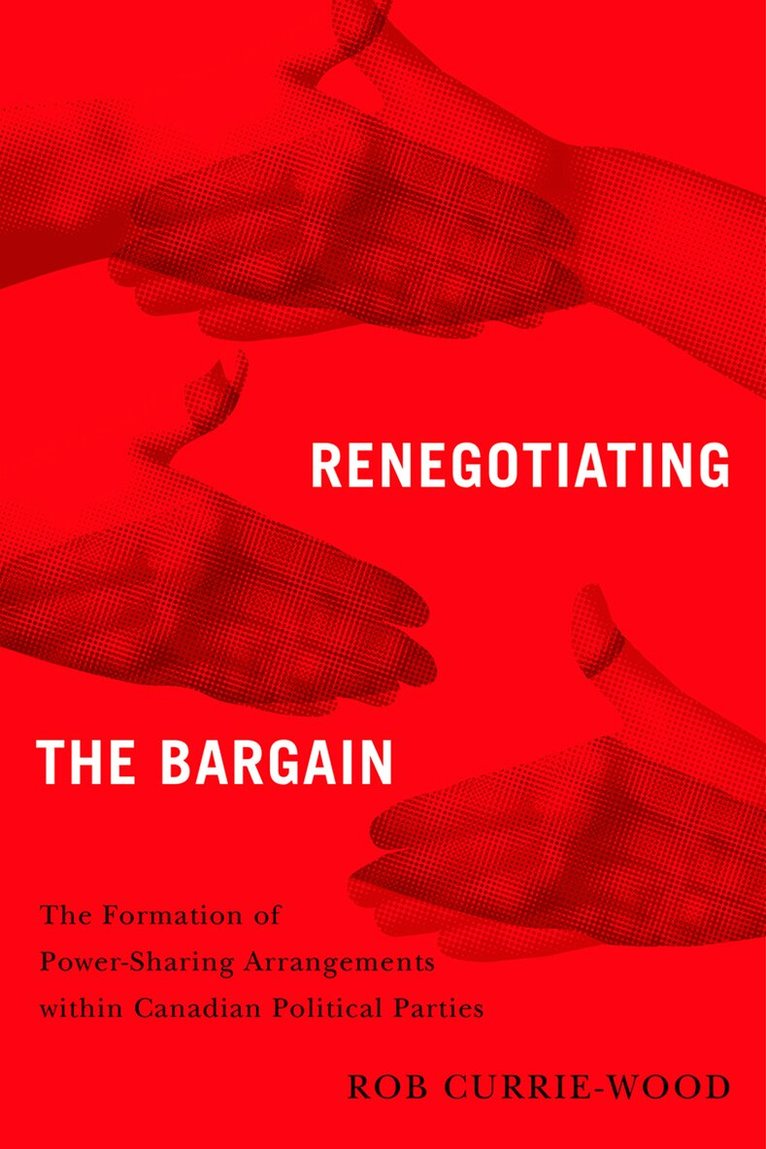
The franchise bargain that once divided Canadian political parties into separate spheres of authority – with members on the ground controlling personnel selection and elites at the centre dominating policy and branding decisions – has been displaced. Renegotiating the Bargain explains why parties have reformed their internal decision-making structures and shows how the new arrangement operates. Rob Currie-Wood draws on in-depth interviews with current and former party officials, party governance documents, and election financing reports to trace organizational reform within Canadian parties since the end of the twentieth century. Rank-and-file members increasingly possess the same participatory rights as long-time activists and elected officials, but the central apparatus has also acquired the capacity to regulate membership participation in key areas of policy development, leadership selection, candidate nominations, and campaigning. Renegotiating the Bargain demonstrates not only the formation of this power-sharing arrangement within parties but also how party democracy works in practice. Its findings show that parties remain meaningful sites of civic participation in Canada's democratic life.
366 kr
Skickas
422 kr
Skickas
1 228 kr
Skickas inom 5-8 vardagar
The franchise bargain that once divided Canadian political parties into separate spheres of authority – with members on the ground and elites at the centre – has been displaced. Renegotiating the Bargain explains why parties have reformed their internal decision-making structures and shows how the new arrangement operates. Rob Currie-Wood draws on in-depth interviews with current and former party officials, party governance documents, and election financing reports to trace organizational change within Canadian political parties since the end of the twentieth century. Rank-and-file members now possess the same participatory rights as long-time activists and elected officials, but the central apparatus now also has capacity to regulate membership participation in key areas of policy-making, leadership selection, candidate nominations, and campaigning. Renegotiating the Bargain demonstrates that parties remain meaningful sites of civic participation in Canada's democratic life. Its findings reveal not only the evolution of power-sharing arrangements within parties but also how party democracy works.
409 kr
Skickas inom 5-8 vardagar
The franchise bargain that once divided Canadian political parties into separate spheres of authority – with members on the ground controlling personnel selection and elites at the centre dominating policy and branding decisions – has been displaced. Renegotiating the Bargain explains why parties have reformed their internal decision-making structures and shows how the new arrangement operates. Rob Currie-Wood draws on in-depth interviews with current and former party officials, party governance documents, and election financing reports to trace organizational reform within Canadian parties since the end of the twentieth century. Rank-and-file members increasingly possess the same participatory rights as long-time activists and elected officials, but the central apparatus has also acquired the capacity to regulate membership participation in key areas of policy development, leadership selection, candidate nominations, and campaigning. Renegotiating the Bargain demonstrates not only the formation of this power-sharing arrangement within parties but also how party democracy works in practice. Its findings show that parties remain meaningful sites of civic participation in Canada's democratic life.