Robert A. Pratt - Böcker
Visar alla böcker från författaren Robert A. Pratt. Handla med fri frakt och snabb leverans.
4 produkter
4 produkter
280 kr
Skickas inom 10-15 vardagar
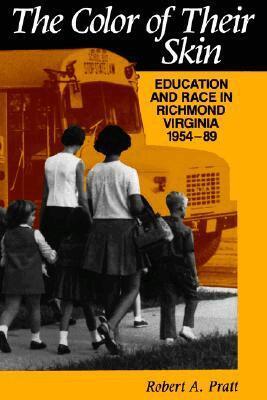
This is a study of school desegregation in Virginia. It traces the evolution of the Richmond public schools from segregation to desegregation to resegregation in the decades following the ""Brown"" decision. It analyses the ""separate but equal"" system and its impact on life in the city.
428 kr
Skickas inom 5-8 vardagar
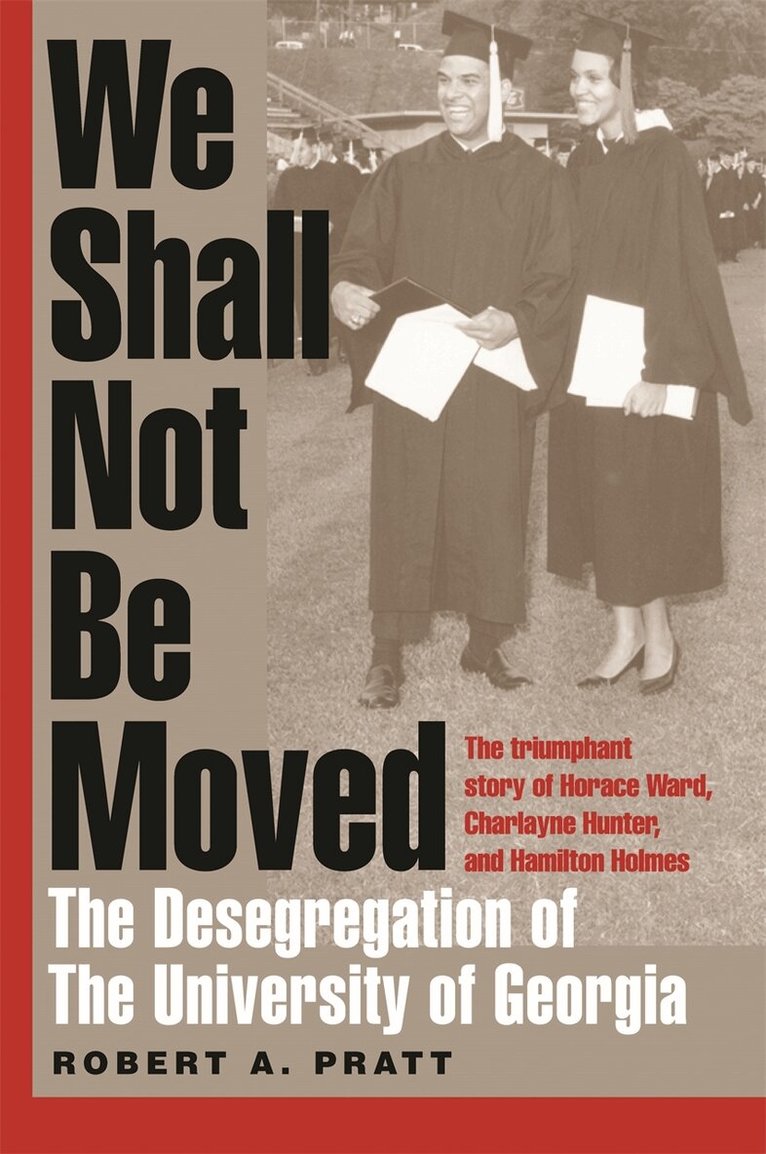
In September 1950, Horace Ward, an African American student from La Grange, Georgia, applied to law school at the University of Georgia. Despite his impressive academic record, Ward received a reply—in reality, a bribe—from one of the university's top officials offering him financial assistance if he would attend an out-of-state law school. Ward, outraged at the unfairness of the proposition and determined to end this unequal treatment, sued the state of Georgia with the help of the NAACP, becoming the first black student to challenge segregation at the University of Georgia.Beginning with Ward's unsuccessful application to the university and equally unsuccessful suit, Robert A. Pratt offers a rigorously researched account of the tumultuous events surrounding the desegregation of Georgia's flagship institution. Relying on archival materials and oral histories, Pratt debunks the myths encircling the landmark 1961 decision to accept black students into the university: namely the notion that the University of Georgia desegregated with very little violent opposition. Pratt shows that when Ward, by then a lawyer, helped litigate for the acceptance of Hamilton Earl Holmes and Charlayne Alberta Hunter, University of Georgia students, rather than outsiders, carefully planned riots to encourage the expulsion of Holmes and Hunter. Pratt also demonstrates how local political leaders throughout the state sympathized with—even aided and abetted—the student protestors.Pratt's provocative story of one civil rights struggle does not stop with the initial legal decision that ended segregation at the university. He also examines the legacy of Horace Ward and other civil rights pioneers involved in the university's desegregation—including Donald Hollowell and Constance Baker Motley—who continued for a lifetime to break color barriers in the South and beyond. We Shall Not Be Moved is a testament to Horace Ward, Hamilton Holmes, Charlayne Hunter-Gault, and others who bravely challenged years of legalized segregation.
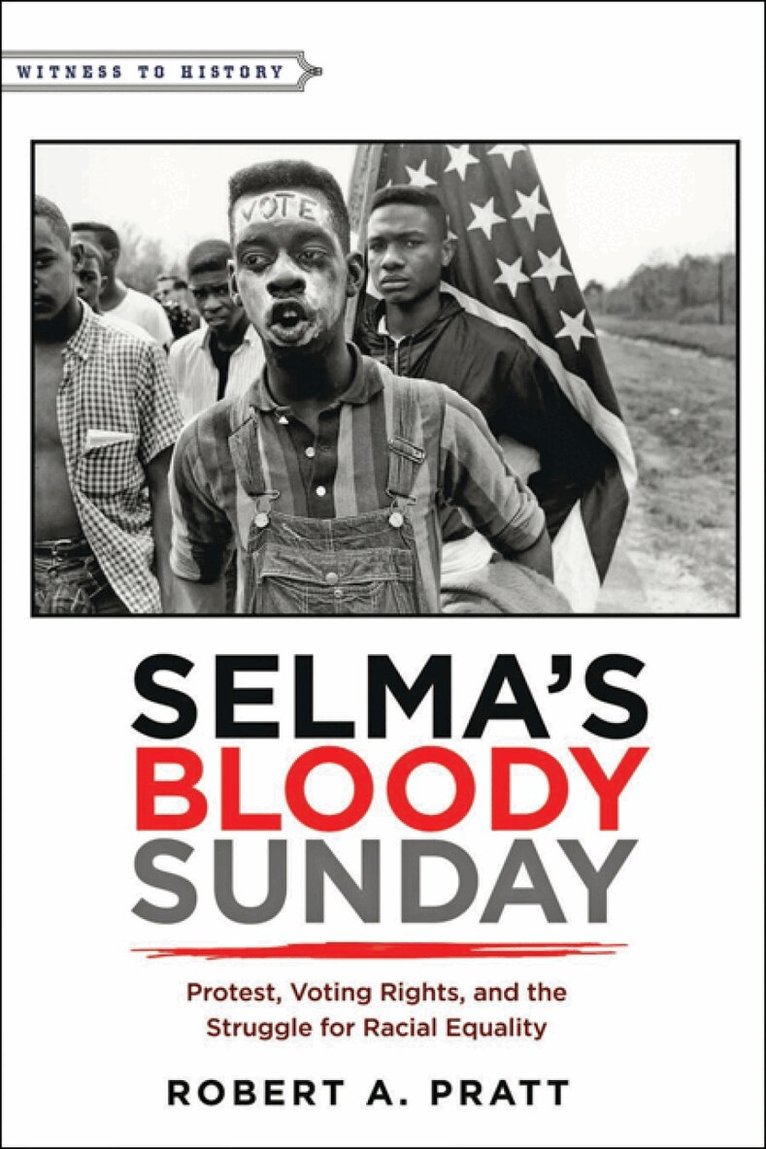
Selma’s Bloody Sunday
Protest, Voting Rights, and the Struggle for Racial Equality
Inbunden, Engelska, 2017
539 kr
Skickas inom 7-10 vardagar
On Sunday afternoon, March 7, 1965, roughly six hundred peaceful demonstrators set out from Brown Chapel A.M.E. Church in a double-file column to march from Selma, Alabama, to the state capital of Montgomery. Leading the march were Hosea Williams of the Southern Christian Leadership Conference and John Lewis of the Student Nonviolent Coordinating Committee. Upon reaching Broad Street, the marchers turned left to cross the Edmund Pettus Bridge that spanned the Alabama River. "When we reached the crest of the bridge," recalls John Lewis, "I stopped dead still. So did Hosea. There, facing us at the bottom of the other side, stood a sea of blue-helmeted, blue-uniformed Alabama state troopers, line after line of them, dozens of battle-ready lawmen stretched from one side of U.S. Highway 80 to the other. Behind them were several dozen more armed men-Sheriff Clark's posse-some on horseback, all wearing khaki clothing, many carrying clubs the size of baseball bats." The violence and horror that was about to unfold at the foot of the bridge would forever mark the day as "Bloody Sunday," one of the pivotal moments of the civil rights movement.Alabama state troopers fell on the unarmed protestors as they crossed the bridge, beating and tear gassing them. In Selma's Bloody Sunday, Robert A. Pratt offers a vivid account of that infamous day and the indelible triumph of black and white protest over white resistance. He explores how the march itself-and the 1965 Voting Rights Act that followed-represented a reaffirmation of the nation's centuries-old declaration of universal equality and the fulfillment of the Fifteenth Amendment to the Constitution. Selma's Bloody Sunday offers a fresh interpretation of the ongoing struggle by African Americans to participate freely in America's electoral democracy. Jumping forward to the present day, Pratt uses the march as a lens through which to examine disturbing recent debates concerning who should, and who should not, be allowed to vote. Drawing on archival materials, secondary sources, and eyewitness accounts of the brave men and women who marched, this gripping account offers a brief and nuanced narrative of this critical phase of the black freedom struggle.
Selma’s Bloody Sunday
Protest, Voting Rights, and the Struggle for Racial Equality
Häftad, Engelska, 2017
208 kr
Tillfälligt slut
On Sunday afternoon, March 7, 1965, roughly six hundred peaceful demonstrators set out from Brown Chapel A.M.E. Church in a double-file column to march from Selma, Alabama, to the state capital of Montgomery. Leading the march were Hosea Williams of the Southern Christian Leadership Conference and John Lewis of the Student Nonviolent Coordinating Committee. Upon reaching Broad Street, the marchers turned left to cross the Edmund Pettus Bridge that spanned the Alabama River. "When we reached the crest of the bridge," recalls John Lewis, "I stopped dead still. So did Hosea. There, facing us at the bottom of the other side, stood a sea of blue-helmeted, blue-uniformed Alabama state troopers, line after line of them, dozens of battle-ready lawmen stretched from one side of U.S. Highway 80 to the other. Behind them were several dozen more armed men-Sheriff Clark's posse-some on horseback, all wearing khaki clothing, many carrying clubs the size of baseball bats." The violence and horror that was about to unfold at the foot of the bridge would forever mark the day as "Bloody Sunday," one of the pivotal moments of the civil rights movement.Alabama state troopers fell on the unarmed protestors as they crossed the bridge, beating and tear gassing them. In Selma's Bloody Sunday, Robert A. Pratt offers a vivid account of that infamous day and the indelible triumph of black and white protest over white resistance. He explores how the march itself-and the 1965 Voting Rights Act that followed-represented a reaffirmation of the nation's centuries-old declaration of universal equality and the fulfillment of the Fifteenth Amendment to the Constitution. Selma's Bloody Sunday offers a fresh interpretation of the ongoing struggle by African Americans to participate freely in America's electoral democracy. Jumping forward to the present day, Pratt uses the march as a lens through which to examine disturbing recent debates concerning who should, and who should not, be allowed to vote. Drawing on archival materials, secondary sources, and eyewitness accounts of the brave men and women who marched, this gripping account offers a brief and nuanced narrative of this critical phase of the black freedom struggle.