Robert B. Keiter - Böcker
Visar alla böcker från författaren Robert B. Keiter. Handla med fri frakt och snabb leverans.
6 produkter
6 produkter
2 338 kr
Skickas inom 5-8 vardagar
In The Wyoming State Constitution, Robert B. Keiter provides a comprehensive guide to Wyoming's colorful constitutional history. Featuring an outstanding analysis of the state's governing charter, the book includes an in-depth, section-by-section analysis of the entire constitution, detailing important changes that have been made since its initial drafting. This treatment, which includes a list of cases, index, and bibliography, makes this guide indispensable for students, scholars, and practitioners of Wyoming's constitution. The second edition contains an up-to-date analysis of the Wyoming Supreme Court's constitutional decisions, new state constitutional amendments and Supreme Court decisions since 1992. Also included is new material explaining how the Wyoming Supreme Court goes about interpreting the state constitution.The Oxford Commentaries on the State Constitutions of the United States is an important series that reflects a renewed international interest in constitutional history and provides expert insight into each of the 50 state constitutions. Each volume in this innovative series contains a historical overview of the state's constitutional development, a section-by-section analysis of its current constitution, and a comprehensive guide to further research.Under the expert editorship of Professor G. Alan Tarr, Director of the Center on State Constitutional Studies at Rutgers University, this series provides essential reference tools for understanding state constitutional law. Books in the series can be purchased individually or as part of a complete set, giving readers unmatched access to these important political documents.
Conserving Nature in Greater Yellowstone
Controversy and Change in an Iconic Ecosystem
Inbunden, Engelska, 2025
838 kr
Skickas inom 7-10 vardagar
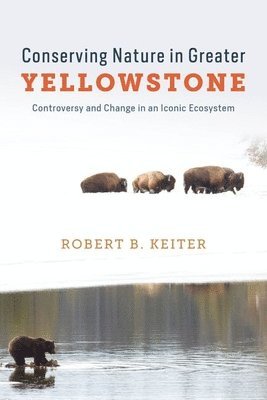
The story of how Yellowstone, established in 1872 as the world’s first national park, has become synonymous with nature conservation—and an examination of today’s challenges to preserve the region’s wilderness heritage. For more than 150 years, the Yellowstone region—now widely known as the twenty-three million acre Greater Yellowstone Ecosystem—has played a prominent role in the United States’ nature conservation agenda. In this book, Robert B. Keiter, an award-winning public land law and policy expert, traces the evolution and application of fundamental ecological conservation concepts tied to Yellowstone. Keiter’s book highlights both the conservation successes and controversies connected with this storied region, which has been enmeshed in change. During the 1980s, leaders in Yellowstone embraced ecosystem management concepts to recover a dwindling grizzly bear population and to support wolf reintroduction. Since then, management policies in the region’s two national parks and adjacent national forests have largely followed suit, prioritizing ecosystem-level conservation over industrial activity. Groundbreaking efforts are currently afoot to protect elk, deer, and pronghorn migration corridors and to maintain the park’s bison population, effectively expanding the scope of regional conservation initiatives. But in the face of explosive human population growth and related development pressures, new efforts must also account for the region’s privately owned lands along with accelerating recreational activities that present quite different problems. Indeed, the Greater Yellowstone Ecosystem—extending across three states and twenty counties and embracing more than sixteen million acres of federal land as well as private and tribal lands —can only be characterized as a complex, jurisdictionally fragmented landscape. As Keiter makes clear, the quest for common ground among federal land managers, state officials, local communities, conservationists, ranchers, Indigenous tribes, and others is a vital, enduring task. Exploring both notable conservation accomplishments and the ongoing challenges confronting this special place, Keiter’s book explains the many forces—scientific, political, economic, legal, cultural, climatic, and more—at work driving controversy and change across the region. But more than this, Conserving Nature in Greater Yellowstone shows us that the lessons gleaned from Yellowstone’s expansive nature conservation efforts are profoundly important for both the country and the world.
Conserving Nature in Greater Yellowstone
Controversy and Change in an Iconic Ecosystem
Häftad, Engelska, 2025
216 kr
Skickas inom 7-10 vardagar
The story of how Yellowstone, established in 1872 as the world’s first national park, has become synonymous with nature conservation—and an examination of today’s challenges to preserve the region’s wilderness heritage. For more than 150 years, the Yellowstone region—now widely known as the twenty-three million acre Greater Yellowstone Ecosystem—has played a prominent role in the United States’ nature conservation agenda. In this book, Robert B. Keiter, an award-winning public land law and policy expert, traces the evolution and application of fundamental ecological conservation concepts tied to Yellowstone. Keiter’s book highlights both the conservation successes and controversies connected with this storied region, which has been enmeshed in change. During the 1980s, leaders in Yellowstone embraced ecosystem management concepts to recover a dwindling grizzly bear population and to support wolf reintroduction. Since then, management policies in the region’s two national parks and adjacent national forests have largely followed suit, prioritizing ecosystem-level conservation over industrial activity. Groundbreaking efforts are currently afoot to protect elk, deer, and pronghorn migration corridors and to maintain the park’s bison population, effectively expanding the scope of regional conservation initiatives. But in the face of explosive human population growth and related development pressures, new efforts must also account for the region’s privately owned lands along with accelerating recreational activities that present quite different problems. Indeed, the Greater Yellowstone Ecosystem—extending across three states and twenty counties and embracing more than sixteen million acres of federal land as well as private and tribal lands —can only be characterized as a complex, jurisdictionally fragmented landscape. As Keiter makes clear, the quest for common ground among federal land managers, state officials, local communities, conservationists, ranchers, Indigenous tribes, and others is a vital, enduring task. Exploring both notable conservation accomplishments and the ongoing challenges confronting this special place, Keiter’s book explains the many forces—scientific, political, economic, legal, cultural, climatic, and more—at work driving controversy and change across the region. But more than this, Conserving Nature in Greater Yellowstone shows us that the lessons gleaned from Yellowstone’s expansive nature conservation efforts are profoundly important for both the country and the world.
642 kr
Skickas inom 5-8 vardagar
In 1872 Congress designated Yellowstone National Park as the world’s first national park; nineteen years later, the land adjacent to Yellowstone became America’s first national forest reserve. Since that time, the entire Yellowstone region has been the scene of major battles over resource management—debates between those who would use the land for extraction of national resources (mining, lumbering, and hunting, for example) and those who believe that wildlife and recreation should dominate land use. In this book, experts in science, economics, and law discuss key resource management issues in the greater Yellowstone ecosystem, using them as a starting point to debate the manner in which humans should interact with the environment of this area. Some authors reflect upon the summer 1988 fires at Yellowstone and review the role and effect of fire in the ecosystem. Others offer opinions on appropriate management of elk and bison, key attractions to Yellowstone since its inception. Still others address the question of whether wolves—now a missing component of the Yellowstone ecosystem—should be restored to the region. A final essay by editors Robert B. Keiter and Mark S. Boyce suggests how ecosystem management principles will affect Greater Yellowstone’s future and how an ecological process management philosophy might be implemented. This important book, which includes special archival photographs of the Yellowstone area, will be the major source of information on this land for years to come. It is also valuable for all who are interested in how wildlands throughout the world can be preserved in their natural state in the face of accelerating human encroachment. .
642 kr
Skickas inom 5-8 vardagar
As the twenty-first century dawns, public land policy is entering a new era. This timely book examines the historical, scientific, political, legal, and institutional developments that are changing management priorities and policies—developments that compel us to view the public lands as an integrated ecological entity and a key biodiversity stronghold.Once the background is set, each chapter opens with a specific natural resource controversy, ranging from the Pacific Northwest’s spotted owl imbroglio to the struggle over southern Utah’s Colorado Plateau country. Robert Keiter uses these case histories to analyze the ideas, forces, and institutions that are both fomenting and retarding change.Although Congress has the final say in how the public domain is managed, the public land agencies, federal courts, and western communities are each playing important roles in the transformation to an ecological management regime. At the same time, a newly emergent and homegrown collaborative process movement has given the public land constituencies a greater role in administering these lands. Arguing that we must integrate the new imperatives of ecosystem science with our devolutionary political tendencies, Keiter outlines a coherent new approach to natural resources policy.
601 kr
Tillfälligt slut
This book examines the evolution of the American national park idea, with the goal of defining a new vision for national parks in today’s world - a world in which adaptation to climate change presents a major challenge to park management.Keiter’s thesis is that the national parks have changed as society has changed, that new ideas have emerged and been tested, and that changes in park policy must ultimately remain faithful to the Organic Act’s “conserve unimpaired” mandate.Individual chapters address the idea or role of national parks as: wilderness areas; recreational playgrounds; tourist destinations; local economic engines; laboratories or classrooms; native or tribal homelands; wildlife reserves; and ecosystemcores in a larger landscape.