• Fri frakt över 249 kr
  • •
  • Snabba leveranser
  • •
  • Billiga böcker
Kundservice

Du är på sajten för privatpersoner.

Företag, bibliotek eller offentlig verksamhet?

Du handlar på classic.bokus.com, där alla dina funktioner finns intakta.
Till classic.bokus.com
Bokus logotyp. Gå till startsidan.
  • Erbjudanden
  • Nyheter
  • Student
  • Topplistor
  • Barn & ungdom
  • Bokus Play
  • E-böcker
  • Pocketböcker
  • Spel & pussel

10% rabatt på allt med kod: NYSTART10 →

Sidfot

Mina sidor

    Hjälp

    • Kundservice
    • Vanliga frågor och svar
    • Frakt och leverans
    • Retur vid ångerrätt
    • Reklamera vara
    • Betalning
    • Köpvillkor
    • Allmänna villkor
    • Information om webbplatsens tillgänglighet

    Om Bokus

    • Om oss
    • Pressrum
    • För studenter
    • För företag
    • För bibliotek och offentlig verksamhet
    • För leverantörer
    • Hållbarhet

    Populärt

    • Aktuella erbjudanden
    • Presentkort
    • Studentlitteratur
    • Nya böcker
    • Topplistor
    • Signerade böcker
    • Engelska böcker

    Inspiration

    • Boktips
    • BookTok
    • Populära bokserier
    • Barnbokskaraktärer
    • Populära författare
    Logotyp för Bokus
    Följ oss på Facebook (extern länk)Följ oss på Instagram (extern länk)Följ oss på YouTube (extern länk)Följ oss på TikTok (extern länk)
    bokus @ CookiesAnpassa cookiesIntegritetspolicyKöpvillkor
    Till Citymail hemsida (extern länk)Till Budbee hemsida (extern länk)Till Postnord hemsida (extern länk)Till Schenker hemsida (extern länk)Till Early Bird hemsida (extern länk)Till Walleys hemsida (extern länk)
    1. Juridik
    2. Särskilda rättsområden
    3. Miljö-, transport- och planeringsrätt
    4. Miljörätt

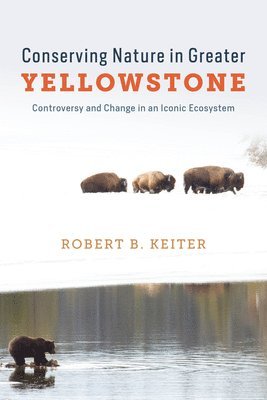
    Conserving Nature in Greater Yellowstone

    Controversy and Change in an Iconic Ecosystem

    AvRobert B. Keiter

    Häftad, Engelska, 2025

    224 kr

    Beställningsvara. Skickas inom 5-8 vardagar. Fri frakt över 249 kr.

    Fler format och utgåvor

    Inbunden

    870 kr

    Beskrivning

    The story of how Yellowstone, established in 1872 as the world’s first national park, has become synonymous with nature conservation—and an examination of today’s challenges to preserve the region’s wilderness heritage.  For more than 150 years, the Yellowstone region—now widely known as the twenty-three million acre Greater Yellowstone Ecosystem—has played a prominent role in the United States’ nature conservation agenda. In this book, Robert B. Keiter, an award-winning public land law and policy expert, traces the evolution and application of fundamental ecological conservation concepts tied to Yellowstone.  Keiter’s book highlights both the conservation successes and controversies connected with this storied region, which has been enmeshed in change. During the 1980s, leaders in Yellowstone embraced ecosystem management concepts to recover a dwindling grizzly bear population and to support wolf reintroduction. Since then, management policies in the region’s two national parks and adjacent national forests have largely followed suit, prioritizing ecosystem-level conservation over industrial activity. Groundbreaking efforts are currently afoot to protect elk, deer, and pronghorn migration corridors and to maintain the park’s bison population, effectively expanding the scope of regional conservation initiatives. But in the face of explosive human population growth and related development pressures, new efforts must also account for the region’s privately owned lands along with accelerating recreational activities that present quite different problems.  Indeed, the Greater Yellowstone Ecosystem—extending across three states and twenty counties and embracing more than sixteen million acres of federal land as well as private and tribal lands —can only be characterized as a complex, jurisdictionally fragmented landscape. As Keiter makes clear, the quest for common ground among federal land managers, state officials, local communities, conservationists, ranchers, Indigenous tribes, and others is a vital, enduring task.  Exploring both notable conservation accomplishments and the ongoing challenges confronting this special place, Keiter’s book explains the many forces—scientific, political, economic, legal, cultural, climatic, and more—at work driving controversy and change across the region. But more than this, Conserving Nature in Greater Yellowstone shows us that the lessons gleaned from Yellowstone’s expansive nature conservation efforts are profoundly important for both the country and the world.

    Produktinformation

    • Utgivningsdatum:2025-07-09
    • Mått:152 x 229 x 25 mm
    • Vikt:426 g
    • Format:Häftad
    • Språk:Engelska
    • Antal sidor:384
    • Förlag:The University of Chicago Press
    • ISBN:9780226841267

    Utforska kategorier

    • Miljörätt inom Juridik
    • Miljövetenskap och miljöpolitik inom Naturvetenskap och teknik

    Mer om författaren

    Robert B. Keiter is the Wallace Stegner Professor of Law, University Distinguished Professor, and founding director of the Wallace Stegner Center for Land, Resources, and the Environment at the University of Utah's S. J. Quinney College of Law. His books include To Conserve Unimpaired, Keeping Faith with Nature, and The Greater Yellowstone Ecosystem. He currently serves on the National Park System Advisory Board and as a trustee for the National Parks Conservation Association.

    Recensioner i media

    "While Yellowstone National Park is the core of the Greater Yellowstone Ecosystem (GYE), the GYE is actually much bigger than the park, encompassing Grand Teton National Park and a variety of other public lands, for a total of 23 million acres. Keiter, a public land law and policy expert, explores the GYE in this book, which comes out in July. He looks at how the Yellowstone ecosystem came to be tied to conservation, and the controversies, challenges, and changes the region has dealt with in the past, as well as what it’s currently facing. But it’s not just a book about Yellowstone; Keiter examines the lessons in nature conservation learned from Yellowstone and how they can be applied elsewhere, helping to pave the way for the future."

    Innehållsförteckning

    • PrefaceIntroduction1. Greater Yellowstone and Ecosystem Conservation2. Nature Conservation in the GYE National Parks3. Restoring Endangered Species: Grizzly Bears and Wolves4. Maintaining Migratory Wildlife: Bison, Elk, and Pronghorn5. The Multiple-Use Lands: From Clearcuts to Playgrounds6. A Fragmenting Landscape: The Private Land Conservation Challenge7. Ecosystem Conservation RevisitedConclusionAcknowledgmentsNotesIndex