Robert Bacon – författare
Visar alla böcker från författaren Robert Bacon. Handla med fri frakt och snabb leverans.
16 produkter
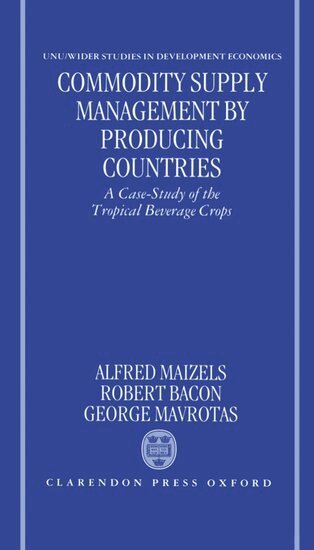
Commodity Supply Management by Producing Countries
A Case-Study of the Tropical Beverage Crops
Av Alfred Maizels, Robert Bacon m. fl.
Inbunden, 1997
1091 kr
Lägg i varukorg
The collapse in commodity prices since 1980 has been a major cause of the economic crisis in a large number of developing countries. This book investigates whether the commodity-producing countries, by joint action, could have prevented the price collapse by appropriate supply management. The …
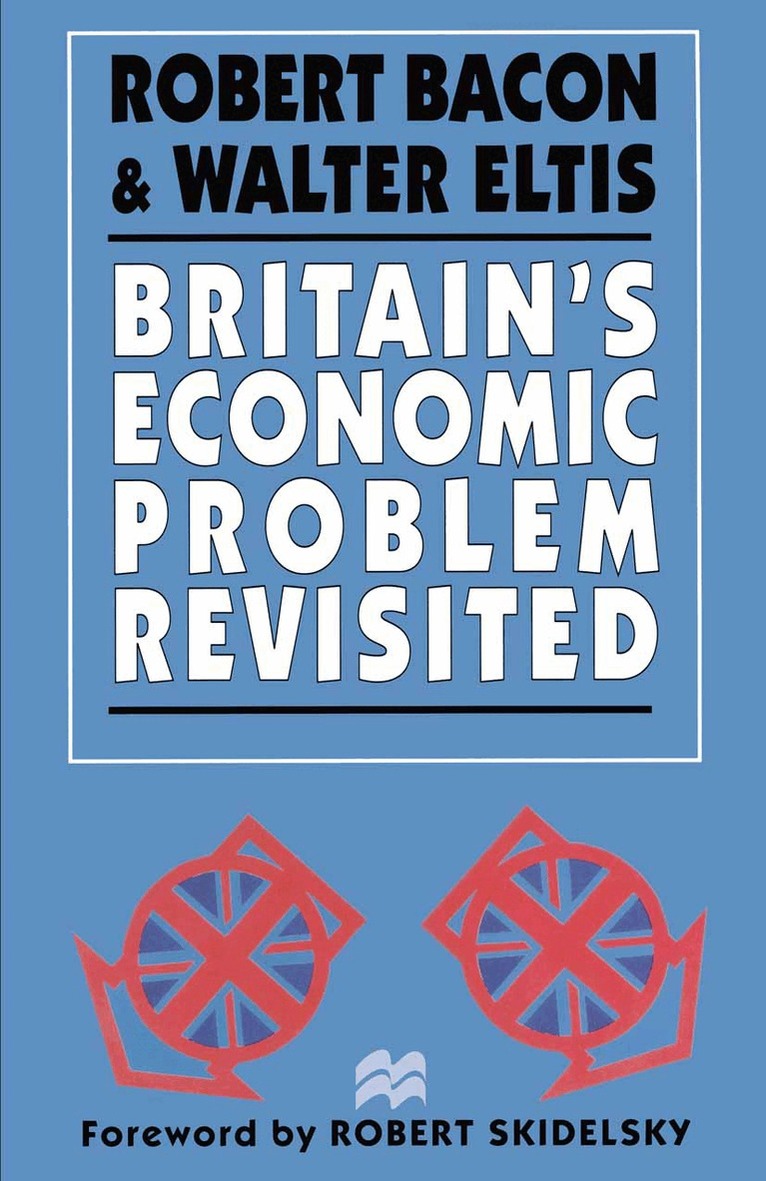
Britain’s Economic Problem Revisited
Häftad, 1996
308 kr
Lägg i varukorg
This 1996 edition of Britain's Economic Problem opens with a substantial new chapter, 'Bacon and Eltis after 20 Years', in which the authors assess the impact of the policies of successive Conservative governments to bring British public expenditure under control. They also develop their theory and …
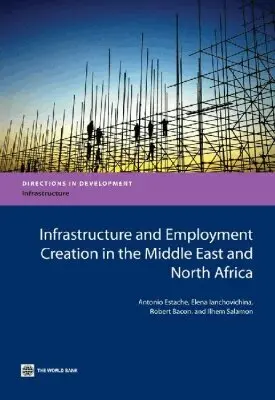
Infrastructure and Employment Creation in the Middle East and North Africa
Av Antonio Estache, Elena Ianchovichina m. fl.
Häftad, 2013
313 kr
Lägg i varukorg
This study assesses the potential for job creation through infrastructure investment in the Middle East and North Africa. The region has experience in making the most of infrastructure investments, but maintaining and spreading the momentum in infrastructure will be important to support future …
Latin America and the United States;
Av James Brown Scott, Robert Bacon m. fl.
Inbunden, 2023
398 kr
Lägg i varukorg
Latin America and the United States;
Av James Brown Scott, Robert Bacon m. fl.
Häftad, 2023
288 kr
Lägg i varukorg
Latin America and the United States
Av Elihu Root, Robert Bacon m. fl.
Häftad, 2025
250 kr
Lägg i varukorg
Latin America and the United States
Av Elihu Root, Robert Bacon m. fl.
Inbunden, 2025
396 kr
Lägg i varukorg
Latin America and the United States
Addresses by Elihu Root (Cram Edition)
Av Elihu Root, Robert Bacon m. fl.
Häftad, 2026
308 kr
Lägg i varukorg
Addresses on International Subjects
Av Elihu Root, Robert Bacon m. fl.
Häftad, 2013
383 kr
Lägg i varukorg
Britain's Economic Problem Revisited
E-bok, 1996
339 kr
Lägg i varukorg
This 1996 edition of Britain''s Economic Problem opens with a substantial new chapter, ''Bacon and Eltis after 20 Years'', in which the authors assess the impact of the policies of successive Conservative governments to bring British public expenditure under control. They also develop their theory …
Latin America and the United States;
Av James Brown Scott, Robert Bacon m. fl.
Häftad, 2018
373 kr
Lägg i varukorg
Shedding Light on Electricity Utilities in the Middle East and North Africa
Insights from a Performance Diagnostic
Av Daniel Camos, Robert Bacon m. fl.
Häftad, 2017
460 kr
Lägg i varukorg
Shedding Light on Electricity Utilities in the Middle East and North Africa