Elena Ianchovichina - Böcker
Visar alla böcker från författaren Elena Ianchovichina. Handla med fri frakt och snabb leverans.
4 produkter
4 produkter
295 kr
Skickas inom 10-15 vardagar
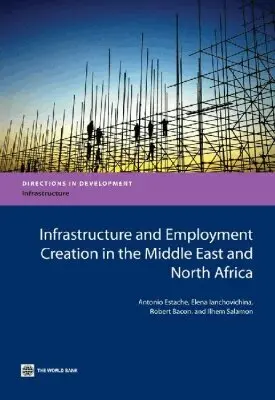
This study assesses the potential for job creation through infrastructure investment in the Middle East and North Africa. The region has experience in making the most of infrastructure investments, but maintaining and spreading the momentum in infrastructure will be important to support future growth and job creation. To do so, policymakers will have to recognize that there are large differences in initial conditions across the region in terms of starting stock, needs, fiscal commitments, private sector participation and job creation potential. Overall, the region’s infrastructure needs through 2020 are quite large and estimated at about 106 billion dollars per year or 6.9 percent of the annual regional GDP. The differences in infrastructure and maintenance needs across sub-regions are also impressive, with developing oil exporters expected to require almost 11 percent of their GDP annually, while the oil importing countries and the GCC oil exporters expected to need approximately 6 and 5 percent of their GDP, respectively. Investment and rehabilitation needs are likely to be especially high in the electricity and transport sectors, particularly roads. Rehabilitation needs are expected to account for slightly more than half of total infrastructure needs. While oil exporters will be able to meet their national infrastructure needs if they maintain investment spending at rates prevailing in the 2000s, oil importers will fall short. The infrastructure sector has the potential to contribute to employment creation in MENA. The region could generate 2.0 million direct jobs and 2.5 million direct, indirect and induced infrastructure-related jobs just by meeting estimated, annual investment needs. However, the potential varies greatly across countries, and infrastructure alone will not resolve MENA’s unemployment problem. Going forward, decisions on what types of public spending to expand and what to downsize in order to achieve balanced budgets will have important implications for jobs. In designing country specific solutions, governments will have to tackle predictable challenges: the governance of job creation, the proper targeting and fiscal costs assessment of subsidies needed to create jobs, the design and fiscal costs of the (re)training programs needed and the expectations on the job creation effects of infrastructure.
422 kr
Skickas inom 7-10 vardagar
A sequel to Global Trade Analysis: Modeling and Applications (Cambridge University Press, 1996, edited by Thomas W. Hertel), this new volume presents the technical aspects of the Global Trade Analysis Program's global dynamic framework (GDyn) and its applications within important global policy issues. The book covers a diverse set of topics including trade reform, growth, investment, technology, demographic change and the environment. Environmental issues are particularly well-suited for analysis with GDyn, and this volume covers its uses with climate change, resource use and technological progress in agriculture. Other applications presented in the book focus on integration issues such as rules governing foreign investment, e-commerce regulations, trade in services, harmonization of technical standards, sanitary and photo-sanitary regulations, streamlining of customs procedures, and demographic change and migration.
1 499 kr
Skickas inom 7-10 vardagar
A sequel to Global Trade Analysis: Modeling and Applications (Cambridge University Press, 1996, edited by Thomas W. Hertel), this new volume presents the technical aspects of the Global Trade Analysis Program's global dynamic framework (GDyn) and its applications within important global policy issues. The book covers a diverse set of topics including trade reform, growth, investment, technology, demographic change and the environment. Environmental issues are particularly well-suited for analysis with GDyn, and this volume covers its uses with climate change, resource use and technological progress in agriculture. Other applications presented in the book focus on integration issues such as rules governing foreign investment, e-commerce regulations, trade in services, harmonization of technical standards, sanitary and photo-sanitary regulations, streamlining of customs procedures, and demographic change and migration.
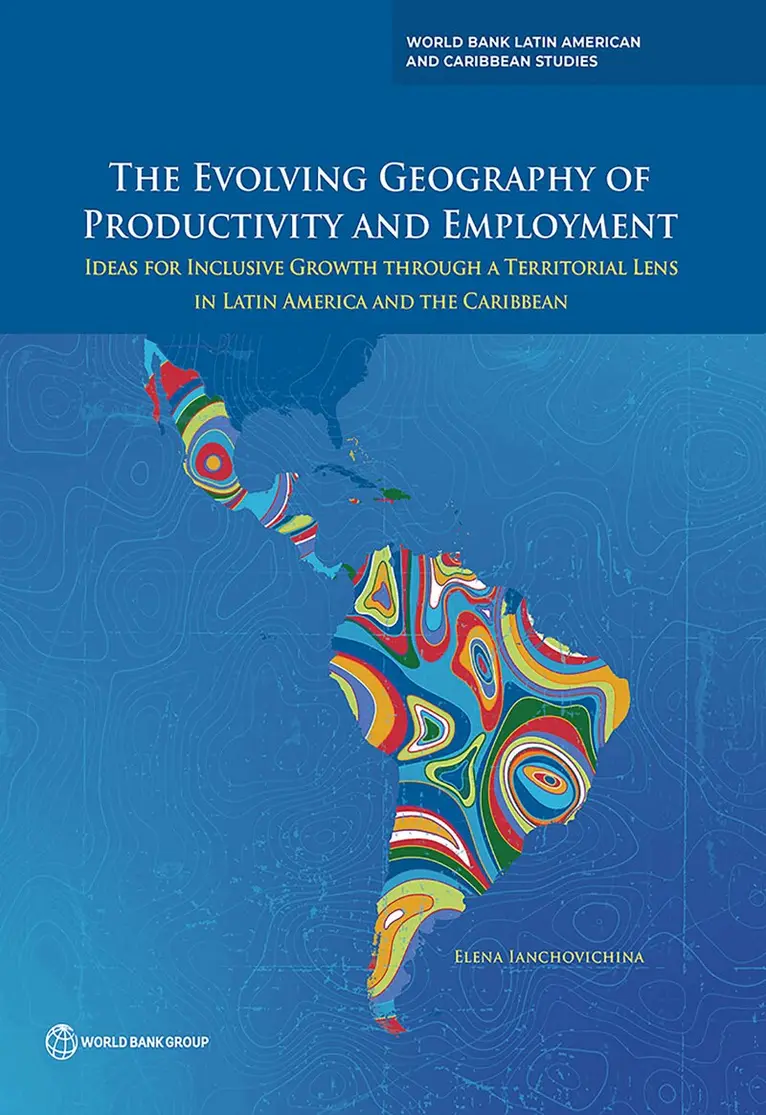
Evolving Geography of Productivity and Employment
Ideas for Inclusive Growth Through a Territorial Lens in Latin America and the Caribbean
Häftad, Engelska, 2024
440 kr
Skickas inom 7-10 vardagar
This study adopts a spatial lens to shed light on weaknesses in competitiveness that have left Latin America unprepared to fully realize the potential of its mostly urban workforce and take advantage of opportunities in a post-pandemic economy reshaped by geopolitical shifts