Robert Bernard Hass - Böcker
Visar alla böcker från författaren Robert Bernard Hass. Handla med fri frakt och snabb leverans.
4 produkter
4 produkter
609 kr
Kommande
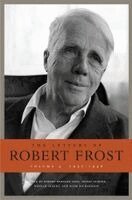
A revelatory new volume of Robert Frost’s correspondence, illuminating one of America’s most renowned poets at the height of his literary fame and the depths of personal tragedy.By the late 1930s, Robert Frost had achieved bona fide celebrity. He won his third Pulitzer Prize for A Further Range, published in 1936, and he had become an in-demand lecturer nationwide. The penultimate volume of The Letters of Robert Frost—which presents 606 letters, most for the first time—sheds new light on the poet’s inner life as he aged into his sixties and early seventies.These were heady days indeed—from summers at the Bread Loaf Writers’ Conference in Vermont, to prestigious fellowships at Harvard and Dartmouth, to winter retreats at the Florida home he affectionately called “Pencil Pines.” Yet even as his literary reputation flourished, personal tragedy struck with devastating force. In 1938, some six months after undergoing surgery for breast cancer, his wife, Elinor, succumbed to heart failure. Two years later, in 1940, his son Carol died by suicide. Between these losses, Frost fell in love with Kathleen “Kay” Morrison, who was married to Harvard professor Theodore Morrison. She soon became Frost’s secretary—though not his wife, as he had hoped—and he credited her with renewing his poetic vitality. In 1942, he published his acclaimed seventh collection, A Witness Tree, for which he won his fourth, and final, Pulitzer Prize.Thoroughly annotated and accompanied by a biographical glossary and detailed chronology, volume 4 of The Letters of Robert Frost offers a strikingly intimate portrait of a towering American poet.
425 kr
Skickas inom 7-10 vardagar
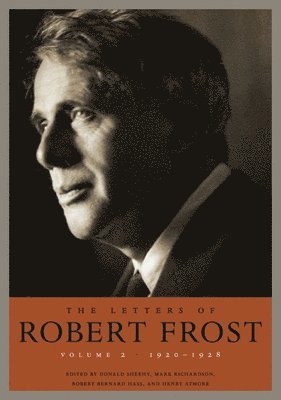
The Letters of Robert Frost, Volume 2: 1920–1928 is the second installment of Harvard’s five-volume edition of the poet’s correspondence. Nearly three hundred letters in the critically-acclaimed first volume had never before been collected; here, close to four hundred are gathered for the first time. Volume 2 includes letters to some 160 correspondents: family and friends; colleagues, fellow writers, visual artists, editors, and publishers; educators of all kinds; farmers, librarians, and admirers.In the years covered here, publication of Selected Poems, New Hampshire, and West-Running Brook enhanced Frost’s stature in America and abroad, and the demands of managing his career—as public speaker, poet, and teacher—intensified. A good portion of the correspondence is devoted to Frost’s appointments at the University of Michigan and Amherst College, through which he played a major part in staking out the positions poets would later hold in American universities. Other letters show Frost helping to shape the Bread Loaf School of English and its affiliated Writers’ Conference. We encounter him discussing his craft with students and fostering the careers of younger poets. His observations (and reservations) about educators are illuminating and remain pertinent. And family life—with all its joys and sorrows, hardships and satisfactions—is never less than central to Frost’s concerns.Robert Frost was a masterful prose stylist, often brilliant and always engaging. Thoroughly annotated and accompanied by a biographical glossary, chronology, and detailed index, these letters are both the record of a remarkable literary life and a unique contribution to American literature.
425 kr
Skickas inom 7-10 vardagar
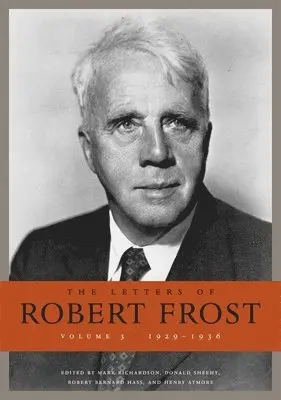
The third installment of Harvard’s five-volume edition of Robert Frost’s correspondence.The Letters of Robert Frost, Volume 3: 1929–1936 is the latest installment in Harvard’s five-volume edition of the poet’s correspondence. It presents 601 letters, of which 425 are previously uncollected. The critically acclaimed first volume, a Times Literary Supplement Book of the Year, included nearly 300 previously uncollected letters, and the second volume 350 more.During the period covered here, Robert Frost was close to the height of his powers. If Volume 2 covered the making of Frost as America’s poet, in Volume 3 he is definitively made. These were also, however, years of personal tribulation. The once-tight Frost family broke up as marriage, illness, and work scattered the children across the country. In the case of Frost’s son Carol, both distance and proximity put strains on an already fractious relationship. But the tragedy and emotional crux of this volume is the death of Frost’s youngest daughter, Marjorie. Frost’s correspondence from those dark days is a powerful testament to the difficulty of honoring the responsibilities of a poet’s eminence while coping with the intensity of a parent’s grief.Volume 3 also sees Frost responding to the crisis of the Great Depression, the onset of the New Deal, and the emergence of totalitarian regimes in Europe, with wit, canny political intelligence, and no little acerbity. All the while, his star continues to rise: he wins a Pulitzer for Collected Poems in 1931 and will win a second for A Further Range, published in 1936, and he is in constant demand as a public speaker at colleges, writers’ workshops, symposia, and dinners. Frost was not just a poet but a poet-teacher; as such, he was instrumental in defining the public functions of poetry in the twentieth century. In the 1930s, Frost lived a life of paradox, as personal tragedy and the tumults of politics interwove with his unprecedented achievements.Thoroughly annotated and accompanied by a biographical glossary and detailed chronology, these letters illuminate a triumphant and difficult period in the life of a towering literary figure.
852 kr
Skickas inom 10-15 vardagar
One of the most vexing problems facing American modernist poets was how to find a place for poetry and religion in a culture that considered science its most reliable source of truth. By the time Robert Frost began writing, the Emersonian concept of nature as an analogue for a benevolent deity had been replaced among the scientifically educated by the view that nature's mechanisms were based solely upon accident, competition and survival. Frost not only saw his religious belief shattered by Darwin's theory of natural selection but also recognized that poetry, in the wake of stunning scientific accomplishment, was slowly losing to science what was left of its cultural authority. With both designer and purpose absent from the post-Darwinian world, the old religious orders appeared trivial, and humankind found itself dislodged from the centre of the natural order. This view of nature plunged Frost into a spiritual crisis, which he surmounted by writing poetry. Arguing that the central problem of Frost's career was his conflict with science, Robert Bernard Hass examines the ways in which the conflict affected the development of Frost's career from beginning to end. Hass situates the poet's work in the intellectual ferment of the late 19th and early 20th centuries and argues that as materialism collapsed under the weight of new scientific discovery, Frost began to see science as a historically conditioned mode of perception.