Robert C. Tucker - Böcker
Visar alla böcker från författaren Robert C. Tucker. Handla med fri frakt och snabb leverans.
14 produkter
14 produkter
346 kr
Skickas inom 7-10 vardagar
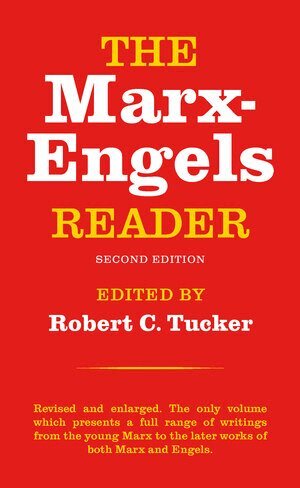
This revised and enlarged edition of the leading anthology provides the essential writings of Marx and Engels—those works necessary for an introduction to Marxist thought and ideology.
2 166 kr
Skickas inom 10-15 vardagar
This book summarizes leadership and general political developments in the Soviet Union since the onset of the reforms. It explores new developments and old continuities in elite politics in the Russian Federation and other post-Soviet states during the period of transition and consolidation.
634 kr
Skickas inom 10-15 vardagar
This book summarizes leadership and general political developments in the Soviet Union since the onset of the reforms. It explores new developments and old continuities in elite politics in the Russian Federation and other post-Soviet states during the period of transition and consolidation.
266 kr
Skickas inom 5-8 vardagar
In this volume Robert C. Tucker looks critically at the later writings of Marx and Engels, not only as political theory but as the ideology for political revolution. From the vantage point established in his earlier work--that there is a continuity underlying Marx's writing from the newly discovered manuscripts of 1844 to the mature work, Capital--Professor Tucker examines Marx as a social, moral, and political theorist, and a theorist of modernization. "The Marxian Revolutionary Idea" is followed, in thought and application, through infancy to maturity, in success and failure, and finally as it has been transformed by modern socialism.
308 kr
Skickas inom 5-8 vardagar
In his treatment of internal and foreign policies, the Soviet period and the Russian historical past, the political elite and the ordinary man, Robert C. Tucker focuses upon the thought patterns and ideological factors that, together, constituted the Soviet political mind. His concern is with the problem of change in the Soviet system and in Soviet policy. Affirming the reality and significance of post-Stalin change, he analyzes and explains this phenomenon within the broad framework of Russia's political development before and after 1917.In constructing this concept, he has evolved an interpretation of Stalinism as a special Soviet pattern whose dynamics were determined in part by the psychopathology of Stalin's personality. Thus, beyond its obvious contribution to the field of Soviet studies, this appraisal of the influence of personality factors on the political development of a country contributes significantly to the theory of dictatorship and authoritarianism.
381 kr
Skickas inom 5-8 vardagar
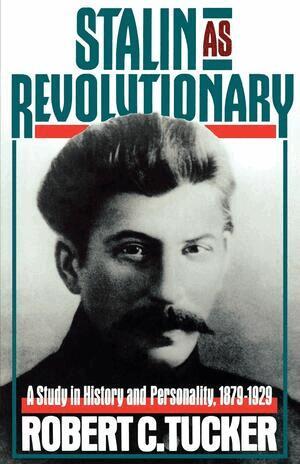
“This towering figure of the twentieth century has hitherto lacked a successful and full-scale biography. The publication of this first volume of a projected trilogy by Robert Tucker marks the beginning of the end of this situation.” —Robert H. McNeal, Russian Review
532 kr
Skickas inom 3-6 vardagar
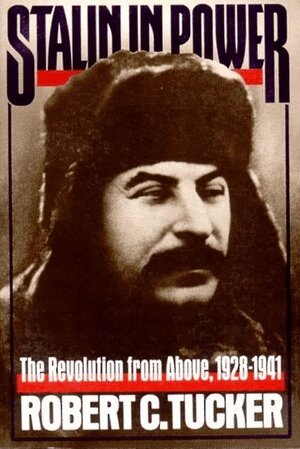
This book forms the second volume of Tucker's biography of Stalin, the first volume of which was "Stalin as Revolutionary". The author shows that Stalin was a Bolshevik of the radical right whose revolution cast the country deep into its imperial, autocratic past. In 1929 Stalin plunged Soviet Russia into a coercive "revolution from above", a decade-long effort to amass military-industrial power for a new war. He forced 25 million peasant families into state-run collectives and transformed the Communist Party into a servile instrument. In 1939, he concluded the pact with Hitler that enabled him to grasp at Eastern Europe while Hitler made war in the West. Tucker brings a fresh analysis to these events and to the Terror of the 1930s, revealing the motives and methods of what he calls the greatest murder mystery of this century.
731 kr
Skickas inom 10-15 vardagar
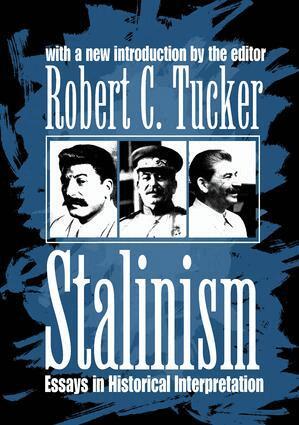
In the years since Stalin's death, his profound influence upon the historical development of Communism has remained elusive and in need of interpretation. Stalinism, as his system has become known, is a phenomenon which embraced all facets of political and social life. While its effect upon the Soviet Union and other nations today is far less than it was while Stalin lived, it is by no means dead.In this landmark volume some of the world's foremost scholars of the subject, in a concerted group inquiry, present their interpretations of Stalinism and its influence on all areas of comparative Communist studies from history and politics to economics, sociology, and literary scholarship. The studies contained in this volume are an outgrowth of a conference on Stalinism held in Bellagio, Italy, sponsored by the American Council of Learned Societies.In his major contribution to this book, Leszek Kolakowski calls Stalinism "a unified state organism facing atom-like individuals." This extraordinary volume, augmented by a revealing new introduction by the editor, Robert C. Tucker, can be seen as amplifying that remark nearly a half century after the death of Joseph Stalin himself.Contributors to this work are: Wlodzimierz Brus, Katerina Clark, Stephen F. Cohen, Alexander Erlich, Leszek Kolakowski, Moshe Lewin, Robert H. McNeal, Mihailo Markovic, Roy A. Medvedev, T. H. Rigby, Robert Sharlet, and H. Gordon Skilling. Robert C. Tucker's principle work on Stalin has been described by George F. Kennan as "the most significant single contribution made to date, anywhere, to the history of Soviet power."
683 kr
Skickas inom 10-15 vardagar
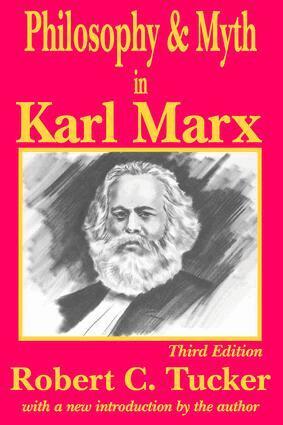
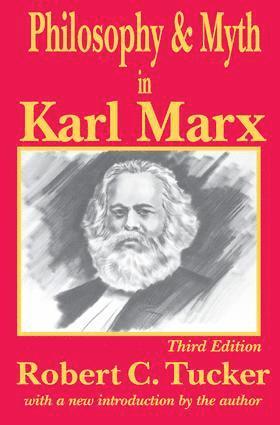
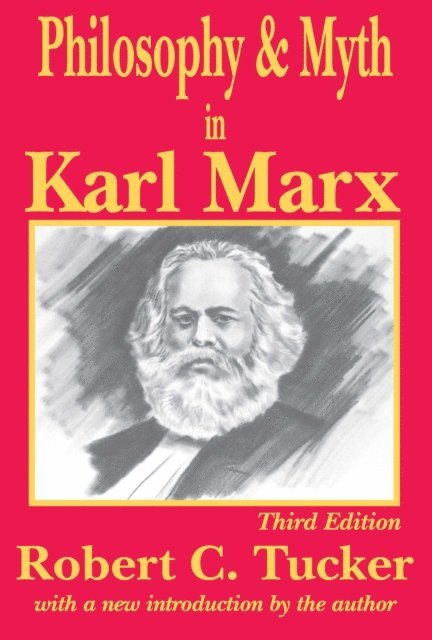
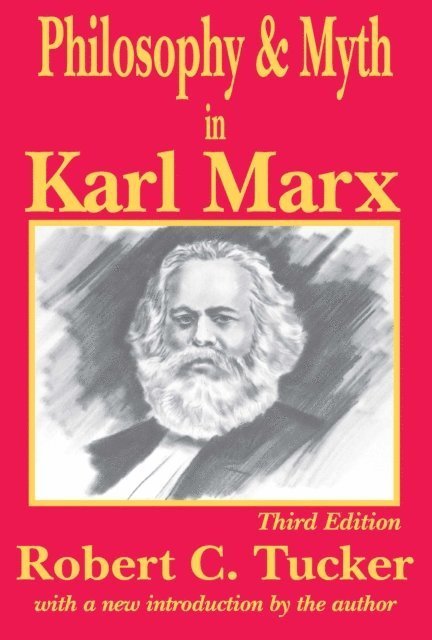
In Karl Marx's early writing (first made available many years after his death) his economic interpretation of history and his concept of communism were set in a comprehensive philosophical framework. Marx's main preoccupation at this time was with man estranged from himself in an alienated world: a subjective, almost religious theme.Taking full account of these earlier writings, Robert Tucker critiques and reinterprets Marx's thought. He shows how its origins can be located in earlier German philosophers, in particular Kant, Hegel, and Feuerbach. Reconstructing the genesis of Marxism in its founder's own mind, he clarifies Marx's mystifying contention that Marxism represented Hegelianism turned 'on its head'. He then presents a new interpretation, based on close textual analysis, of the relation between Marx's early philosophical system and the subsequent materialist conception of history as expounded in the later and best known writings of Marx and Engels. Against this background, Tucker presents Das Kapital as a work belonging to the post-Hegelian mythical development of Germany philosophy. Considering in turn the genesis of Marxism and the underlying continuity of his thought from the early writings to Das Kapital, Tucker shows the theme of alienation is central throughout.In the years since the book was first written, comments and criticism have encouraged Tucker to change his position somewhat. This is explained in a new introduction that goes beyond the interpretative enterprise of the rest of the book to assess Marx in relation to contemporary concerns: first it presents a critique of Marx's treatment of alienation and then it comments on the moot problem of the continuing relevance of his social and economic thought. On the latter point his views have matured and altered during the intervening years and he now finds the economic and social aspects of Marx's thought considerably more relevant than he did before.
380 kr
Skickas inom 5-8 vardagar
258 kr
Skickas inom 5-8 vardagar
2 103 kr
Skickas inom 10-15 vardagar
In Karl Marx's early writing (first made available many years after his death) his economic interpretation of history and his concept of communism were set in a comprehensive philosophical framework. Marx's main preoccupation at this time was with man estranged from himself in an alienated world: a subjective, almost religious theme.Taking full account of these earlier writings, Robert Tucker critiques and reinterprets Marx's thought. He shows how its origins can be located in earlier German philosophers, in particular Kant, Hegel, and Feuerbach. Reconstructing the genesis of Marxism in its founder's own mind, he clarifies Marx's mystifying contention that Marxism represented Hegelianism turned 'on its head'. He then presents a new interpretation, based on close textual analysis, of the relation between Marx's early philosophical system and the subsequent materialist conception of history as expounded in the later and best known writings of Marx and Engels. Against this background, Tucker presents Das Kapital as a work belonging to the post-Hegelian mythical development of Germany philosophy. Considering in turn the genesis of Marxism and the underlying continuity of his thought from the early writings to Das Kapital, Tucker shows the theme of alienation is central throughout.In the years since the book was first written, comments and criticism have encouraged Tucker to change his position somewhat. This is explained in a new introduction that goes beyond the interpretative enterprise of the rest of the book to assess Marx in relation to contemporary concerns: first it presents a critique of Marx's treatment of alienation and then it comments on the moot problem of the continuing relevance of his social and economic thought. On the latter point his views have matured and altered during the intervening years and he now finds the economic and social aspects of Marx's thought considerably more relevant than he did before.
2 375 kr
Skickas inom 10-15 vardagar
In the years since Stalin's death, his profound influence upon the historical development of Communism has remained elusive and in need of interpretation. Stalinism, as his system has become known, is a phenomenon which embraced all facets of political and social life. While its effect upon the Soviet Union and other nations today is far less than it was while Stalin lived, it is by no means dead.In this landmark volume some of the world's foremost scholars of the subject, in a concerted group inquiry, present their interpretations of Stalinism and its influence on all areas of comparative Communist studies from history and politics to economics, sociology, and literary scholarship. The studies contained in this volume are an outgrowth of a conference on Stalinism held in Bellagio, Italy, sponsored by the American Council of Learned Societies.In his major contribution to this book, Leszek Kolakowski calls Stalinism "a unified state organism facing atom-like individuals." This extraordinary volume, augmented by a revealing new introduction by the editor, Robert C. Tucker, can be seen as amplifying that remark nearly a half century after the death of Joseph Stalin himself.Contributors to this work are: Wlodzimierz Brus, Katerina Clark, Stephen F. Cohen, Alexander Erlich, Leszek Kolakowski, Moshe Lewin, Robert H. McNeal, Mihailo Markovic, Roy A. Medvedev, T. H. Rigby, Robert Sharlet, and H. Gordon Skilling. Robert C. Tucker's principle work on Stalin has been described by George F. Kennan as "the most significant single contribution made to date, anywhere, to the history of Soviet power."
3 982 kr
Skickas inom 7-10 vardagar
This new addition to the ASM Handbook series is co-published by the Thermal Spray Society and ASM International. Volume 5A is a replacement for the Handbook of Thermal Spray Technology, edited by J.R. Davis (ASM, 2004). The volume provides an introduction to modern thermal spray processes including plasma spray, high velocity oxy-fuel, and detonation gun deposition; and a description of coating properties, their wear, corrosion, and thermal barrier characteristics. Principles, types of coatings, applications, performance, and testing/analysis also are covered. The Handbook serves as an excellent introduction and guidebook for those new to thermal spray.A greatly expanded selection of applications includes examples and figures from various industries, including electronics and semiconductors, automotive, energy, and biomedical. Emergent thermal spray market sectors such as aerospace and industrial gas turbines, and important areas of growth such as advanced thermal barrier materials, wear coatings, clearance control coatings, and oxidation/hot corrosion resistant alloys also are reviewed. Thermal spray coatings offer industry the opportunity to improve the performance and lower the costs of manufacturing equipment and processes as well as products produced. The major advantages of thermal spray processes include the ability to produce coatings of an extremely wide variety of materials (including ceramics, metals, cermets, and some polymerics), to deposit those materials without significantly heating the substrate and thus without changing the dimensions or properties of the component being coated, and, in most cases, to strip a worn coating and replace it with a new one. More reliable and robust equipment technology, along with improved particle diagnostics, have helped to move the thermal spray process from guesswork to science, giving designers and end users more confidence in the long-term manufacturing capabilities of thermal spray processes. The key to future growth will be environmental barrier coatings for applications using high temperature composite substrates that surpass the operating limits of superalloys and advanced high temperature ceramics for insulation purposes.