Robert Drews – författare
Visar alla böcker från författaren Robert Drews. Handla med fri frakt och snabb leverans.
13 produkter
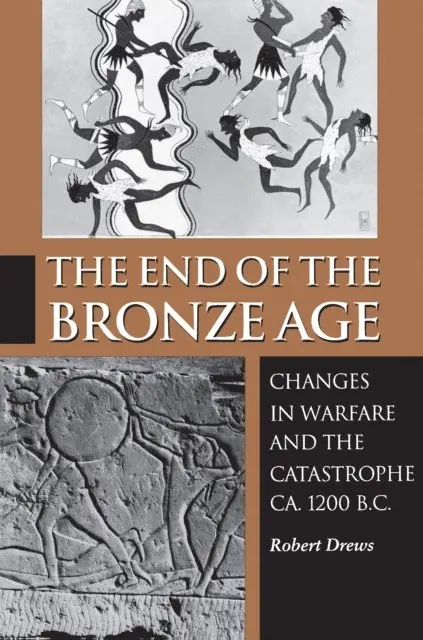
End of the Bronze Age
Changes in Warfare and the Catastrophe ca. 1200 B.C. - Third Edition
Av Robert Drews
Häftad, 1996
471 kr
Lägg i varukorg
The Bronze Age came to a close early in the twelfth century b.c. with one of the worst calamities in history: over a period of several decades, destruction descended upon key cities throughout the Eastern Mediterranean, bringing to an end the Levantine, Hittite, Trojan, and Mycenaean kingdoms and …
Militarism and the Indo-Europeanizing of Europe
Av Robert Drews
Häftad, 2019
756 kr
Lägg i varukorg
This book argues that the Indo-Europeanizing of Europe essentially began shortly before 1600 BC, when lands rich in natural resources were taken over by military forces from the Eurasian steppe and from southern Caucasia. First were the copper and silver mines (along with good harbors) in Greece, …
Early Riders
The Beginnings of Mounted Warfare in Asia and Europe
Av Robert Drews
Inbunden, 2004
2820 kr
Lägg i varukorg
In this wide-ranging and often controversial book, Robert Drews examines the question of the origins of man's relations with the horse. He questions the belief that on the Eurasian steppes men were riding in battle as early as 4000 BC, and suggests that it was not until around 900 BC that men …
Early Riders
The Beginnings of Mounted Warfare in Asia and Europe
Av Robert Drews
Häftad, 2008
935 kr
Lägg i varukorg
In this wide-ranging and often controversial book, Robert Drews examines the question of the origins of man's relations with the horse. He questions the belief that on the Eurasian steppes men were riding in battle as early as 4000 BC, and suggests that it was not until around 900 BC that men …
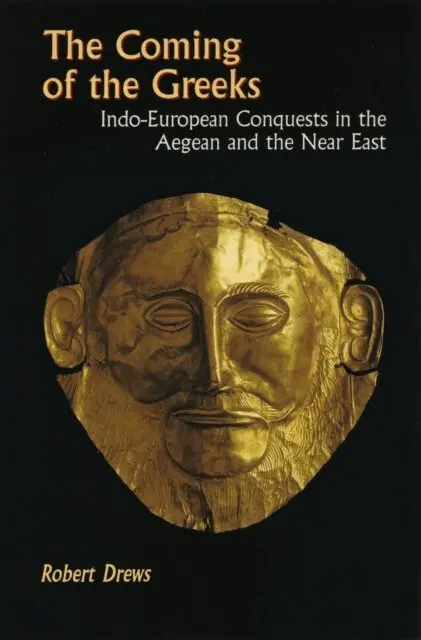
Coming of the Greeks
Indo-European Conquests in the Aegean and the Near East
Av Robert Drews
Häftad, 1994
418 kr
Lägg i varukorg
When did the Indo-Europeans enter the lands that they occupied during historical times? And, more specifically, when did the Greeks come to Greece? Robert Drews brings together the evidence--historical, linguistic, and archaeological--to tackle these important questions.
Coming of the Greeks
Indo-European Conquests in the Aegean and the Near East
Av Robert Drews
E-bok, 2018
588 kr
Lägg i varukorg
When did the Indo-Europeans enter the lands that they occupied during historical times? And, more specifically, when did the Greeks come to Greece? Robert Drews brings together the evidence--historical, linguistic, and archaeological--to tackle these important questions.
End of the Bronze Age
Changes in Warfare and the Catastrophe ca. 1200 B.C. - Third Edition
Av Robert Drews
E-bok, 2020
661 kr
Lägg i varukorg
The Bronze Age came to a close early in the twelfth century b.c. with one of the worst calamities in history: over a period of several decades, destruction descended upon key cities throughout the Eastern Mediterranean, bringing to an end the Levantine, Hittite, Trojan, and Mycenaean kingdoms and …
Early Riders
The Beginnings of Mounted Warfare in Asia and Europe
Av Robert Drews
E-bok, 2004
1106 kr
Lägg i varukorg
In this wide-ranging and often controversial book, Robert Drews examines the question of the origins of man''s relations with the horse. He questions the belief that on the Eurasian steppes men were riding in battle as early as 4000 BC, and suggests that it was not until around 900 BC that men …
Early Riders
The Beginnings of Mounted Warfare in Asia and Europe
Av Robert Drews
E-bok, 2004
1082 kr
Lägg i varukorg
In this wide-ranging and often controversial book, Robert Drews examines the question of the origins of man''s relations with the horse. He questions the belief that on the Eurasian steppes men were riding in battle as early as 4000 BC, and suggests that it was not until around 900 BC that men …
Militarism and the Indo-Europeanizing of Europe
Av Robert Drews
Inbunden, 2017
2820 kr
Lägg i varukorg
This book argues that the Indo-Europeanizing of Europe essentially began shortly before 1600 BC, when lands rich in natural resources were taken over by military forces from the Eurasian steppe and from southern Caucasia. First were the copper and silver mines (along with good harbors) in Greece, …
Militarism and the Indo-Europeanizing of Europe
Av Robert Drews
E-bok, 2017
803 kr
Lägg i varukorg
This book argues that the Indo-Europeanizing of Europe essentially began shortly before 1600 BC, when lands rich in natural resources were taken over by military forces from the Eurasian steppe and from southern Caucasia. First were the copper and silver mines (along with good harbors) in Greece, …
Militarism and the Indo-Europeanizing of Europe
Av Robert Drews
E-bok, 2017
803 kr
Lägg i varukorg
This book argues that the Indo-Europeanizing of Europe essentially began shortly before 1600 BC, when lands rich in natural resources were taken over by military forces from the Eurasian steppe and from southern Caucasia. First were the copper and silver mines (along with good harbors) in Greece, …