Robert H. Ferrell - Böcker
Visar alla böcker från författaren Robert H. Ferrell. Handla med fri frakt och snabb leverans.
11 produkter
11 produkter
282 kr
Skickas inom 5-8 vardagar
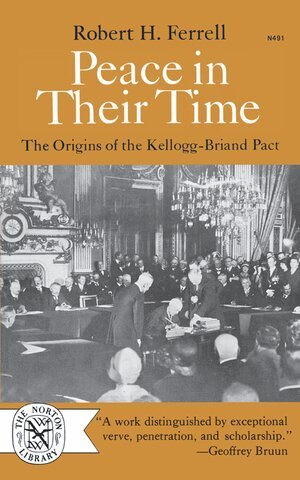
After World War I, private peace groups proliferated and rapidly became a significant force in American politics. These groups' activities were regarded by the Harding and Coolidge administrations as a bungling interference with the regular conduct of diplomacy. Ultimately, however, President Coolidge yielded to domestic pressure and the efforts of French foreign minister Aristide Briand to conclude a peace treaty. A protracted series of negotiations between the United States and France resulted in the multilateral Kellogg-Briand Pact, the treaty to "outlaw war."The Kellogg-Briand Pact, Mr. Ferrell writes, was the peculiar result of some very shrewd diplomacy and some very unsophisticated popular enthusiasm for peace. In analyzing the forces that produced the treaty, Peace in Their Time reveals significant aspects of American foreign policy in the interwar period.
391 kr
Skickas inom 5-8 vardagar
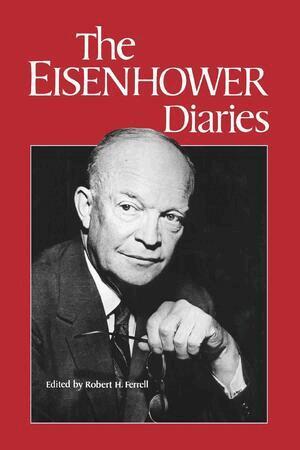
In his books—the memoir of the Second World War, the two large volumes on the presidency, the incomplete autobiography written near the end of his life—Eisenhower related the course of events over the years, with descriptive detail and frequently with humor, but he usually stayed away from analysis. In his many private letters to friends and acquaintances, some of which have been published, he was more frank, but he still held back. And the public record of his military career and of his presidency does not reflect many open, frank statements, proofs that the soldier-president thought long and deeply about issues, personal or public; it has given substance to the speculation by many of his contemporaries and by some later students of Eisenhower that he was essentially a public relations man and that his life was all outward—an expression of assent and agreement or at least of forebearance, of a man who never had an idea or, if he did, would quickly chase it out of sight.
372 kr
Tillfälligt slut
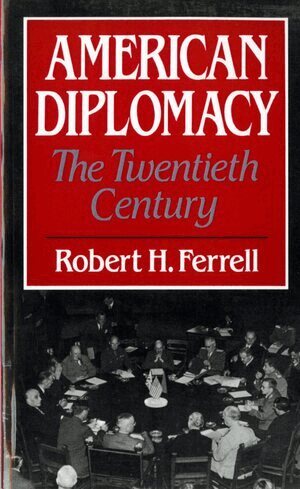
From the war with Spain to the latest summit with the Soviet Union, through the glorious and tragic events that have marked America's emergence as a world power, American Diplomacy: The Twentieth Century provides a vigorous, thorough narrative of American diplomatic history. Among the prominent themes in the text are: nuclear diplomacy and the problem of arms control, the often critical connection between domestic policies and foreign policy, and America's uneasy relations with emerging nations of Asia, Africa, and Latin America.
454 kr
Skickas inom 7-10 vardagar
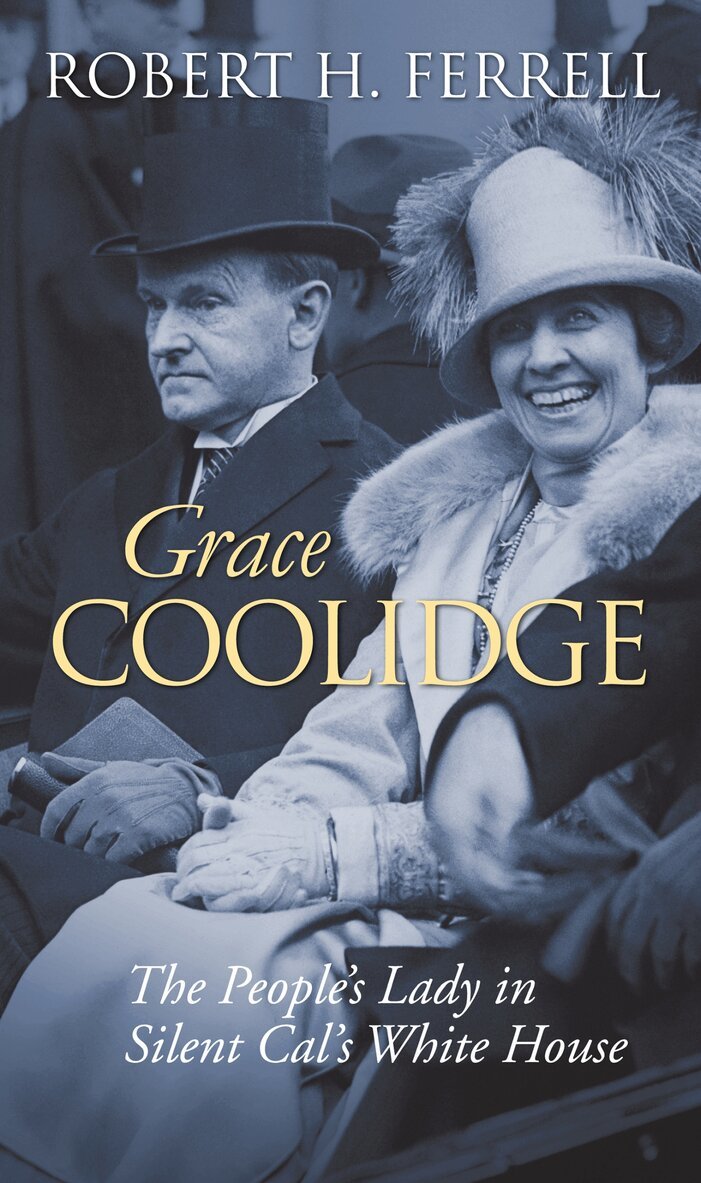
When Grace Anna Goodhue wed Calvin Coolidge in 1905, she thought then that marriage ""has seldom united two people of more vastly different temperaments and tastes."" Warm and vivacious to her husband's dour and taciturn, Grace was to be a contrast to Calvin for years to come. But as Robert Ferrell shows, their marriage ensured her husband's rise to high office.Ferrell focuses on Grace Coolidge's years in the White House, 1923-1929. Although the president did his best to rein her in - even forbidding her to speak on public issues - Grace quickly became one of the most popular and stylish of first ladies. Among the best-dressed women of her time (famously in red), she became the nation's fashion leader. She also opened the White House to the public, sponsored musicales within its walls, and worked on behalf of the deaf and disabled - all despite a less than supportive spouse. Ferrell recounts how she accomplished all of this, finding strength through the years in her Burlington background, her family, and her faith.In this lively book Ferrell provides a perceptive and often moving account of Grace Coolidge. From his insightful portrait of her Vermont roots to a frank assessment of the Coolidges and their sons, he offers a fresh perspective on a much-admired woman who was perhaps her husband's greatest political asset.Ferrell also takes readers inside Grace's strained marriage to the famously taciturn president who kept his wife in the dark about his plans, both political and personal. He offers a much more subtle look at the Coolidges and their relationship in the public eye than we've had, shedding new light on how she managed to deal with his irascible temper - and how the marriage ultimately triumphed over difficulties that Calvin could not have handled alone.Alternately charming and analytic, Ferrell's narrative will leave readers with the real sense of Grace Coolidge as a human being and a contributor to the historical legacy of presidential wives. For she did more than simply enliven a quiet White House - she set the tone for a nation and for first ladies to come.
603 kr
Skickas inom 7-10 vardagar
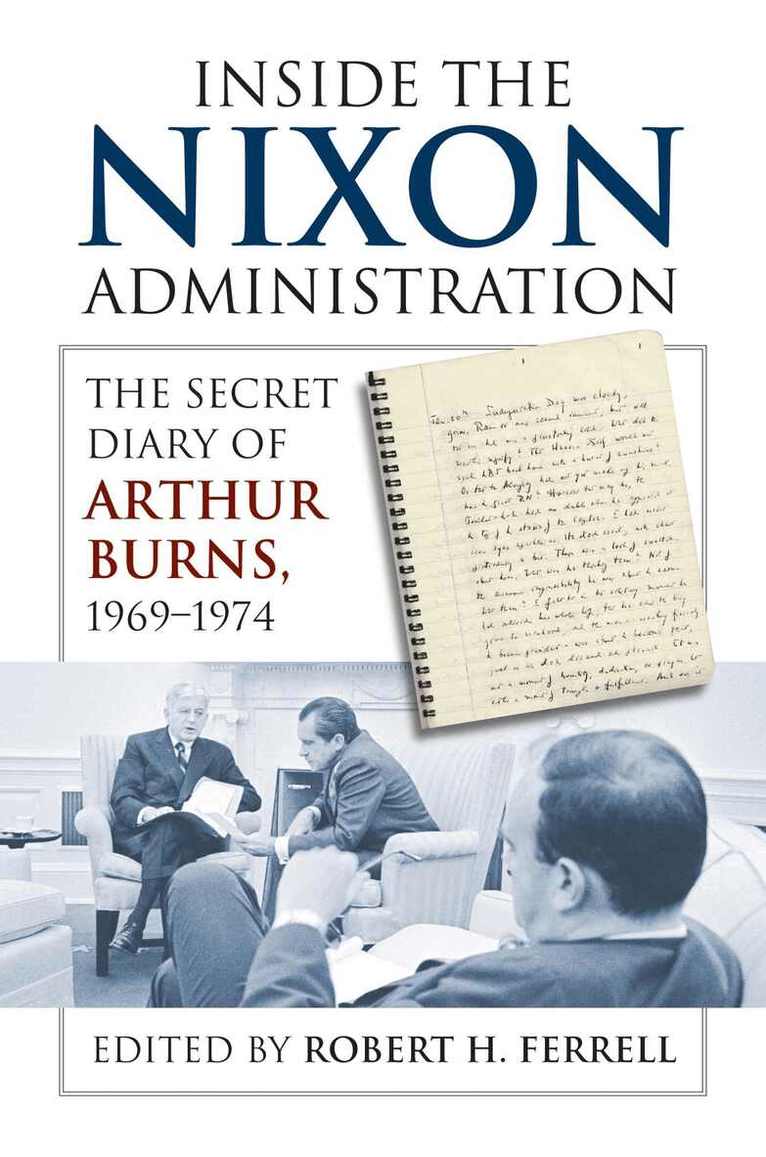
As chairman of the Federal Reserve Board in the seventies, Arthur Burns had a unique view of the Nixon administration. Burns first joined the Nixon administration as an advisor in 1969 and was privy to the dynamics of the president's coterie over the course of six tumultuous years. Now the recently released secret diary of this top-level economist offers a surprisingly candid inside look at Richard Nixon's fall.The diary tracks Burns's growing awareness of Nixon's behind-the-scenes maneuverings and worrisome behavior (such as "insane shouting") and reveals how such things undermined his respect and enthusiasm for the president. Perhaps even more telling, Burns's evaluations of his colleagues provide piercing insights into the president's inner circle, including Henry Kissinger ("a brilliant political analyst, but admittedly ignorant of economics"), George Schultz ("a no less confused amateur economist"), John Connally ("a thoroughly confused politician"), and the "vulgarians" H. R. Haldeman and John Ehrlichman—the only people he thought Nixon felt relaxed around.The Burns diary also offers rare and telling glimpses into the era's economy—particularly an account of how Nixon exerted political pressure to shape monetary policies that helped to fuel the stagflation of the 1970s. The administration sought to close the so-called gold window, an approximate valuation of dollars with gold bullion, by floating the dollar, and the consensus over many years has been that Nixon himself arranged this—speculation now confirmed by Burns's diary. It also underscores the growing pressure Burns felt to serve the needs of Nixon's reelection bid rather than the economic welfare of the nation.Sequestered for decades and unavailable until 2008, this document reveals an honest and relatively apolitical man surrounded by partisans in top administrative positions who were dishonest, inept—or both. "The President has many shortcomings," wrote Burns. "He has few convictions, but now and then he gets into a euphoric mood where he wants to persuade himself that he's a statesman. But his sycophantic advisers cannot even recognize that."Deftly annotated by distinguished historian Robert Ferrell, who provides effective historical context and perspective, the Burns diary is a potent—and poignant—testament to the Machiavellian and often Byzantine world of American presidential politics.
323 kr
Skickas inom 10-15 vardagar
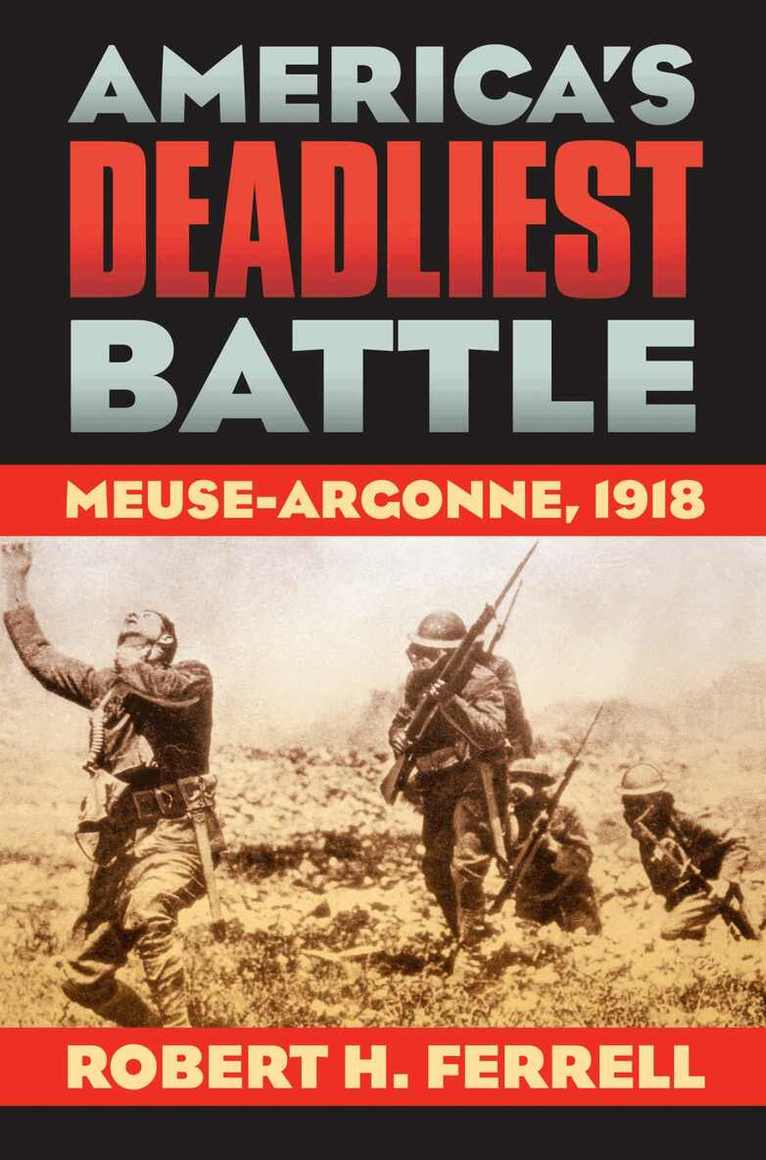
American fighting men had never seen the likes of it before. The great battle of the Meuse-Argonne was the costliest conflict in American history, with 26,000 men killed and tens of thousands wounded. Involving 1.2 million American troops over 47 days, it ended on November 11—what we now know as Armistice Day—and brought an end to World War I, but at a great price. Distinguished historian Robert Ferrell now looks back at this monumental struggle to create the definitive study of the battle—and to determine just what made it so deadly. Ferrell re-examines factors in the war that many historians have chosen to disregard. He points first to the failure of the Wilson administration to mobilise the country for war. American industry had not been prepared to produce the weaponry or transport ships needed by our military, and the War Department—with outmoded concepts of battle shaped by the Spanish-American War—shared equal blame in failing to train American soldiers for a radically new type of warfare. Once in France, under trained American doughboys were forced to learn how to conduct mobile warfare through bloody experience. Ferrell assesses the soldiers’ lack of skill in the use of artillery, the absence of tactics for taking on enemy machine gun nests, and the reluctance of American officers to use poison gas—even though by 1918 it had become a staple of warfare. In all of these areas, the German army held the upper hand. Ferrell relates how, during the last days of the Meuse-Argonne, the American divisions had finally learned up-to-date tactics, and their final attack on November 1 is now seen as a triumph of military art. Yet even as the armistice was being negotiated, some American officers—many of whom had never before commanded men in battle—continued to spur their troops on, wasting more lives in an attempt to take new ground mere hours before the settlement. Besides the U.S. shortcomings in mobilisation and tactics, Ferrell points to the greatest failure of all: the failure to learn from the experience, as after the armistice the U.S. Army retreated to its prewar mindset. Enhanced by more than four dozen maps and photographs, America’s Deadliest Battle is a riveting revisit to the forests of France that reminds us of the costs of World War I—and of the shadow that it cast on the twentieth century. This book is part of the Modern War Studies series.
440 kr
Skickas inom 3-6 vardagar
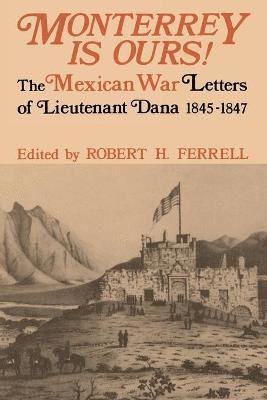
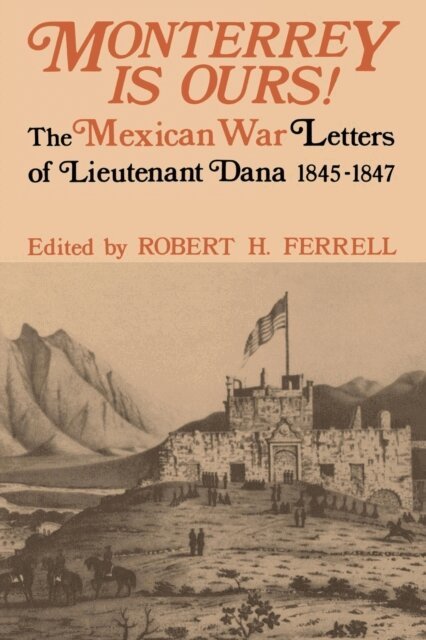
"Here we are on the banks of the Nueces in the grand camp of the army of occupation." So wrote Lt. Napoleon Jackson Tecumseh Dana when in 1845, not many months before the outbreak of the Mexican War, he joined the white-tented encampment of General Zachary Taylor in Texas. And so he continued writing during the uncertain life of camp and campaign for the better part of the next two years. In these letters to his wife, published here for the first time, Dana provides a detailed, firsthand view of the United States' war with Mexico -- fighting off the Mexicans from within Fort Brown during the initial attack; hearing the distant thunder of artillery as Taylor's army marched to the rescue of the beleaguered Seventh Infantry; occupying Matamoros; taking Monterrey, street by street with the defenders firing from the housetops. After Monterrey, Dana was at the siege of Veracruz and on the march to Cerro Gordo. Badly wounded in the attack on Telegraph Hill at Cerro Gordo, he was left on the field for dead, but was rescued by a burial party a day and a half later. Following the Mexican War, Dana went on to become a major general during the Civil War and later to have an illustrious career as a railroad executive. Nearly one hundred of his letters about the Mexican War survived and are now in the archives at West Point. From them Robert Ferrell has edited this vivid, eyewitness narrative.
216 kr
Skickas inom 7-10 vardagar
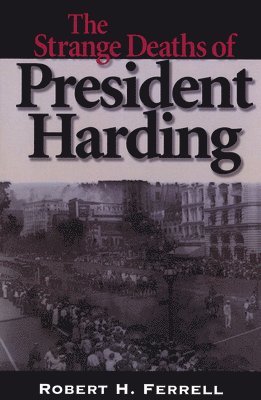
This text examines the mystery around Warren G. Harding's death. After Harding's death a variety of attacks and unsubstantiated claims left the public with a tainted impression. This work examines the claims against this unpopular president and presents material to counter the accusations.
234 kr
Skickas inom 7-10 vardagar
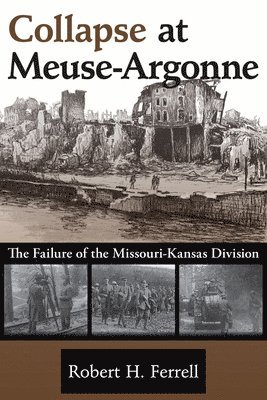
During World War I, the Thirty-fifth Division was made up of National Guard units from Missouri and Kansas. Composed of thousands of men from the two states, the Missouri-Kansas Division entered the great battle of the Meuse-Argonne with no battle experience and only a small amount of training, a few weeks of garrisoning in a quiet sector in Alsace. The division fell apart in five days, and the question Robert Ferrell attempts to answer is why.The Thirty-fifth Division was based at Camp Doniphan on the Fort Sill reservation in Oklahoma and was trained essentially for stationary, or trench, warfare. In March 1918, the German army launched a series of offensives that nearly turned the tide on the Western Front. The tactics were those of open warfare, quick penetrations by massive forces, backed by heavy artillery and machine guns. The American Expeditionary Forces (AEF) commanded by Gen. John J. Pershing were unprepared for this change in tactics. When the Thirty-fifth Division was placed in the opening attack in the Meuse-Argonne on September 26, 1918, it quickly fell.In addition to the Thirty-fifth Division’s lack of experience, its problems were compounded by the necessary confusions of turning National Guard units into a modern assemblage of men and machines. Although the U.S. Army utilized observers during the initial years of World War I, their dispatches had piled up in the War College offices in Washington and, unfortunately, were never studied.The Thirty-fifth Division was also under the command of an incompetent major general and an incompetent artillery brigadier. The result was a debacle in five days, with the division line pushed backward and held only by the 110th Engineer Regiment of twelve hundred men, bolstered by what retreating men could be shoved into the line, some of them at gunpoint.Although three divisions got into trouble at the outset of the Meuse-Argonne, the Thirty-fifth’s failure was the worst. After the collapse, the Red Cross representative of the division, Henry J. Allen, became governor of Kansas and instigated investigations by both houses of Congress. Secretary of War Newton D. Baker testified in an effort to limit the political damage. But the hullabaloo gradually died down, and the whole sad episode passed into the darker corridors of history.By focusing on a single event in history, Collapse at Meuse-Argonne offers a unique glimpse into one of the most critical battles of World War I. Historians, as well as the general reader, will find this new perspective on what really happened to the Thirty-fifth Division fascinating.
216 kr
Skickas inom 7-10 vardagar
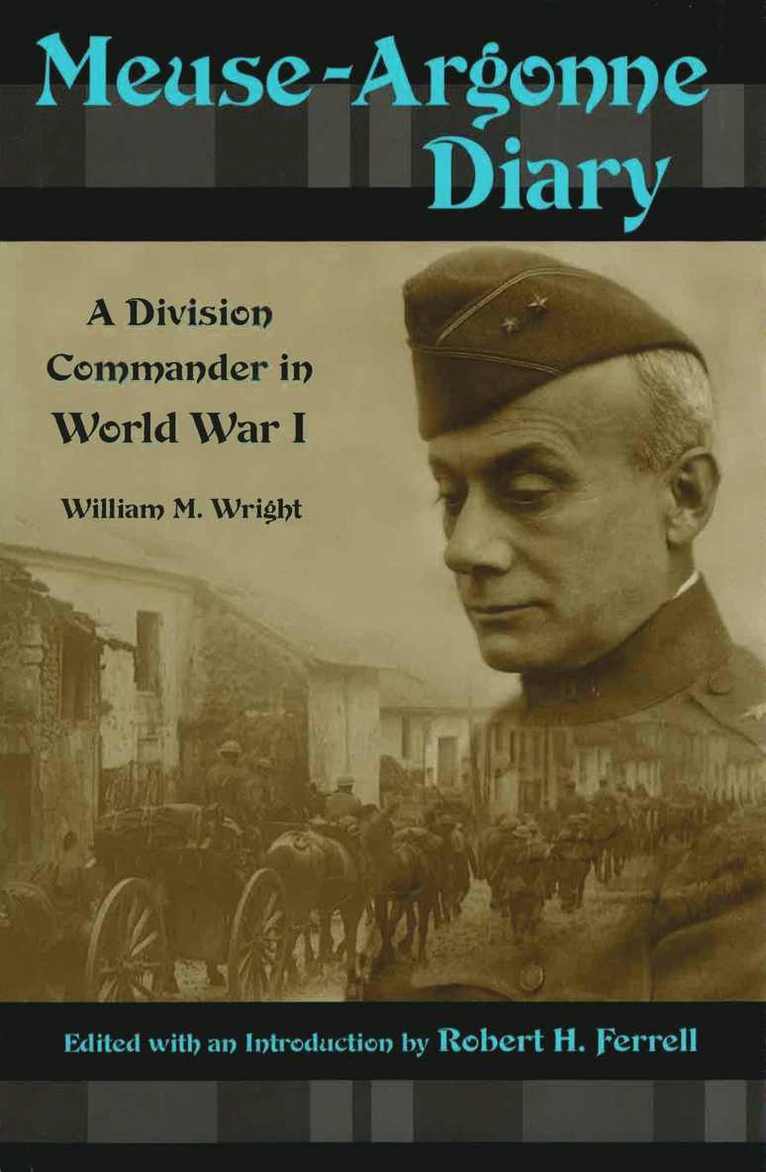
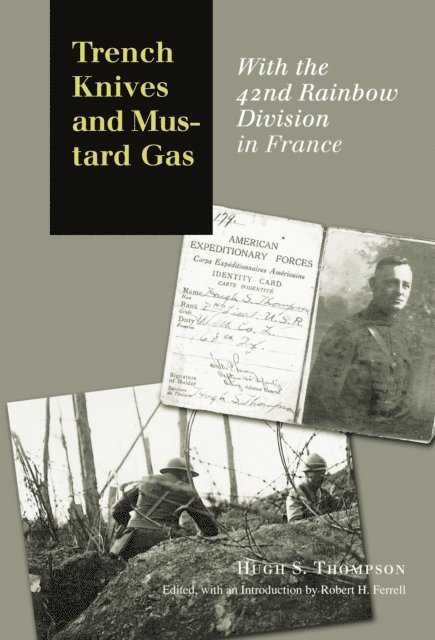
September 13, 1918Got no sleep at all last night.About two o'clock in the morning Col. Heintzelman, chief of staff of the corps, came out and he was much pleased with what the division had accomplished and with the way they had gone through. It was the division's first battle and it played a very important and creditable part. Certain things fell down. . . . The truth of the matter is the troops got away from the wire and it was impossible to keep the wire up through the tangle of barbed wire and woods. We captured 3,000 prisoners on our front alone and have lost 521. November 1, 1918 Considerable heavy artillery fire all night. The preparation fire went down promptly at 3:30, it was very heavy. . . . The barrage went down promptly at 5:30. Troops jumped off. At 7:30 thirty prisoners reported from Le Dhuy Fme., taken by the 353rd and 354th infantries. I don't understand what the 353rd Infantry is doing in there, as it is out of the sector. At 7:00 a.m. there was a distinct lull in the artillery fire. . . . I told Hanson at 8:05 to move his troops forward to parallel 86 immediately. He stated that he would get them going about 8:30, but actually did not get them started until about eleven o'clock. I sent for him on arrival and told him to hurry his men up. Before Lee left I had ordered the divisional reserve to move forward with its advance element on the first objective to maintain their echelonment in depth. Smyser came in at one o'clock and I ordered the divisional machine guns to the front to take position about one-half kilometer east of Dhuy Fme. At the time the reserves were ordered forward. I ordered Hanson to take his P.C. to Dhuy Fme. . . . Hanson has just arrived. I do not understand why he is always so slow. He seems to be inordinately stupid. During America's participation in World War I, 1917–1918, only a single commander of a division, William M. Wright, is known to have kept a diary. In it, General Wright relates his two-month experience at St. Mihiel and especially the Meuse-Argonne, the largest and most costly battle in American history. In the Meuse-Argonne, the Eighty-ninth Division, made up of 28,000 draftees from Missouri and Kansas and under Wright's command, was one of the two American point divisions beginning November 1, 1918, when the U.S. First Army forced the German defenders back to the Meuse River and helped end World War I as the main German railway line for the entire Western Front came under American artillery fire. It was a great moment, and Wright was at the center of it. Robert Ferrell skillfully supplements the diary with his own narrative, making use of pertinent manuscripts, notably a memoir by one of Wright's infantry regiment commanders.The diary shows the exacting attention that was necessary to keep such a large, unwieldy mass of men in motion. It also shows how the work of the two infantry brigadiers and of the two supporting artillery brigades required the closest attention. Meuse-Argonne Diary, a unique account of, among other things, a singular moment in the Great War in which American troops ensured victory, will fascinate anyone interested in military history in general and World War I in particular.
706 kr
Skickas inom 3-6 vardagar
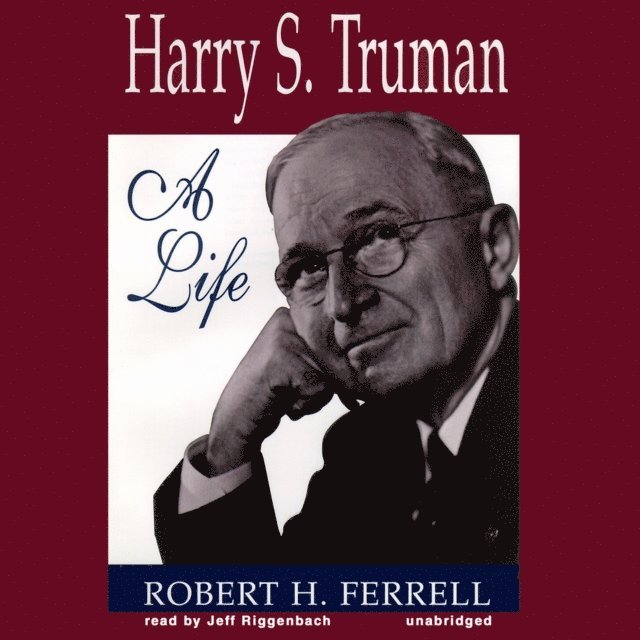
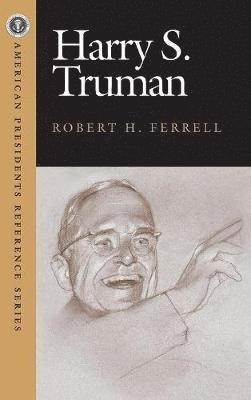
Each volume in the new American Presidents Reference Series is organized around an individual presidency and gathers a host of biographical, analytical, and primary source historical material that will analyze the presidency and bring the president, his administration, and his times to life. The series focuses on key moments in U.S. political history as seen through the eyes of the most influential presidents to take the oath of office. Unique headnotes provide the context to data, tables and excerpted primary source documents.Harry Truman was born on May 8, 1884. He served with distinction during World War I as a commander of an artillery battery, and he ultimately attained the rank of major. In 1922, with the support of political boss Tom Pendergast, Truman was elected as a county judge. He lost reelection, but then won again as presiding judge in 1926 and 1930. In 1934 Truman was elected to the U.S. Senate, where he supported President Franklin Roosevelt′s New Deal policies and entry into World War II. When Vice President Henry Wallace alienated Democratic Party leaders, Truman was nominated for vice president. On April 12, 1945, eighty-two days into Truman′s vice presidency, Roosevelt died in Warm Springs, Georgia. At the age of sixty-one, Truman was sworn in as the thirty-third president of the United States. Key events during the Truman presidency include victory in World War II and Truman′s decision to drop atomic bombs on Japan, the start of the cold war with the Soviet Union and its eastern European satellites, the Marshall Plan, the Berlin airlift, the Fair Deal, price-control legislation, and the McCarthy hearings. In March 1952 Truman announced that he would not seek reelection. Harry S. Truman died on December 26, 1972.This new volume on the presidency of Harry S. Truman will cover campaigns, elections, and the Pendergast connection,Senator Truman, particularly his chairmanship of the Special Committee to Investigate the National Defense Program,FDR, World War II, and the atomic bomb decision,Joseph McCarthy, the cold war, and the police action in Korea,civil rights.