• Fri frakt över 249 kr
  • •
  • Snabba leveranser
  • •
  • Billiga böcker
Kundservice

Du är på sajten för privatpersoner.

Företag, bibliotek eller offentlig verksamhet?

Du handlar på classic.bokus.com, där alla dina funktioner finns intakta.
Till classic.bokus.com
Bokus logotyp. Gå till startsidan.
  • Erbjudanden
  • Nyheter
  • Student
  • Topplistor
  • Barn & ungdom
  • Bokus Play
  • E-böcker
  • Pocketböcker
  • Spel & pussel

10% rabatt på allt med kod NYSTART10 →

Sidfot

Mina sidor

    Hjälp

    • Kundservice
    • Vanliga frågor och svar
    • Frakt och leverans
    • Retur vid ångerrätt
    • Reklamera vara
    • Betalning
    • Köpvillkor
    • Allmänna villkor
    • Information om webbplatsens tillgänglighet

    Om Bokus

    • Om oss
    • Pressrum
    • För studenter
    • För företag
    • För bibliotek och offentlig verksamhet
    • För leverantörer
    • Hållbarhet

    Populärt

    • Aktuella erbjudanden
    • Presentkort
    • Studentlitteratur
    • Nya böcker
    • Topplistor
    • Signerade böcker
    • Engelska böcker

    Inspiration

    • Boktips
    • BookTok
    • Populära bokserier
    • Barnbokskaraktärer
    • Populära författare
    Logotyp för Bokus
    Följ oss på Facebook (extern länk)Följ oss på Instagram (extern länk)Följ oss på YouTube (extern länk)Följ oss på TikTok (extern länk)
    bokus @ CookiesAnpassa cookiesIntegritetspolicyKöpvillkor
    Till Citymail hemsida (extern länk)Till Budbee hemsida (extern länk)Till Postnord hemsida (extern länk)Till Schenker hemsida (extern länk)Till Early Bird hemsida (extern länk)Till Walleys hemsida (extern länk)
    1. Historia och arkeologi
    2. Historia
    3. Militärhistoria
    4. Första världskriget

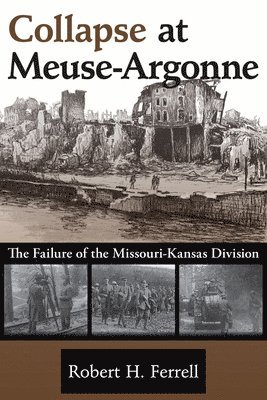
    Collapse at Meuse-Argonne

    The Failure of the Missouri-Kansas Division

    AvRobert H. Ferrell

    Häftad, Engelska, 2017

    242 kr

    Beställningsvara. Skickas inom 5-8 vardagar. Fri frakt över 249 kr.

    Beskrivning

    During World War I, the Thirty-fifth Division was made up of National Guard units from Missouri and Kansas. Composed of thousands of men from the two states, the Missouri-Kansas Division entered the great battle of the Meuse-Argonne with no battle experience and only a small amount of training, a few weeks of garrisoning in a quiet sector in Alsace. The division fell apart in five days, and the question Robert Ferrell attempts to answer is why.The Thirty-fifth Division was based at Camp Doniphan on the Fort Sill reservation in Oklahoma and was trained essentially for stationary, or trench, warfare. In March 1918, the German army launched a series of offensives that nearly turned the tide on the Western Front. The tactics were those of open warfare, quick penetrations by massive forces, backed by heavy artillery and machine guns. The American Expeditionary Forces (AEF) commanded by Gen. John J. Pershing were unprepared for this change in tactics. When the Thirty-fifth Division was placed in the opening attack in the Meuse-Argonne on September 26, 1918, it quickly fell.In addition to the Thirty-fifth Division’s lack of experience, its problems were compounded by the necessary confusions of turning National Guard units into a modern assemblage of men and machines. Although the U.S. Army utilized observers during the initial years of World War I, their dispatches had piled up in the War College offices in Washington and, unfortunately, were never studied.The Thirty-fifth Division was also under the command of an incompetent major general and an incompetent artillery brigadier. The result was a debacle in five days, with the division line pushed backward and held only by the 110th Engineer Regiment of twelve hundred men, bolstered by what retreating men could be shoved into the line, some of them at gunpoint.Although three divisions got into trouble at the outset of the Meuse-Argonne, the Thirty-fifth’s failure was the worst. After the collapse, the Red Cross representative of the division, Henry J. Allen, became governor of Kansas and instigated investigations by both houses of Congress. Secretary of War Newton D. Baker testified in an effort to limit the political damage. But the hullabaloo gradually died down, and the whole sad episode passed into the darker corridors of history.By focusing on a single event in history, Collapse at Meuse-Argonne offers a unique glimpse into one of the most critical battles of World War I. Historians, as well as the general reader, will find this new perspective on what really happened to the Thirty-fifth Division fascinating.

    Produktinformation

    • Utgivningsdatum:2017-09-10
    • Mått:152 x 229 x 15 mm
    • Vikt:280 g
    • Format:Häftad
    • Språk:Engelska
    • Antal sidor:176
    • Förlag:University of Missouri Press
    • ISBN:9780826221421

    Utforska kategorier

    • Första världskriget inom Historia och arkeologi
    • Europas historia inom Historia och arkeologi
    • Allmän historia och världshistoria inom Historia och arkeologi

    Mer om författaren

    Robert H. Ferrell is Professor Emeritus of History at Indiana University. He is the author or editor of numerous books, including A Youth in the Meuse-Argonne: A Memoir, 1917–1918 by William S. Triplet; Harry S. Truman: A Life; and The Dying President: Franklin D. Roosevelt, 1944–1945, all available from the University of Missouri Press. Ferrell resides in Ann Arbor, Michigan.

    Recensioner i media

    An excellent study of the interrelationship of leadership, training, morale, and unit cohesion. It offers the military professional a cautionary tale on how a unit composed of good soldiers can turn into a mob when they perceive their leaders are out of touch, indifferent, or too career-focused."" - Military Review""This excellent book is what one expects from its author, unsurpassed for his industry, competence, and honesty. It is most unusual that a scholar of his eminence would devote himself to such a valuable “small” history. His father, a veteran of the AEF, would have been proud."" - Journal of Military History

    Innehållsförteckning

    • PrefaceAcknowledgementsOne: PreparationTwo: Thursday, September 26Three: Friday-Saturday, September 27-28Four: Sunday, September 29Five: AftermathSix: ConclusionA Contemporary AnalysisNotesSourcesIndex