Robert J. Helfenbein - Böcker
Visar alla böcker från författaren Robert J. Helfenbein. Handla med fri frakt och snabb leverans.
8 produkter
8 produkter
533 kr
Skickas inom 10-15 vardagar
WINNER 2023 Society of Professors of Education Outstanding Book AwardCritical Geographies of Education: Space, Place, and Curriculum Inquiry is an attempt to take space seriously in thinking about school, schooling, and the place of education in larger society. In recent years spatial terms have emerged and proliferated in academic circles, finding application in several disciplines extending beyond formal geography. Critical Geography, a reconceptualization of the field of geography rather than a new discipline itself, has been theoretically considered and practically applied in many other disciplines, mostly represented by what is collectively called social theory (i.e., anthropology, sociology, cultural studies, political science, and literature). The goal of this volume is to explore how the application of the ideas and practices of Critical Geography to educational theory in general and curriculum theorizing in specific might point to new trajectories for analysis and inquiry. This volume provides a grounding introduction to the field of Critical Geography, making connections to the significant implications it has for education, and by providing illustrations of its application to specific educational situations (i.e., schools, classrooms, and communities). Presented as an intellectual geography that traces how spatial analysis can be useful in curriculum theorizing, social foundations of education, and educational research, the book surveys a range of issues including social justice and racial equity in schools, educational reform, internationalization of the curriculum, and how schools are placed within the larger social fabric.
2 096 kr
Skickas inom 10-15 vardagar
WINNER 2023 Society of Professors of Education Outstanding Book AwardCritical Geographies of Education: Space, Place, and Curriculum Inquiry is an attempt to take space seriously in thinking about school, schooling, and the place of education in larger society. In recent years spatial terms have emerged and proliferated in academic circles, finding application in several disciplines extending beyond formal geography. Critical Geography, a reconceptualization of the field of geography rather than a new discipline itself, has been theoretically considered and practically applied in many other disciplines, mostly represented by what is collectively called social theory (i.e., anthropology, sociology, cultural studies, political science, and literature). The goal of this volume is to explore how the application of the ideas and practices of Critical Geography to educational theory in general and curriculum theorizing in specific might point to new trajectories for analysis and inquiry. This volume provides a grounding introduction to the field of Critical Geography, making connections to the significant implications it has for education, and by providing illustrations of its application to specific educational situations (i.e., schools, classrooms, and communities). Presented as an intellectual geography that traces how spatial analysis can be useful in curriculum theorizing, social foundations of education, and educational research, the book surveys a range of issues including social justice and racial equity in schools, educational reform, internationalization of the curriculum, and how schools are placed within the larger social fabric.
Critical Geographies in/of Education
Revisiting Discursive and Spatial Reckonings
Inbunden, Engelska, 2025
2 037 kr
Skickas inom 10-15 vardagar
This book assembles pioneering work that first applied critical geography's concepts to educational theory, offering a comprehensive introduction to this emerging field. In recent years, spatial theory has transcended traditional geography, permeating diverse academic disciplines, particularly within social theory.The volume demonstrates how spatial and discursive frameworks can fundamentally reshape our understanding of education across formal and informal contexts. By examining how spatial practices and embodied experiences configure learning environments, the chapters in this volume illuminate the profound impact of the "spatial turn" on educational discourse. Through compelling examples from schools, classrooms, and communities, they explore how spatial dynamics shape educational experiences and interactions.Featuring the special issue on Critical Geographies of Education originally published in Education Studies, this book is complemented by new reflection pieces that trace the field's intellectual development. Its interdisciplinary framework offers valuable insights for scholars across Sociology of Education, Cultural Studies, Urban Education, Curriculum Theory, and Teacher Education. Graduate students investigating the complex intersections of space, place, power, and identity in educational contexts will find this collection an indispensable resource that bridges theoretical foundations with practical applications.
579 kr
Skickas inom 7-10 vardagar
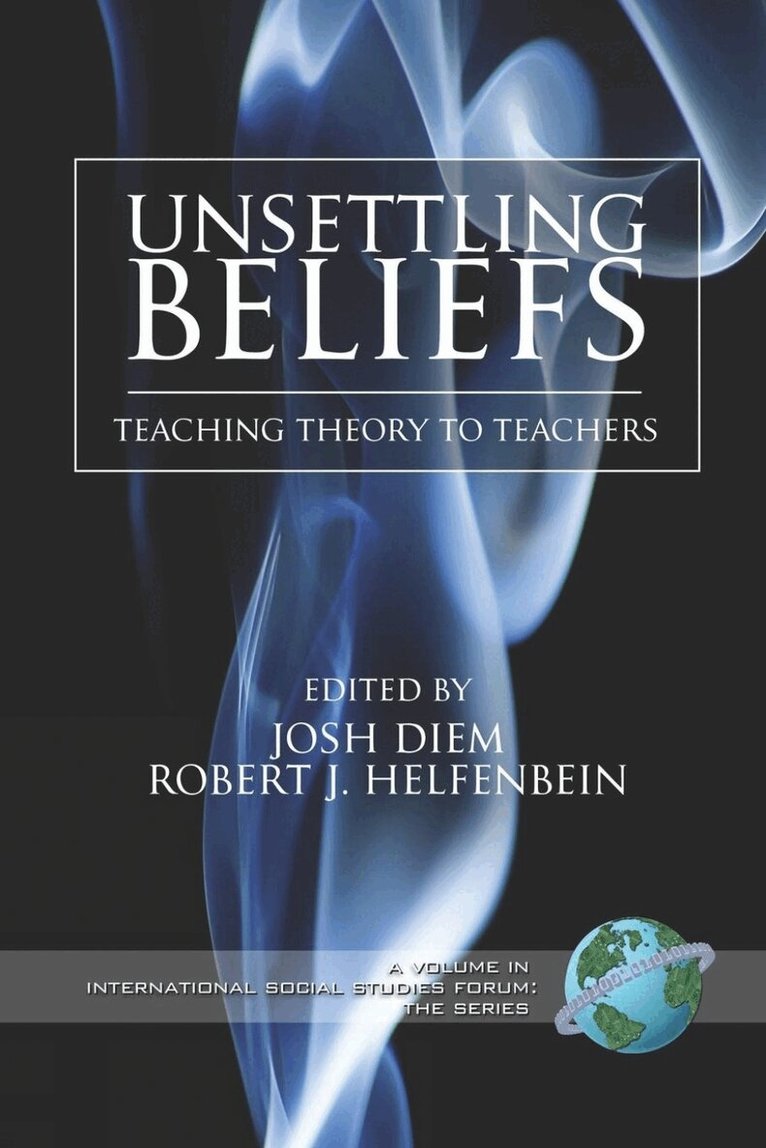
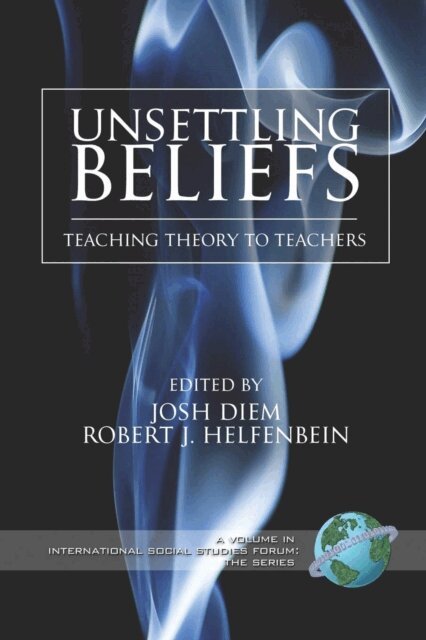
This volume explores issues involved with teaching social theory to preservice teachers pursuing degrees through teacher education programs and experienced teachers and administrators pursuing graduate degrees. The contributors detail their experiences teaching theoretical perspectives regarding race, gender, ethnicity, sexuality, power, and the construction of schools as an institution of the state. The editors and contributors hope to offer the beginning of a colleagial dialogue within the field of education (both inside and outside the academy) about the relevance and pedagogical issues associated with such material. Additionally, the contributors offer advice on missteps to avoid and provide success stories that give hope to those who also wish to engage in the practice of teaching theory to teachers.
1 023 kr
Skickas inom 7-10 vardagar
This volume explores issues involved with teaching social theory to preservice teachers pursuing degrees through teacher education programs and experienced teachers and administrators pursuing graduate degrees. The contributors detail their experiences teaching theoretical perspectives regarding race, gender, ethnicity, sexuality, power, and the construction of schools as an institution of the state. The editors and contributors hope to offer the beginning of a colleagial dialogue within the field of education (both inside and outside the academy) about the relevance and pedagogical issues associated with such material. Additionally, the contributors offer advice on missteps to avoid and provide success stories that give hope to those who also wish to engage in the practice of teaching theory to teachers.
579 kr
Skickas inom 7-10 vardagar
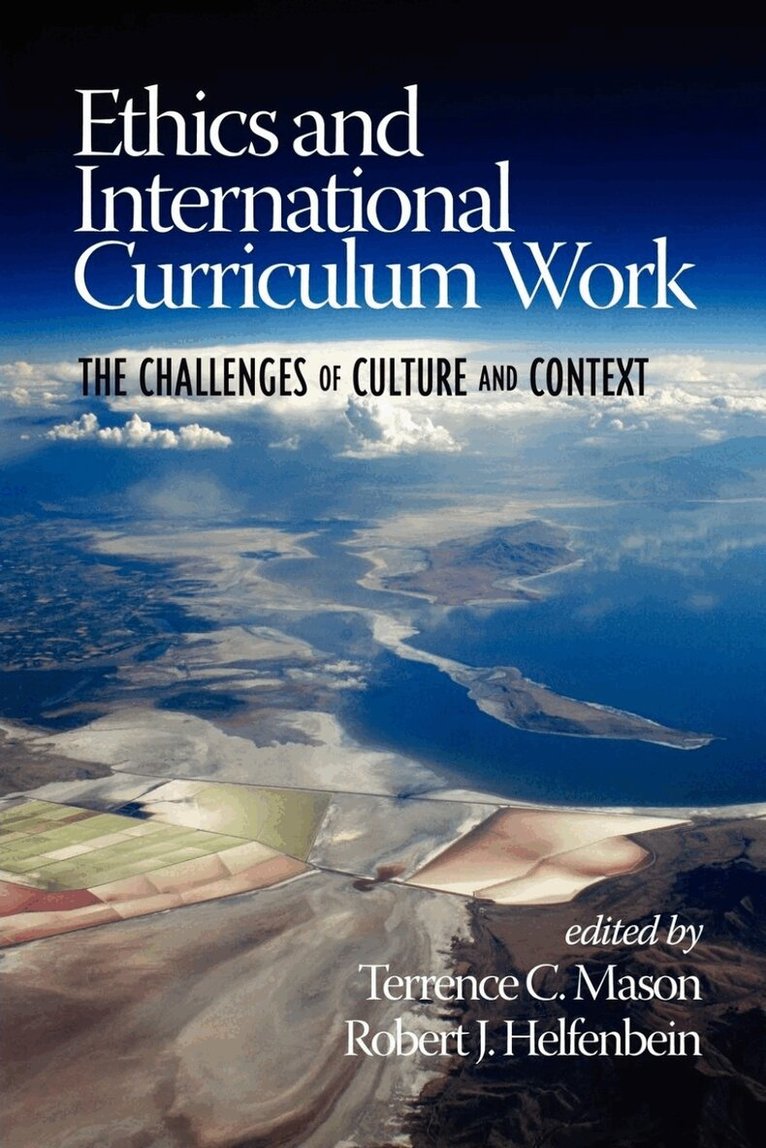
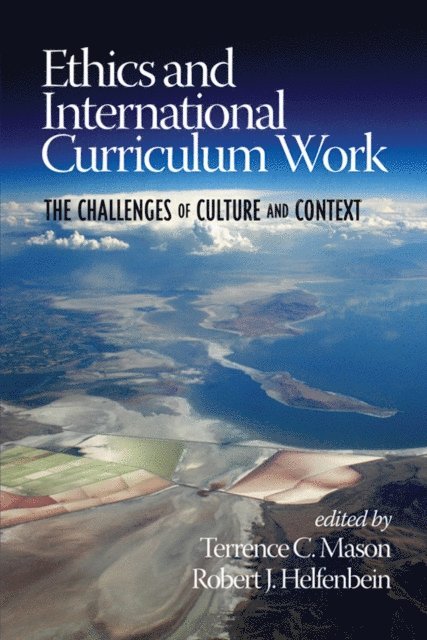
The widely cited, though highly contested, idea that “the world is flat” (Friedman, 2004) carries with it a call for education to provide a leveling effect across continents and cultures Students in Skokie or in Skopje, as the theory goes, are expected to experience a school curriculum that shares certain common elements, goals, and purposes. Such a globalized view is not, however, without its complications. This book addresses some of the issues that arise when the transmigration of educational ideas occurs, with a particular eye toward the ethical dilemmas that curriculum workers face in international contexts.The authors who have contributed to this volume explore, through case examples and critical reflection, what happens when ideas that are drawn from one set of cultural norms and experiences is introduced into other cultural contexts. In many cases these are the stories of “donors” and “hosts,” of structured inequities of power and influence, of disparities in material resources, and, as expressed in one of the cases, the dynamics of the “colonizer” and the “colonized.” A recurrent theme concerns the challenges faced by educators working internationally to reconcile their own ethical predispositions toward equity and cultural responsiveness with certain tacit assumptions about the appropriateness or value of curriculum practices brought from the “developed” world for teachers and students in the “developing” world. How these dilemmas are navigated forms the content of this collection of reports from the field written by those who engage in this complex and important work.While the content of this volume is situated at the intersection between the field of curriculum studies and comparative education, it is fundamentally a book about curriculum. Most of the authors come from various disciplinary backgrounds with specializations in curriculum development in content areas such as social studies, geography, or mathematics. As “outsiders looking in” on the field of international education and with thoughtful reflections grounded in practice, the authors provide a new set of insights into the challenges of international curriculum work. Finally, since many of the questions raised by the work included here are ethical in nature, the book begins and ends with analyses that link the practical realities presented in the cases with contemporary philosophical thought. This, then, can be seen as the primary contribution of the book to the educational literature as it offers a careful and well-articulated synthesis of theory and practice in the field of international curriculum work. This publication would make an important contribution to courses in curriculum theory and practice, comparative and international education, and international development outside of the field of education.
Ethics and International Curriculum Work
The Challenges of Culture and Context
Inbunden, Engelska, 2012
1 023 kr
Skickas inom 7-10 vardagar
The widely cited, though highly contested, idea that “the world is flat” (Friedman, 2004) carries with it a call for education to provide a leveling effect across continents and cultures Students in Skokie or in Skopje, as the theory goes, are expected to experience a school curriculum that shares certain common elements, goals, and purposes. Such a globalized view is not, however, without its complications. This book addresses some of the issues that arise when the transmigration of educational ideas occurs, with a particular eye toward the ethical dilemmas that curriculum workers face in international contexts.The authors who have contributed to this volume explore, through case examples and critical reflection, what happens when ideas that are drawn from one set of cultural norms and experiences is introduced into other cultural contexts. In many cases these are the stories of “donors” and “hosts,” of structured inequities of power and influence, of disparities in material resources, and, as expressed in one of the cases, the dynamics of the “colonizer” and the “colonized.” A recurrent theme concerns the challenges faced by educators working internationally to reconcile their own ethical predispositions toward equity and cultural responsiveness with certain tacit assumptions about the appropriateness or value of curriculum practices brought from the “developed” world for teachers and students in the “developing” world. How these dilemmas are navigated forms the content of this collection of reports from the field written by those who engage in this complex and important work.While the content of this volume is situated at the intersection between the field of curriculum studies and comparative education, it is fundamentally a book about curriculum. Most of the authors come from various disciplinary backgrounds with specializations in curriculum development in content areas such as social studies, geography, or mathematics. As “outsiders looking in” on the field of international education and with thoughtful reflections grounded in practice, the authors provide a new set of insights into the challenges of international curriculum work. Finally, since many of the questions raised by the work included here are ethical in nature, the book begins and ends with analyses that link the practical realities presented in the cases with contemporary philosophical thought. This, then, can be seen as the primary contribution of the book to the educational literature as it offers a careful and well-articulated synthesis of theory and practice in the field of international curriculum work. This publication would make an important contribution to courses in curriculum theory and practice, comparative and international education, and international development outside of the field of education.
452 kr
Skickas inom 7-10 vardagar
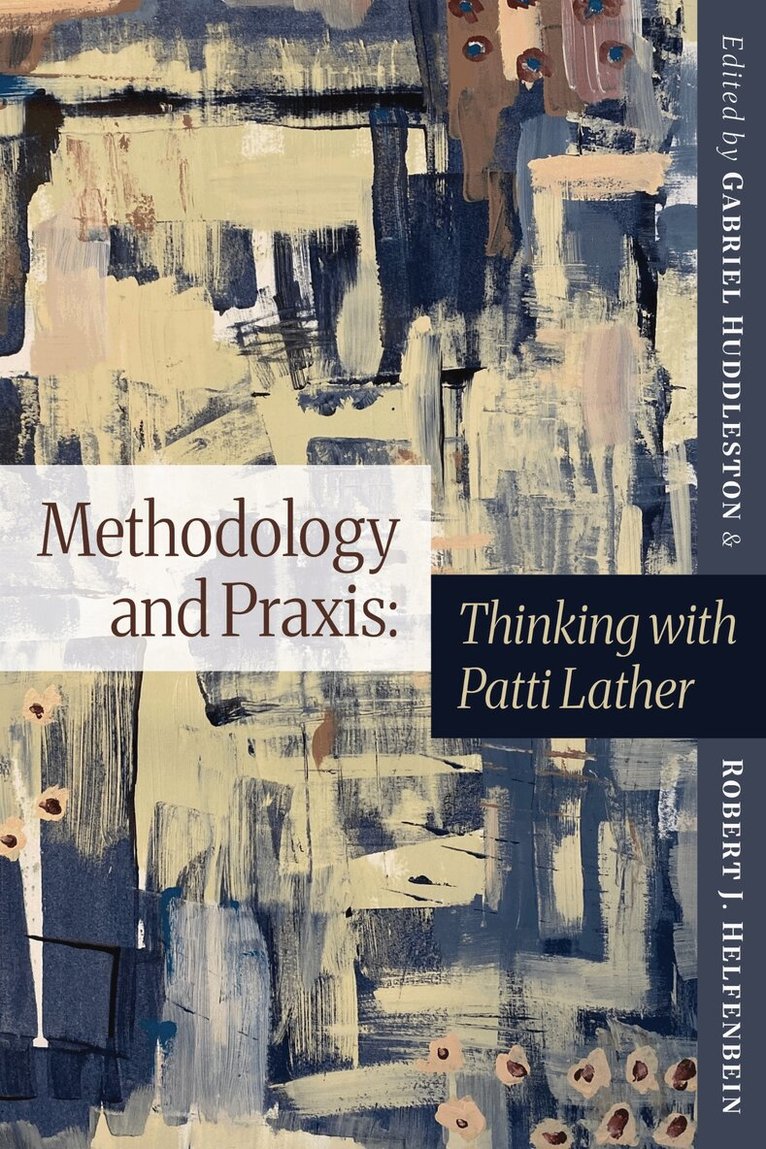
Methodology and Praxis: Thinking with Patti Lather examines the work of Patti Lather and its importance at the intersections of curriculum theory, cultural studies, and critical qualitative research. The book explores the impact of Lather's work on the field both broadly and in specific and to engage with her ideas and methods in innovative ways. Since 1988, Patti Lather has been a faculty member at Ohio State University's School of Educational Policy and Leadership, where she teaches qualitative research, feminist methodology, and courses on gender and education. She has authored four influential books: Getting Smart: Feminist Research and Pedagogy With/in the Postmodern (1991 Critics Choice Award); Troubling the Angels: Women Living with HIV/AIDS (co-written with Chris Smithies, 1998 CHOICE Outstanding Academic Title); Getting Lost: Feminist Efforts Toward a Double(d) Science (2008 Critic's Choice Award); and Engaging (Social) Science: Policy from the Side of the Messy (awarded the Critic's Choice Award in 2010 and 2011). Dr. Lather has delivered lectures extensively both nationally and internationally, and has held several distinguished visiting lectureships. Her research explores (post)critical, feminist, and poststructural theories, with her recent work focusing on how the demand for scientifically-based research in education affects qualitative inquiry. She has served in visiting roles at institutions such as the University of British Columbia, Goteborg University, York University, and the Danish Pedagogy Institute, and in 1995 she undertook a sabbatical at the Humanities Research Institute at the University of California, Irvine, where she led a seminar on feminist research methodology. Her accolades include a 1989 Fulbright to New Zealand and induction as an AERA Fellow in 2009. Lather is a prominent and prolific scholar whose work has been influential in shaping multiple fields, challenging conventional understandings of research and knowledge, and advocating for social justice and equity in education. This collection represents a diverse group of academics that builds on these contributions and showcase the diverse ways in which research improves teaching and learning. Contributors in this volume include scholars in educational theory, social science, research methodology, feminist social theory, and curriculum theorizing. Perfect for courses such as: Cultural Studies of Education; Qualitative Research Methodology; Contemporary Curriculum Theory; Advanced Qualitative Inquiry; Feminist Theory and Methodology; Education Policy Studies; Research In Education