Robert Kargon - Böcker
Visar alla böcker från författaren Robert Kargon. Handla med fri frakt och snabb leverans.
3 produkter
3 produkter
415 kr
Skickas inom 7-10 vardagar
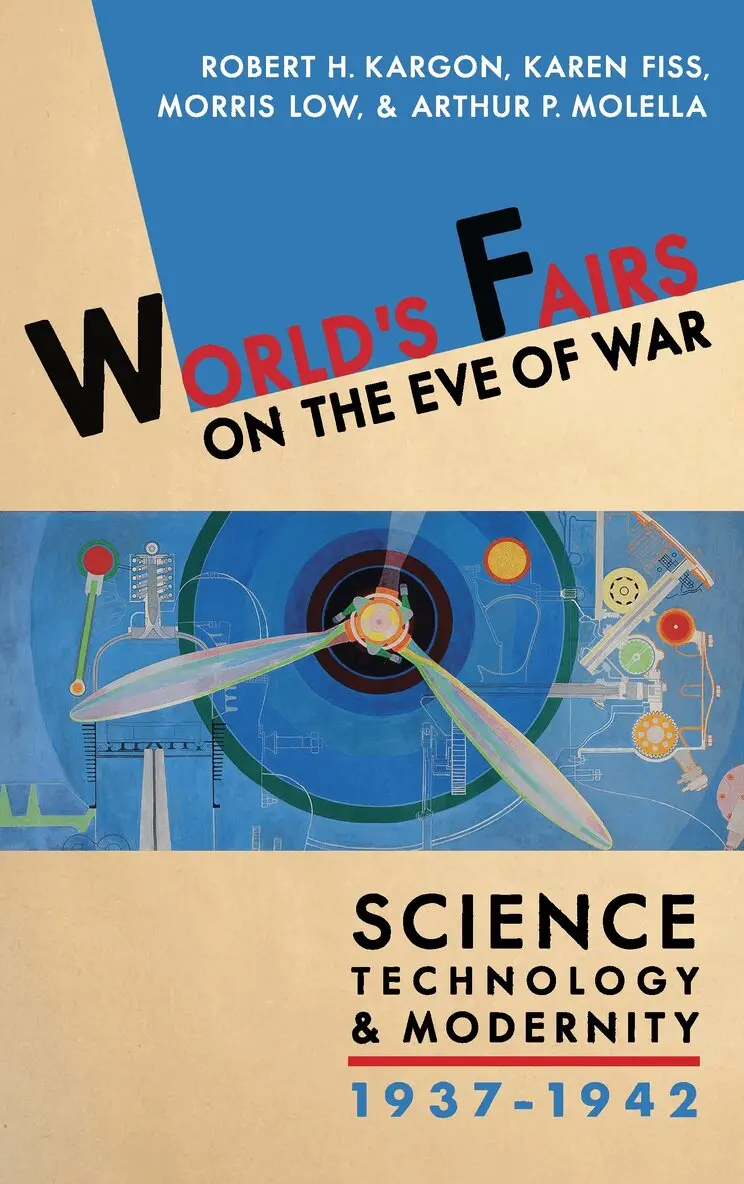
Since the first world’s fair in London in 1851, at the dawn of the era of industrialization, international expositions served as ideal platforms for rival nations to showcase their advancements in design, architecture, science and technology, industry, and politics. Before the outbreak of World War II, countries competing for leadership on the world stage waged a different kind of war—with cultural achievements and propaganda—appealing to their own national strengths and versions of modernity in the struggle for power. World’s Fairs on the Eve of War examines five fairs and expositions from across the globe—including three that were staged (Paris, 1937; Dusseldorf, 1937; and New York, 1939–40) and two that were in development before the war began but never executed (Tokyo, 1940; and Rome, 1942). Collectively, the authors consider representations of science and technology at world’s fairs as influential cultural forces and at a critical moment in history, when tensions and ideological divisions between political regimes would soon lead to war.
2 159 kr
Skickas inom 10-15 vardagar
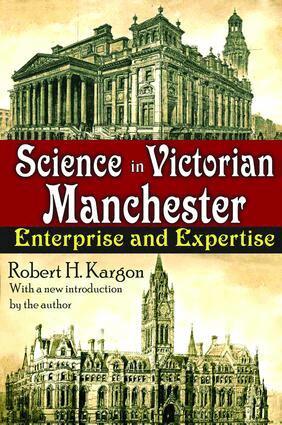
The evolution of an urban scientific community under the pressures of conceptual and social change is the main focus of this book. Manchester was Victorian Britain's leading industrial city. In order to describe and analyze the transformation of science in the eighteenth century, Robert Kargon closely examines Manchester through successive stages. In so doing, he traces the evolution of science from an activity pursued by gentlemen-amateurs to a highly specialized profession.At the end of this process, the author shows, a major trans formation in our understanding of the nature of science can be discerned: scientific knowledge, it was realized, could be produced. Science was no longer regarded primarily as the di vine design rendered into laws of nature, but rather as a method, or instrument, to be applied to novel areas of human endeavor. Science had become on the one hand enterprise, and on the other expertise. In each chapter, Kargon relates the changing conception of science and its social role to the birth, growth, and character of the city's scientific institutions.The contours of the scientific community-its interests, concerns, and approaches to what it came to see as critical problem---were shaped by its civic environment. Its character, in turn, responded to the development of the disciplines represented within it. As the sciences increased in specialization and complexity during the course of the nineteenth century, they placed new stress upon the community, affecting the composition of its membership and the nature of its leading institutions. The scientific frontier reacted upon Manchester just as Manchester acted upon it. Now available in paperback, this classic work in history includes a new introduction by the author.
730 kr
Skickas inom 10-15 vardagar
The evolution of an urban scientific community under the pressures of conceptual and social change is the main focus of this book. Manchester was Victorian Britain's leading industrial city. In order to describe and analyze the transformation of science in the eighteenth century, Robert Kargon closely examines Manchester through successive stages. In so doing, he traces the evolution of science from an activity pursued by gentlemen-amateurs to a highly specialized profession.At the end of this process, the author shows, a major trans formation in our understanding of the nature of science can be discerned: scientific knowledge, it was realized, could be produced. Science was no longer regarded primarily as the di vine design rendered into laws of nature, but rather as a method, or instrument, to be applied to novel areas of human endeavor. Science had become on the one hand enterprise, and on the other expertise. In each chapter, Kargon relates the changing conception of science and its social role to the birth, growth, and character of the city's scientific institutions.The contours of the scientific community-its interests, concerns, and approaches to what it came to see as critical problem---were shaped by its civic environment. Its character, in turn, responded to the development of the disciplines represented within it. As the sciences increased in specialization and complexity during the course of the nineteenth century, they placed new stress upon the community, affecting the composition of its membership and the nature of its leading institutions. The scientific frontier reacted upon Manchester just as Manchester acted upon it. Now available in paperback, this classic work in history includes a new introduction by the author.