Robert Liddiard - Böcker
Visar alla böcker från författaren Robert Liddiard. Handla med fri frakt och snabb leverans.
3 produkter
3 produkter
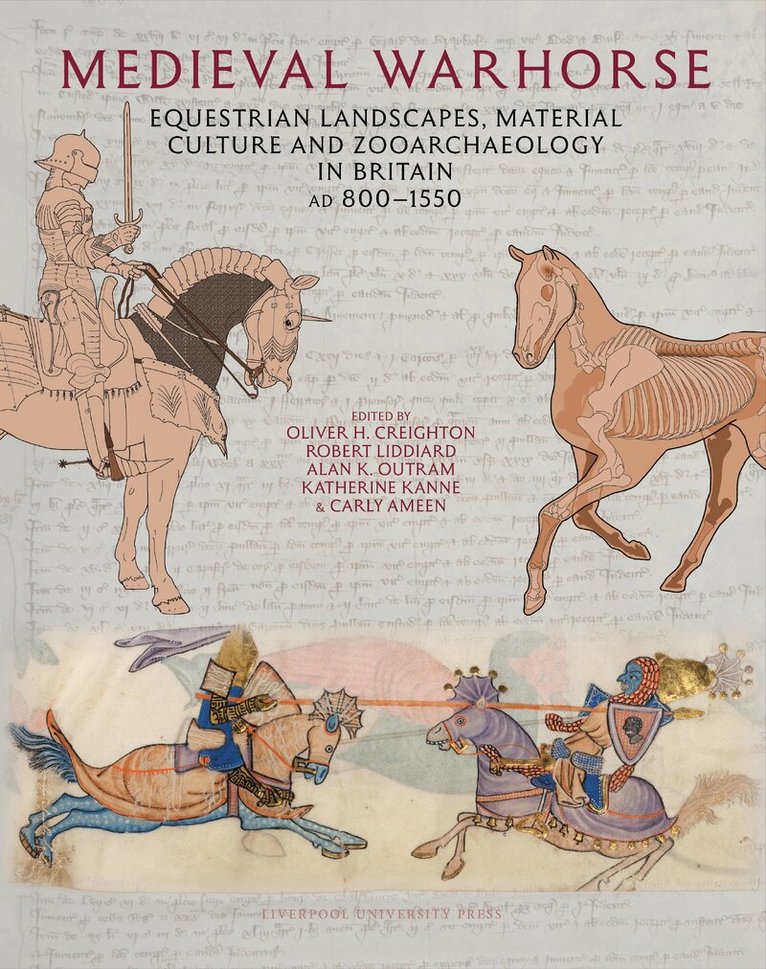
Medieval Warhorse
Equestrian Landscapes, Material Culture and Zooarchaeology in Britain, AD 800–1550
Inbunden, Engelska, 2025
736 kr
Skickas inom 7-10 vardagar
Nominated for Current Archaeology Book of the Year 2026The image of the armoured knight mounted on his charging warhorse is one of the most evocative of the Middle Ages. As distinctive symbols of social status, horses were central to the medieval aristocratic image and closely bound up with concepts of knighthood and chivalry, while as weapons of war bred for size, strength and stamina, they changed the face of battle.Drawing upon new interdisciplinary research, this volume presents a fresh perspective on warhorses, and medieval horses generally, in Britain, understood within its wider European context. It adopts an integrated approach that covers the full array of evidence for medieval horses, from their physical remains (bones, teeth and DNA), equipment and armour, through to visual sources such as sculpture and wall paintings, and documentary and landscape evidence for the environments in which they were bred and trained. Analyses of these sources of information are first presented individually, and then integrated and cross-compared with the historical record to present a new chronology of horse stature, conformation and appearance and to generate new understandings of the changing place of the horse in the medieval world.
Landscapes of Lordship'
Norman Castles and the Countryside in Medieval Norfolk, 1066 - 1200
Häftad, Engelska, 2000
701 kr
Skickas inom 5-8 vardagar
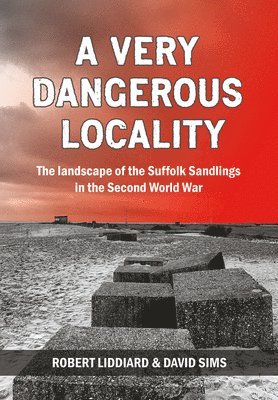
Very Dangerous Locality
The Landscape of the Suffolk Sandlings in the Second World War
Häftad, Engelska, 2018
287 kr
Tillfälligt slut
This book examines the landscape archaeology of the Second World War on the section of the east coast of England known as the Suffolk Sandlings (the coastal strip from Lowestoft to Felixstowe), an area unusually rich in military archaeology. It was in the front line of Britain's defences against invasion throughout the war and as a training ground it was the setting for nationally important exercises in the lead-up to the D-Day landings. In 1944 it also played a major role in Operation 'Diver', the defence against the flying bomb. The Sandlings is therefore an ideal testbed for much wider questions about the militarisation of the landscape during the Second World War. This important new study considers how this area was transformed in the course of the conflict by synthesising an extensive range of sources, including the physical remains of defences and training, aerial photographs, the war diaries of military units on the coast, oral history and artistic representations. What emerges is the most detailed account to date of a coastal landscape during the Second World War.A highly innovative interdisciplinary study, this holistic approach reveals in astonishing detail the struggle to build defences in 1940, the dramatic reorganisation of those defences in 1941? 2 and the slow transformation of the military landscape from one of defence to one where troops prepared for the offensive. The reader is shown not just a new view of the wartime landscape, but a new methodology for the study of conflict landscapes more broadly; in this the book makes a major contribution to scholarship.Richly illustrated with plans, maps and wartime photographs - many published for the first time - the book presents a vivid picture of a landscape in a crucial period in its history and will be of great interest to military historians, landscape archaeologists and all those with an interest in the area.