Robert Ricketts - Böcker
Visar alla böcker från författaren Robert Ricketts. Handla med fri frakt och snabb leverans.
6 produkter
6 produkter
853 kr
Skickas inom 7-10 vardagar
What works best for clients? Learn the pros and cons of the LLC, general partnership, limited partnership, and limited liability partnership by focusing on planning and potential tax traps. This title offers a review of distinct advantages of these entities coupled with an examination of the risk members and partners face if they do not have a solid tax plan to minimize their exposure. In addition, the authors explore some of the more intricate rules and regulations of these entities so you can move your working knowledge of partnership and LLC taxation beyond the basics.This book prepares the reader to do the following: Analyze a partnership or LLC agreement to determine whether any special allocations in the agreement will be allowed under Code Section 704(b)Identify the potential economic consequences of special allocations to a partner or LLC memberIdentify the potential tax consequences when a partner or LLC member has a negative balance in his or her capital accountRecognize the relationship between partnership and LLC allocations of profit and loss and the allocation of the risks and rewards of entity operationsDistinguish between the requirements for substantiality and those for economic effect under the regulationsDistinguish between "book" allocations required under Section 704(b) and "tax" allocations required under Section 704(c)Recognize the three methods described in the Section 704(c) regulations to make special allocations with respect to contributed propertyDetermine when a non-contributing partner or LLC member will or will not be protected by required allocations under Section 704(c)Calculate the gain that can result from reallocation of liabilities when a partner joins a partnershipCalculate a partner's or member's share of recourse liabilities of a partnership or LLCDistinguish between recourse and nonrecourse liabilities of a partnership or LLCAnalyze the impact of a partner or LLC member's guarantee of a recourse or nonrecourse liability of the entityRecognize when to treat a liability as a recognized versus contingent liability and understand how to account for partnership or LLC contingent liabilitiesCalculate the basis of each property received by a partner receiving multiple properties in a liquidating vs. non-liquidating distribution from a partnership or LLCRecognize which properties will receive a step-up or step-down in basis when multiple properties are received from a partnership or LLCAllocate basis increases or decreases among multiple properties for federal income tax purposesDetermine when an Internal Revenue code (IRC) Section 754 election will allow a partnership or LLC to adjust its basis in its assetsAllocate required basis adjustments among partnership or LLC assetsDetermine the tax consequences associated with the sale of a partner's or member's interest in a partnership or LLCRecognize how using the installment method to account for the sale of a partnership interest will affect how the partner will report his or her gain on the saleRecognize when the sale of an interest in a partnership will trigger a technical termination of the partnershipDetermine the tax basis and holding period of assets owned by the partnership following a technical terminationDetermine the tax consequences associated with subsequent dispositions of built-in gain or loss assets following a technical termination
1 701 kr
Skickas inom 7-10 vardagar
Are you ready to master the advanced concepts of partnership taxation? Provide your clients with valuable advice and tax planning strategies and gain a working knowledge of the Internal Revenue Code's sophisticated partnership tax rules and regulations. This book takes a deep dive into the complexities of partnership tax law. It includes step-by-step examples to help guide you through the complicated world of advanced partnership and LLC tax law.Some of the many concepts covered in this course include special allocations, liquidating and non-liquidation distributions, property basis calculations under various scenarios, and sales of a partnership interest.
725 kr
Skickas inom 5-8 vardagar
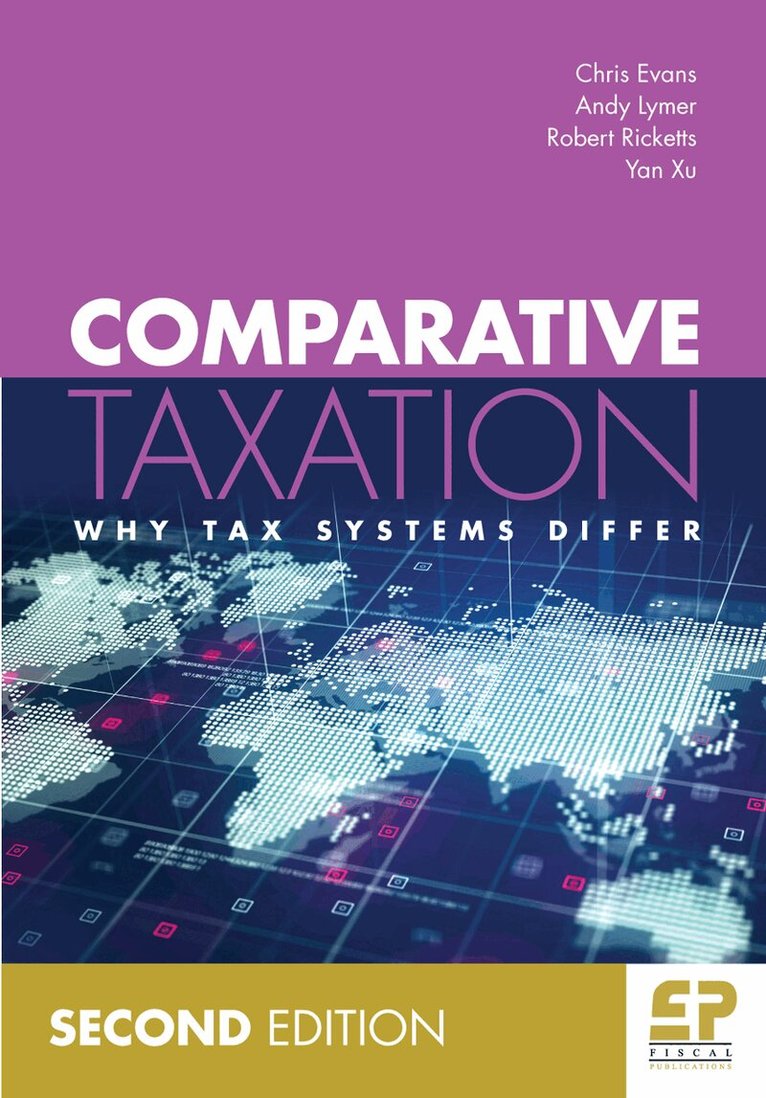
This book explores a number of critical issues related to tax systems around the world. Drawing upon a wealth of literature, it compares and contrasts modern tax systems in developed and developing countries, identifying factors that suggest they are converging and others that continue to distinguish them. It addresses the taxation of incomes (personal and corporate), wealth and consumption at the local, national, supranational and international levels; considers the use of environmental taxes; provides an analysis of modern trends in tax administration including issues of tax complexity and of tax compliance; and addresses the process and outcomes of tax reform.Readers will include anyone interested in how tax systems are formed, how they operate in practice, and how they are reformed.An ideal text for academic study at the intermediate or advanced levelsThis text explores and answers questions including:Why are the tax systems of developing and developed countries converging and how do they still differ?Why is the property tax the most widely used tax for local government?Why has income become the predominant tax base in developed countries?Do we need corporate income taxes?Why are wealth taxes relatively under-utilised in all countries?Why have so many countries adopted a VAT as their general sales tax?How do taxes help governments to deliver environmental objectives?Can we avoid complexity in tax system design or are we stuck with it if we want effective taxes?Why do taxpayers comply, or not comply, with their tax obligations?Where should we go next in designing tax systems for the 21st century?... and many others.
483 kr
Skickas inom 5-8 vardagar
This book explores a number of critical issues related to tax systems around the world. Drawing upon a wealth of literature, it compares and contrasts modern tax systems in developed and developing countries, identifying factors that suggest they are converging and others that continue to distinguish them. It addresses the taxation of incomes (personal and corporate), wealth and consumption at the local, national, supranational and international levels; considers the use of environmental taxes; provides an analysis of modern trends in tax administration including issues of tax complexity and of tax compliance; and addresses the process and outcomes of tax reform.Readers will include anyone interested in how tax systems are formed, how they operate in practice, and how they are reformed.An ideal text for academic study at the intermediate or advanced levelsThis text explores and answers questions including:Why are the tax systems of developing and developed countries converging and how do they still differ?How do countries adapt their tax systems to deal with external shocks such as wars, pandemics, climate change and financial crises?Why is the property tax the most widely used tax for local government?Why has income become the predominant tax base in developed countries?Do we need corporate income taxes?Why are wealth taxes relatively under-utilised in all countries?Why have so many countries adopted a VAT or GST as their general consumption tax?How do taxes help governments to deliver environmental objectives?Can we avoid complexity in tax system design or are we stuck with it if we want effective taxes?Why do taxpayers comply, or not comply, with their tax obligations?Where should we go next in designing tax systems for the 21st century?... and many others.
Del 44 - International Comparative Social Studies
“Comfort Stations” as Remembered by Okinawans during World War II
Inbunden, Engelska, 2020
2 759 kr
Skickas inom 5-8 vardagar
Okinawa, the only Japanese prefecture invaded by US forces in 1945, was forced to accommodate 146 “military comfort stations” from 1941–45. How did Okinawans view these intrusive spaces and their impact on regional society? Interviews, survivor testimonies, and archival documents show that the Japanese army manipulated comfort stations to isolate local communities, facilitate “spy hunts,” and foster a fear of rape by Americans that induced many Okinawans to choose death over survival. The politics of sex pursued by the US occupation (1945–72) perpetuated that fear of rape into the postwar era. This study of war, sexual violence, and postcolonial memory sees the comfort stations as discursive spaces of remembrance where differing war experiences can be articulated, exchanged, and mutually reassessed.Winner of the 2017 Best Publication Award of the Year by the Okinawa Times.
Del 44 - International Comparative Social Studies
“Comfort Stations” as Remembered by Okinawans during World War II
Häftad, Engelska, 2023
1 291 kr
Skickas inom 5-8 vardagar
Okinawa, the only Japanese prefecture invaded by US forces in 1945, was forced to accommodate 146 “military comfort stations” from 1941–45. How did Okinawans view these intrusive spaces and their impact on regional society? Interviews, survivor testimonies, and archival documents show that the Japanese army manipulated comfort stations to isolate local communities, facilitate “spy hunts,” and foster a fear of rape by Americans that induced many Okinawans to choose death over survival. The politics of sex pursued by the US occupation (1945–72) perpetuated that fear of rape into the postwar era. This study of war, sexual violence, and postcolonial memory sees the comfort stations as discursive spaces of remembrance where differing war experiences can be articulated, exchanged, and mutually reassessed.Winner of the 2017 Best Publication Award of the Year by the Okinawa Times.