Robert U. Ayres – författare
Visar alla böcker från författaren Robert U. Ayres. Handla med fri frakt och snabb leverans.
38 produkter
Bubble Economy
E-bok, 2014
422 kr
Lägg i varukorg
Why the global economy has become increasingly unstable, and how financial “de-carbonization” could break the pattern of bubble-driven wealth destruction. The global economy has become increasingly, perhaps chronically, unstable. Since 2008, we have heard about the housing bubble, subprime …
Information, Entropy, and Progress
A New Evolutionary Paradigm
Inbunden, 1997
1095 kr
Lägg i varukorg
Market: Those in economics, especially thermodynamics, statistical mechanics, cybernetics, information theory, resource use, and evolutionary economic behavior. This book presents an innovative and challenging look at evolution on several scales, from the earth and its geology and chemistry to …
Scarcity and Growth Revisited
Natural Resources and the Environment in the New Millenium
Av Robert U. Ayres, Michael A. Toman m. fl.
E-bok, 2012
981 kr
Lägg i varukorg
In this volume, a group of distinguished international scholars provides a fresh investigation of the most fundamental issues involved in our dependence on natural resources. In Scarcity and Growth (RFF, 1963) and Scarcity and Growth Reconsidered (RFF, 1979), researchers considered the long-term …
Scarcity and Growth Revisited
Natural Resources and the Environment in the New Millenium
Av Robert U. Ayres, Michael A. Toman m. fl.
E-bok, 2012
981 kr
Lägg i varukorg
In this volume, a group of distinguished international scholars provides a fresh investigation of the most fundamental issues involved in our dependence on natural resources. In Scarcity and Growth (RFF, 1963) and Scarcity and Growth Reconsidered (RFF, 1979), researchers considered the long-term …
Economics and the Environment
A Materials Balance Approach
Av Allen V. Kneese, Robert U. Ayres m. fl.
Inbunden, 2015
2205 kr
Lägg i varukorg
This monograph length report, first published in 1970, originated from a program of research at Resources for the Future that dealt with the management of residuals and of environmental quality. It presents some of the broad concepts that the program was based on and represents the effort to break …
Economics and the Environment
A Materials Balance Approach
Av Allen V. Kneese, Robert U. Ayres m. fl.
Häftad, 2016
669 kr
Lägg i varukorg
This monograph length report, first published in 1970, originated from a program of research at Resources for the Future that dealt with the management of residuals and of environmental quality. It presents some of the broad concepts that the program was based on and represents the effort to break …
Economics and the Environment
A Materials Balance Approach
Av Ralph C. d'Arge, Robert U. Ayres m. fl.
E-bok, 2015
762 kr
Lägg i varukorg
This monograph length report, first published in 1970, originated from a program of research at Resources for the Future that dealt with the management of residuals and of environmental quality. It presents some of the broad concepts that the program was based on and represents the effort to break …
Economics and the Environment
A Materials Balance Approach
Av Ralph C. d'Arge, Robert U. Ayres m. fl.
E-bok, 2015
762 kr
Lägg i varukorg
This monograph length report, first published in 1970, originated from a program of research at Resources for the Future that dealt with the management of residuals and of environmental quality. It presents some of the broad concepts that the program was based on and represents the effort to break …
Life Cycle of Copper, Its Co-Products and Byproducts
Av Robert U. Ayres, Leslie W. Ayres m. fl.
Inbunden, 2003
1095 kr
Lägg i varukorg
Achieving the goals and objectives of sustainable development requires better information about the consequences of proposed actions. Partial information accounts for many failed efforts in the past. The financial implications for the proponent of the projects have often been more thoroughly …
Sustainable Metals Management
Securing Our Future - Steps Towards a Closed Loop Economy
Av Arnim von Gleich, Robert U. Ayres m. fl.
Inbunden, 2006
2183 kr
Lägg i varukorg
What’s in a name? What, in particular, is metals management’ all about? I suspect that my ‘ colleagues assumed that I would have a good answer, given that the endowed Sandoz Chair I occupied from 1992 until my retirement in 2000 was entitled “Environment and Management”, and at INSEAD I created a …
Sustainable Metals Management
Securing Our Future - Steps Towards a Closed Loop Economy
Av Stefan Goling-Reisemann, Robert U. Ayres m. fl.
E-bok, 2007
2925 kr
Lägg i varukorg
What’s in a name? What, in particular, is metals management’ all about? I suspect that my ‘ colleagues assumed that I would have a good answer, given that the endowed Sandoz Chair I occupied from 1992 until my retirement in 2000 was entitled “Environment and Management”, and at INSEAD I created a …
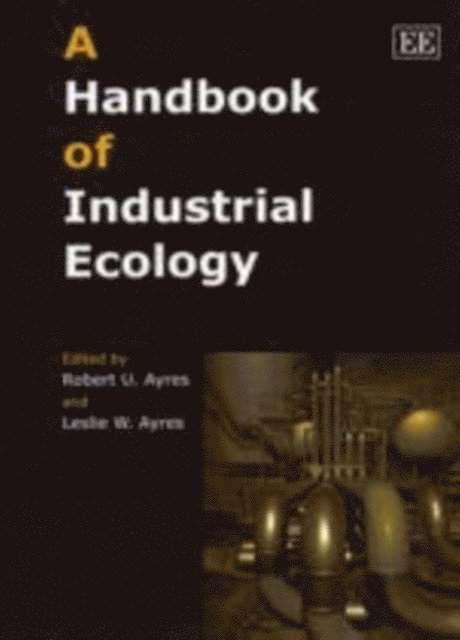
Handbook of Industrial Ecology
Av Robert U. Ayres, Leslie W. Ayres
Inbunden, 2002
5077 kr
Lägg i varukorg
Industrial ecology is coming of age and this superb book brings together leading scholars to present a state-of-the-art overviews of the subject.Each part of the book comprehensively covers the following issues in a systematic style: the goals and achievements of industrial ecology and the history …
Handbook of Industrial Ecology
Av Leslie W. Ayres, Robert U. Ayres
E-bok, 2002
880 kr
Lägg i varukorg
Industrial ecology is coming of age and this superb book brings together leading scholars to present a state-of-the-art overviews of the subject. Each part of the book comprehensively covers the following issues in a systematic style: the goals and achievements of industrial ecology and the history …
On the Reappraisal of Microeconomics
Economic Growth and Change in a Material World
Av Robert U. Ayres, Katalin Martinás
Inbunden, 2005
1822 kr
Lägg i varukorg
The conventional utility-based approach to microeconomics is now nearly a century old and although frequently criticised, it has yet to be replaced. On the Reappraisal of Microeconomics offers an alternative approach that overcomes most of the objections to orthodox theory, whilst offering some …
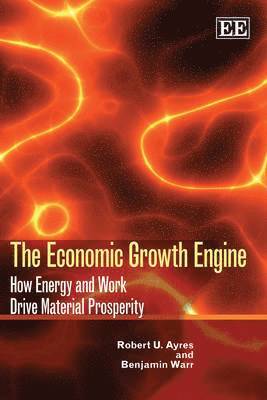
Economic Growth Engine
How Energy and Work Drive Material Prosperity
Av Benjamin Warr, Robert U. Ayres
E-bok, 2009
754 kr
Lägg i varukorg
The historic link between output (GDP) growth and employment has weakened. Since there is no quantitively verifiable economic theory to explain past growth, this unique book explores the fundamental relationship between thermodynamics (physical work) and economics. The authors take a realistic …
Economic Growth Engine
How Energy and Work Drive Material Prosperity
Av Robert U. Ayres, Benjamin Warr
Häftad, 2010
867 kr
Lägg i varukorg
The historic link between output (GDP) growth and employment has weakened. Since there is no quantitively verifiable economic theory to explain past growth, this unique book explores the fundamental relationship between thermodynamics (physical work) and economics. The authors take a realistic …
Industrial Ecology
Towards Closing the Materials Cycle
Av Robert U. Ayres, Leslie W. Ayres
Inbunden, 1996
2405 kr
Lägg i varukorg
Industrial Ecology is perhaps the first serious attempt to go beyond general statements regarding the desirability of 'clean technology' and to assess realistically and quantitatively the range of practicable possibilities for reducing materials extraction, consumption and waste.This major new book …
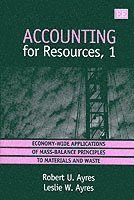
accounting for resources, 1
Economy-Wide Applications of Mass-Balance Principles to Materials and Waste
Av Robert U. Ayres, Leslie W. Ayres
Inbunden, 1998
1888 kr
Lägg i varukorg
This innovative book presents new research on the increasingly important need to account for the use of resources, and the dispersion of waste materials. It considers resource accounting both at the process level and at the materials level, and in addition offers policy suggestions for waste and …
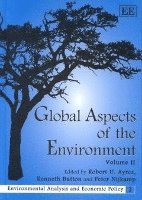
Global Aspects of the Environment
Av Robert U. Ayres, Kenneth Button m. fl.
Inbunden, 1999
9841 kr
Lägg i varukorg
This two volume collection of pioneering material includes landmarks and significant contributions to the subjects of global environmental issues. The editors have prepared a new introduction for this authoritative collection.This collection enables the reader, whether an economist or …
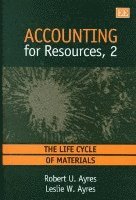
Accounting for Resources, 2
The Life Cycle of Materials
Av Robert U. Ayres, Leslie W. Ayres
Inbunden, 1999
2526 kr
Lägg i varukorg
This companion to Accounting for Resources, 1 tracks the life cycle of specific elements, such as chlorine and heavy metals, in order to estimate the generation and dissipative losses of material wastes.The book begins with a succinct review of the life-cycle analysis methodology and evaluates some …
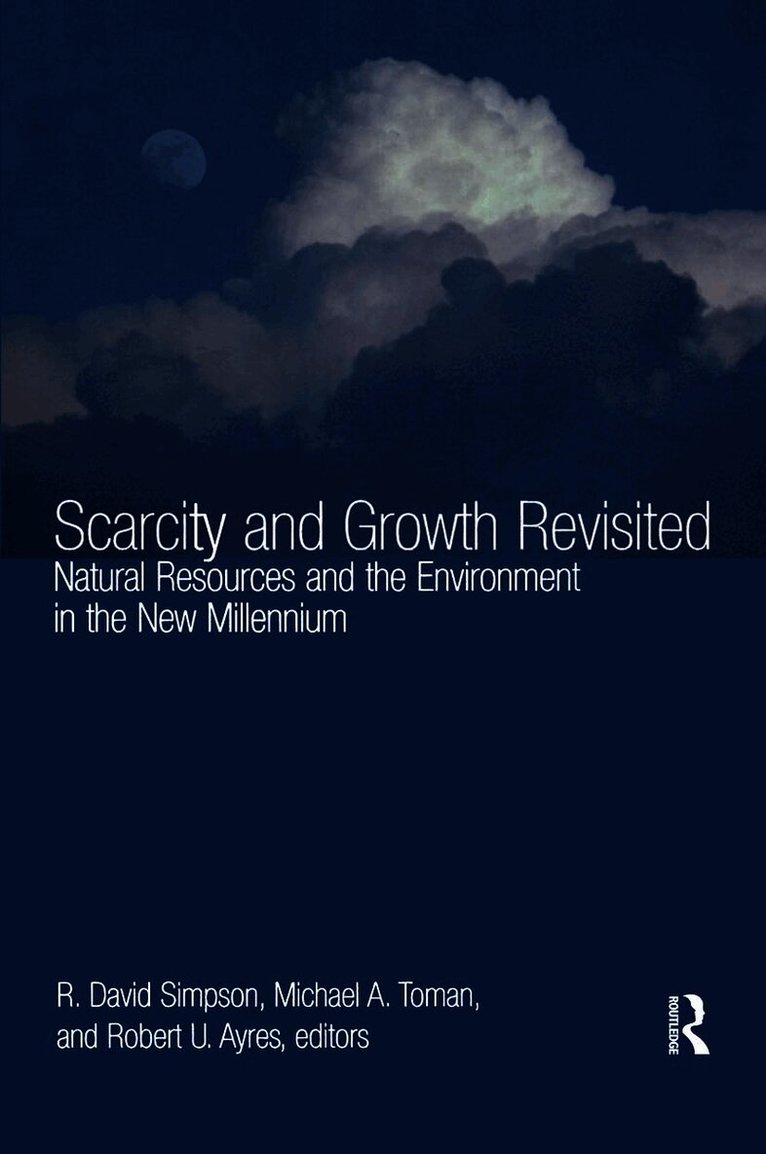
Scarcity and Growth Revisited
Natural Resources and the Environment in the New Millenium
Av R. David Simpson, Michael A. Toman m. fl.
Inbunden, 2005
2749 kr
Lägg i varukorg
In this volume, a group of distinguished international scholars provides a fresh investigation of the most fundamental issues involved in our dependence on natural resources. In Scarcity and Growth (RFF, 1963) and Scarcity and Growth Reconsidered (RFF, 1979), researchers considered the long-term …
Scarcity and Growth Revisited
Natural Resources and the Environment in the New Millenium
Av R. David Simpson, Michael A. Toman m. fl.
Häftad, 2005
809 kr
Lägg i varukorg
In this volume, a group of distinguished international scholars provides a fresh investigation of the most fundamental issues involved in our dependence on natural resources. In Scarcity and Growth (RFF, 1963) and Scarcity and Growth Reconsidered (RFF, 1979), researchers considered the long-term …
On Capitalism and Inequality
Progress and Poverty Revisited
Inbunden, 2020
336 kr
Lägg i varukorg
Capitalism is under attack. Defenders say that capitalism has raised billions of people from poverty. But a central activity of capitalism today, Wall Street style, is speculation (gambling), using other people’s money, and privatizing the profits while socializing the debts. Skeptics argue that …
On Capitalism and Inequality
Progress and Poverty Revisited
E-bok, 2020
457 kr
Lägg i varukorg
Capitalism is under attack. Defenders say that capitalism has raised billions of people from poverty. But a central activity of capitalism today, Wall Street style, is speculation (gambling), using other people’s money, and privatizing the profits while socializing the debts. Skeptics argue that …
On Capitalism and Inequality
Progress and Poverty Revisited
Häftad, 2021
336 kr
Lägg i varukorg
Capitalism is under attack. Defenders say that capitalism has raised billions of people from poverty. But a central activity of capitalism today, Wall Street style, is speculation (gambling), using other people’s money, and privatizing the profits while socializing the debts. Skeptics argue that …
History and Future of Technology
Can Technology Save Humanity from Extinction?
Inbunden, 2021
605 kr
Lägg i varukorg
Eminent physicist and economist, Robert Ayres, examines the history of technology as a change agent in society, focusing on societal roots rather than technology as an autonomous, self-perpetuating phenomenon. With rare exceptions, technology is developed in response to societal needs that have …
History and Future of Technology
Can Technology Save Humanity from Extinction?
E-bok, 2021
897 kr
Lägg i varukorg
Eminent physicist and economist, Robert Ayres, examines the history of technology as a change agent in society, focusing on societal roots rather than technology as an autonomous, self-perpetuating phenomenon. With rare exceptions, technology is developed in response to societal needs that have …
History and Future of Technology
Can Technology Save Humanity from Extinction?
Häftad, 2022
605 kr
Lägg i varukorg
Eminent physicist and economist, Robert Ayres, examines the history of technology as a change agent in society, focusing on societal roots rather than technology as an autonomous, self-perpetuating phenomenon. With rare exceptions, technology is developed in response to societal needs that have …
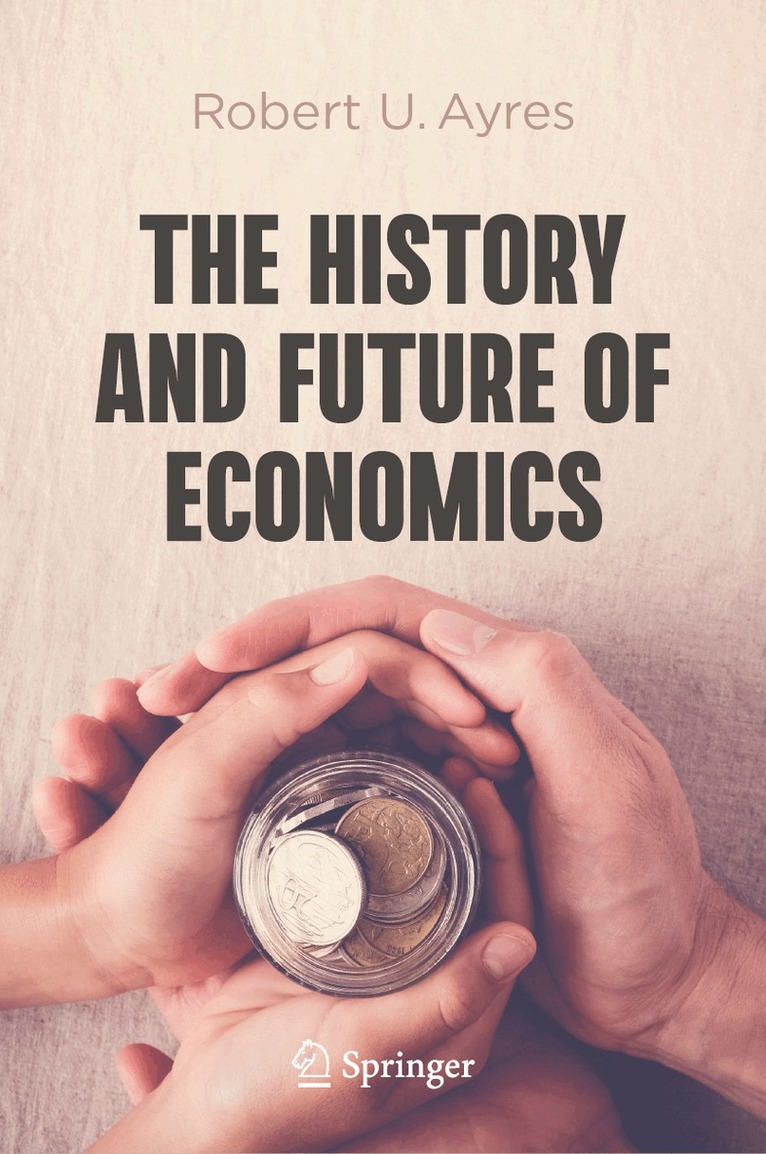
History and Future of Economics
Inbunden, 2023
605 kr
Lägg i varukorg
The purpose of this book is three-fold. The first purpose is to posit that the fundamental substance of the universe is energy, and that energy is required (consumed) for any material transformation, or information transmission. The labor theory of value, articulated by the physiocrats and …
History and Future of Economics
E-bok, 2023
897 kr
Lägg i varukorg
The purpose of this book is three-fold. The first purpose is to posit that the fundamental substance of the universe is energy, and that energy is required (consumed) for any material transformation, or information transmission. The labor theory of value, articulated by the physiocrats and …