Inbunden, Engelska, 2003
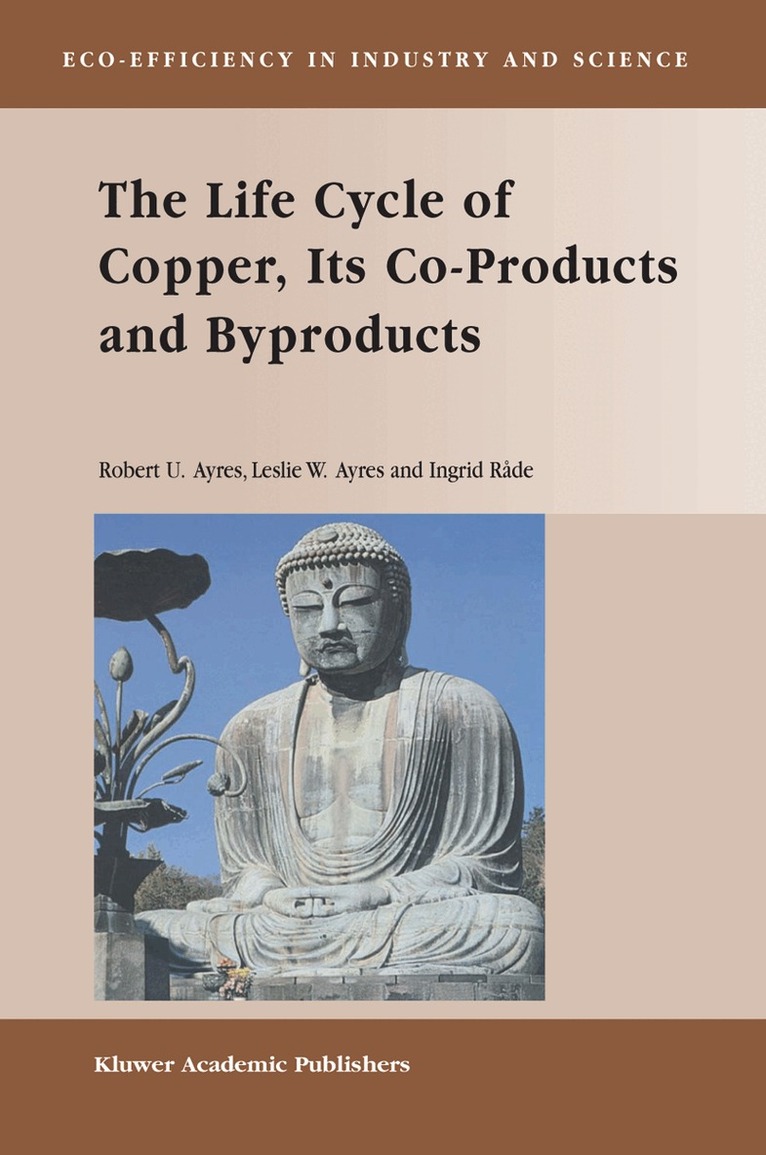
Life Cycle of Copper, Its Co-Products and Byproducts
Av Robert U. Ayres, Leslie W. Ayres, Ingrid Råde, Robert U. Ayres, Leslie W. Ayres
1095 kr
Beställningsvara. Skickas inom 10-15 vardagar. Fri frakt över 249 kr.
Beskrivning
Achieving the goals and objectives of sustainable development requires better information about the consequences of proposed actions. Partial information accounts for many failed efforts in the past. The financial implications for the proponent of the projects have often been more thoroughly analyzed than the implications for other actors. The impacts on biological diversity, or on the social fabric of local communities, have often been ignored. Decisi- makers may also focus more on the short-term consequences instead of long- term impacts, creating negative unintended consequences. It is clear that better decision-making processes are needed. Making better decisions requires identifying, obtaining, synthesizing and acting on larger and more diverse data sets, including information that has previously been overlooked in development decisions. The good news is that better processes are being developed and are becoming available. If the goal is to reach decisions that are broadly understood and accepted, affected communities need to be consulted. Early public participation in defining problems is a prerequisite to effective decision-making. There is no universal formula or checklist of information applicable to every proposed project. The scope of information required should not be determined from the start by small cadres of experts. It is unlikely that any individual or small group processes all of the expertise to achieve the kind of profound int- disciplinary synthesis that is needed.
Produktinformation
- Utgivningsdatum: 2003-09-30
- Mått: 155 x 235 x 22 mm
- Vikt: 588 g
- Format: Inbunden
- Språk: Engelska
- Serie: Eco-Efficiency in Industry and Science
- Antal sidor: 265
- Upplaga: 2003
- Förlag: Kluwer Academic Publishers
- ISBN: 9781402015526
Utforska kategorier
Betyg & recensioner
0 recensioner
Inga recensioner tillgängliga.