Leslie W. Ayres – författare
Visar alla böcker från författaren Leslie W. Ayres. Handla med fri frakt och snabb leverans.
6 produkter
6 produkter
Del 13 - Eco-Efficiency in Industry and Science
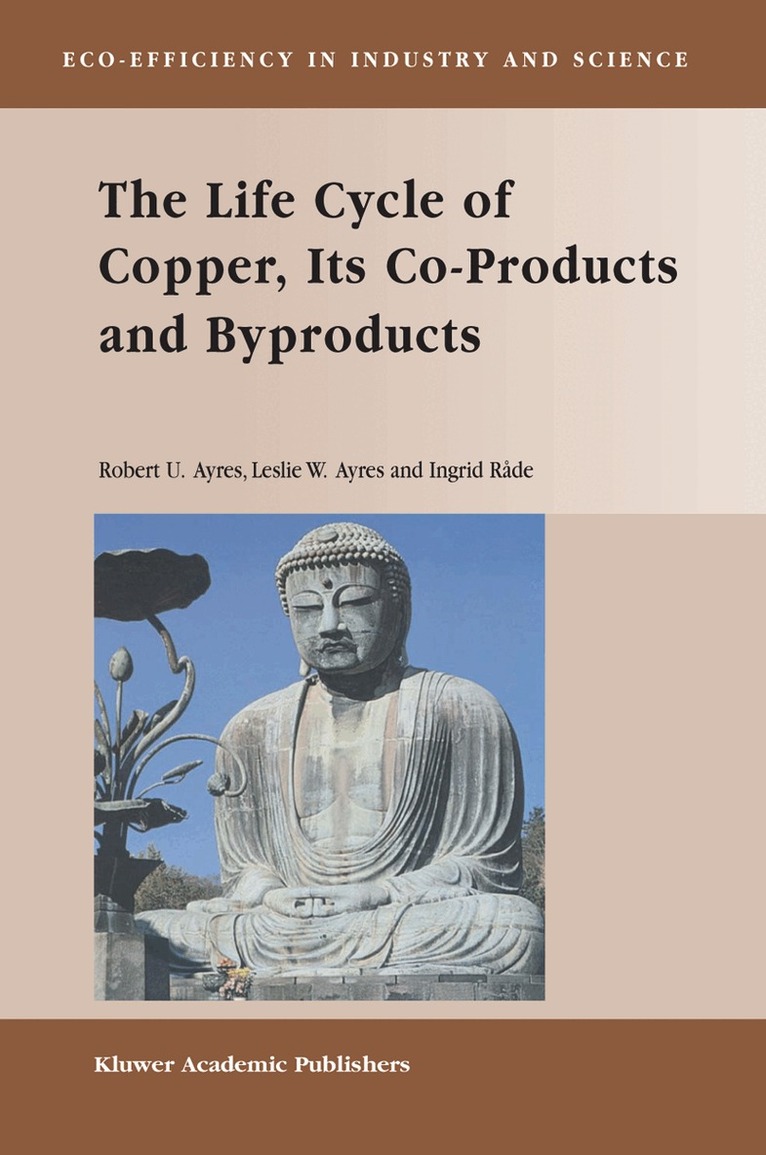
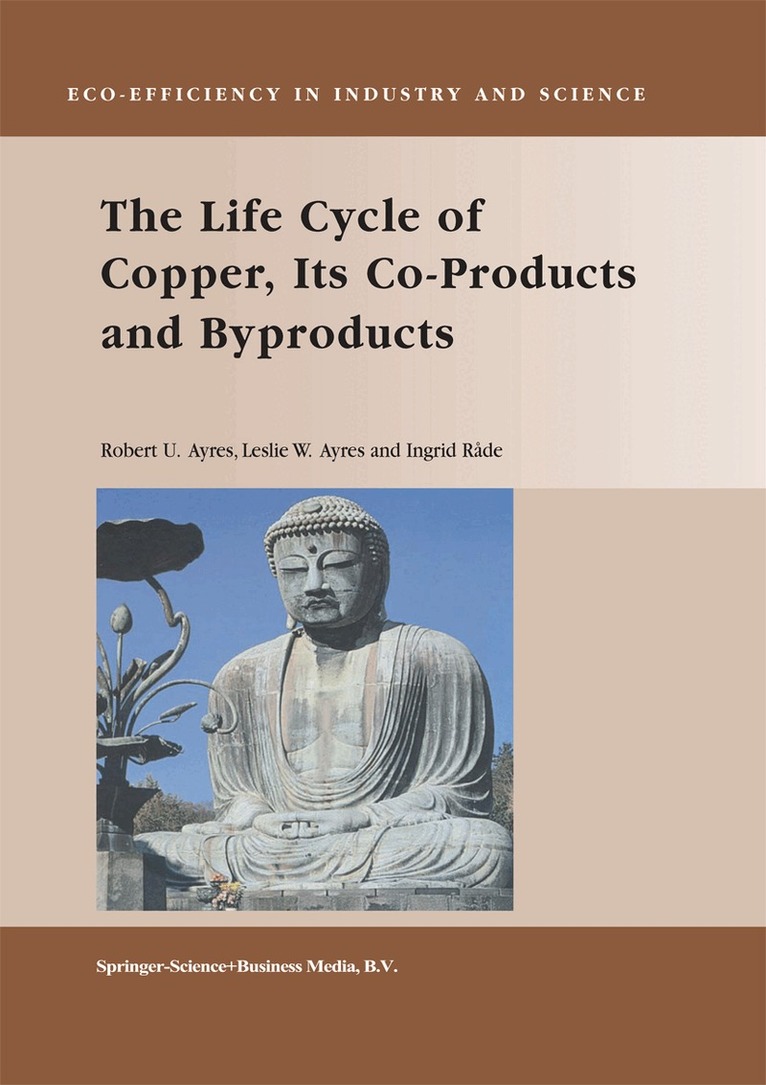
Life Cycle of Copper, Its Co-Products and Byproducts
Inbunden, Engelska, 2003
1 082 kr
Skickas inom 10-15 vardagar
Achieving the goals and objectives of sustainable development requires better information about the consequences of proposed actions. Partial information accounts for many failed efforts in the past. The financial implications for the proponent of the projects have often been more thoroughly analyzed than the implications for other actors. The impacts on biological diversity, or on the social fabric of local communities, have often been ignored. Decisi- makers may also focus more on the short-term consequences instead of long- term impacts, creating negative unintended consequences. It is clear that better decision-making processes are needed. Making better decisions requires identifying, obtaining, synthesizing and acting on larger and more diverse data sets, including information that has previously been overlooked in development decisions. The good news is that better processes are being developed and are becoming available. If the goal is to reach decisions that are broadly understood and accepted, affected communities need to be consulted. Early public participation in defining problems is a prerequisite to effective decision-making. There is no universal formula or checklist of information applicable to every proposed project. The scope of information required should not be determined from the start by small cadres of experts. It is unlikely that any individual or small group processes all of the expertise to achieve the kind of profound int- disciplinary synthesis that is needed.
Inbunden, Engelska, 2002
4 879 kr
Skickas inom 5-8 vardagar
Industrial ecology is coming of age and this superb book brings together leading scholars to present a state-of-the-art overviews of the subject.Each part of the book comprehensively covers the following issues in a systematic style: the goals and achievements of industrial ecology and the history of the fieldmethodology, covering the main approaches to analysis and assessmenteconomics and industrial ecologyindustrial ecology at the national/regional leveindustrial ecology at the sectoral/materials levelapplications and policy implications.The authors are all experts at the cutting edge of the field and the bibliography alone will prove useful as a comprehensive guide to the literature. This outstanding handbook will be an indispensable reference for students and scholars working in environmental management, industrial ecology and environmental and ecological studies.
Inbunden, Engelska, 1996
2 303 kr
Skickas inom 5-8 vardagar
Industrial Ecology is perhaps the first serious attempt to go beyond general statements regarding the desirability of 'clean technology' and to assess realistically and quantitatively the range of practicable possibilities for reducing materials extraction, consumption and waste.This major new book examines strategic options for reducing wastes and pollution and increasing the productivity of materials. Using an industrial ecology perspective, the authors analyse thirteen generic cases of material, beginning with four families of metals (aluminium, chromium, copper and zinc), several families of chemicals (phosphates and fluorine; suphur-based, nitrogen-based and chlorine-based), silicon and several different types of waste. Opportunities for creating 'industrial ecosystems' by deliberate design are discussed as well as the use of low-value by-products as feed stocks for useful products. In addition to surveying the technological possibilities, the authors also consider the public interest, institutional barriers and the range of possible alternatives that might be applicable. Environmental scientists, economists, practitioners and policy makers will welcome Industrial Ecology's integrated approach and the emphasis which it places on resource productivity, materials cycle optimization and waste minimization.
Inbunden, Engelska, 1998
1 807 kr
Skickas inom 5-8 vardagar
This innovative book presents new research on the increasingly important need to account for the use of resources, and the dispersion of waste materials. It considers resource accounting both at the process level and at the materials level, and in addition offers policy suggestions for waste and resource accounting.The book opens with an introduction to industrial metabolism and its various implications. It then goes on to examine resource accounting at the national and sectoral level, through the systematic application of the mass-balance principle to estimate materials losses at different stages of the production process. It then examines one cluster of industries (related to chlorine) in greater detail. At the process level the use of chemical process simulation software in the estimation of waste emissions is examined, specifically focusing on cases where emissions data is unavailable or unreliable. Finally it introduces, for the first time, a common single measure for evaluating and comparing process or sectoral resource and waste flows between time periods, between sectors and between regions and nations. This measure is known as exergy, and although not new in itself, it has never before been used systematically for these purposes. In conclusion the author summarizes the main problems of resource and waste accounting and offers some policy recommendations for the implementation of accounting for resources.Accounting for Resources, 1 will be welcomed by environmental managers and scientists, economists, practitioners and government policymakers.
Inbunden, Engelska, 1999
2 418 kr
Skickas inom 5-8 vardagar
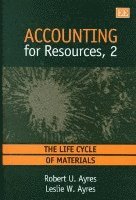
This companion to Accounting for Resources, 1 tracks the life cycle of specific elements, such as chlorine and heavy metals, in order to estimate the generation and dissipative losses of material wastes.The book begins with a succinct review of the life-cycle analysis methodology and evaluates some of its weaknesses in estimating the generation of waste. The authors propose a new quantitative measure of the potential for environmental harm of waste materials. They include case studies to add weight to their proposal. Four horizontal life-cycle case studies are included; one for chlorine and chlorine chemicals; one for mercury; one for arsenic and cadmium; and the other for copper, lead and zinc. The book also includes a longitudinal study of heavy metals use and dissipation, during the period 1880-1980 with reference to the Hudson-Raritan basin. The book concludes with an overview, including some recommendations for future research and for policy changes with respect to governmental statistical data collection and organization.
Del 13 - Eco-Efficiency in Industry and Science
Life Cycle of Copper, Its Co-Products and Byproducts
Häftad, Engelska, 2010
1 073 kr
Skickas inom 10-15 vardagar
Achieving the goals and objectives of sustainable development requires better information about the consequences of proposed actions. Partial information accounts for many failed efforts in the past. The financial implications for the proponent of the projects have often been more thoroughly analyzed than the implications for other actors. The impacts on biological diversity, or on the social fabric of local communities, have often been ignored. Decisi- makers may also focus more on the short-term consequences instead of long- term impacts, creating negative unintended consequences. It is clear that better decision-making processes are needed. Making better decisions requires identifying, obtaining, synthesizing and acting on larger and more diverse data sets, including information that has previously been overlooked in development decisions. The good news is that better processes are being developed and are becoming available. If the goal is to reach decisions that are broadly understood and accepted, affected communities need to be consulted. Early public participation in defining problems is a prerequisite to effective decision-making. There is no universal formula or checklist of information applicable to every proposed project. The scope of information required should not be determined from the start by small cadres of experts. It is unlikely that any individual or small group processes all of the expertise to achieve the kind of profound int- disciplinary synthesis that is needed.