Robert Welch – författare
Visar alla böcker från författaren Robert Welch. Handla med fri frakt och snabb leverans.
9 produkter
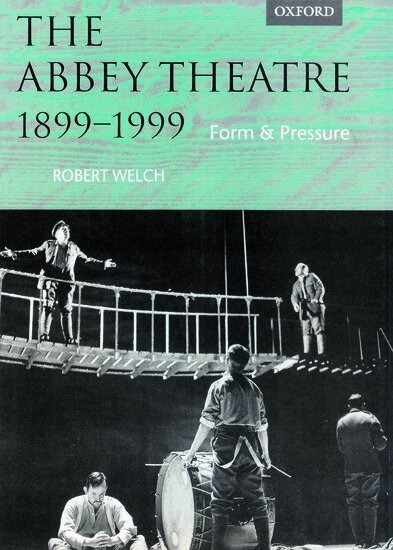
The Abbey Theatre, 1899-1999
Form and Pressure
Av Robert Welch
Inbunden, 1999
3036 kr
Lägg i varukorg
A century ago this year, productions of W. B. Yeats's The Countess Cathleen and Edward Martyn's The Heather Field inaugurated the Irish Literary Theatre, which was to take its name from its home in Abbey Street, Dublin. Despite riot, fire, and critical controversy, the Abbey Theatre has housed …
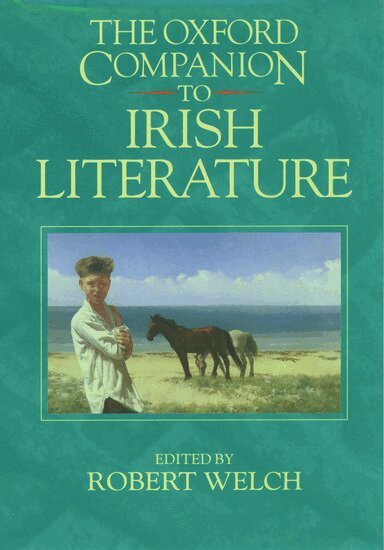
The Oxford Companion to Irish Literature
Av Welsh, Robert Welch
Inbunden, 1996
2393 kr
Lägg i varukorg
The literature of Ireland displays an exceptional richness and diversity - whether in Irish or English, by native Irish and Anglo-Irish writers or by outsiders like Edmund Spenser whose works were deeply imbued with the country in which he lived and wrote. In over 2,000 entries, the Companion to …
The Abbey Theatre, 1899-1999
Form and Pressure
Av Robert Welch
Häftad, 2003
771 kr
Lägg i varukorg
A century ago this year, productions of W. B. Yeats's The Countess Cathleen and Edward Martyn's The Heather Field inaugurated the Irish Literary Theatre, which was to take its name from its home in Abbey Street, Dublin. Despite riot, fire, and critical controversy, the Abbey Theatre has housed …
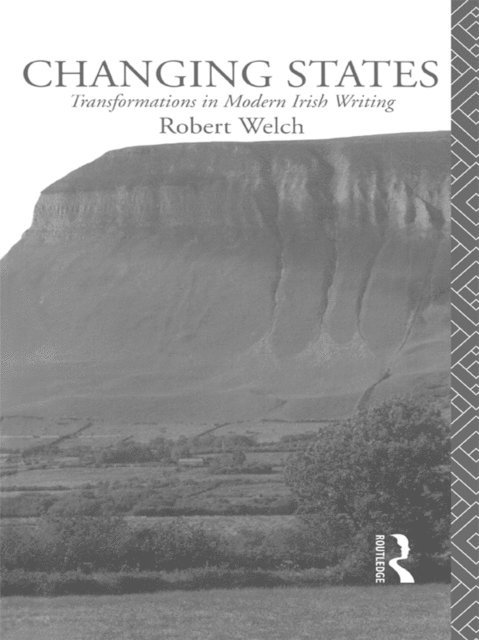
Changing States
Transformations in Modern Irish Writing
Av Robert Welch
Häftad, 1993
744 kr
Lägg i varukorg
In Changing States Robert Welch examines the work of the major authors of modern Irish literature in the context of the transformation from Gaelic to twentieth-century post-industrial culture. The force of Irish writing, uniting authors as various as Yeats, Heaney, Synge, Beckett, Joyce and Mairtin …
Milk Composition, Production and Biotechnology
Av Robert A. S. Welch, Donald J. W. Burns m. fl.
Inbunden, 1997
2371 kr
Lägg i varukorg
Major changes have recently taken place in the value attached to components of milk. Although approximately half the energy in milk is contained in fat, fat is rapidly decreasing in value relative to protein. This has come about because of the increased availability of competitively-priced, …
Changing States
Transformations in Modern Irish Writing
Av Robert Welch
E-bok, 2005
857 kr
Lägg i varukorg
In Changing States Robert Welch examines the work of the major authors of modern Irish literature in the context of the transformation from Gaelic to twentieth-century post-industrial culture. The force of Irish writing, uniting authors as various as Yeats, Heaney, Synge, Beckett, Joyce and Mairtin …
Changing States
Transformations in Modern Irish Writing
Av Robert Welch
E-bok, 2005
876 kr
Lägg i varukorg
In Changing States Robert Welch examines the work of the major authors of modern Irish literature in the context of the transformation from Gaelic to twentieth-century post-industrial culture. The force of Irish writing, uniting authors as various as Yeats, Heaney, Synge, Beckett, Joyce and Mairtin …
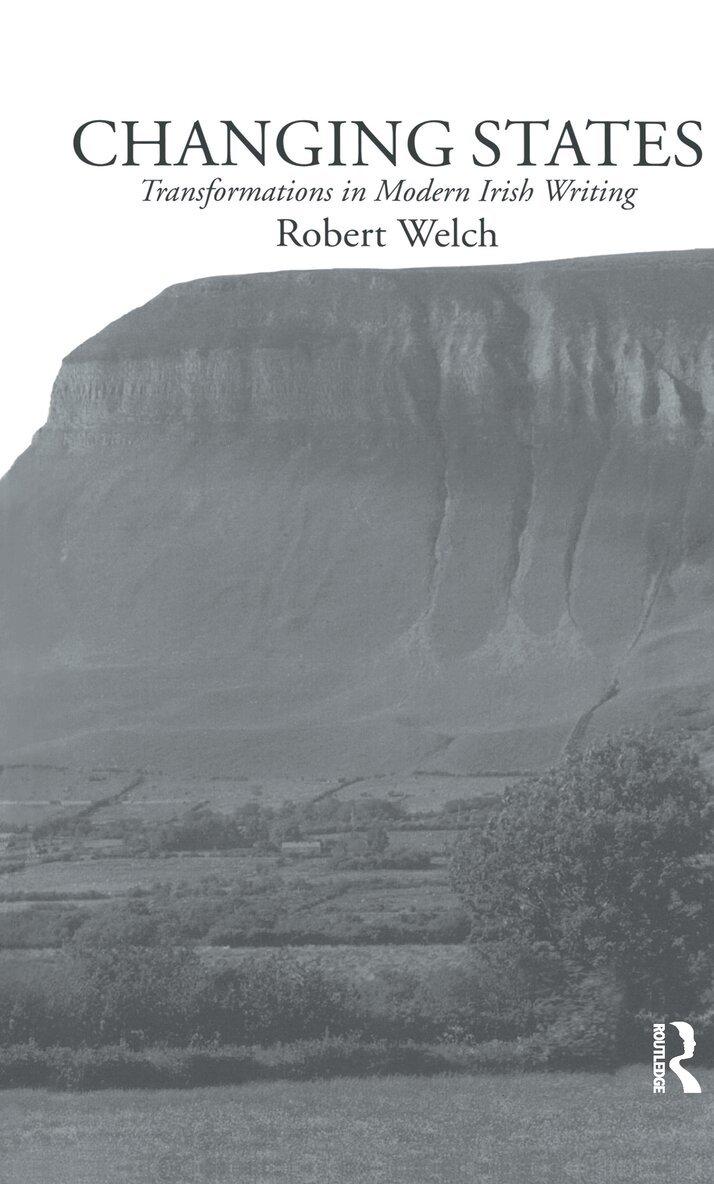
Changing States
Transformations in Modern Irish Writing
Av Robert Welch
Inbunden, 2017
3523 kr
Lägg i varukorg
In Changing States Robert Welch examines the work of the major authors of modern Irish literature in the context of the transformation from Gaelic to twentieth-century post-industrial culture. The force of Irish writing, uniting authors as various as Yeats, Heaney, Synge, Beckett, Joyce and Mairtin …
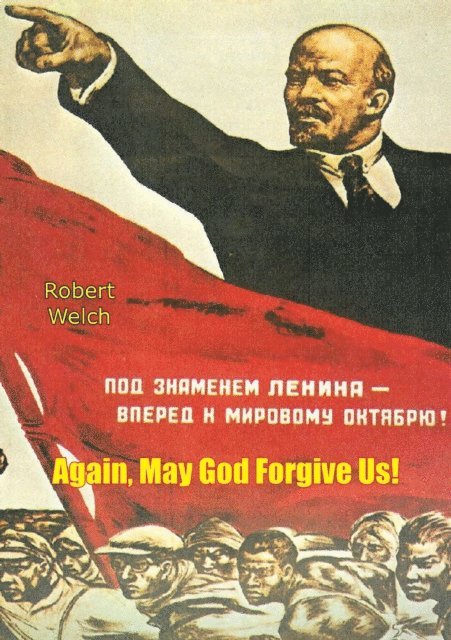
Again, May God Forgive Us!
Av Robert Welch
E-bok, 2018
36 kr
Lägg i varukorg
ON July 14, 1951 an American business man sat down to write a letter to a friend. It was a letter that took some thirty days, and ran to thirty-seven typewritten pages. In these pages, Robert H. W. Welch, Jr., set forth brilliantly and convincingly a straightforward clarification of some important …