Robert Wenley - Böcker
Visar alla böcker från författaren Robert Wenley. Handla med fri frakt och snabb leverans.
4 produkter
4 produkter
218 kr
Skickas inom 7-10 vardagar
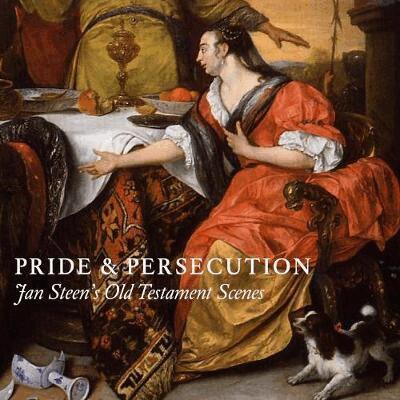
Full of humanity and even humour, the Old Testament paintings by master visual storyteller Jan Steen are often treated like incidents in 17th-century Holland. This groundbreaking examination considers the influence of Jewish history and Dutch theatre on this exciting element of his oeuvre. The Leiden-born artist Jan Steen (1626–1679) is widely admired as one of the most engaging and technically brilliant painters of the Dutch Golden Age. This volume accompanies an exhibition that will be the first in the UK devoted to Steen’s Old Testament subjects. The focal point will be his magnificent Wrath of Ahasuerus (c.1668–69), one of the highlights of the Barber’s collection, which will be joined by a number of other paintings by Steen from private and public collections across the world. Three essays will examine the core themes of the show – the role of Jewish history in Steen’s Old Testament scenes; the influence of Dutch theatre on his work; and the critical response to his Old Testament paintings from the 17th century to date. Robert Wenley (Barber Institute of Fine Arts) will look at how the Dutch nation established its identity in part by associating its people with the Biblical Israelites, seeing themselves as persecuted by the Spanish for their faith. He will explore the popularity of the story of Esther and other Old Testament subjects in Dutch culture – in plays as well as paintings – and the possibility of Jewish patrons for Steen’s Old Testament paintings. Nina Cahill (University of Kassel) will put forward new research about how Steen adopted the gestural language of contemporary Dutch theatre, amateur and professional, in order to represent the key figures in these scenes and to convey the pivotal dramatic moments. In some instances, Steen may have been quoting from an actual production of a play based on the Biblical story. Rosalie van Gulick (Utrecht University) will consider how Steen’s Old Testament scenes have been received and understood over the years. She will investigate how the apparent farcical character of these scenes has been understood over the centuries and why they have prompted adversely critical responses from some modern art historians.
195 kr
Skickas inom 7-10 vardagar
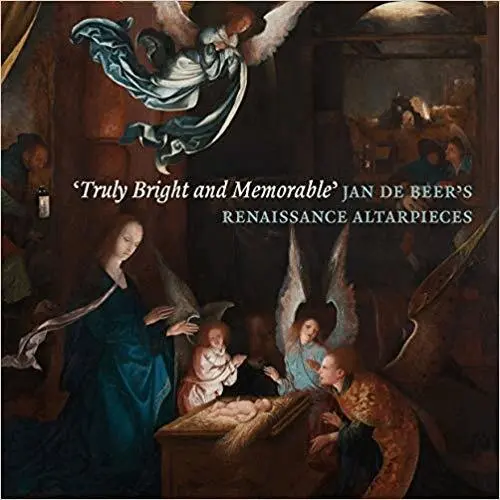
Accompanying an exhibition at the Barber Institute of Fine Arts - only the second exhibition ever devoted to the artist - this noteworthy publication considers De Beer’s work and career, working methods, and traces the history of De Beer’s paintings in British collections. The Antwerp painter Jan de Beer (c.1475-1527/28) was highly esteemed in his lifetime and still famous a couple of generations after his death, but then fell into oblivion until the early twentieth century. Only recently have his achievements been fully recognized and documented. The artist’s known oeuvre consists of forty works, mainly devotional paintings and triptychs but also a dozen drawings and a stained glass window, after a lost design. De Beer’s stylish and elegant art appealed to patrons and collectors, churches abroad, and copyists. His work is typically associated with that of the Antwerp Mannerists, a prominent group of mostly anonymous painters active in the city during his lifetime. This publication will accompany an exhibition at the Barber Institute of Fine Arts, University of Birmingham (25 October 2019 to 19 January 2020) that focuses on one of its and De Beer’s acknowledged masterpieces: the double-sided Joseph and the Suitors/ The Nativity. This is the only surviving fragment from what must have been a major altarpiece. It will be accompanied by a half-dozen key loans of paintings and drawings by De Beer and his workshop including all the attributed paintings in UK collections. These will provide both an instructive context for the Barber painting and for De Beer’s art more generally, with the whole chronological range of his career represented. It will be only the second ever exhibition devoted to De Beer, and the first to show the broad range of his work. The fully-illustrated catalog will feature extended entries for all the exhibited works and three essays exploring the core themes of the show, written by Robert Wenley, Head of Collections at the Barber Institute and the lead curator of the exhibition, and two leading De Beer specialists. Professor Dan Ewing (Barry University, Miami Shores, Florida) will consider De Beer’s work and career; while Peter van den Brink (Director, Suermondt-Ludwig-Museum, Aachen) will explore De Beer’s working methods, in particular as revealed by the underdrawings of his pictures. Robert Wenley’s essay will survey the history of De Beer’s paintings in British collections.
195 kr
Skickas inom 7-10 vardagar
The forgotten story of the rhinoceros Miss Clara, the most famous animal of the eighteenth century. "Miss Clara" arrived in Europe from the Dutch East Indies in 1741 and was toured around Europe to huge acclaim and excitement. The first rhinoceros to be seen on mainland Europe since 1579, Clara quickly became an object of great wonder and affection. Her fame generated a massive industry in souvenirs and imagery, from life-size paintings by major masters to cheap popular prints. There were even Clara-inspired clocks and hairstyles. This book brings us the story of the phenomenon of Clara, with a particular focus on three-dimensional representations of her, set within the context of other celebrity pachyderms represented by artists between the sixteenth and nineteenth centuries. At the core of the book is a small bronze statue of Miss Clara held by the Barber Museum, where it is a favorite of visitors. Accompanying essays put the works in their proper historical and artistic context.
207 kr
Skickas inom 7-10 vardagar
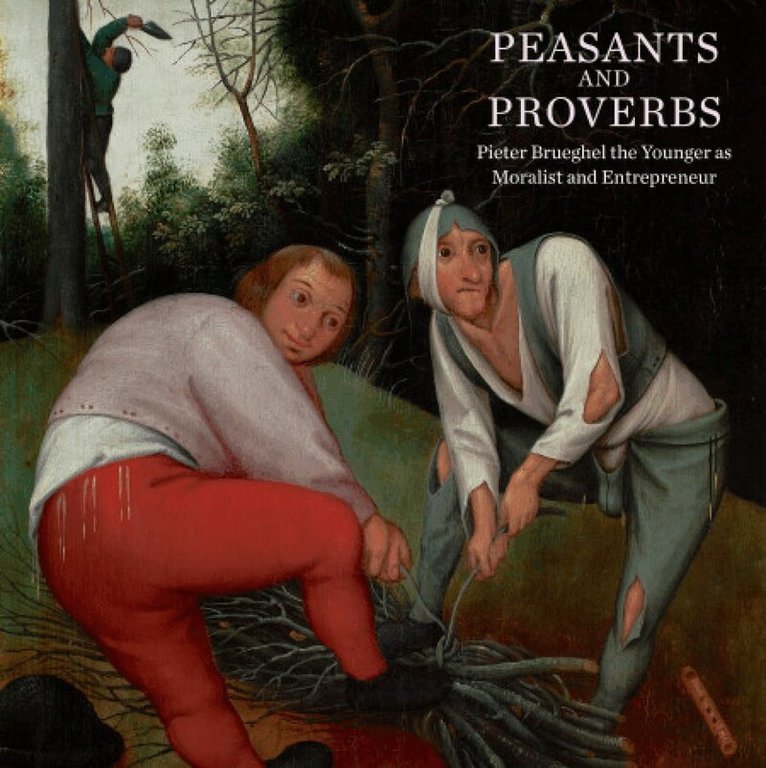
This catalogue accompanies an exhibition at the Barber Institute of Fine Arts that will shine a spotlight on Pieter Brueghel the Younger (1564 – 1637/38), an artist who was hugely successful in his lifetime but whose later reputation has been overshadowed by that of his famous father, Pieter Bruegel the Elder (c.1525 – 1569). Peasants and Proverbs: Pieter Brueghel the Younger as Moralist and Entrepreneur shares recent research into the Barber’s comical yet enigmatic little painting, Two Peasants Binding Firewood, setting out fresh insights and offering a new appreciation of a figure whose prodigious output and business skills firmly established and popularised the distinctive ‘Brueghelian’ look of Netherlandish peasant life. Born in Brussels, Pieter Brueghel the Younger was just five years old when his renowned father died prematurely. Clearly talented, by the time he was around 20 years old, Brueghel the Younger was already registered as a master in Antwerp’s Guild of Saint Luke. Between 1588, the year of his marriage, and 1626, he took on nine apprentices, demonstrating that he had established a successful studio. His workshop produced an abundance of paintings, ranging from exact copies of famous compositions by his father, to pastiches and more inventive compositions that further promoted the distinctive Bruegelian ‘family style’, usually focused on scenes of peasant life. He was, as a consequence, later deemed a second-rate painter, capable of only producing derivative works. This exhibition and book highlight how a more sophisticated understanding is now emerging of a creative and capable artist, and a savvy entrepreneur, who exploited favourable market conditions from his base in cosmopolitan Antwerp. From this deeper understanding of his practice, his favoured subjects and the market for them, we gain a more profound and compelling insight into the society in which he operated and its preoccupations and passions. A dozen other versions of Two Peasants Binding Firewood exist and, by examining some of them alongside the Barber painting, and using the insights gleaned from recent conservation work and technical analysis, the exhibition and book will explore how Brueghel the Younger operated his studio to produce and reproduce paintings, and the extent to which the entire enterprise was motivated by trends in the contemporary art market.