Robert Ziegler - Böcker
Visar alla böcker från författaren Robert Ziegler. Handla med fri frakt och snabb leverans.
12 produkter
12 produkter
213 kr
Skickas inom 5-8 vardagar
195 kr
Skickas inom 5-8 vardagar
284 kr
Skickas inom 5-8 vardagar
2 470 kr
Skickas inom 5-8 vardagar
A clinician faces a multitude of considerations when assessing a child patient. Foremost among these is that caring for the child entails caring for the family members involved with that child. The therapist must balance the competing needs and feelings of the child, parents, and family as a whole. By forming an alliance with all members of the family, the therapist is in a position to strengthen and enhance the ties between child, parents, and family during all phases of assessment and treatment, leading to a more effective therapeutic intervention. Paving the Way for Children's Success offers a model that will help clinicians achieve this alliance. The model presented in this book focuses on ways to integrate child assessment and treatment with that of their parents' and families' level of function. It uses the authors' unique concept of the Zones of Care to help clinicians assess this level of function. In turn, each of the four zones leads to a specific approach to treatment. The authors present how these treatment approaches to current internalizing and externalizing disorders in children and adolescents allow clinicians to integrate a wide variety of techniques to address most DSM-IV categories. Their approach stresses both symptom reduction and the cultivation of coping skills. It also integrates fiscal issues of treatment into the development of the alliance with the parents in resolving the presenting problem. Dr. Ziegler and Dr. Bush present the reader with practical, workable strategies for laying down strong diagnostic foundations for successful treatment, making Paving the Way for Children's Success a valuable resource for any clinician working with children and adolescents.
704 kr
Skickas inom 10-15 vardagar
A clinician faces a multitude of considerations when assessing a child patient. Foremost among these is that caring for the child entails caring for the family members involved with that child. The therapist must balance the competing needs and feelings of the child, parents, and family as a whole. By forming an alliance with all members of the family, the therapist is in a position to strengthen and enhance the ties between child, parents, and family during all phases of assessment and treatment, leading to a more effective therapeutic intervention. Paving the Way for Children's Success offers a model that will help clinicians achieve this alliance. The model presented in this book focuses on ways to integrate child assessment and treatment with that of their parents' and families' level of function. It uses the authors' unique concept of the Zones of Care to help clinicians assess this level of function. In turn, each of the four zones leads to a specific approach to treatment. The authors present how these treatment approaches to current internalizing and externalizing disorders in children and adolescents allow clinicians to integrate a wide variety of techniques to address most DSM-IV categories. Their approach stresses both symptom reduction and the cultivation of coping skills. It also integrates fiscal issues of treatment into the development of the alliance with the parents in resolving the presenting problem. Dr. Ziegler and Dr. Bush present the reader with practical, workable strategies for laying down strong diagnostic foundations for successful treatment, making Paving the Way for Children's Success a valuable resource for any clinician working with children and adolescents.
329 kr
Skickas inom 3-6 vardagar
301 kr
Skickas inom 5-8 vardagar
212 kr
Skickas inom 5-8 vardagar
217 kr
Skickas inom 5-8 vardagar
1 314 kr
Skickas inom 10-15 vardagar
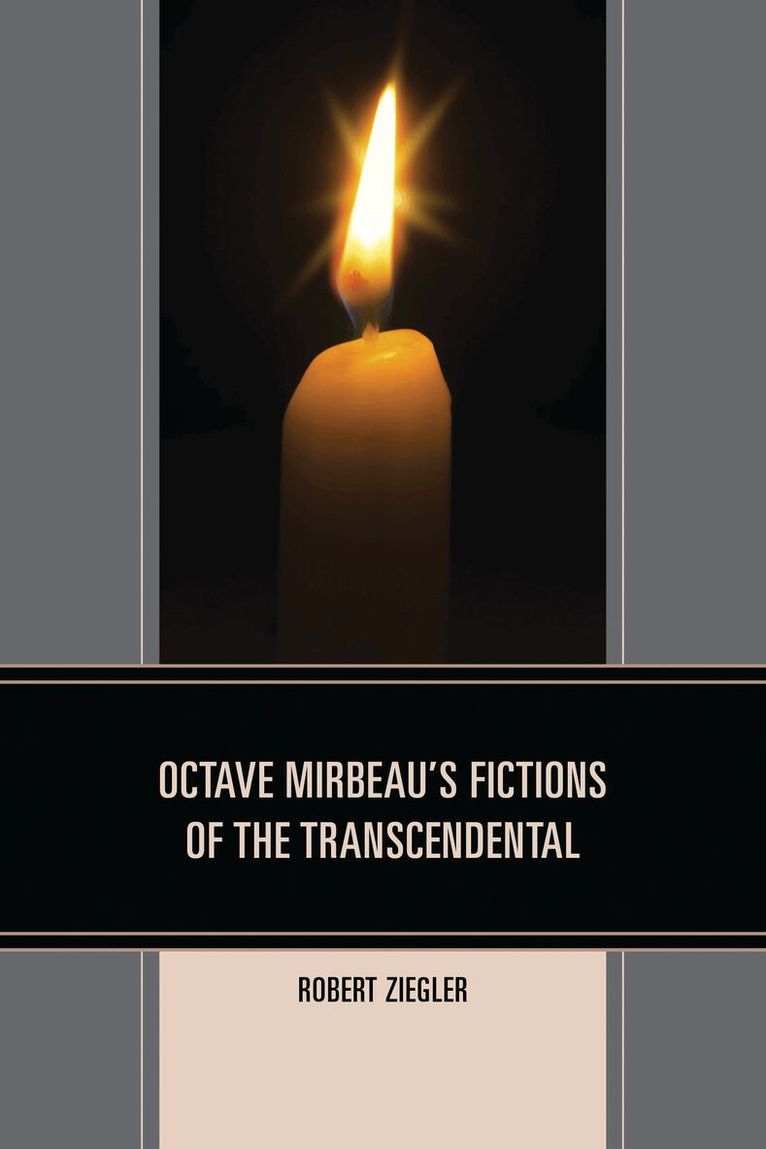
Political firebrand, tireless reformer, champion of the avant-garde, Octave Mirbeau embraced his role as disturber of the peace. Inspired by Kropotkin and Dostoyevsky, Mirbeau became the social conscience of the era, speaking in a clear voice to impugn capitalist ideology, to defend the cause of the worker, the child, the pauper, the prostitute, and the soldier sacrificed as cannon fodder.Mirbeau’s critiques of society seethe with indictments of indoctrinating agencies: the family, which stifled the child’s freedom and expressive creativity, the school, which besotted students with the aridity of its curriculum, the army, which privileged patriotism over the sanctity of life, the church, which sanctified suffering, perverted instinct, and alienated the faithful from nature. Yet Mirbeau shared the admiration of fin-de-siècle zealots for the pariahs, tramps, and beggars rehabilitated in the Scripture. The personal trials of the misbegotten became an insignia of election. Those marginalized by society experienced damnation here below yet had glimpses of the bliss they hoped might await them somewhere higher. Yet it was not just in the less fortunate that Mirbeau sought evidence of the supra-rational. Generally neglected by critics, Mirbeau’s interest in the unknown and the inexpressible informed virtually all of his writing and helped shape his views on artistic work and political struggle. For this reason, this study sets out to analyze the spiritual politics of the author. As Mirbeau was becoming involved in the escalating controversy over the Dreyfus case and cementing his alliance with prominent anarchists, he was also undergoing a uniquely personal spiritual evolution. This volume breaks new ground, exploring the author’s secular metaphysic, charting his investigation of the spiritually transfiguring experience that redeems man’s desolate existence. What begins as Mirbeau’s indictment of Catholicism’s death-glorifying ethos, his attempt to find refuge from life’s pain in the blessedness of Nirvana, becomes a pursuit of mystical diffusion into the community of others. Showing how Mirbeau controverts the existence of a Christian god, this study argues that Mirbeau never abandons his exploration of life’s mysteries, apprehensions of the infinite that come from a refinement of his art and an identification with his brothers.
1 428 kr
Skickas inom 5-8 vardagar
In an era when reality was aestheticized as collectibles, Octave Mirbeau unleashed his fiction like a destructive machine, setting fire to stale material and discredited ideologies, burning them as fuel and expelling texts as clean emissions. In this first English-language overview of all the novels published under Mirbeau’s name, this study argues that Mirbeau is unique among his fin-de-siècle peers. Unlike the Decadents, whose art was a reliquary in which dead inspiration was preserved, Mirbeau disengaged himself from the corpses of past works. Abhorring tradition and complacency, Mirbeau elaborated a kinetics of fiction that made the novel into an agent of violent transformation.Contrasting the Decadents’ aesthetic of elegant morbidity with Mirbeau’s vitalistic view of fiction, this volume shows Mirbeau modeling himself on the figure of the torture artist, cutting up his finished works, building novels to disassemble them, fitting them together in revolutionary ways. Creativity for Mirbeau fertilizes un jardin des supplices, a cemetery smoldering with decomposing texts that are resolved into their constituent parts and then reemerge in different guises. In Mirbeau’s writing, lives and art works are only transient aggregates of material, and creativity is immortalized through the perishing of old forms.
1 495 kr
Skickas inom 5-8 vardagar
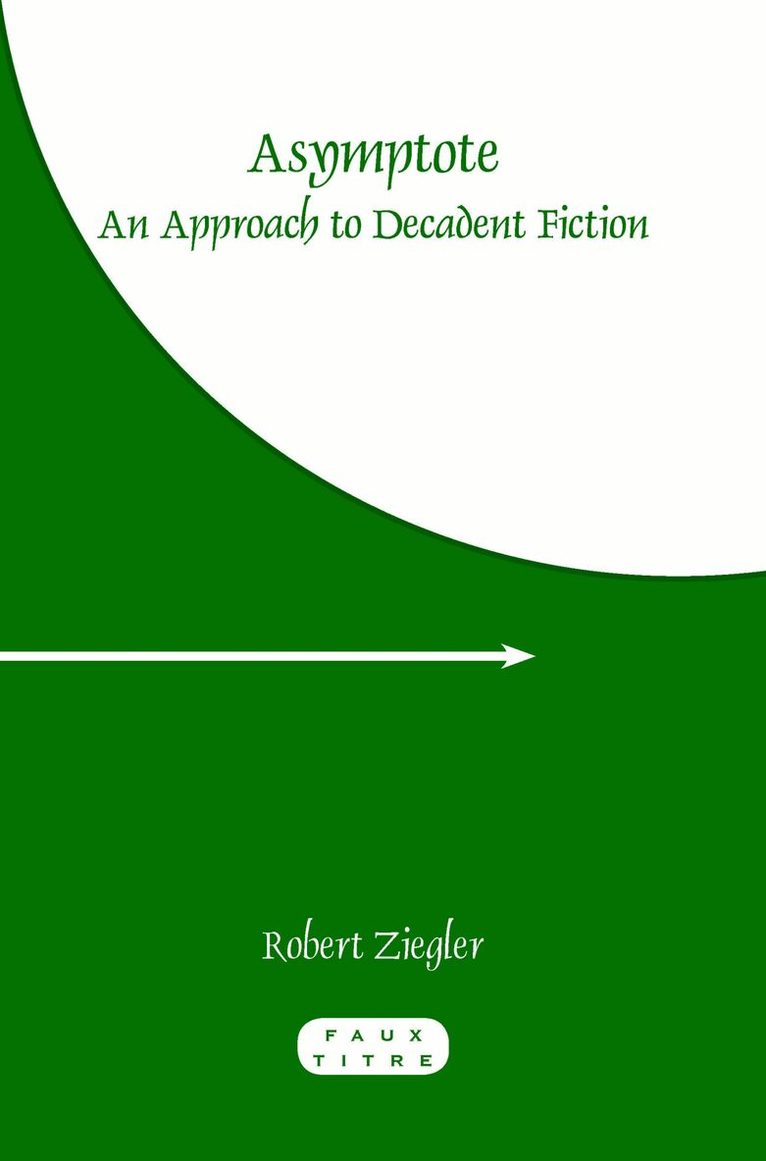
Asymptote: An Approach to Decadent Fiction offers a radically new approach to the psychology of Decadent creation. Rejecting traditional arguments that Decadence is a celebration of deviance and exhaustion, this study presents the fin-de-siecle novel as a transformative process, a quest for health. By allowing the writer to project into fiction unwanted traits and destructive tendencies – by permitting the playful invention of provisional identities –, Decadent creation itself becomes a dynamic act of creative regeneration.In describing the interrelationship of Decadent authors and their fictions, Asymptote uses the mathematical figure of the asymptote to show how they converge, then split apart, and grow distant. The author’s approach to the facsimile selves he plays with and discards is the curve that never merges with his authorial identity.In successive chapters, this study describes the Decadents’ experimentation with perversion (Huysmans’s A rebours and Mendes’s Zo’har), and their subsequent validation of social regulation and creative discipline. It examines magic and its appeal to fantasies of elitism and omnipotence (Péladan’s Le Vice supreme and Villiers’s Axël ), then shows authors embracing the values of community and service. It considers the Decadent text as a vehicle of change in which an artist ventilates fantasies of aggression and revenge (Mirbeau’s Le Journal d’une femme de chamber and Rachilde’s La Marquise de Sade) then employs writing as the means by which these feelings are discharged. It examines creation as a form of play, “une aliénation grâce à laquelle l’esprit se récupère sous la forme des autres” (Schwob’s Vies imaginaries and Lorrain’s Histoires de masques), yet notes the Decadents’ decision to return to a single generative center. Finally, it examines creation as an expression of artistic transience and failure, yet shows the Decadents’ success in commemorating the very forces of disintegration (Rodenbach’s L’Art en exil). In considering the Decadents’ insistence on subjectivism and aloneness, this study concludes (Gourmont’s Sixtine) by showing their wish to escape the prison of identity and to redefine their art as cooperative creation.