Roberta J. Magnusson – författare
Visar alla böcker från författaren Roberta J. Magnusson. Handla med fri frakt och snabb leverans.
2 produkter
2 produkter
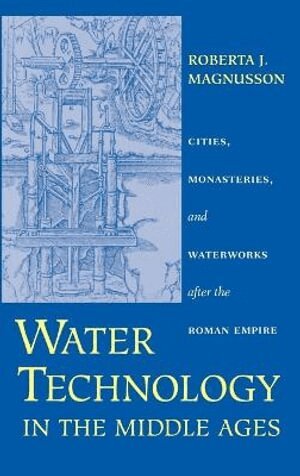
Water Technology in the Middle Ages
Cities, Monasteries, and Waterworks after the Roman Empire
Inbunden, Engelska, 2002
571 kr
Skickas inom 7-10 vardagar
Focusing attention on gravity-fed water-flow systems in medieval cities and monasteries, Water Technology in the Middle Ages: Cities, Monasteries, and Waterworks after the Roman Empire challenges the view that hydraulic engineering died with the Romans and remained moribund until the Renaissance. Roberta Magnusson explores the systems' technologies-how they worked, what uses the water served-and also the social rifts that created struggles over access to this basic necessity. Mindful of theoretical questions about what hastens technological change and how society and technology mutually influence one another, the author supplies a thoughtful and instructive study. Archeological, historical, and literary evidence vividly depicts those who designed, constructed, and used medieval water systems and demonstrates a shift from a public-administrative to a private-innovative framework-one that argues for the importance of local initiatives. "The following chapters attempt to chart a course between the Scylla and Charybdis of technological and social determinism.While writing them, I have tried to strike a balance between the technical and human aspects of medieval hydraulic systems, and to remember that beneath the welter of documents and diffusion patterns, configurations and components, ordinances and expenditures, lie the perceptions, the choices, and often the plain hard work of individual men and women." -from the Preface
761 kr
Kommande
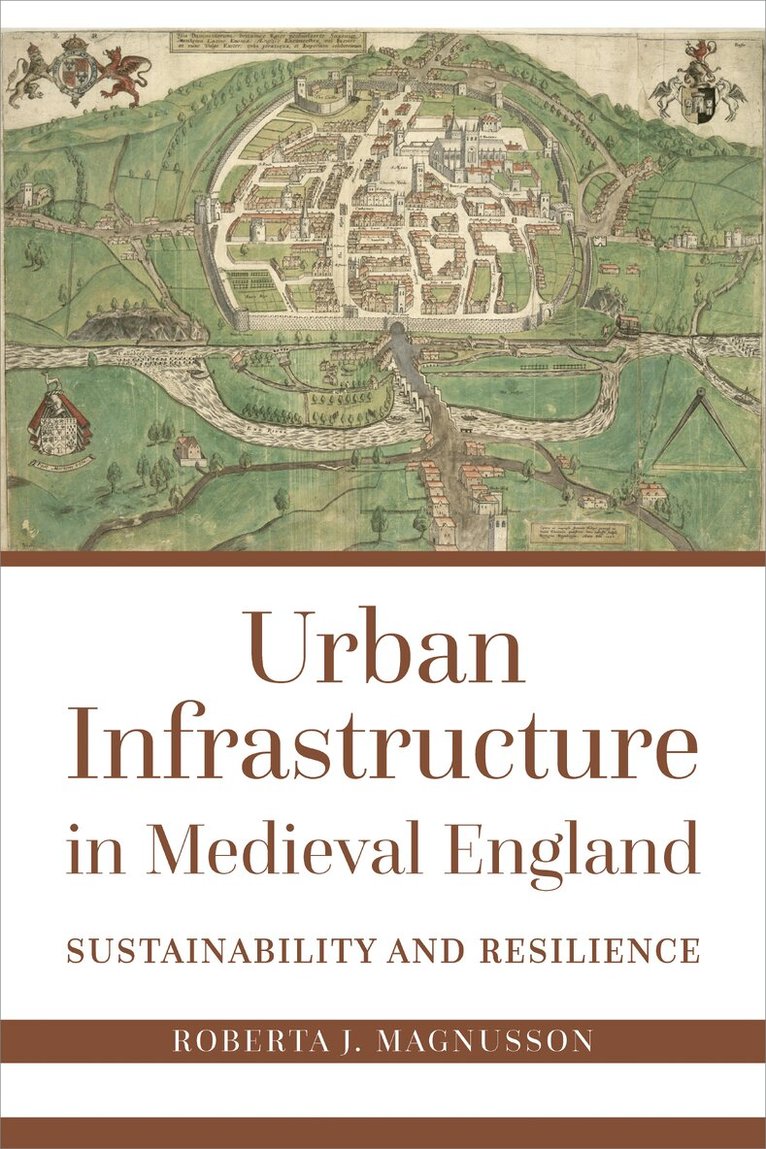
How medieval English towns built, sustained, and reimagined the lifelines of urban life.In the bustling market towns and growing cities of medieval England between 1200 and 1600, public works were the lifelines of urban society. In Urban Infrastructure in Medieval England, Roberta J. Magnusson offers the first comprehensive study of how medieval towns built, financed, and sustained their defenses, bridges, streets, water systems, and harbors.Magnusson reveals how even modest communities, like the Warwickshire town of Atherstone, boldly pursued projects that reshaped their futures. Grants of tolls and taxes funded paving initiatives, bridge repairs, and fortified walls, while enterprising lords and abbots sponsored sluices, conduits, and quays. These efforts were not confined to England's great cities; small towns with limited means also sought to enhance their competitive edge, even when such investments strained their resources. Drawing on royal records, municipal archives, and archaeological evidence, Magnusson situates these civic undertakings in their broader social and environmental contexts. She shows how townsmen adapted traditional obligations of labor and charity alongside innovative fiscal tools to sustain projects that could span generations. Yet the balance was fragile. The crises of the fourteenth century—famine, plague, and the harsher climate of the Little Ice Age—undermined local resources, leaving many communities to struggle with maintenance or watch their infrastructures decline.At once a history of engineering, economy, and community, this study illuminates how medieval people conceived of security, health, and prosperity through the material fabric of their towns. By tracing the rise, transformation, and survival of these infrastructures, Magnusson demonstrates how urban communities navigated centuries of change while shaping the very landscapes in which they lived.