Roberta Thompson Manning – författare
Visar alla böcker från författaren Roberta Thompson Manning. Handla med fri frakt och snabb leverans.
3 produkter
3 produkter
552 kr
Skickas inom 7-10 vardagar
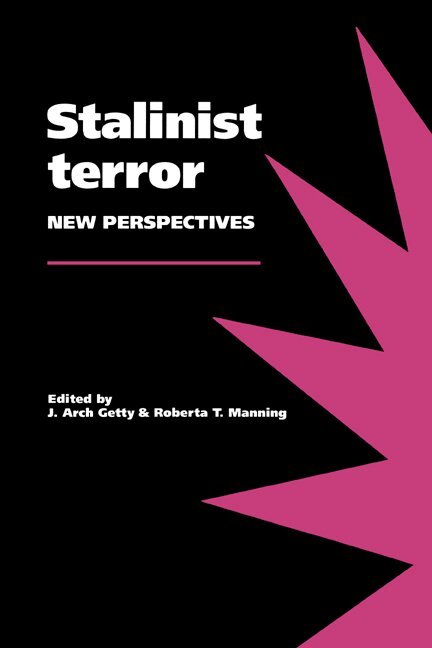
This collection of essays by scholars from five nations - the United States, Great Britain, Australia, France, and Russia - makes several major contributions to the understanding of Stalinist terror in the 1930s. The essays explore in greater depth than before the background of the terror and patterns of persecution, while providing more empirically founded and substantiated estimates of the numbers of Stalin's victims. Some contributors tap unexplored or underutilized source materials while others have taken advantage of glasnost and the opening of Soviet archives and libraries for the years of the terror to draw on freshly available archival and secondary materials. Many of the essays are informed by distinct trends in social and political history, and they approach Stalinist terror with fresh methods and perspectives. The volume supplements works that have focused exclusively on Stalin's personality by concentrating instead on preconditions, mentalities, economics, and specific groups. Although Stalin remains the central personality in the terror, other leaders, institutions, and social groups played important roles, and by analyzing them the essays in the volume help to provide a more complete and balanced view of the phenomenon of the terror as a whole.
1 656 kr
Skickas inom 3-6 vardagar
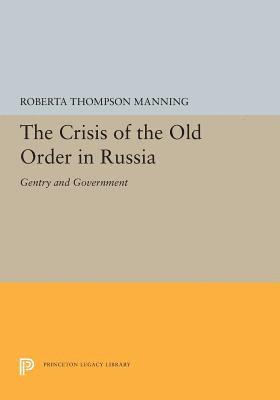
Focusing on the role of the landowning gentry in the First Russian Revolution of 1905-1907, Roberta Manning explores the complex relationship between this traditional social and political elite and the imperial Russian government in the period between the abolition of serfdom and the February Revolution of 1917. In contrast to the commonly accepted view that the 1905 Revolution significantly expanded the circle of people involved in government, Professor Manning argues that the gentry became Russia's dominant political force after the 1907 coup d'etat. Overwhelmed after Emancipation by economic crisis and a devastating erosion of their role in government service, the gentry utilized the revitalized assemblies of the nobility and the newly founded zemstvos first to agitate for and then to dominate the representative institutions created by the 1905 Revolution.Through a vast array of primary sources, Professor Manning considers the acquisitions and consequences of the gentry's augmented political role and presents an updated account of the peasant rebellions of 1905-1907 and their impact on the gentry. Included is a brilliant portrayal of P.A. Stolypin, the period's most gifted gentry statesman, and of the defeat, accomplished with the aid of gentry pressure groups, of his reform program, the last comprehensive effort to restructure the political order of Imperial Russia.Studies of this period of Russian history have generally focused on the dramatic confrontation between the Old Regime and its revolutionary adversaries. Here Professor Manning illuminates the equally fateful conflicts within the Russian upper classes.Roberta Thompson Manning is Associate Professor at Boston College.Studies of the Russian Institute, Columbia University.Originally published in 1983.The Princeton Legacy Library uses the latest print-on-demand technology to again make available previously out-of-print books from the distinguished backlist of Princeton University Press. These editions preserve the original texts of these important books while presenting them in durable paperback and hardcover editions. The goal of the Princeton Legacy Library is to vastly increase access to the rich scholarly heritage found in the thousands of books published by Princeton University Press since its founding in 1905.
4 217 kr
Skickas inom 3-6 vardagar
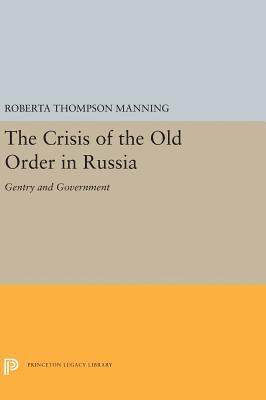
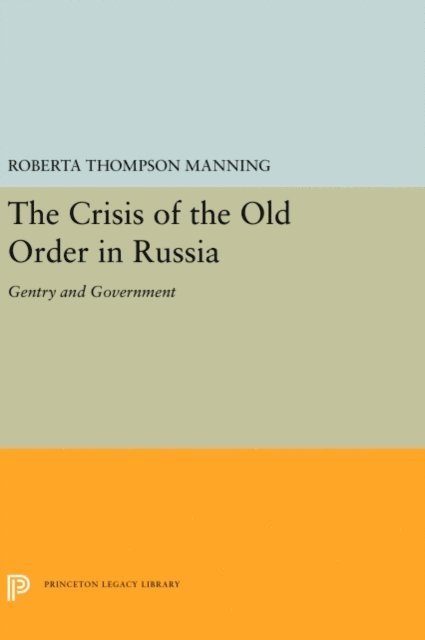
Focusing on the role of the landowning gentry in the First Russian Revolution of 1905-1907, Roberta Manning explores the complex relationship between this traditional social and political elite and the imperial Russian government in the period between the abolition of serfdom and the February Revolution of 1917. In contrast to the commonly accepted view that the 1905 Revolution significantly expanded the circle of people involved in government, Professor Manning argues that the gentry became Russia's dominant political force after the 1907 coup d'etat. Overwhelmed after Emancipation by economic crisis and a devastating erosion of their role in government service, the gentry utilized the revitalized assemblies of the nobility and the newly founded zemstvos first to agitate for and then to dominate the representative institutions created by the 1905 Revolution.Through a vast array of primary sources, Professor Manning considers the acquisitions and consequences of the gentry's augmented political role and presents an updated account of the peasant rebellions of 1905-1907 and their impact on the gentry. Included is a brilliant portrayal of P.A. Stolypin, the period's most gifted gentry statesman, and of the defeat, accomplished with the aid of gentry pressure groups, of his reform program, the last comprehensive effort to restructure the political order of Imperial Russia.Studies of this period of Russian history have generally focused on the dramatic confrontation between the Old Regime and its revolutionary adversaries. Here Professor Manning illuminates the equally fateful conflicts within the Russian upper classes.Roberta Thompson Manning is Associate Professor at Boston College.Studies of the Russian Institute, Columbia University.Originally published in 1983.The Princeton Legacy Library uses the latest print-on-demand technology to again make available previously out-of-print books from the distinguished backlist of Princeton University Press. These editions preserve the original texts of these important books while presenting them in durable paperback and hardcover editions. The goal of the Princeton Legacy Library is to vastly increase access to the rich scholarly heritage found in the thousands of books published by Princeton University Press since its founding in 1905.