Roberto J. González - Böcker
Visar alla böcker från författaren Roberto J. González. Handla med fri frakt och snabb leverans.
10 produkter
10 produkter
Anthropologists in the Public Sphere
Speaking Out on War, Peace, and American Power
Häftad, Engelska, 2004
314 kr
Skickas inom 10-15 vardagar
Anthropologists have a long tradition of prescient diagnoses of world events. Possessing a knowledge of culture, society, and history not always shared by the media's talking heads, anthropologists have played a crucial role in educating the general reader on the public debates from World War I to the second Gulf War. This anthology collects over fifty commentaries by noted anthropologists such as Margaret Mead, Franz Boas, and Marshall Sahlins who seek to understand and explain the profound repercussions of U.S. involvement in the Middle East, Asia, Africa, and Latin America. Frequently drawing on their own fieldwork, the anthropologists go beyond the headlines to draw connections between indigenous cultures, corporate globalization, and contemporary political and economic crises. Venues range from the op-ed pages of internationally renowned newspapers such as the New York Times and the Washington Post to magazine articles and television interviews. Special sections entitled "Prelude to September 11" and "Anthropological Interpretations of September 11" include articles that provided many Americans with their first substantial introduction to the history of Islam, Central Asia, and the Middle East. Each article includes a brief introduction contextualizing the commentary.
350 kr
Skickas inom 10-15 vardagar
2003 — Julian Steward Award – Anthropology & Environment Section, American Anthropological Association2002 — A CHOICE Outstanding Academic BookHow Zapotec agricultural and dietary theories and practices constitute a valid local science.Zapotec farmers in the northern sierra of Oaxaca, Mexico, are highly successful in providing their families with abundant, nutritious food in an ecologically sustainable fashion, although the premises that guide their agricultural practices would be considered erroneous by the standards of most agronomists and botanists in the United States and Europe. In this book, Roberto GonzÁlez convincingly argues that in fact Zapotec agricultural and dietary theories and practices constitute a valid local science, which has had a reciprocally beneficial relationship with European and United States farming and food systems since the sixteenth century. GonzÁlez bases his analysis upon direct participant observation in the farms and fields of a Zapotec village. By using the ethnographic fieldwork approach, he is able to describe and analyze the rich meanings that campesino families attach to their crops, lands, and animals. GonzÁlez also reviews the history of maize, sugarcane, and coffee cultivation in the Zapotec region to show how campesino farmers have intelligently and scientifically adapted their farming practices to local conditions over the course of centuries. By setting his ethnographic study of the Talea de Castro community within a historical world systems perspective, he also skillfully weighs the local impact of national and global currents ranging from Spanish colonialism to the 1910 Mexican Revolution to NAFTA. At the same time, he shows how, at the turn of the twenty-first century, the sustainable practices of "traditional" subsistence agriculture are beginning to replace the failed, unsustainable techniques of modern industrial farming in some parts of the United States and Europe.
250 kr
Skickas inom 7-10 vardagar
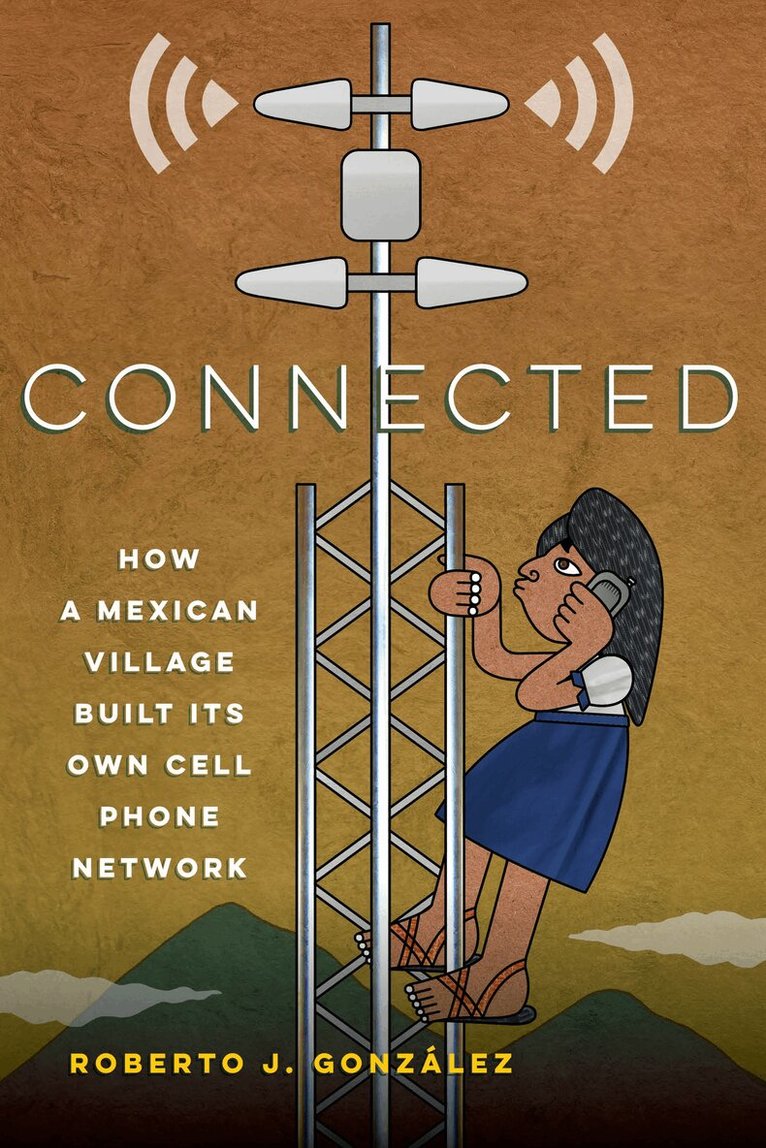
This is the true story of how, against all odds, a remote Mexican pueblo built its own autonomous cell phone network—without help from telecom companies or the government. Anthropologist Roberto J. González paints a vivid and nuanced picture of life in a Oaxaca mountain village and the collective tribulation, triumph, and tragedy the community experienced in pursuit of getting connected. In doing so, this book captures the challenges and contradictions facing Mexico's indigenous peoples today, as they struggle to wire themselves into the 21st century using mobile technologies, ingenuity, and sheer determination. It also holds a broader lesson about the great paradox of the digital age, by exploring how constant connection through virtual worlds can hinder our ability to communicate with those around us.
War Virtually
The Quest to Automate Conflict, Militarize Data, and Predict the Future
Inbunden, Engelska, 2022
243 kr
Skickas inom 7-10 vardagar
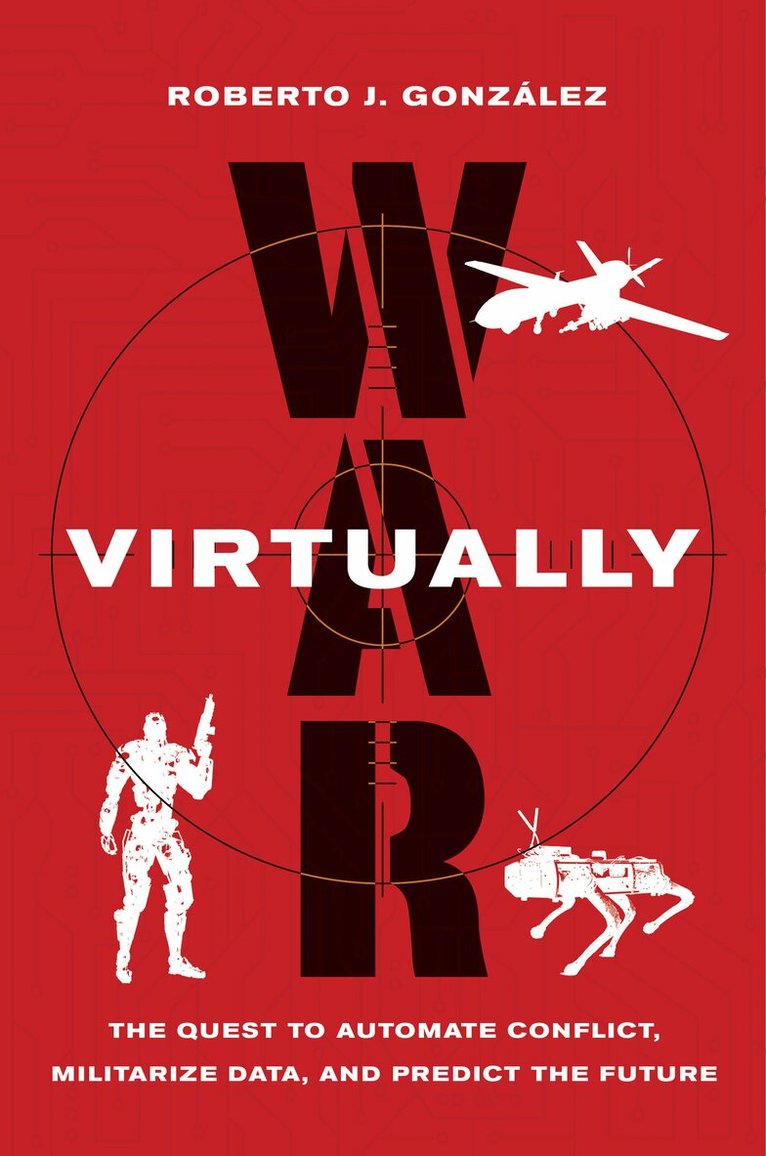
A critical look at how the US military is weaponizing technology and data for new kinds of warfare—and why we must resist.War Virtually is the story of how scientists, programmers, and engineers are racing to develop data-driven technologies for fighting virtual wars, both at home and abroad. In this landmark book, Roberto J. González gives us a lucid and gripping account of what lies behind the autonomous weapons, robotic systems, predictive modeling software, advanced surveillance programs, and psyops techniques that are transforming the nature of military conflict. González, a cultural anthropologist, takes a critical approach to the techno-utopian view of these advancements and their dubious promise of a less deadly and more efficient warfare. With clear, accessible prose, this book exposes the high-tech underpinnings of contemporary military operations—and the cultural assumptions they're built on. Chapters cover automated battlefield robotics; social scientists' involvement in experimental defense research; the blurred line between political consulting and propaganda in the internet era; and the military's use of big data to craft new counterinsurgency methods based on predicting conflict. González also lays bare the processes by which the Pentagon and US intelligence agencies have quietly joined forces with Big Tech, raising an alarming prospect: that someday Google, Amazon, and other Silicon Valley firms might merge with some of the world's biggest defense contractors. War Virtually takes an unflinching look at an algorithmic future—where new military technologies threaten democratic governance and human survival.
War Virtually
The Quest to Automate Conflict, Militarize Data, and Predict the Future
Häftad, Engelska, 2024
243 kr
Skickas inom 7-10 vardagar
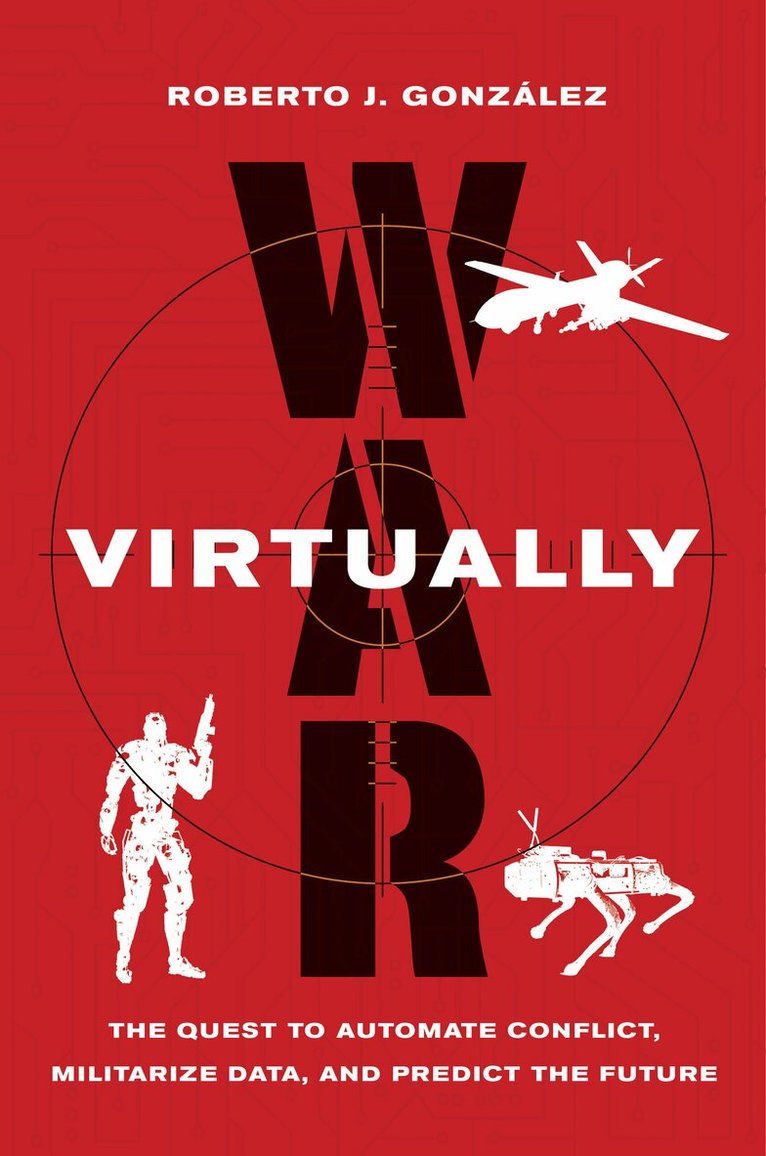
A critical look at how the US military is weaponizing technology and data for new kinds of warfare—and why we must resist.War Virtually is the story of how scientists, programmers, and engineers are racing to develop data-driven technologies for fighting virtual wars, both at home and abroad. In this landmark book, Roberto J. González gives us a lucid and gripping account of what lies behind the autonomous weapons, robotic systems, predictive modeling software, advanced surveillance programs, and psyops techniques that are transforming the nature of military conflict. González, a cultural anthropologist, takes a critical approach to the techno-utopian view of these advancements and their dubious promise of a less deadly and more efficient warfare. With clear, accessible prose, this book exposes the high-tech underpinnings of contemporary military operations—and the cultural assumptions they're built on. Chapters cover automated battlefield robotics; social scientists' involvement in experimental defense research; the blurred line between political consulting and propaganda in the internet era; and the military's use of big data to craft new counterinsurgency methods based on predicting conflict. González also lays bare the processes by which the Pentagon and US intelligence agencies have quietly joined forces with Big Tech, raising an alarming prospect: that someday Google, Amazon, and other Silicon Valley firms might merge with some of the world's biggest defense contractors. War Virtually takes an unflinching look at an algorithmic future—where new military technologies threaten democratic governance and human survival.
143 kr
Skickas inom 11-20 vardagar
Politicians, pundits, and Pentagon officials are singing the praises of a kinder, gentler American counterinsurgency. Some claim that counterinsurgency is so sophisticated and effective that it is the 'graduate level of war'. Private military contracting firms have jumped on the bandwagon, and many have begun employing anthropologists, political scientists, psychologists, and sociologists to help meet the Department of Defense's new demand. The $60 million Human Terrain System (HTS), an intelligence gathering program that embeds social scientists with combat brigades in Iraq and Afghanistan, dramatically illustrates the approach. But when the military, transnational corporations, and the human sciences become obsessed with controlling the 'human terrain' - the civilian populations of Iraq and Afghanistan - what are the consequences? In this timely pamphlet, Roberto J. Gonzalez offers a searing critique of HTS, showing how the history of anthropology can be used to illuminate the problems of turning 'culture' into a military tool.
1 724 kr
Skickas inom 7-10 vardagar
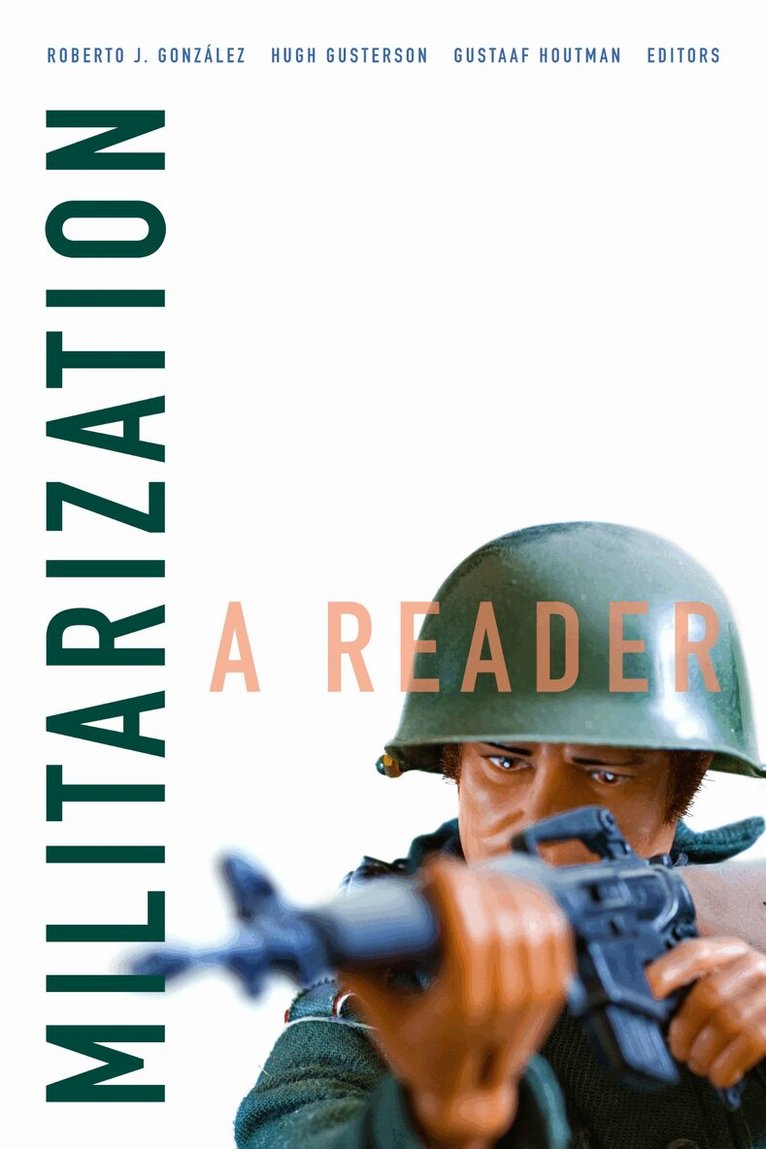
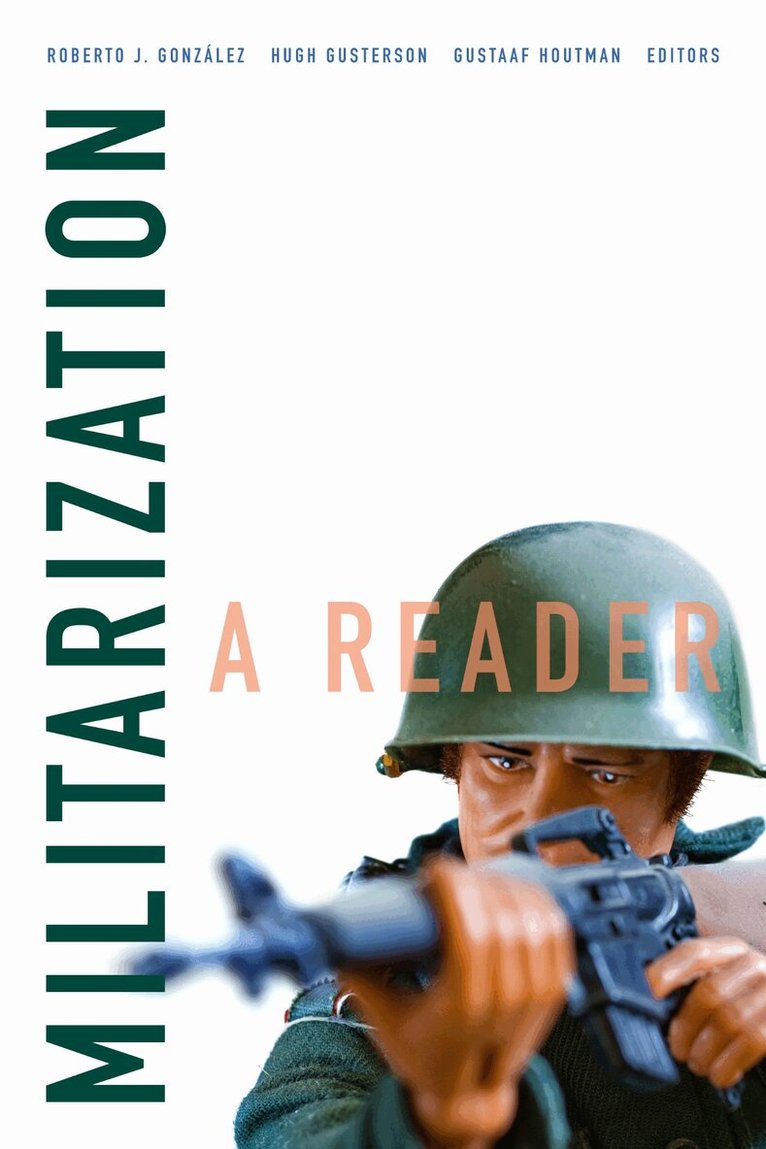
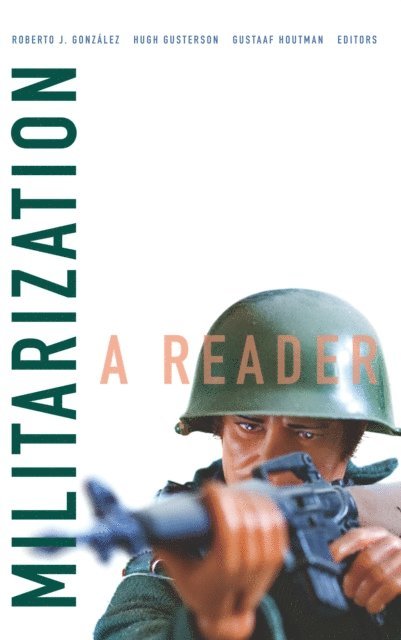
Militarization: A Reader offers a range of critical perspectives on the dynamics of militarization as a social, economic, political, cultural, and environmental phenomenon. It portrays militarism as the condition in which military values and frameworks come to dominate state structures and public culture both in foreign relations and in the domestic sphere. Featuring short, readable essays by anthropologists, historians, political scientists, cultural theorists, and media commentators, the Reader probes militarism's ideologies, including those that valorize warriors, armed conflict, and weaponry. Outlining contemporary militarization processes at work around the world, the Reader offers a wide-ranging examination of a phenomenon that touches the lives of billions of people.In collaboration with Catherine Besteman, Andrew Bickford, Catherine Lutz, Katherine T. McCaffrey, Austin Miller, David H. Price, David Vine
427 kr
Skickas inom 7-10 vardagar
Militarization: A Reader offers a range of critical perspectives on the dynamics of militarization as a social, economic, political, cultural, and environmental phenomenon. It portrays militarism as the condition in which military values and frameworks come to dominate state structures and public culture both in foreign relations and in the domestic sphere. Featuring short, readable essays by anthropologists, historians, political scientists, cultural theorists, and media commentators, the Reader probes militarism's ideologies, including those that valorize warriors, armed conflict, and weaponry. Outlining contemporary militarization processes at work around the world, the Reader offers a wide-ranging examination of a phenomenon that touches the lives of billions of people.In collaboration with Catherine Besteman, Andrew Bickford, Catherine Lutz, Katherine T. McCaffrey, Austin Miller, David H. Price, David Vine
2 088 kr
Skickas inom 10-15 vardagar
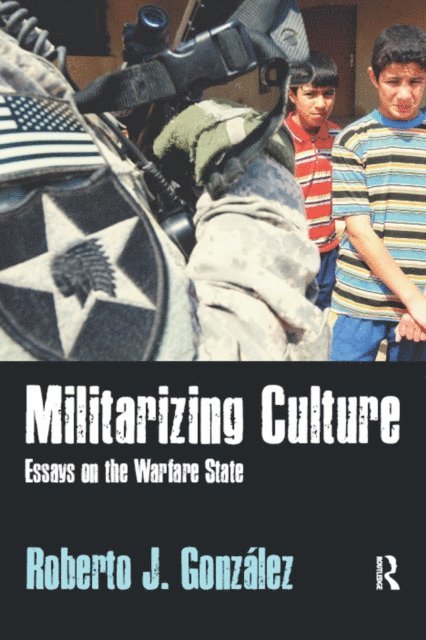
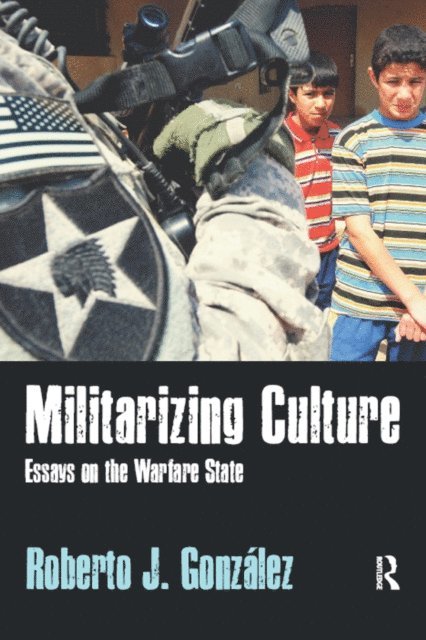
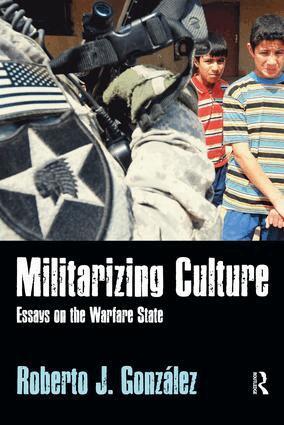
Militarizing Culture is a rousing critique of the American warfare state by a leading cultural commentator. Roberto J. González reveals troubling trends in the post-9/11 era, as the military industrial complex infiltrates new arenas of cultural life, from economic and educational arenas to family relationships. One of the nation’s foremost critics of the Human Terrain System program, González makes passionate arguments against the engagement of social scientists and the use of anthropological theory and methods in military operations. Despite the pervasive presence of militarism and violence in our society, González insists that warfare is not an inevitable part of human nature, and charts a path toward the decommissioning of culture.
563 kr
Skickas inom 10-15 vardagar
Militarizing Culture is a rousing critique of the American warfare state by a leading cultural commentator. Roberto J. González reveals troubling trends in the post-9/11 era, as the military industrial complex infiltrates new arenas of cultural life, from economic and educational arenas to family relationships. One of the nation’s foremost critics of the Human Terrain System program, González makes passionate arguments against the engagement of social scientists and the use of anthropological theory and methods in military operations. Despite the pervasive presence of militarism and violence in our society, González insists that warfare is not an inevitable part of human nature, and charts a path toward the decommissioning of culture.