Robin Fleming - Böcker
Visar alla böcker från författaren Robin Fleming. Handla med fri frakt och snabb leverans.
6 produkter
6 produkter
163 kr
Skickas
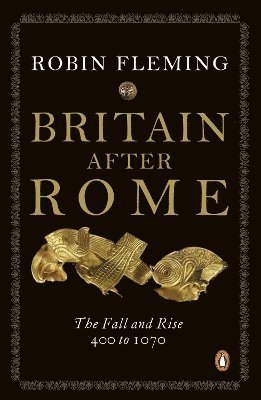
The enormous hoard of beautiful gold military objects found in a field in Staffordshire has focused huge attention on the mysterious world of 7th and 8th century Britain. Clearly the product of a sophisticated, wealthy, highly militarized society, the objects beg innumerable questions about how we are to understand the people who once walked across the same landscape we inhabit, who are our ancestors and yet left such a slight record of their presence.Britain after Rome brings together a wealth of research and imaginative engagement to bring us as close as we can hope to get to the tumultuous centuries between the departure of the Roman legions and the arrival of Norman invaders nearly seven centuries later. As towns fell into total decay, Christianity disappeared and wave upon wave of invaders swept across the island, it can be too easily assumed that life in Britain became intolerable - and yet this is the world in which modern languages and political arrangements were forged, a number of fascinating cultures rose and fell and tantalizing glimpses, principally through the study of buildings and burials, can be had of a surprising and resilient place.The result of a lifetime of work, Robin Fleming's major new addition to the Penguin History of Britain could not be more opportune. A richly enjoyable, varied and surprising book, Britain after Rome allows its readers to see Britain's history in a quite new light.
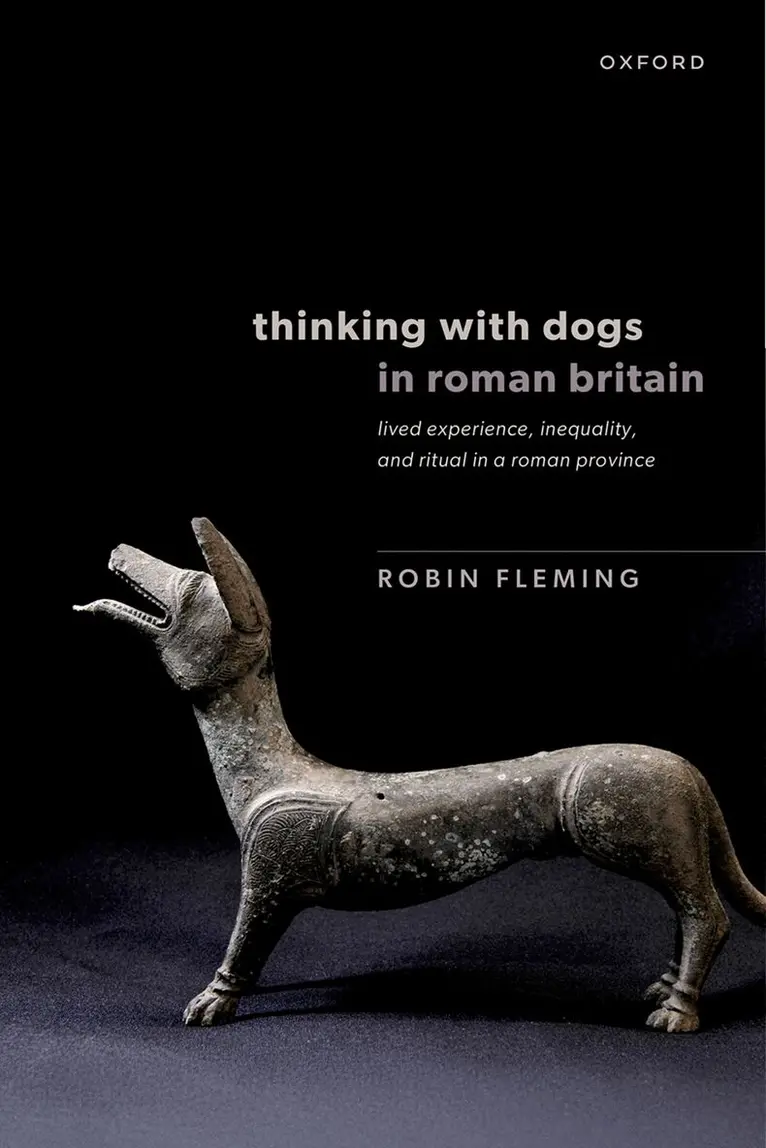
Thinking with Dogs in Roman Britain
Lived Experience, Inequality, and Ritual in a Roman Province
Inbunden, Engelska, 2026
478 kr
Skickas inom 5-8 vardagar
Thinking with Dogs in Roman Britain: Lived Experience, Inequality, and Ritual in a Roman Province argues that in Roman Britain, where little written evidence survives, some aspects of the past are more visible when we look not at people but instead focus on the dogs nipping at their heels. By examining the evidence of more than 1,700 Roman-period dogs preserved in structured deposits that Fleming suggests are the remnants of ritual acts, she provides a history of the relationships between canines and people living in a provincial context. The book begins by investigating the lives of real dogs in Britain under Rome, some of which were pampered working or personal animals, but many of which had hard lives and had to fend for themselves. It then explores how the period's authors used both pampered dogs and strays as metaphors, shedding light on issues of hierarchy, inequality, and enslavement. Finally it then turns to the widespread use of dogs as a material of religion, investigating their role as sacrificial animals and ritual agents, first in temple and shrine rituals and then in everyday household religion. Fleming concludes by asking what dogs did for ritual and what they can tell us about the making of Roman provincial culture.
Del 15 - Cambridge Studies in Medieval Life and Thought: Fourth Series
Kings and Lords in Conquest England
Häftad, Engelska, 2004
550 kr
Skickas inom 7-10 vardagar
This is a study of landholding and alliance in England in the years 950 to 1086, a period in which the fortunes of lay lords and their families rose and fell dramatically. It was also a period of dizzying tenurial change, in which the fluctuations in landed wealth and alliances shed light on the economic and geographic balance between the monarchy and the aristocracy, and on how this balance helped shape Conquest England. A number of key historical issues are investigated: the impact of Cnut's conquest on England, the quality of Edward the Confessor's kingship, the means by which the Norman settlement was carried out, and the effects on England of William's conquest. The book will become the standard work on the often volatile relationship between the king and the great lords in this key transitional period, and is one of the most stimulating and original contributions to Conquest studies.
672 kr
Skickas inom 7-10 vardagar
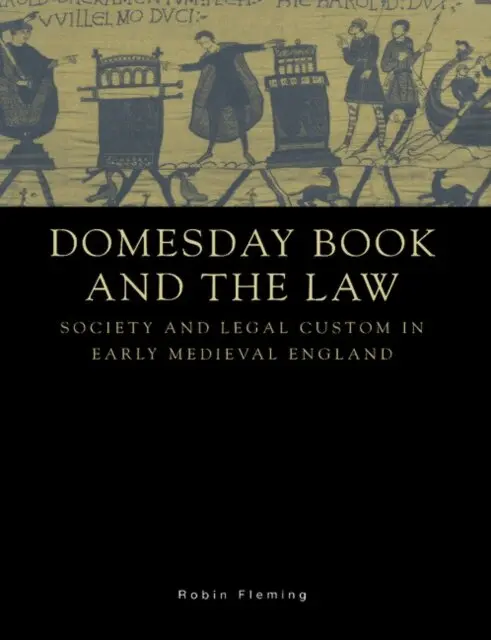
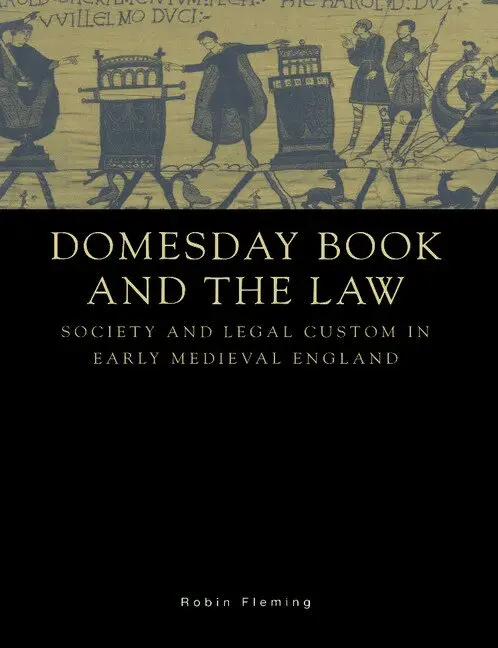
The Domesday Book contains a great many things, including the most comprehensive, varied, and monumental legal material to survive from England before the rise of the common law. This book argues that it can - and should - be read as a legal text. When the statistical information present in the great survey is stripped away, there is much material still left, almost all of which stems directly from inquest, testimony given by jurors impanelled in 1086, or from the sworn statements of lords and their men. This information, read in context, can provide a picture of what the law looked like, the ways in which it was changing, and the means whereby the inquest was a central event in the formation of English law. The volume provides translations (with Latin legal terminology included parenthetically) for all of Domesday Book's legal references, each numbered and organised by county, fee, and folio.
837 kr
Skickas inom 10-15 vardagar
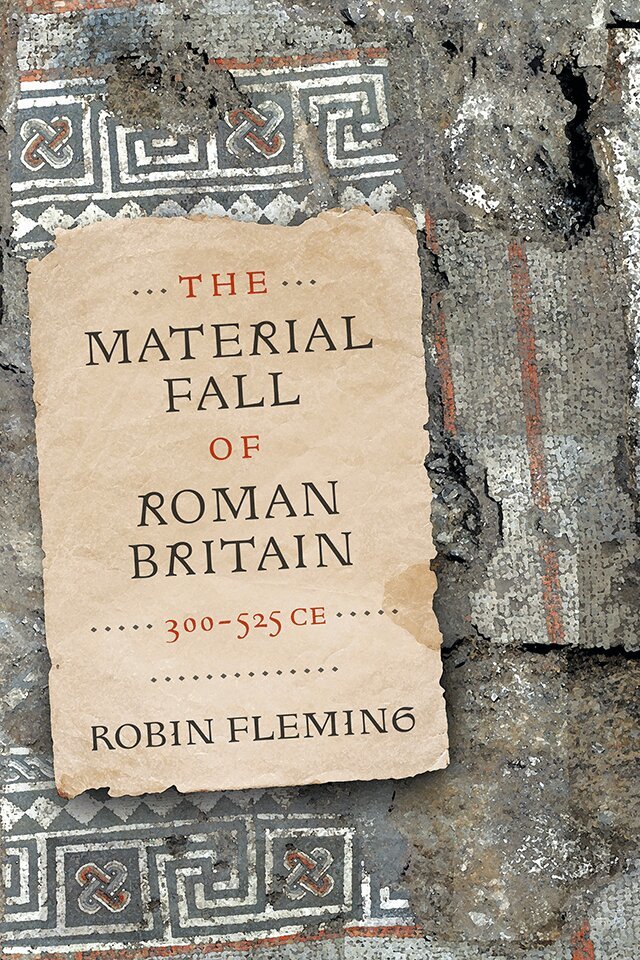
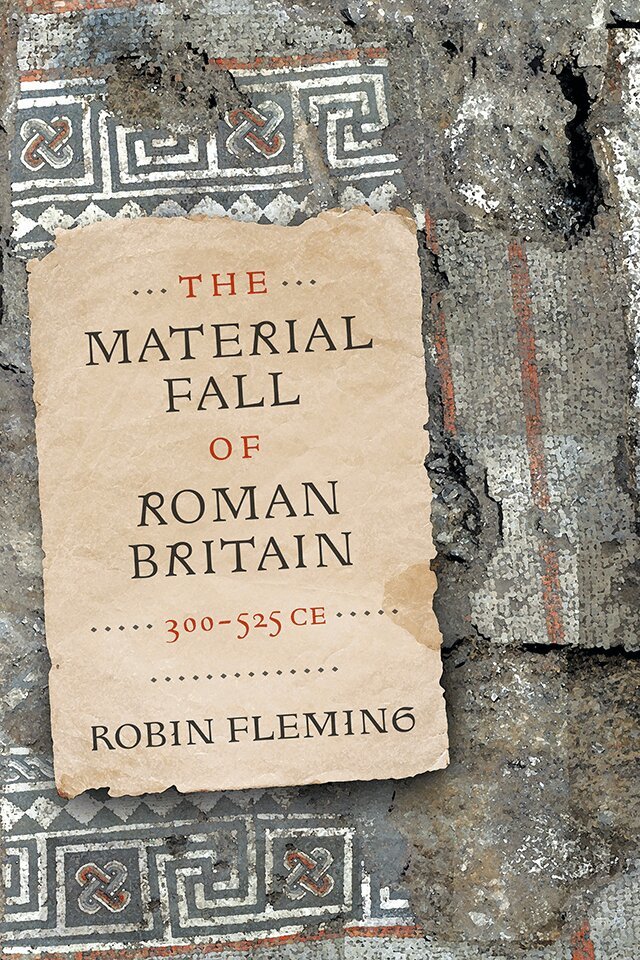
Although lowland Britain in 300 CE had been as Roman as any province in the empire, in the generations on either side of 400, urban life, the money economy, and the functioning state collapsed. Many of the most quotidian and fundamental elements of Roman-style material culture ceased to be manufactured. Skills related to iron and copper smelting, wooden board and plank making, stone quarrying, commercial butchery, horticulture, and tanning largely disappeared, as did the knowledge standing behind the production of wheel-thrown, kiln-fired pottery and building in stone. No other period in Britain's prehistory or history witnessed the loss of so many classes of once-common skills and objects. While the reasons for this breakdown remain unclear, it is indisputable the collapse was foundational in the making of a new world we characterize as early medieval.The standard explanation for the emergence of the new-style material culture found in lowland Britain by the last quarter of the fifth century is that foreign objects were brought in by "Anglo-Saxon" settlers. Marshalling a wealth of archaeological evidence, Robin Fleming argues instead that not only Continental immigrants, but also the people whose ancestors had long lived in Britain built this new material world together from the ashes of the old, forging an identity that their descendants would eventually come to think of as English. As with most identities, she cautions, this was one rooted in neither birth nor blood, but historically constructed, and advanced and maintained over the generations by the shared material culture and practices that developed during and after Rome's withdrawal from Britain.
318 kr
Skickas
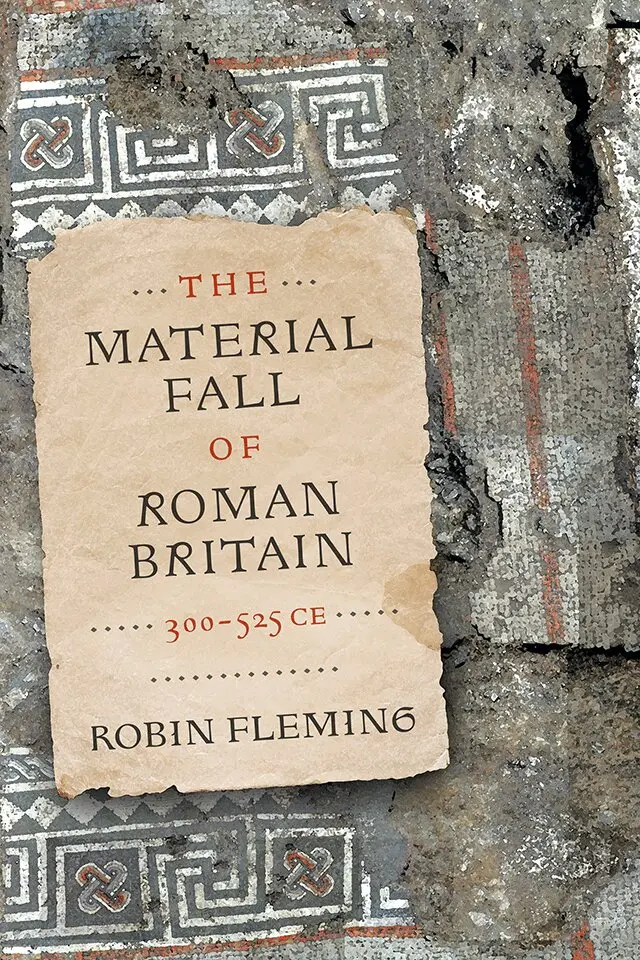
Although lowland Britain in 300 CE had been as Roman as any province in the empire, in the generations on either side of 400, urban life, the money economy, and the functioning state collapsed. Many of the most quotidian and fundamental elements of Roman-style material culture ceased to be manufactured. Skills related to iron and copper smelting, wooden board and plank making, stone quarrying, commercial butchery, horticulture, and tanning largely disappeared, as did the knowledge standing behind the production of wheel-thrown, kiln-fired pottery and building in stone. No other period in Britain's prehistory or history witnessed the loss of so many classes of once-common skills and objects. While the reasons for this breakdown remain unclear, it is indisputable the collapse was foundational in the making of a new world we characterize as early medieval.The standard explanation for the emergence of the new-style material culture found in lowland Britain by the last quarter of the fifth century is that foreign objects were brought in by "Anglo-Saxon" settlers. Marshalling a wealth of archaeological evidence, Robin Fleming argues instead that not only Continental immigrants, but also the people whose ancestors had long lived in Britain built this new material world together from the ashes of the old, forging an identity that their descendants would eventually come to think of as English. As with most identities, she cautions, this was one rooted in neither birth nor blood, but historically constructed, and advanced and maintained over the generations by the shared material culture and practices that developed during and after Rome's withdrawal from Britain.