Rochelle Tobias - Böcker
Visar alla böcker från författaren Rochelle Tobias. Handla med fri frakt och snabb leverans.
4 produkter
4 produkter
630 kr
Tillfälligt slut
Paul Celan has long been regarded as the most important European poet after 1945 but also the most difficult owing to the numerous references in his work to his personal history and to a cultural heritage spanning many disciplines, centuries, and languages. In this insightful study, Rochelle Tobias goes a long way to dispelling the obscurity that has surrounded the poet and his work. She shows that the enigmatic images in his poetry have a common source. They are drawn from the disciplines of geology, astrology, and physiology or what could be called the sciences of the earth, the heavens, and the human being. Celan's poetry borrows from each of these disciplines to create a poetic universe-a universe that attests to what is no longer and projects what is not yet. This is the unnatural world of Celan's poetry. It is a world in which time itself takes physical form or is made plastic. Through a series of close readings and philosophical explorations, Tobias reflects on the experience of time encoded and embodied in Celan's work.She demonstrates that the physical world in his poetry ultimately serves as a showcase for time, which is the most elusive aspect of human experience because it is based nowhere but in the mind. Tobias's probing interpretations present a new model for understanding Celan's work from the early elegiac poems to the later cryptic texts. An interdisciplinary project, the study combines readings of Celan's poetry with discussions of ancient and modern science, mystical cosmology, and twentieth-century literature and thought. Tobias's original approach to Celan illuminates his complex verse and contributes significantly to the theory of metaphor as it applies to modern verse.
549 kr
Skickas
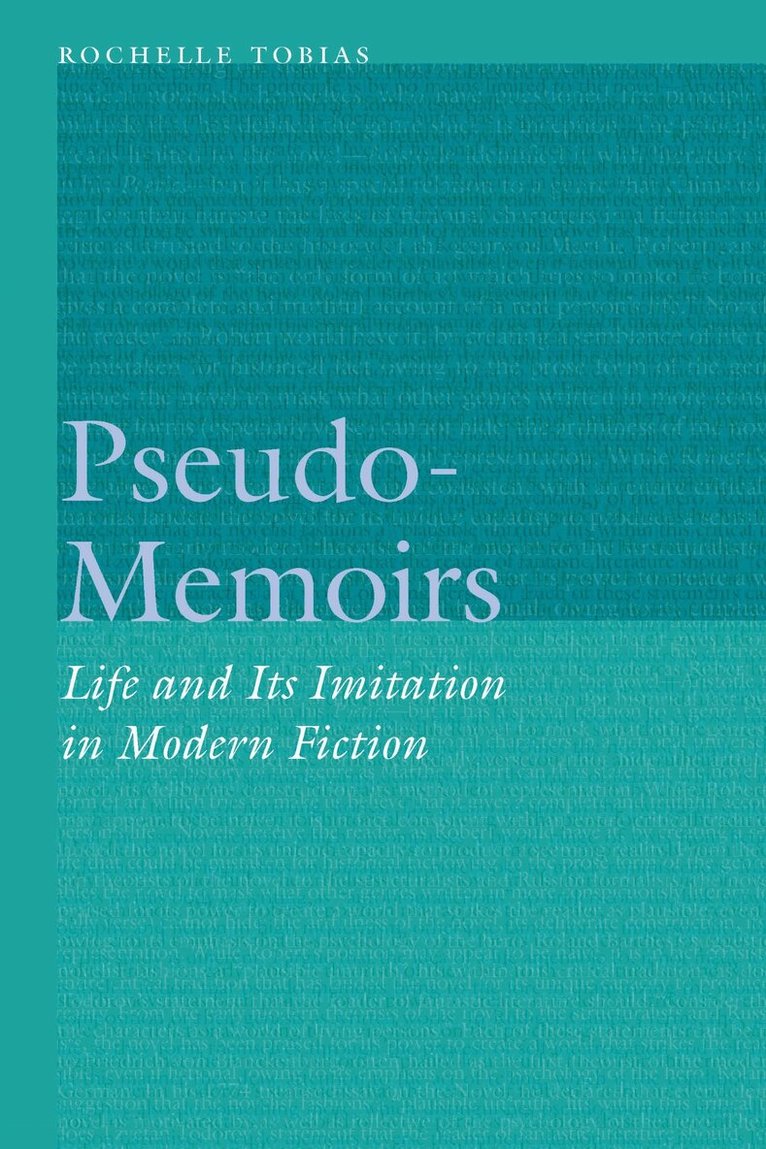
Pseudo-Memoirs redefines the notion of fiction itself, a form that has all too often been understood in terms of its capacity to produce a seeming reality. Rochelle Tobias argues that the verisimilitude of the novel derives not from its object but from the subjectivity at its base. What generates the plausibility of fiction is not the referentiality of its depictions but the intentionality of consciousness.Edmund Husserl developed the idea that consciousness is always intentional in the sense that it is directed outside itself toward something that it does not find so much as it constitutes as an object. Pseudo-memoirs reveal the full implications of this position in their double structure as the tale of their own telling or the fiction of life-writing. In so doing they reveal how the world of fiction is constructed, but more important they bring to the fore the idealist premises that fuel the novel and guarantee its truth, even when it remains an invention of the imagination.Rochelle Tobias explores novels by Thomas Mann, Robert Walser, Thomas Bernhard, and W. G. Sebald in conjunction with philosophical and theoretical texts by RenÉ Descartes, Husserl, Friedrich Nietzsche, GyÖrgy ŁukÁcs, Roland Barthes, and Maurice Blanchot.
571 kr
Skickas inom 3-6 vardagar
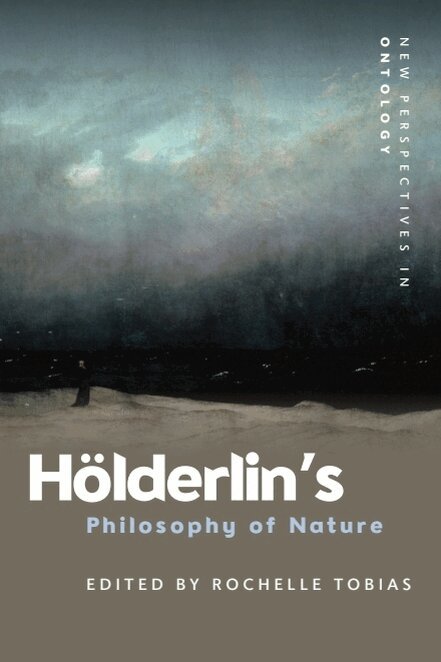
The work of the decidedly philosophical poet Friedrich Holderlin has gained renewed urgency in its emphasis on the forces of nature that produce life and at the same time threaten to devour it. This volume brings Holderlin into dialogue with pre-Socratic and German Idealist thought as well as contemporary environmental theory to show the continued relevance of the poet's understanding of natural catastrophes. With twelve original contributions on Holderlin's poetry by noted scholars including Jennifer Anna Gosetti-Ferencei, Achim Geisenhansluke, Anja Lemke, Jan Mieszkowski, Katrin Pahl and Thomas Schestag, the book explores Holderlin's legacy and what it reveals about the impulses toward form and formlessness in nature and the role that poetry plays in fashioning a musical accord, or what Holderlin called 'harmonious opposition'.
1 812 kr
Skickas inom 5-8 vardagar
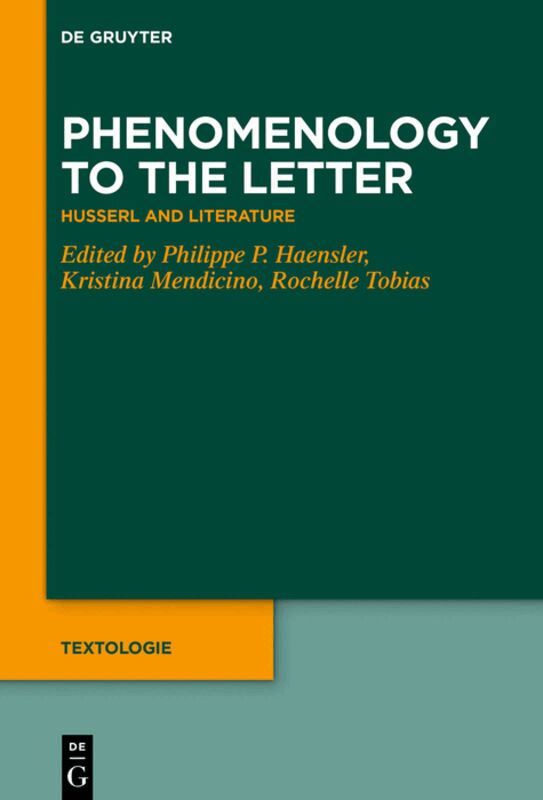
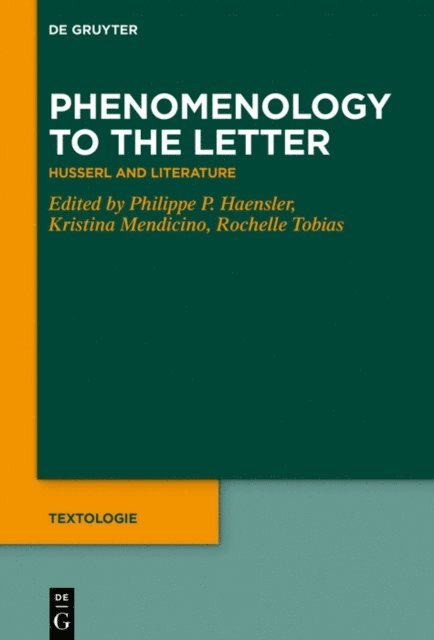
Regarding philosophical importance, Edmund Husserl is arguably "the" German export of the early twentieth century. In the wake of the linguistic turn(s) of the humanities, however, his claim to return to the "Sachen selbst" became metonymic for the neglect of language in Western philosophy. This view has been particularly influential in post-structural literary theory, which has never ceased to attack the supposed "logophobie" of phenomenology. "Phenomenology to the Letter. Husserl and Literature" challenges this verdict regarding the poetological and logical implications of Husserl’s work through a thorough re-examination of his writing in the context of literary theory, classical rhetoric, and modern art. At issue is an approach to phenomenology and literature that does not merely coordinate the two discourses but explores their mutual implication. Contributions to the volume attend to the interplay between phenomenology and literature (both fiction and poetry), experience and language, as well as images and embodiment. The volume is the first of its kind to chart a phenomenological approach to literature and literary approach to phenomenology. As such it stands poised to make a novel contribution to literary studies and philosophy.