Roger Kitching - Böcker
Visar alla böcker från författaren Roger Kitching. Handla med fri frakt och snabb leverans.
2 produkter
2 produkter
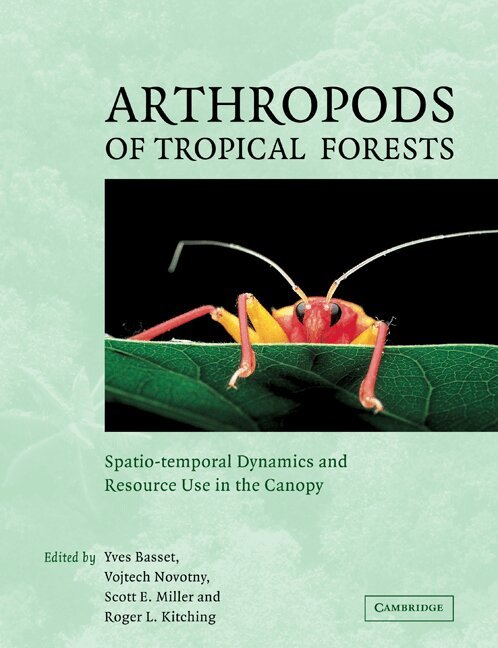
Arthropods of Tropical Forests
Spatio-Temporal Dynamics and Resource Use in the Canopy
Häftad, Engelska, 2008
665 kr
Skickas inom 7-10 vardagar
Arthropods are the most diverse group of organisms on our planet and the tropical rainforests represent the most biologically diverse of all ecosystems. This book, written by 79 authors contributing to 35 chapters, aims to provide an overview of data collected during recent studies in Australia, Africa, Asia, and South America. The book focuses on the distribution of arthropods and their use of resources in the rainforest canopies, providing a basis for comparison between the forest ecosystems of the main biogeographical regions. Topics covered include the distribution of arthropods along vertical gradients and the relationship between the soil/litter habitat and the forest canopy. The temporal dynamics of arthropod communities, habitats and food selection are examined within and among tropical tree crowns, as are the effects of forest disturbance. This important book is a valuable addition to the literature used by community ecologists, conservation biologists entomologists, botanists and forestry experts.
2 287 kr
Skickas inom 7-10 vardagar
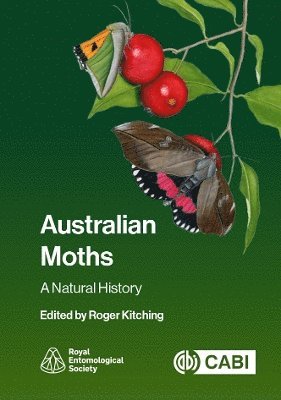
The insect Order Lepidoptera is one of the four megadiverse groups of insects globally. The vast majority of the Order are moths and the unique Australian fauna has long been of interest to scientists and other enthusiasts. Australian Moths: a Natural History presents a synthesis of much of the research work that has occurred over the last 30 years on the Australian moth fauna, focussing on the ecology, evolution and natural history of this key Order of insects. All the chapters are authored by experts currently active in the field. Following introductory material, the chapters fall into three broad categories. Seven chapters present general accounts of the fauna ranging from the history of its discovery (including Indigenous knowledge), through origin and evolution, community ecology, to conservation. A central block of chapters describes key groups of Australian moths which have radiated extensively in Australia, followed by chapters summarizing knowledge on key species. These species are of particular economic, social or conservation significance. The book closes with a chapter on key knowledge gaps as a challenge to future researchers and naturalists. The work is essential reading for research students, senior scientists, conservationists, pest managers and amateur entomologists. It aims to promote moths as exciting and productive subjects for further study, enthusiasm and admiration.