• Fri frakt över 249 kr
  • •
  • Snabba leveranser
  • •
  • Billiga böcker
Kundservice

Du är på sajten för privatpersoner.

Företag, bibliotek eller offentlig verksamhet?

Du handlar på classic.bokus.com, där alla dina funktioner finns intakta.
Till classic.bokus.com
Bokus logotyp. Gå till startsidan.
  • Erbjudanden
  • Nyheter
  • Student
  • Topplistor
  • Barn & ungdom
  • Bokus Play
  • E-böcker
  • Pocketböcker
  • Spel & pussel

10% rabatt på allt med kod: NYSTART10 →

Sidfot

Mina sidor

    Hjälp

    • Kundservice
    • Vanliga frågor och svar
    • Frakt och leverans
    • Retur vid ångerrätt
    • Reklamera vara
    • Betalning
    • Köpvillkor
    • Allmänna villkor
    • Information om webbplatsens tillgänglighet

    Om Bokus

    • Om oss
    • Pressrum
    • För studenter
    • För företag
    • För bibliotek och offentlig verksamhet
    • För leverantörer
    • Hållbarhet

    Populärt

    • Aktuella erbjudanden
    • Presentkort
    • Studentlitteratur
    • Nya böcker
    • Topplistor
    • Signerade böcker
    • Engelska böcker

    Inspiration

    • Boktips
    • BookTok
    • Populära bokserier
    • Barnbokskaraktärer
    • Populära författare
    Logotyp för Bokus
    Följ oss på Facebook (extern länk)Följ oss på Instagram (extern länk)Följ oss på YouTube (extern länk)Följ oss på TikTok (extern länk)
    bokus @ CookiesAnpassa cookiesIntegritetspolicyKöpvillkor
    Till Citymail hemsida (extern länk)Till Budbee hemsida (extern länk)Till Postnord hemsida (extern länk)Till Schenker hemsida (extern länk)Till Early Bird hemsida (extern länk)Till Walleys hemsida (extern länk)
    1. Naturvetenskap och teknik
    2. Matematik och naturvetenskap
    3. Biologi
    4. Biovetenskap

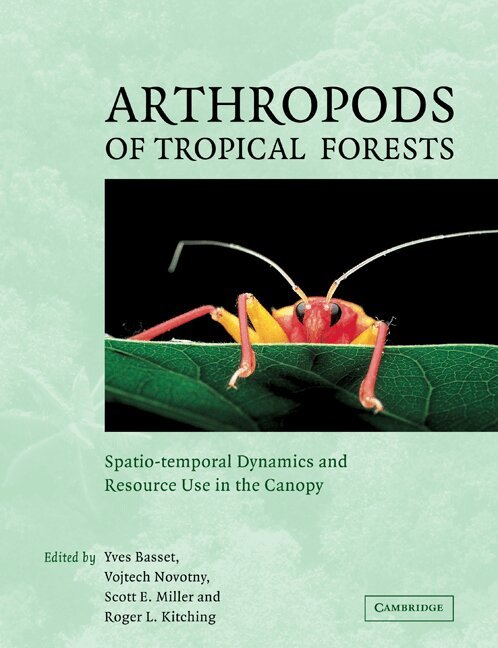
    Arthropods of Tropical Forests

    Spatio-Temporal Dynamics and Resource Use in the Canopy

    AvYves Basset,Roger Kitching

    Häftad, Engelska, 2008

    720 kr

    Beställningsvara. Skickas inom 10-15 vardagar. Fri frakt över 249 kr.

    Beskrivning

    Arthropods are the most diverse group of organisms on our planet and the tropical rainforests represent the most biologically diverse of all ecosystems. This book, written by 79 authors contributing to 35 chapters, aims to provide an overview of data collected during recent studies in Australia, Africa, Asia, and South America. The book focuses on the distribution of arthropods and their use of resources in the rainforest canopies, providing a basis for comparison between the forest ecosystems of the main biogeographical regions. Topics covered include the distribution of arthropods along vertical gradients and the relationship between the soil/litter habitat and the forest canopy. The temporal dynamics of arthropod communities, habitats and food selection are examined within and among tropical tree crowns, as are the effects of forest disturbance. This important book is a valuable addition to the literature used by community ecologists, conservation biologists entomologists, botanists and forestry experts.

    Produktinformation

    • Utgivningsdatum:2008-12-11
    • Mått:188 x 246 x 19 mm
    • Vikt:890 g
    • Format:Häftad
    • Språk:Engelska
    • Antal sidor:492
    • Förlag:Cambridge University Press
    • ISBN:9780521087841

    Utforska kategorier

    • Biovetenskap inom Naturvetenskap och teknik
    • Djurböcker inom Djur och Natur
    • Zoologi inom Naturvetenskap och teknik

    Mer om författaren

    Yves Basset is a Tupper Fellow at the Smithsonian Tropical Research Institute in the Republic of Panama. Roger Kitching is Professor of Ecology in the Department of Environmental Sciences at Griffith University, Brisbane, Australia.

    Recensioner i media

    Review of the hardback: '… a solid contribution to what we know about the spatial and temporal distribution of tropical arthropods.' Ecology

    Innehållsförteckning

    • Foreword; Preface; Part I. Arthropods of Tropical Canopies: Current Themes of Research: 1. Canopy entomology, an expanding field of natural science; 2. Methodological advances and limitations in canopy entomology; 3. Vertical stratification of arthropod assemblages; 4. Determinants of temporal variation in community structure; 5. Herbivore assemblages and their food resources; Part II. Vertical Stratification in Tropical Forests: 6. Distribution of ants and bark-beetles in crowns of tropical oaks; 7. Vertical and temporal diversity of a species-rich moth taxon in Borneo; 8. Canopy foliage structure and flight density of butterflies and birds in Sarawak; 9. Stratification of the spider fauna in a Tanzanian forest; 10. Fauna of suspended soils in an Ongokea gore tree in Gabon; 11. Vertical stratification of flying insects in a Surinam lowland rainforest; Part III. Temporal Patterns in Tropical Canopies: 12. Insect responses to general flowering in Sarawak; 13. Arthropod assemblages across a long chronosequence in the Hawaiian islands; 14. Seasonality of canopy beetles in Uganda; 15. Seasonality and community composition of springtails in Mexican forests; 16. Seasonal variation of canopy arthropods in Central Amazon; 17. Arthropod seasonality in tree crowns with different epiphyte loads; Part IV. Resource Use and Host Specificity in Tropical Canopies: 18. How do beetle assemblages respond to anthropogenic disturbance? 19. Organization of arthropod assemblages in African savanna trees; 20. Flower ecology in the Neotropics: a flower-ant love-hate relationship; 21. Taxonomic composition and host specificity of phytophagous beetles in a dry forest in Panama; 22. Microhabit distribution of forest grasshoppers in the Amazon; 23. Flowering events and beetle diversity in Venezuela; Part V. Synthesis: Spatio-Temporal Dynamics and Resource Use in Tropical Canopies: 24. Habitat use and stratification of Collembola and oribatid mites; 25. Insect herbivores feeding on conspecific seedlings and trees; 26. Hallowed hideaways: basal mites in tree hollows and allied habitats; 27. Arthropod diel activity and stratification; 28. Diel, seasonal and disturbance-induced variation in invertebrate assemblages; 29. Tree relatedness and the similarity of insect assemblages: pushing the limits?; 30. A review of mosaics of dominant ants in rainforests and plantations; 31. Insect herbivores in the canopies of savannas and rainforests; 32. Canopy flowers and certainty: loose niches revisited; 33. How polyphagous are Costa Rican dry forest saturniid caterpillars?; 34. Influences of forest management on insects; 35. Conclusion: arthropods, canopies and interpretable patterns; Part VI. References; Index.