Ronald I. McKinnon - Böcker
Visar alla böcker från författaren Ronald I. McKinnon. Handla med fri frakt och snabb leverans.
5 produkter
5 produkter
769 kr
Skickas inom 5-8 vardagar
Focusing on monetization of international trade per se, the text analyses common financial practices of merchants and manufacturers, commerical banks and central banks.
503 kr
Skickas inom 5-8 vardagar
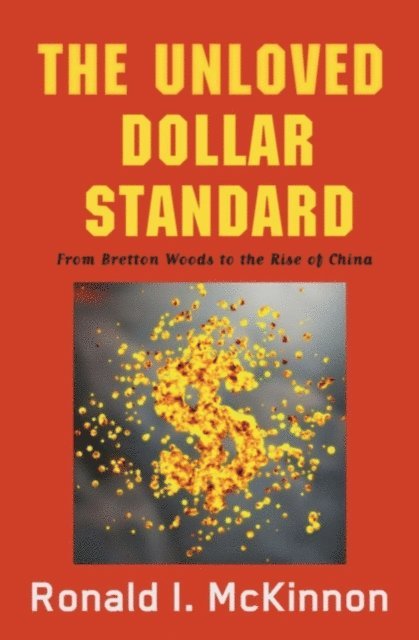
The world dollar standard is an accident of history that greatly facilitates international trade and exchange-even trade not directly involving the United States. Since 1945, the dollar has been the key currency for clearing international payments among banks including interventions by governments to set exchange rates, the dominant currency for invoicing trade in primary commodities, and the principal currency in official exchange reserves. Although the strong network effects of the dollar standard greatly increases the financial efficiency of multilateral trade, nobody loves it. Erratic U.S. monetary and exchange rate policies have continually made foreigners unhappy. A weak and falling dollar led to the worldwide price inflations of the 1970s and contributed to the disastrous asset bubbles and global credit crisis of the noughties -- including the global credit crunch of 2008-09. Dollar weakness aggravated the postwar world's three great oil shocks in 1973, 1979, and 2007-08. After 2008, the U.S. Federal Reserve Bank's policy of keeping short-term interest rates near zero and out of alignment with emerging markets on the dollar standard's periphery, makes the international monetary system vulnerable to 'carry' trades: hot money inflows into the periphery that cause a loss of monetary control, commodity bubbles, and worldwide inflation . When these carry-trade bubbles suddenly unwind, they can result in huge swings in exchange rates and credit crunches.The asymmetrical nature of the dollar standard also makes many Americans unhappy because they cannot control their own exchange rate. Under the rules of the dollar standard game as explained in chapters 2 and 3 of this book, foreign governments may opt to set their exchange rates against the dollar while, to prevent conflict, the U.S. government typically does not intervene. Nevertheless, Americans often complain about how foreigners set their dollar exchange rates unfairly. Japan bashing in the late 1970s to the mid-1990s over the alleged under valuation of the yen, and China bashing in the new millennium over the alleged undervaluation of the renminbi, are two cases in point. Thus, while nobody loves the dollar standard, the revealed preference of both governments and private participants in the foreign exchange markets since 1945 is to continue to use it. As the principal monetary mechanism ensuring that international trade remains robustly multilateral rather than narrowly bilateral, it is a remarkable survivor that is too valuable to lose and too difficult to replace. This book provides historical and analytical perspectives on the different phases of the postwar dollar standard in order to better understand its resilience in spite of the great volatility in today's global monetary system.
Dollar and Yen
Resolving Economic Conflict between the United States and Japan
Inbunden, Engelska, 1997
121 kr
Tillfälligt slut
Order of Economic Liberalization
Financial Control in the Transition to a Market Economy
Häftad, Engelska, 1993
342 kr
Skickas
Can knowledge of financial policies in developing countries over four decades help the socialist economies of Asia and Eastern Europe become open market economies in the 1990s? In all these countries the loss of fiscal and monetary control has often resulted in high inflation that undermines the liberalization process itself. In the second edition of The Order of Economic Liberalization, Ronald McKinnon builds on his influential work on the liberalization of financial markets in less developed countries and outlines the progression necessary to move from a "repressed" to an open economy. New to this edition are chapters that contrast the gradual Chinese approach to liberalizing domestic and foreign trade with the "big bang" approach followed by some Eastern European countries and republics of the former Soviet Union. Financial control and macroeconomic stability, McKinnon argues, are more critical to a successful transition than is any crash program to privatize state-owned industrial assets and the banking system.
261 kr
Skickas inom 10-15 vardagar
This books presents a theory of economic development very different from the ""stages of growth"" hypothesis or strategies emphasizing foreign aid, trade, or regional association. Leaving these aside, the author breaks new ground by focusing on the use of domestic capital markets to stimulate economic performance. He suggests a ""bootstrap"" approach in which successful development would depend largely on policy choices made by national authorities in the developing countries themselves.Central to his theory is the freeing of domestic financial markets to allow interest rates to reflect the true scarcity of capital in a developing economy. His analysis leads to a critique of prevailing monetary theory and to a new view of the relation between money and physical capitala view with policy implications for governments striving to overcome the vicious circle of inflation and stagnation. Examining the performance of South Korea, Taiwan, Brazil, and other countries, the author suggests that their success or failure has depended primarily on steps taken in the monetary sector. He concludes that monetary reform should take precedence over other development measures, such as tariff and tax reform or the encouragement of foreign capital investment. In addition to challenging much of the conventional wisdom of development, the author's revision of accepted monetary theory may be relevant for mature economies that face monetary problems.