Rory Putman - Böcker
Visar alla böcker från författaren Rory Putman. Handla med fri frakt och snabb leverans.
11 produkter
11 produkter
1 062 kr
Skickas inom 10-15 vardagar
This book should be of interest to ecologists and evolutionists.
1 824 kr
Skickas inom 7-10 vardagar
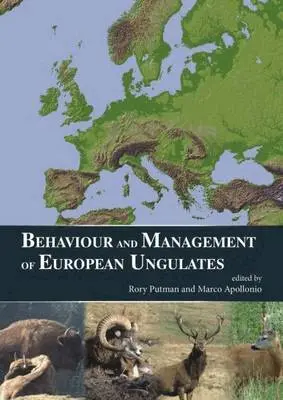
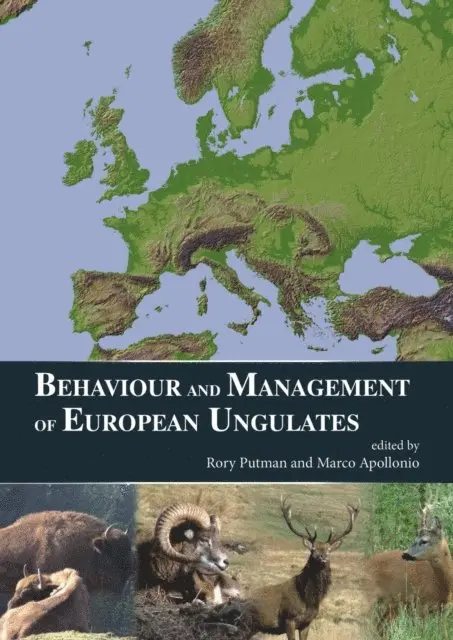
This book considers a number of problems posed by ungulates and their management in Europe. Through a synthesis of the underlying biology and a comparison of the management techniques adopted in different countries, the book explores which management approaches seem effective - and in which circumstances. Experts in a number of different areas of applied wildlife biology review various management problems and alternative solutions, including the impact of large ungulates on agriculture, forestry and conservation habitats, the impact of disease and predation on ungulate populations and the involvement of ungulates in road traffic accidents and possible measures for mitigation. This book is directed at practising wildlife managers, those involved in research to improve methods of wildlife management, and policy-makers in local, regional and national administrations.
2 127 kr
Skickas inom 7-10 vardagar
This book is the first to explore the diversity of management objectives and the different approaches to wildlife management of large ungulates in a wide range of different European countries. Specialist authors from each country present an analysis of the species present, numerical status and distribution of different ungulates which occur in their particular country and consider issues which must be addressed by management (whether management for conservation, for control of damaging impacts or for exploitation). Management systems are described (and both legislative and administrative structures) together with an evaluation of how effective current management practices may be in addressing problems identified - or the extent to which they may contribute to those problems. The book is aimed primarily at those who may be actively involved in research into improving methods of wildlife management; practising wildlife managers and game-keepers; policy makers in local regional or national administrations, responsible for formulating policies.
1 410 kr
Skickas inom 3-6 vardagar
Among the most widespread and abundant of the world's larger mammals, deer have been a source of endless fascination for humans beings. Yet over the centuries we have hunted them for sport and for their meat, hides, and antlers, and pursued them as destructive pests.In this richly informative and engagingly written book, Rory Putnam captures the astonishing diversity—in habitat, diet, social organization, and behavior—of the world's 40 species of deer, and tells what is known about their biology and natural history. Rather than simply assembling species-by-species data, he compares and contrasts the characteristics of the various species and accounts for their similiarities and differences in reference to the environments they have come to colonize.After discussing the origins of deer, Putnam describes the species of modern deer and their evolutionary relationships. He considers aspects of their physiology, ecology, and behavior, drawing particular attention to the ecology of habitat use, diet and digestive physiology, and social organization and behavior. He covers the life histories of the different species, population dynamics, and the interactions of deer with other animals.Devoting a whole chapter to an essay on antlers, he ends with an enlightening and entertaining analysis of the relations between deer and humans.Generously illustrated with stunning color and black-and-white photographs, as well as many line drawings and figures, this book will both reward the amateur naturalist and please the professional biologist.
75 kr
Skickas
617 kr
Skickas inom 11-20 vardagar
Ungulates are an extraordinarily important group of animals worldwide, at many levels - in their remarkable biodiversity; in many cases, as keystone species with a disproportionate effect on the functioning of the wider ecological systems of which they form a part or as dominant species acting as ecological engineers; and as a prey base for endangered or expanding populations of large carnivores. They are also important culturally and economically, as a major source of protein in subsistence cultures and because of their wide exploitation in recreational hunting, which is still a major form of land-use in many countries. A number of aspects of the balance of cost and benefit of ungulates and their management in Europe are considered. Through a synthesis of the underlying biology and a comparison of the management techniques adopted in different countries, management approaches which seem effective within their respective circumstances are explored.Each chapter is written by experts in their own particular field, ensuring that they are aware of the most up-to-date literature on that topic and can also offer an experienced and informed review based on their own research experience.
228 kr
Skickas
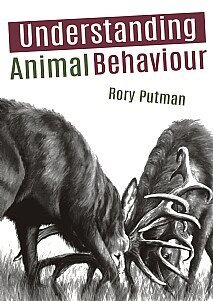
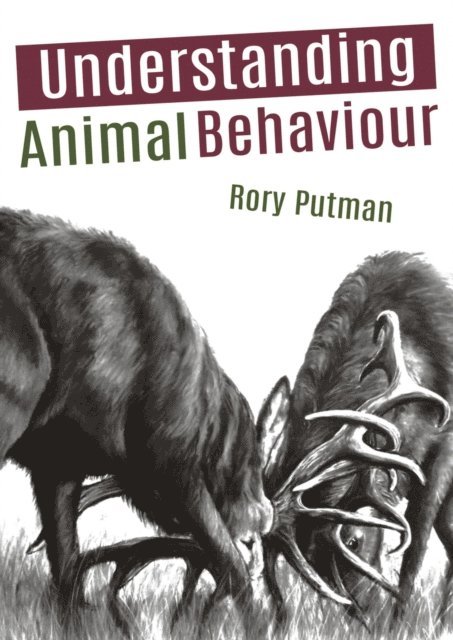
This accessible introduction to animal behaviour provides an authoritative yet reader-friendly guide for the interested naturalist. It presents current knowledge about the way animals behave and will enable the reader to derive more pleasure from their observations of animals by gaining a deeper understanding of their behaviour. The concepts are presented in an easily appreciated way with which everyone can associate.In the first part of the book, the author explores how animals behave by considering the physical processes involved in the way animals perceive their environment and what determines how they respond to it. This is followed by the 'why' of animal behaviour in which the author examines many topics under the overall issue of expressing behaviour, and the evolutionary forces that have shaped - and continue to shape - the detailed form of more complex behaviours. Therefore questions such as why animals forage in the way they do and how that foraging pattern may be refined to optimal efficiency; why animals adopt a particular reproductive strategy and breeding behaviour and why some animals live as solitary individuals, while others live in groups and so on. The book is copiously illustrated throughout in support and interpretation of the text. While the pictures enhance understanding of the written text, the text also showcases the exquisite illustrations of wildlife artist Catherine Putman.
312 kr
Skickas inom 11-20 vardagar
This book provides a concise and up to date review of current knowledge on the biological processes affecting animal welfare, and the implications emerging from our improved understanding of those biological principles in terms of options available to assess and manage the welfare status of individuals and populations. Biological principles are embedded within wider consideration of the ethical basis for our concern about animals and their welfare, in recognition of the fact that concern and responsibility for welfare is strongly affected by cultural and ethical norms.The Biology and Management of Animal Welfare covers several topics not addressed in other texts. Thus it pays attention to the difference between animal welfare and animal rights and distinguishes between welfare and evolutionary fitness (which often causes confusion). The thorny problem of necessary versus unnecessary suffering is considered; most legislation provides for the prevention of unnecessary suffering but never defines it. In addition a box feature explores how human psychological development can affect attitudes to animals and how psychological dysfunctions (in terms of attitudes to other humans) can often be detected in advance from attitudes to animals. The book also includes consideration of alternatives to animal experimentation with a chapter devoted to the 3 Rs (Refine, Reduce, Replace).Written by authors who work in the field and all regularly contribute to postgraduate courses in animal welfare, in veterinary faculties and elsewhere, the text is deliberately kept short and concise to emphasise the essential principles, but is comprehensively referenced throughout in order to guide the reader in their own wider background reading around the framework provided by this overview. The book includes a number of dedicated box features that offer more detailed illustration or worked examples for some of the topics addressed in the text, or to focus attention on additional special topics.
205 kr
Skickas inom 11-20 vardagar
A professional biologist with wide experience of working both in the UK and overseas, Rory Putman takes us with him on working trips to Iceland, East Africa, Nigeria and Indonesia, introducing us to the countries and their people, their natural history, and explaining some of the wildlife issues which have prompted himself and his colleagues to travel there in the first place. The stories cover episodes from more than four decades of working as a jobbing biologist overseas. The understanding required to solve problems and seek solutions to particular issues related to management and conservation of wildlife means that in some way the observer becomes much more intimately engaged, and perhaps gains a different perspective of the country and its culture than might be apparent to a more casual ‘outside’ onlooker. To some extent, that deeper involvement enables Rory Putman to give the reader more of an inside view and introduction to the countries and their wildlife from a wholly personal perspective. Like many other enthusiastic naturalists, the author enjoyed experiencing new habitats and seeing wonderful and exotic species on his travels and this engaging book will carry the reader along on the journey.
217 kr
Skickas
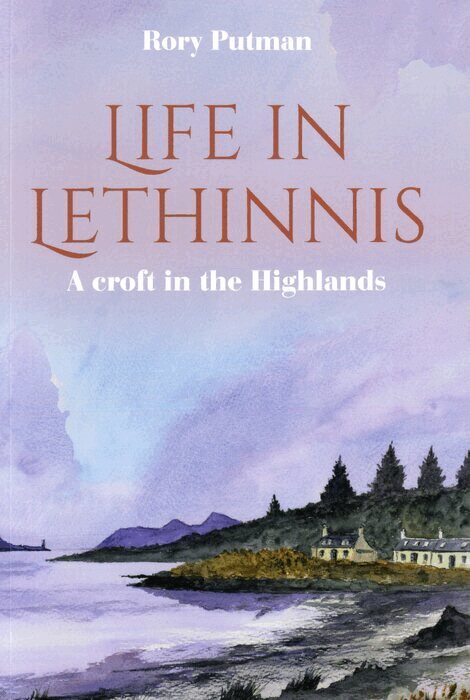
A book that reveals life in the Scottish Highlands with all its humour and character.After 20 years working as a professional biologist, the author decided to ‘retire’ to the Highlands, moving with his wife to a croft at the edge of a small and somewhat inaccessible village on the west coast. This was no romantic and idealistic aspiration for the Good Life, nor really an attempt to ‘get away from it all’; rather a growing disaffection with living in the overpopulated south of England and a desire to return to his Scottish roots. Moving was like stepping back 50 years in time: most of the other residents of this tiny hamlet had been born and bred there, the majority were Gaelic-speaking and, with few of the conventional ‘services’, there was a strong sense of community that had been missed.This engaging story gives a collection of cameos from those first few years as they moved into and settled in their remote smallholding. It is developed as a series of short 'anecdotes' about life in this isolated west-coast Scottish community. Actual anecdotes are interwoven with snippets of natural history observation related to various topical wildlife issues.In the tradition of Lillian Beckwith’s The Hills is Lonely, the stories revolve around the strong characters who made up this isolated community and became part of their everyday life. All the people and events described in this book are real, although places and names may have been changed. Enough clues remain that professional biologists or those with a keen interest in natural history will readily identify the peninsula.
217 kr
Skickas
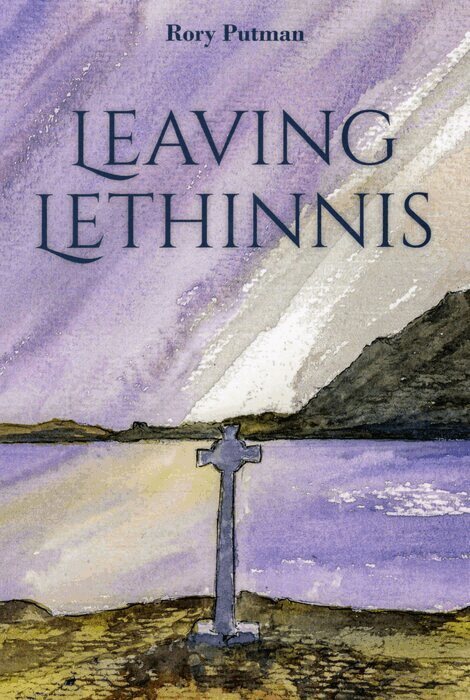
In this sequel to Life in Lethinnis, Rory offers a further collection of pen-portraits from those early years in the place he has called Lochuisge.In the tradition of Lillian Beckwith’s The Hills is Lonely, or Sybil Armstrong’s A Croft in Clachan, the anecdotes inevitably revolve around the strong characters that made up this isolated community and became part of everyday life. With the author continuing to earn a living as a professional biologist, the characters featured are both human and animal as the various tales capture the atmosphere of living and working in this tight-knit community into which he and his wife were so immediately welcomed.After 20 years leading a research group in wildlife biology at the University of Southampton, Rory Putman decided to ‘retire’ to the Highlands of Scotland, moving with his wife to a croft at the edge of a small and somewhat inaccessible village on the west coast. In the same vein as the well-received Life in Lethinnis, he offers a further collection of cameos from those first few years as they moved into and settled in their remote smallholding.The author’s intimate writing style draws the reader with him into the heart of that same community. But in this sequel there is perhaps a greater darkness as Putman registers that life on the Peninsula is changing and that he is in effect chronicling the end of an era.