Rosilie Hernández - Böcker
Visar alla böcker från författaren Rosilie Hernández. Handla med fri frakt och snabb leverans.
3 produkter
3 produkter
646 kr
Skickas inom 10-15 vardagar
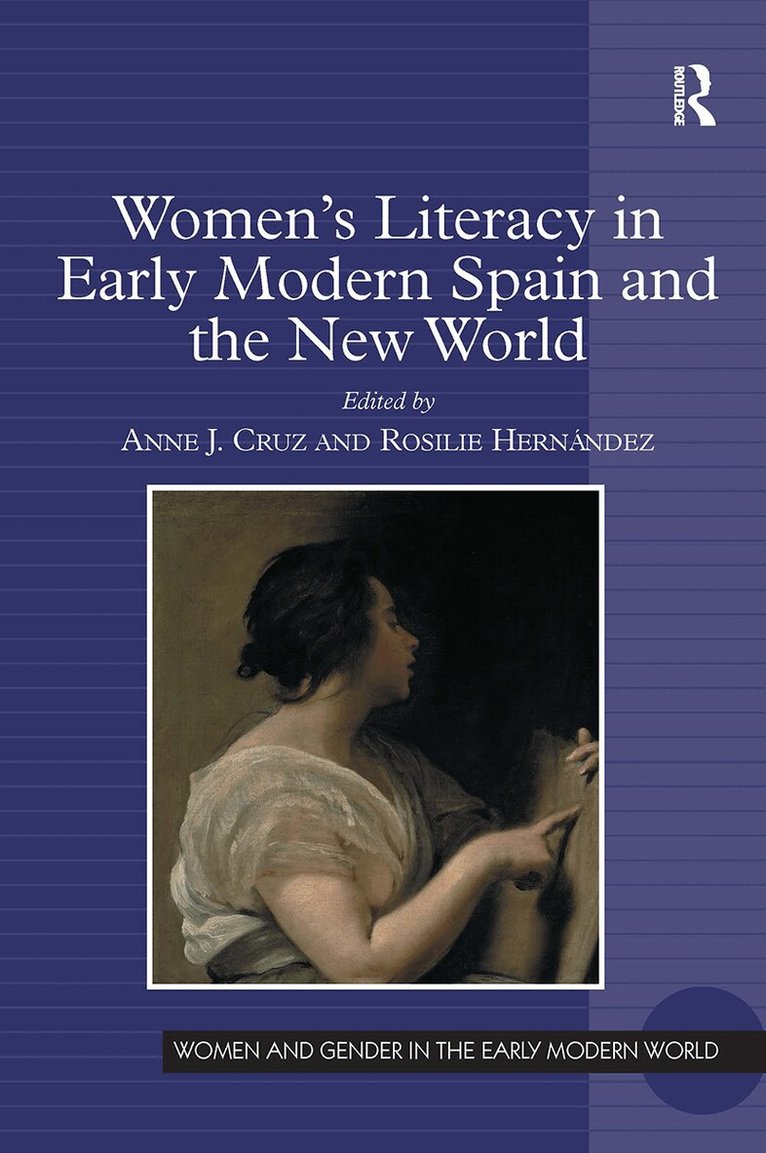
Containing essays from leading and recent scholars in Peninsular and colonial studies, this volume offers entirely new research on women's acquisition and practice of literacy, on conventual literacy, and on the cultural representations of women's literacy. Together the essays reveal the surprisingly broad range of pedagogical methods and learning experiences undergone by early modern women in Spain and the New World. Focusing on the pedagogical experiences in Spain, New Spain (present-day Mexico), and New Granada (Colombia) of such well-known writers as Saint Teresa of Ãvila, Sor Juana Inés de la Cruz, and MarÃa de Zayas, as well as of lesser-known noble women and writers, and of nuns in the Spanish peninsula and the New World, the essays contribute significantly to the study of gendered literacy by investigating the ways in which women”religious and secular, aristocratic and plebeian”became familiarized with the written word, not only by means of the education received but through visual art, drama, and literary culture. Contributors to this collection explore the abundant writings by early modern women to disclose the extent of their participation in the culture of Spain and the New World. They investigate how women”playwrights, poets, novelists, and nuns” applied their education both to promote literature and to challenge the male-dominated hierarchy of church and state. Moreover, they shed light on how women whose writings were not considered literary also took part in the gendering of Hispanic culture through letters and autobiographies, among other means, and on how that same culture depicted women's education in the visual arts and the literature of the period.
2 652 kr
Skickas inom 10-15 vardagar
Containing essays from leading and recent scholars in Peninsular and colonial studies, this volume offers entirely new research on women's acquisition and practice of literacy, on conventual literacy, and on the cultural representations of women's literacy. Together the essays reveal the surprisingly broad range of pedagogical methods and learning experiences undergone by early modern women in Spain and the New World. Focusing on the pedagogical experiences in Spain, New Spain (present-day Mexico), and New Granada (Colombia) of such well-known writers as Saint Teresa of Ãvila, Sor Juana Inés de la Cruz, and MarÃa de Zayas, as well as of lesser-known noble women and writers, and of nuns in the Spanish peninsula and the New World, the essays contribute significantly to the study of gendered literacy by investigating the ways in which women”religious and secular, aristocratic and plebeian”became familiarized with the written word, not only by means of the education received but through visual art, drama, and literary culture. Contributors to this collection explore the abundant writings by early modern women to disclose the extent of their participation in the culture of Spain and the New World. They investigate how women”playwrights, poets, novelists, and nuns” applied their education both to promote literature and to challenge the male-dominated hierarchy of church and state. Moreover, they shed light on how women whose writings were not considered literary also took part in the gendering of Hispanic culture through letters and autobiographies, among other means, and on how that same culture depicted women's education in the visual arts and the literature of the period.
Immaculate Conceptions
The Power of the Religious Imagination in Early Modern Spain
Inbunden, Engelska, 2019
853 kr
Skickas inom 7-10 vardagar
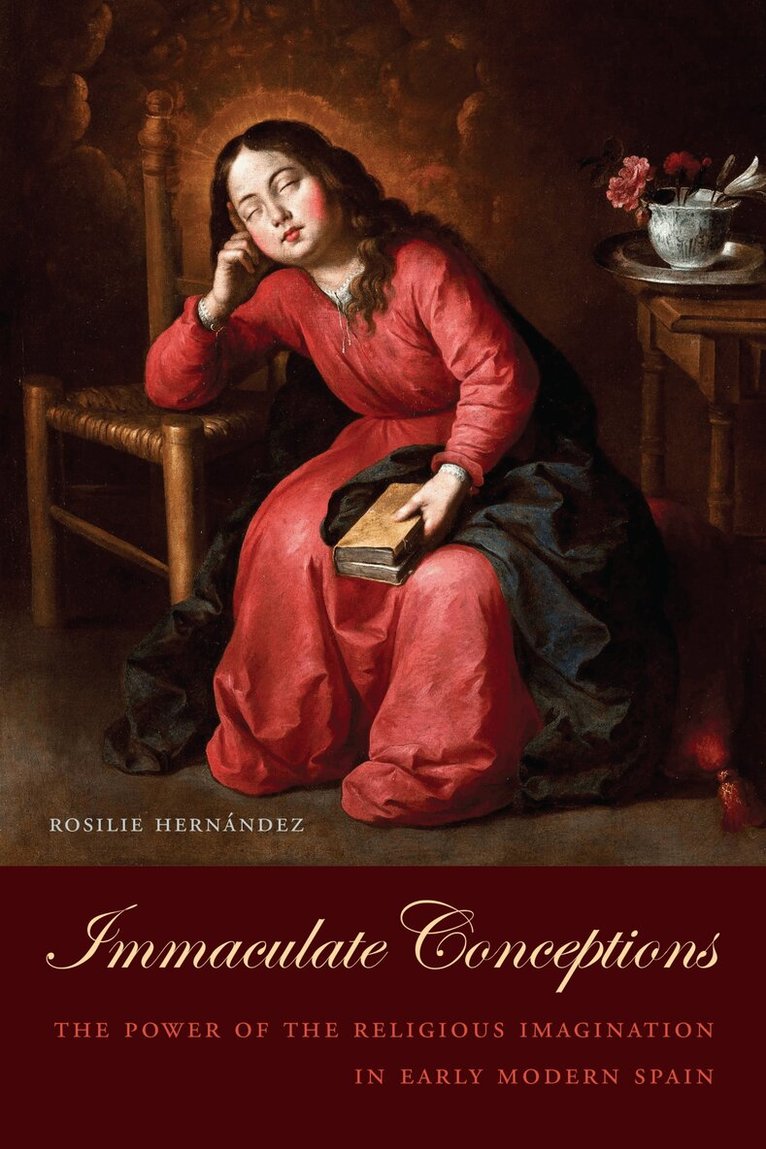
Immaculate Conceptions examines devotional writings, religious and literary texts, and visual art that feature the mystery of the immaculacy of the Virgin Mary in the culture of early modern Spain. The author’s analysis is motivated by the complexity and multivalent capacity of the doctrine and its icon at a time when the debates around Mary’s conception imbued all levels of religious and social life. She considers the many interests – political, doctrinal, artistic, and gender-driven – that intersect and compete in the exegesis and textual and visual representations of the Immaculate Conception. She argues that the Immaculate Conception of Mary proved to be a fertile conceptual and ideological field wherein the identities of the Spanish state, local communities, and individuals were negotiated, variously defined, and contested. The study’s broader aim is to delineate a speculative category, the religious imagination, defined as a spiritual, intellectual, or artistic pursuit in which the individual is committed to sacred truth yet articulates this truth through contingent, partial, and contextually determined theological propositions. The representational status of the image and its relationship to theories of physical sight and spiritual vision are central to the author’s formulation of this category.