Rosinka Chaudhuri – författare
Visar alla böcker från författaren Rosinka Chaudhuri. Handla med fri frakt och snabb leverans.
10 produkter
Burmese Days
Av George Orwell, Rosinka Chaudhuri
Häftad, 2021
130 kr
Lägg i varukorg
'...after all, natives were natives - interesting, no doubt, but finally ... an inferior people'Based on his experiences as a policeman in Burma, George Orwell's first novel is set during the end days of British colonialism, when Burma is ruled from Delhi as part of British India. In the fictional …
Ethics and politics in Tagore, Coetzee and certain scenes of teaching
Av Gayatri Chakravarty Spivak, Rosinka Chaudhuri
Inbunden, 2019
139 kr
Lägg i varukorg
This essay is a version of the text presented as a paper in Kolkata in February 2003. This was the first day of the two-day S. G. Deuskar lecture delivered by Gayatri Chakravorty Spivak at the Centre for Studies in Social Sciences, Calcutta. Fifteen years after that event, this essay finds its …
Indian Postcolonial
A Critical Reader
Av Elleke Boehmer, Rosinka Chaudhuri
Inbunden, 2010
1749 kr
Lägg i varukorg
India has often been at the centre of debates on and definitions of the postcolonial condition. Offering a challenging new direction for the field, this Critical Reader confronts how theory in the Indian context is responding in vital terms to our understanding of that condition today. The Indian …
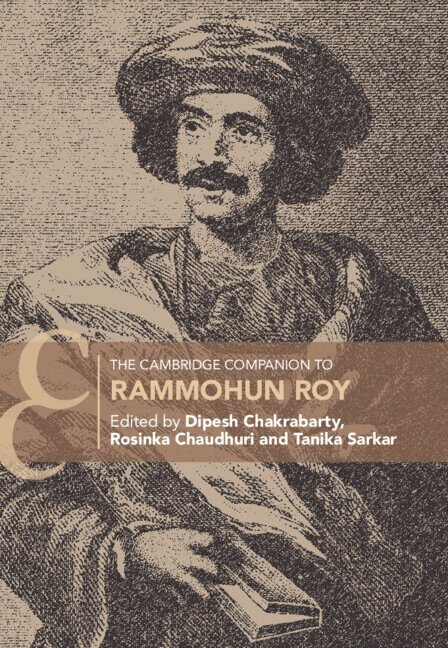
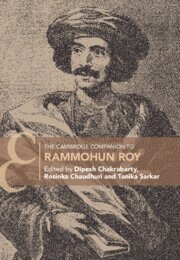
The Cambridge Companion to Rammohun Roy
Av Dipesh Chakrabarty, Rosinka Chaudhuri m. fl.
Inbunden, 2026
1421 kr
Kommande
Rammohun Roy (1774-1833) has been variously celebrated-or critiqued-as the 'Father of Modern India', 'the Erasmus of India', the first embodiment of the Bengal Renaissance under British rule, or, indeed, as the first modern Indian intellectual whose dilemmas revealed (to later analysts) the …
The Cambridge Companion to Rammohun Roy
Av Dipesh Chakrabarty, Rosinka Chaudhuri m. fl.
Häftad, 2026
500 kr
Kommande
Rammohun Roy (1774-1833) has been variously celebrated-or critiqued-as the 'Father of Modern India', 'the Erasmus of India', the first embodiment of the Bengal Renaissance under British rule, or, indeed, as the first modern Indian intellectual whose dilemmas revealed (to later analysts) the …
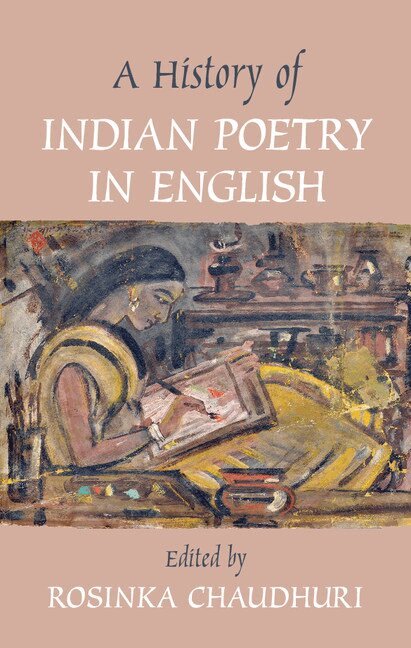
A History of Indian Poetry in English
Inbunden, 2016
2341 kr
Lägg i varukorg
A History of Indian Poetry in English explores the genealogy of Anglophone verse in India from its nineteenth-century origins to the present day. Beginning with an extensive introduction that charts important theoretical contributions to the field, this History includes extensive essays that …
History of Indian Poetry in English
E-bok, 2016
2324 kr
Lägg i varukorg
A History of Indian Poetry in English explores the genealogy of Anglophone verse in India from its nineteenth-century origins to the present day. Beginning with an extensive introduction that charts important theoretical contributions to the field, this History includes extensive essays that …
History of Indian Poetry in English
E-bok, 2016
2324 kr
Lägg i varukorg
A History of Indian Poetry in English explores the genealogy of Anglophone verse in India from its nineteenth-century origins to the present day. Beginning with an extensive introduction that charts important theoretical contributions to the field, this History includes extensive essays that …
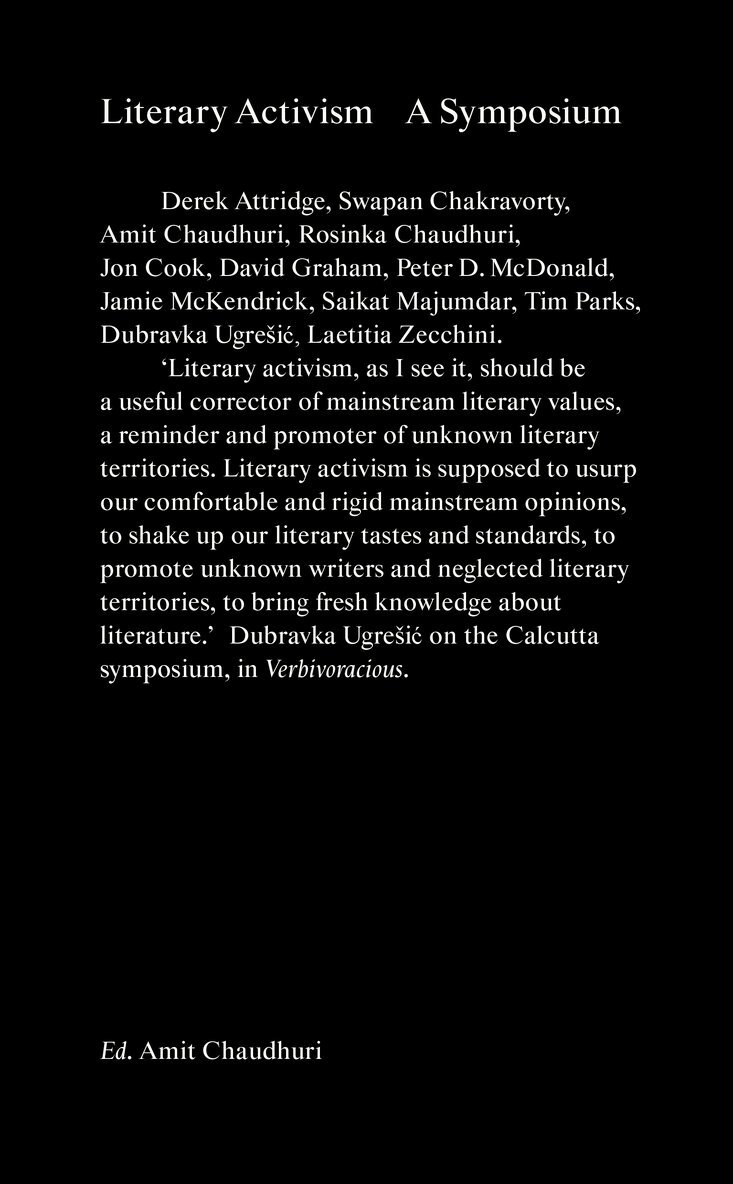
Literary Activism
A Symposium
Av Derek Attridge, Swapan Chakravorty m. fl.
Häftad, 2016
251 kr
Lägg i varukorg
Literary Activism – activism that revisits and interrogates an idea of literature – emerges from a radically altered landscape for both publishing and academia, where market pressures are effecting changes – on language, on the measuring of value, on the concept of influence – we might struggle to …
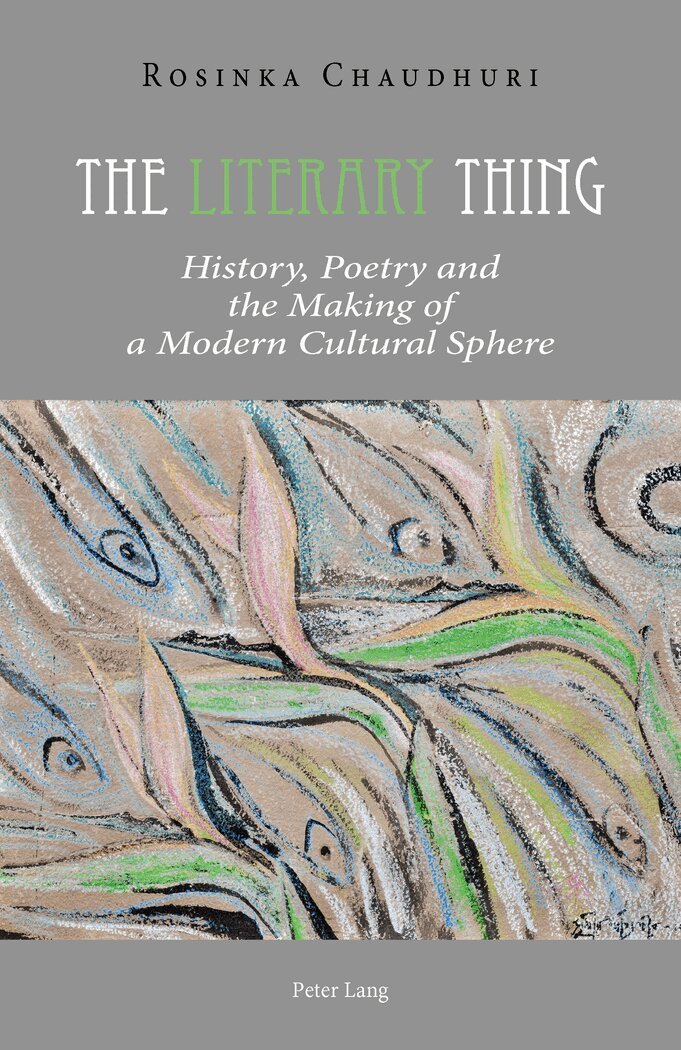
Literary Thing
History, Poetry and the Making of a Modern Cultural Sphere
Häftad, 2014
439 kr
Lägg i varukorg
The imponderable value of the literary to critical discourse is given pre-eminence in this study of cultural turning points in the history of Bengali literature, so that we might investigate the place of the aesthetic in the composition of a literary culture without denuding it of its significance …