Russell Fraser - Böcker
Visar alla böcker från författaren Russell Fraser. Handla med fri frakt och snabb leverans.
15 produkter
15 produkter
1 858 kr
Skickas inom 3-6 vardagar
160 kr
Skickas inom 3-6 vardagar
153 kr
Skickas inom 7-10 vardagar
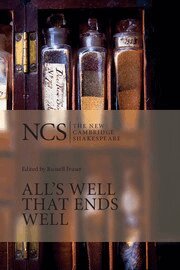
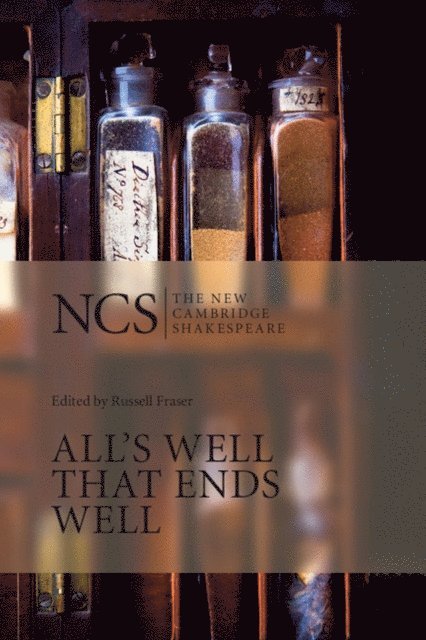
The New Cambridge Shakespeare appeals to students worldwide for its up-to-date scholarship and emphasis on performance. The series features line-by-line commentaries and textual notes on the plays and poems. Introductions are regularly refreshed with accounts of new critical, stage and screen interpretations. For the second edition of All's Well That Ends Well, Alexander Leggatt has written a completely new introduction to Russell Fraser's text of one of Shakespeare's most puzzling, ambiguous and demanding plays. Leggatt's interest in performance is evident throughout the introduction, particularly in his discussion of the instability of the main characters. He also provides a full, illustrated and thoughtful account of the play's critical and theatrical fortunes to the end of the twentieth century, and explores our experience as an audience of seeing and hearing the play performed. An updated reading list completes the volume.
948 kr
Skickas inom 7-10 vardagar
The New Cambridge Shakespeare appeals to students worldwide for its up-to-date scholarship and emphasis on performance. The series features line-by-line commentaries and textual notes on the plays and poems. Introductions are regularly refreshed with accounts of new critical, stage and screen interpretations. For the second edition of All's Well That Ends Well, Alexander Leggatt has written a completely new introduction to Russell Fraser's text of one of Shakespeare's most puzzling, ambiguous and demanding plays. Leggatt's interest in performance is evident throughout the introduction, particularly in his discussion of the instability of the main characters. He also provides a full, illustrated and thoughtful account of the play's critical and theatrical fortunes to the end of the twentieth century, and explores our experience as an audience of seeing and hearing the play performed. An updated reading list completes the volume.
1 282 kr
Tillfälligt slut
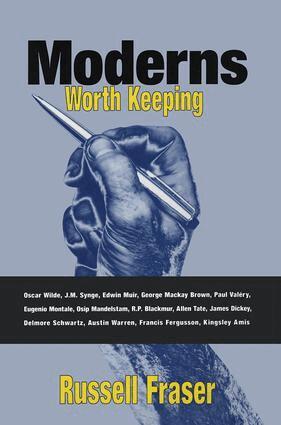
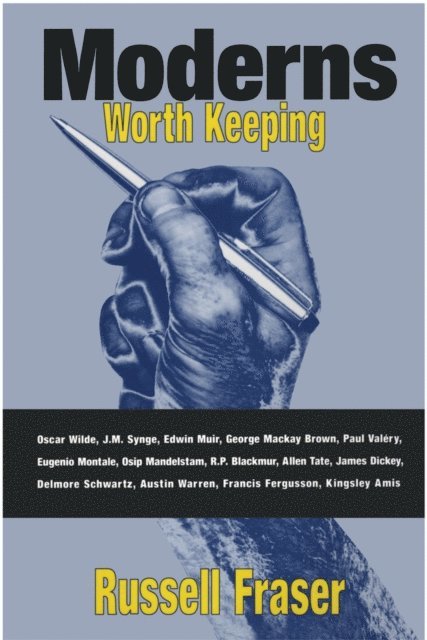
In this new volume, Russell Fraser assembles fourteen twentieth-century writers he judges "worth keeping." All were famous in their time, but many outlived it, enduring an eclipse that Fraser intends this book to dispel. Each of the authors differs in background and in the kinds of writing practiced, and while together they do not constitute a modern canon, Fraser persuasively presents them as a group distinguished by a more than ordinary affiliation for language. Leading off are Oscar Wilde and J. M. Synge, both of whom were Irish and principally known as playwrights. The Scottish poets Edwin Muir and G.M. Brown are complemented by three great Europeans: Paul Valery, Eugenio Montale, and Osip Mandelstam, "mandarins" who wrote for an elite of their time, not a social elite, but readers who could read. The New Critics, who gave language first place in their writing, loom large in this account. R.P. Blackmur and Allen Tate are followed by Delmore Schwartz, Austin Warren, and Francis Fergusson, lesser stars orbiting those greater than themselves. Kingsley Amis the novelist and James Dickey the poet, with whom the book concludes, had a great run at fame and fortune, but ended bleakly. The world was livelier for these writers' presence, and what they left us still gives satisfaction. This heterogeneous group may be said to be our saving remnant. In a time of coarsened feeling, its members possess in high degree the ability to discriminate, seeing acutely, and inspiring feeling where it was dead. Their function is therapeutic, even restorative for the life of letters. To give them a hearing is the principal purpose of the book.
788 kr
Skickas inom 10-15 vardagar
In this new volume, Russell Fraser assembles fourteen twentieth-century writers he judges "worth keeping." All were famous in their time, but many outlived it, enduring an eclipse that Fraser intends this book to dispel. Each of the authors differs in background and in the kinds of writing practiced, and while together they do not constitute a modern canon, Fraser persuasively presents them as a group distinguished by a more than ordinary affiliation for language. Leading off are Oscar Wilde and J. M. Synge, both of whom were Irish and principally known as playwrights. The Scottish poets Edwin Muir and G.M. Brown are complemented by three great Europeans: Paul Valery, Eugenio Montale, and Osip Mandelstam, "mandarins" who wrote for an elite of their time, not a social elite, but readers who could read. The New Critics, who gave language first place in their writing, loom large in this account. R.P. Blackmur and Allen Tate are followed by Delmore Schwartz, Austin Warren, and Francis Fergusson, lesser stars orbiting those greater than themselves. Kingsley Amis the novelist and James Dickey the poet, with whom the book concludes, had a great run at fame and fortune, but ended bleakly. The world was livelier for these writers' presence, and what they left us still gives satisfaction. This heterogeneous group may be said to be our saving remnant. In a time of coarsened feeling, its members possess in high degree the ability to discriminate, seeing acutely, and inspiring feeling where it was dead. Their function is therapeutic, even restorative for the life of letters. To give them a hearing is the principal purpose of the book.
2 166 kr
Skickas inom 10-15 vardagar
In this volume, Pulitzer Prize-winning historian Michael Kammen explores the U.S. Constitution's place in the public consciousness and its role as a symbol in American life, from ratification in 1788 to our own time. As he examines what the Constitution has meant to the American people (perceptions and misperceptions, uses and abuses, knowledge and ignorance), Kammen shows that although there are recurrent declarations of reverence most of us neither know nor fully understand our Constitution. How did this gap between ideal and reality come about? To explain it, Kammen examines the complex and contradictory feelings about the Constitution that emerged during its preparation and that have been with us ever since. He begins with our confusion as to the kind of Union we created, especially with regard to how much sovereignty the states actually surrendered to the central government. This confusion is the source of the constitutional crisis that led to the Civil War and its aftermath. Kammen also describes and analyzes changing perceptions of the differences and similarities between the British and American constitutions; turn-of-the-century debates about states' rights versus national authority; and disagreements about how easy or difficult it ought to be to amend the Constitution. Moving into the twentieth century, he notes the development of a "cult of the Constitution" following World War I, and the conflict over policy issues that persisted despite a shared commitment to the Constitution.
2 166 kr
Skickas inom 10-15 vardagar
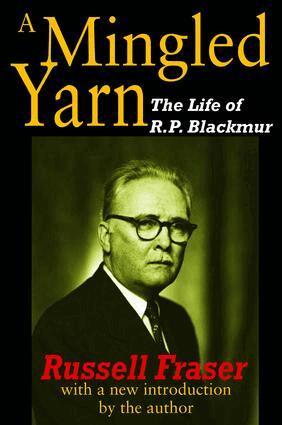
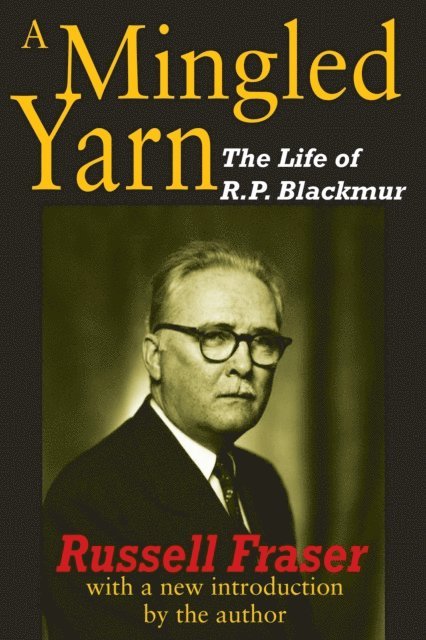
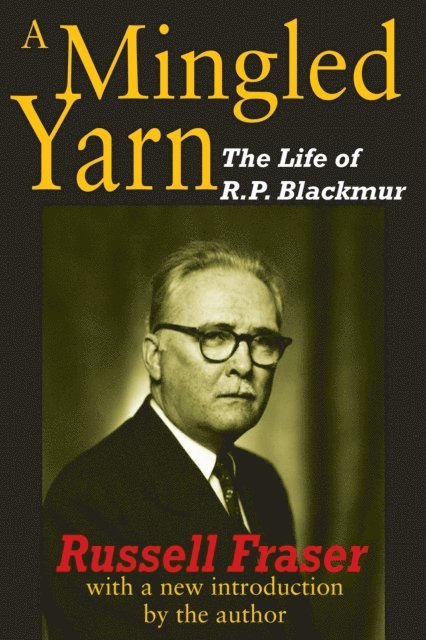
R. P. Blackmur was an American critic and poet, as well as a professor of English literature and creative writing at Princeton University. At the time of his death, he had completed five books and numerous plays, poems, and short stories. He devoted most of his life to studies on Henry Adams - someone he saw in himself. In his lifetime, he received a share of adulation, but he was not successful in the way that success is commonly measured. In this work, Russell Fraser follows the course of Blackmur's self-declared failed genius. He tells the story of his precocious youth in Cambridge; his eclectic education; his years of poverty and renown as a poet, novelist, freelance music critic, and essayist; his obsessive marriage to artist Helen Dickson; his entangled friendships with T. S. Eliot, Delmore Schwartz, Allen Tate, and John Berryman; and, his passion for the wilds of Maine. He discusses Blackmur's crucial role in the literary magazines of the twenties and thirties; his unique influence as instructor of creative writing; the emotional and professional price he paid for a doubtful security at Princeton University; and, the torment of wavering between intellectual inertia and prolific inspiration. With empathy and insight, Fraser shows how the trajectory of Blackmur's career parallels the movements in the American literary scene; the experiments in poetry and fiction; the development of the New Criticism; the writer's conflict between order and anarchy, taxonomy and the full response; and, the emergence of the critic as artist. A biography, intellectual history, and literary criticism, "A Mingled Yarn" unravels Blackmur's complex character and celebrates his great achievement.
2 405 kr
Skickas inom 10-15 vardagar
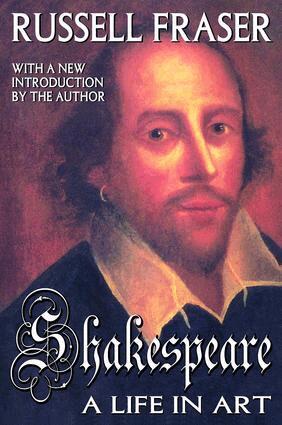
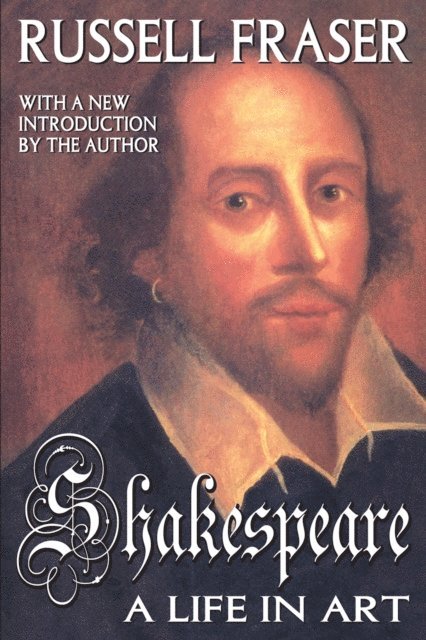
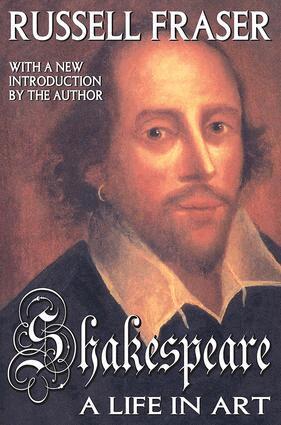
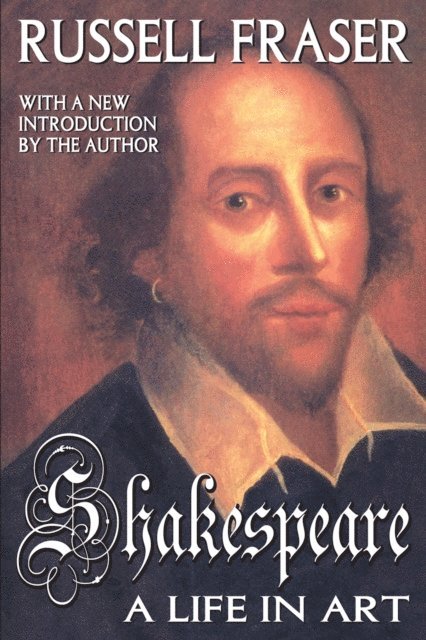
Shakespeare: A Life in Art brings together in a single volume Fraser's previously published two-volume biography (Young Shakespeare, 1988, and Shakespeare: The Later Years, 1992). This volume includes a new introduction, which looks back on the author's lifelong commitment to Shakespeare's work and seeks to find the pattern in his carpet.Fraser's approach places Shakespeare's work first but shows how the life and art interpenetrate, like "the yolk and white of one shell." What Shakespeare was doing in Stratford and London underlies what he was writing, or more exactly, the two flow together. Most of the book is devoted to Shakespeare the man and artist, but it simultaneously throws light on his literary and personal relations with contemporaries such as Jonson, Marlowe, and others known as the University Wits. His experience as an actor and man of theater is absorbingly recounted here, as well as his relations to well-born patrons like the Earl of Southampton and Henry Carey, Lord Hunsdon (England's Lord Chamberlain). In 1603 when James I ascended the throne, the Chamberlain's Men became the King's Men, passing under the sovereign's protection. How Shakespeare responded to his ambiguous role--he was both servant to the great and their remorseless critic--is another of Fraser's subjects. In short, Fraser's principal purpose is to advance our understanding of Shakespeare, at the same time throwing light on the work of the man who of all modern, and perhaps ancient poets had the "largest and most comprehensive soul." John Dryden, Shakespeare's first great critic, said that, and Fraser tries to estimate what he meant.
2 166 kr
Skickas inom 10-15 vardagar
Moscow, Constantinople (now Istanbul), and Rome itself are vitally alive in the present and are magnets for tourists. Also going back a long way, each lives in history. These cities have their points in common, each wanting to rule the world and establish Rome of the Caesars, Constantinople of the Emperors, and Moscow of the Tsars were also the Rome of St. Peter, the Constantinople of the Patriarchs, and the Moscow of the Orthodox Metropolitans. These were cities on earth that aspired to heaven, kingdoms that succeeded each other as standard-bearers of Christianity from the fourth century on. Indeed, the Russian monk declared to the Tsar: "Two Romes have fallen, but the third stands, and a fourth shall never besh the kingdom of heaven on earth. People, recognizing this, link them together as the Three Romes. These cities differ, though, in their understanding of man's nature and business. The Three Romes are three places and also states of mind. Now, with a new introduction which describes the contemporary significance to these cities this book will be assessable to the modern reader at all levels.This fascinating book weaves the past and present in a narrative that is sometimes harrowing, always vivid, and even, at times, amusing. Russell Fraser shows the reader each city as he himself saw it. He shuttles easily between today and yesterday, between today's Central Committee and Ivan the Great, between Turkish Istanbul and the golden Constantinople of Justinian, between today's Roman politics and the splendid Caesars. Great historical events, intellectual concerns, and artistic riches define the three Romes. Fraser goes beyond the facades, images, and myths to lay bare the three great psychologies still vying for the mind of man. The Three Romes is an utterly original book a celebration of the past and an urbane guide to the present.
689 kr
Skickas inom 10-15 vardagar
In this volume, Pulitzer Prize-winning historian Michael Kammen explores the U.S. Constitution's place in the public consciousness and its role as a symbol in American life, from ratification in 1788 to our own time. As he examines what the Constitution has meant to the American people (perceptions and misperceptions, uses and abuses, knowledge and ignorance), Kammen shows that although there are recurrent declarations of reverence most of us neither know nor fully understand our Constitution. How did this gap between ideal and reality come about? To explain it, Kammen examines the complex and contradictory feelings about the Constitution that emerged during its preparation and that have been with us ever since. He begins with our confusion as to the kind of Union we created, especially with regard to how much sovereignty the states actually surrendered to the central government. This confusion is the source of the constitutional crisis that led to the Civil War and its aftermath. Kammen also describes and analyzes changing perceptions of the differences and similarities between the British and American constitutions; turn-of-the-century debates about states' rights versus national authority; and disagreements about how easy or difficult it ought to be to amend the Constitution. Moving into the twentieth century, he notes the development of a "cult of the Constitution" following World War I, and the conflict over policy issues that persisted despite a shared commitment to the Constitution.
732 kr
Skickas inom 10-15 vardagar
Shakespeare: A Life in Art brings together in a single volume Fraser's previously published two-volume biography (Young Shakespeare, 1988, and Shakespeare: The Later Years, 1992). This volume includes a new introduction, which looks back on the author's lifelong commitment to Shakespeare's work and seeks to find the pattern in his carpet.Fraser's approach places Shakespeare's work first but shows how the life and art interpenetrate, like "the yolk and white of one shell." What Shakespeare was doing in Stratford and London underlies what he was writing, or more exactly, the two flow together. Most of the book is devoted to Shakespeare the man and artist, but it simultaneously throws light on his literary and personal relations with contemporaries such as Jonson, Marlowe, and others known as the University Wits. His experience as an actor and man of theater is absorbingly recounted here, as well as his relations to well-born patrons like the Earl of Southampton and Henry Carey, Lord Hunsdon (England's Lord Chamberlain). In 1603 when James I ascended the throne, the Chamberlain's Men became the King's Men, passing under the sovereign's protection. How Shakespeare responded to his ambiguous role--he was both servant to the great and their remorseless critic--is another of Fraser's subjects. In short, Fraser's principal purpose is to advance our understanding of Shakespeare, at the same time throwing light on the work of the man who of all modern, and perhaps ancient poets had the "largest and most comprehensive soul." John Dryden, Shakespeare's first great critic, said that, and Fraser tries to estimate what he meant.
710 kr
Skickas inom 10-15 vardagar
Moscow, Constantinople (now Istanbul), and Rome itself are vitally alive in the present and are magnets for tourists. Also going back a long way, each lives in history. These cities have their points in common, each wanting to rule the world and establish Rome of the Caesars, Constantinople of the Emperors, and Moscow of the Tsars were also the Rome of St. Peter, the Constantinople of the Patriarchs, and the Moscow of the Orthodox Metropolitans. These were cities on earth that aspired to heaven, kingdoms that succeeded each other as standard-bearers of Christianity from the fourth century on. Indeed, the Russian monk declared to the Tsar: "Two Romes have fallen, but the third stands, and a fourth shall never besh the kingdom of heaven on earth. People, recognizing this, link them together as the Three Romes. These cities differ, though, in their understanding of man's nature and business. The Three Romes are three places and also states of mind. Now, with a new introduction which describes the contemporary significance to these cities this book will be assessable to the modern reader at all levels.This fascinating book weaves the past and present in a narrative that is sometimes harrowing, always vivid, and even, at times, amusing. Russell Fraser shows the reader each city as he himself saw it. He shuttles easily between today and yesterday, between today's Central Committee and Ivan the Great, between Turkish Istanbul and the golden Constantinople of Justinian, between today's Roman politics and the splendid Caesars. Great historical events, intellectual concerns, and artistic riches define the three Romes. Fraser goes beyond the facades, images, and myths to lay bare the three great psychologies still vying for the mind of man. The Three Romes is an utterly original book—a celebration of the past and an urbane guide to the present.
819 kr
Skickas inom 10-15 vardagar
R. P. Blackmur was an American critic and poet, as well as a professor of English literature and creative writing at Princeton University. At the time of his death, he had completed five books and numerous plays, poems, and short stories. He devoted most of his life to studies on Henry Adams - someone he saw in himself. In his lifetime, he received a share of adulation, but he was not successful in the way that success is commonly measured. In this work, Russell Fraser follows the course of Blackmur's self-declared failed genius. He tells the story of his precocious youth in Cambridge; his eclectic education; his years of poverty and renown as a poet, novelist, freelance music critic, and essayist; his obsessive marriage to artist Helen Dickson; his entangled friendships with T. S. Eliot, Delmore Schwartz, Allen Tate, and John Berryman; and, his passion for the wilds of Maine. He discusses Blackmur's crucial role in the literary magazines of the twenties and thirties; his unique influence as instructor of creative writing; the emotional and professional price he paid for a doubtful security at Princeton University; and, the torment of wavering between intellectual inertia and prolific inspiration. With empathy and insight, Fraser shows how the trajectory of Blackmur's career parallels the movements in the American literary scene; the experiments in poetry and fiction; the development of the New Criticism; the writer's conflict between order and anarchy, taxonomy and the full response; and, the emergence of the critic as artist. A biography, intellectual history, and literary criticism, "A Mingled Yarn" unravels Blackmur's complex character and celebrates his great achievement.
468 kr
Skickas inom 10-15 vardagar
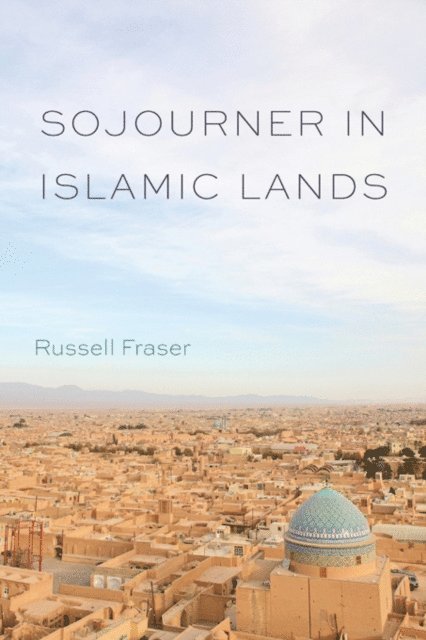
Sojourner in Islamic Lands takes us on a journey from Kazakhstan in the far north of Central Asia, across the mountains to the former Soviet Union, then south to Iran just below the Caspian Sea. Russell Fraser follows the ancient Silk Road wherever possible. For centuries the Silk Road was the primary commercial link between Europe and Asia, with much of it over desert sands and accessible only by camel. Building on history and personal experience, Fraser's narrative describes this vast territory with an eye to geography, artistic culture, and religion over more than two thousand years. The book that he gives us depends first of all on travel, but the author's eye is on an interior landscape, and he focuses on the influence of religious ideology on the cultural landscape of Central Asia. Delving deeply into art and architecture, he takes them to be Islam's most significant creative expressions. Although Islam is currently the predominant religion in the region, the book also examines the two other belief systems with modern-day followers--Christianity and an antireligious sect Fraser calls secular progressivism. His aim is to present Islam to Western readers by describing its achievements during the High Middle Ages and comparing and contrasting them with those of modern Islam. The book offers insights into the history of a major world religion through the eyes of a well-known literary scholar on a journey through exotic parts of the world. He steeps us in the latter, inviting the reader to share the journey with him and participate in the sensations it gives rise to.