Ruth C. Clark – författare
773 kr
Skickas
519 kr
Läs direkt efter köp
504 kr
Läs direkt efter köp
519 kr
Läs direkt efter köp
1 020 kr
Skickas inom 5-8 vardagar
1 148 kr
Läs direkt efter köp
Praise for the First Edition
"For years I''ve been looking for a book that links cognitive research on learning to graphics and instructional design. Here it is! Ruth Clark and Chopeta Lyons not only explain how to make graphics work—they''ve created a very interesting read, full of useful guidelines and examples." —Lynn Kearny, CPT, instructional designer and graphic communicator, Graphic Tools for Thinking and Learning
"Finally! A book that integrates visual design into the larger context of instructional design and development." —Linda Lohr, Ed.D., author, Creating Graphics for Learning and assistant professor, University of Northern Colorado
1 148 kr
Läs direkt efter köp
Praise for the First Edition
"For years I''ve been looking for a book that links cognitive research on learning to graphics and instructional design. Here it is! Ruth Clark and Chopeta Lyons not only explain how to make graphics work—they''ve created a very interesting read, full of useful guidelines and examples." —Lynn Kearny, CPT, instructional designer and graphic communicator, Graphic Tools for Thinking and Learning
"Finally! A book that integrates visual design into the larger context of instructional design and development." —Linda Lohr, Ed.D., author, Creating Graphics for Learning and assistant professor, University of Northern Colorado
455 kr
Skickas inom 5-8 vardagar
456 kr
Skickas inom 5-8 vardagar
519 kr
Läs direkt efter köp
793 kr
Skickas inom 5-8 vardagar
891 kr
Läs direkt efter köp
Scenario-Based e-Learning
Scenario-Based e-Learning offers a new instructional design approach that can accelerate expertise, build critical thinking skills, and promote transfer of learning. This book focuses on the what, when, and how of scenario-based e-learning for workforce learning. Throughout the book, Clark defines and demystifies scenario-based e-learning by offering a practical design model illustrated with examples from veterinary science, automotive troubleshooting, sales and loan analysis among other industries. Filled with helpful guidelines and a wealth of illustrative screen shots, this book offers you the information needed to:
Identify the benefits of a SBeL design for learners and learning outcomes Determine when SBeL might be appropriate for your needs Identify specific outcomes of SBeL relevant to common organizational goals Classify specific instructional goals into one or more learning domains Apply a design model to present content in a task-centered context Evaluate outcomes from SBeL lessons Identify tacit expert knowledge using cognitive task analysis techniques Make a business case for SBeL in your organizationPraise for Scenario-Based e-Learning
"Clark has done it againwith her uncanny ability to make complex ideas accessible to practitioners, the guidelines in this book provide an important resource for you to build your own online, problem-centered instructional strategies."
M. David Merrill, professor emeritus at Utah State University; author, First Principles of Instruction
"Clark''s wonderful book provides a solid explanation of the how, what, and why of scenario-based e-learning. The tools, techniques, and resources in this book provide a roadmap for creating engaging, informative scenarios that lead to tangible, measurable learning outcomes. If you want to design more engaging e-learning, you need to read this book."
Karl M. Kapp, Professor of Instructional Technology, Bloomsburg University; author, The Gamification of Learning and Instruction
891 kr
Läs direkt efter köp
Scenario-Based e-Learning
Scenario-Based e-Learning offers a new instructional design approach that can accelerate expertise, build critical thinking skills, and promote transfer of learning. This book focuses on the what, when, and how of scenario-based e-learning for workforce learning. Throughout the book, Clark defines and demystifies scenario-based e-learning by offering a practical design model illustrated with examples from veterinary science, automotive troubleshooting, sales and loan analysis among other industries. Filled with helpful guidelines and a wealth of illustrative screen shots, this book offers you the information needed to:
Identify the benefits of a SBeL design for learners and learning outcomes Determine when SBeL might be appropriate for your needs Identify specific outcomes of SBeL relevant to common organizational goals Classify specific instructional goals into one or more learning domains Apply a design model to present content in a task-centered context Evaluate outcomes from SBeL lessons Identify tacit expert knowledge using cognitive task analysis techniques Make a business case for SBeL in your organizationPraise for Scenario-Based e-Learning
"Clark has done it againwith her uncanny ability to make complex ideas accessible to practitioners, the guidelines in this book provide an important resource for you to build your own online, problem-centered instructional strategies."
M. David Merrill, professor emeritus at Utah State University; author, First Principles of Instruction
"Clark''s wonderful book provides a solid explanation of the how, what, and why of scenario-based e-learning. The tools, techniques, and resources in this book provide a roadmap for creating engaging, informative scenarios that lead to tangible, measurable learning outcomes. If you want to design more engaging e-learning, you need to read this book."
Karl M. Kapp, Professor of Instructional Technology, Bloomsburg University; author, The Gamification of Learning and Instruction
904 kr
Läs direkt efter köp
Improve the quality of your eLearning materials with evidence-based guidelines
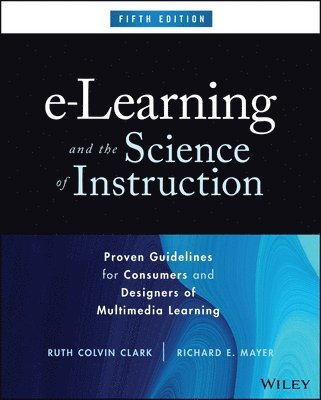
e-Learning and the Science of Instruction, 5th Edition: Proven Guidelines for Consumers and Designers of Multimedia Learning helps practitioners apply evidence-based principles to the design, development, and selection of digital instructional and training materials. This book goes beyond instructional design advice, providing actionable ideas and multimedia examples based on recent research findings. You will learn how to put evidence into practice, with proven e-learning design and development guidelines.
During the pandemic, e-learning assumed a much greater role as an instructional delivery medium, especially with virtual classrooms using tools such as Zoom and MS Teams. The combination of new technological functionality, increases in a remote workforce, and new research findings have led to gaps regarding how to leverage digital learning most effectively. This book explains what instructional designers, multimedia developers, and e-learning consumers need to know to maximize the potential of their e-learning resources. In addition to guidelines regarding use of graphics, audio, text, engagement techniques and collaborative online learning, this new edition covers video-based instruction, digital games, and immersive virtual reality-, showing you when and how to utilize these tools effectively.
Discover the latest research findings about how people learn—and how they learn best online Build instructional materials, including video instruction, digital games, and immersive VR experiences, that empower learners to succeed Get ideas and inspiration for engaging learners in synchronous and asynchronous environments See concrete examples of how research evidence in instructional design can be applied in practice Apply evidence regarding how best to leverage collaborative online learninge-Learning and the Science of Instruction is a valuable resource for students and practitioners who need to design, develop, and select effective eLearning and virtual training materials.
904 kr
Läs direkt efter köp
Improve the quality of your eLearning materials with evidence-based guidelines
e-Learning and the Science of Instruction, 5th Edition: Proven Guidelines for Consumers and Designers of Multimedia Learning helps practitioners apply evidence-based principles to the design, development, and selection of digital instructional and training materials. This book goes beyond instructional design advice, providing actionable ideas and multimedia examples based on recent research findings. You will learn how to put evidence into practice, with proven e-learning design and development guidelines.
During the pandemic, e-learning assumed a much greater role as an instructional delivery medium, especially with virtual classrooms using tools such as Zoom and MS Teams. The combination of new technological functionality, increases in a remote workforce, and new research findings have led to gaps regarding how to leverage digital learning most effectively. This book explains what instructional designers, multimedia developers, and e-learning consumers need to know to maximize the potential of their e-learning resources. In addition to guidelines regarding use of graphics, audio, text, engagement techniques and collaborative online learning, this new edition covers video-based instruction, digital games, and immersive virtual reality-, showing you when and how to utilize these tools effectively.
Discover the latest research findings about how people learn—and how they learn best online Build instructional materials, including video instruction, digital games, and immersive VR experiences, that empower learners to succeed Get ideas and inspiration for engaging learners in synchronous and asynchronous environments See concrete examples of how research evidence in instructional design can be applied in practice Apply evidence regarding how best to leverage collaborative online learninge-Learning and the Science of Instruction is a valuable resource for students and practitioners who need to design, develop, and select effective eLearning and virtual training materials.