• Fri frakt över 249 kr
  • •
  • Snabba leveranser
  • •
  • Billiga böcker
Kundservice

Du är på sajten för privatpersoner.

Företag, bibliotek eller offentlig verksamhet?

Du handlar på classic.bokus.com, där alla dina funktioner finns intakta.
Till classic.bokus.com
Bokus logotyp. Gå till startsidan.
  • Erbjudanden
  • Nyheter
  • Student
  • Topplistor
  • Barn & ungdom
  • Bokus Play
  • E-böcker
  • Pocketböcker
  • Spel & pussel

10% rabatt på allt med kod NYSTART10 →

Sidfot

Mina sidor

    Hjälp

    • Kundservice
    • Vanliga frågor och svar
    • Frakt och leverans
    • Retur vid ångerrätt
    • Reklamera vara
    • Betalning
    • Köpvillkor
    • Allmänna villkor
    • Information om webbplatsens tillgänglighet

    Om Bokus

    • Om oss
    • Pressrum
    • För studenter
    • För företag
    • För bibliotek och offentlig verksamhet
    • För leverantörer
    • Hållbarhet

    Populärt

    • Aktuella erbjudanden
    • Presentkort
    • Studentlitteratur
    • Nya böcker
    • Topplistor
    • Signerade böcker
    • Engelska böcker

    Inspiration

    • Boktips
    • BookTok
    • Populära bokserier
    • Barnbokskaraktärer
    • Populära författare
    Logotyp för Bokus
    Följ oss på Facebook (extern länk)Följ oss på Instagram (extern länk)Följ oss på YouTube (extern länk)Följ oss på TikTok (extern länk)
    bokus @ CookiesAnpassa cookiesIntegritetspolicyKöpvillkor
    Till Citymail hemsida (extern länk)Till Budbee hemsida (extern länk)Till Postnord hemsida (extern länk)Till Schenker hemsida (extern länk)Till Early Bird hemsida (extern länk)Till Walleys hemsida (extern länk)
    1. Psykologi och pedagogik
    2. Pedagogik
    3. Material och digital teknik i undervisningen

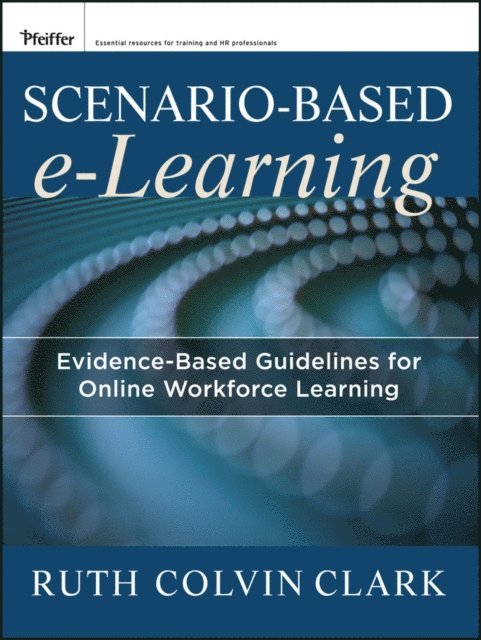
    Scenario-based e-Learning

    Evidence-Based Guidelines for Online Workforce Learning

    AvRuth C. Clark,Richard E. Mayer

    Häftad, Engelska, 2013

    820 kr

    Beställningsvara. Skickas inom 5-8 vardagar. Fri frakt över 249 kr.

    Beskrivning

    Scenario-Based e-LearningScenario-Based e-Learning offers a new instructional design approach that can accelerate expertise, build critical thinking skills, and promote transfer of learning. This book focuses on the what, when, and how of scenario-based e-learning for workforce learning. Throughout the book, Clark defines and demystifies scenario-based e-learning by offering a practical design model illustrated with examples from veterinary science, automotive troubleshooting, sales and loan analysis among other industries. Filled with helpful guidelines and a wealth of illustrative screen shots, this book offers you the information needed to: Identify the benefits of a SBeL design for learners and learning outcomesDetermine when SBeL might be appropriate for your needsIdentify specific outcomes of SBeL relevant to common organizational goalsClassify specific instructional goals into one or more learning domainsApply a design model to present content in a task-centered contextEvaluate outcomes from SBeL lessonsIdentify tacit expert knowledge using cognitive task analysis techniquesMake a business case for SBeL in your organizationPraise for Scenario-Based e-Learning"Clark has done it again—with her uncanny ability to make complex ideas accessible to practitioners, the guidelines in this book provide an important resource for you to build your own online, problem-centered instructional strategies."—M. David Merrill, professor emeritus at Utah State University; author, First Principles of Instruction"Clark's wonderful book provides a solid explanation of the how, what, and why of scenario-based e-learning. The tools, techniques, and resources in this book provide a roadmap for creating engaging, informative scenarios that lead to tangible, measurable learning outcomes. If you want to design more engaging e-learning, you need to read this book."—Karl M. Kapp, Professor of Instructional Technology, Bloomsburg University; author, The Gamification of Learning and Instruction
    Produktinformation

    • Utgivningsdatum:2013-01-22
    • Mått:175 x 234 x 15 mm
    • Vikt:431 g
    • Format:Häftad
    • Språk:Engelska
    • Antal sidor:272
    • Förlag:John Wiley & Sons Inc
    • ISBN:9781118127254

    Utforska kategorier

    • Material och digital teknik i undervisningen inom Psykologi och pedagogik
    • Studievägledning och yrkesorientering inom Psykologi och pedagogik
    • Ledarskapsböcker inom Ekonomi och Ledarskap

    Mer om författaren

    Dr. Ruth Colvin Clark has worked for over 20 years with training professionals assigned to design, develop, and select effective training for classroom or computer delivery. She is widely published in training and performance improvement periodicals and was recently bestowed a Distinguished Professional Service Award from ISPI. She is the co-author of the best-selling e-Learning and the Science of Instruction.

    Innehållsförteckning

    • Foreword xiiiAcknowledgments xviiChapter 1: What is Scenario-based e-learning 1Scenario-Based e-Learning: A First Look 2What Do You think? 4Scenario-Based e-Learning Defined 5Scenario-Based vs. Directive Training Environments 7What Scenario-Based e-Learning Is Not 10Six Reasons to Consider Scenario-Based e-Learning Now 12What Do You Think? Revisited 14Coming Next 15Additional Resources 15Scenario-Based e-Learning and You: Why Now? 16Chapter 2: When to Use Scenario-based e-learning 17Consider Scenario-Based e-Learning for Strategic Tasks 18What Do You Think? 18Situations That Call for Scenario-Based e-Learning 19Eight Scenario-Based Learning Domains 22Scenario-Based Multimedia Interfaces 26Meet the Scenario-Based e-Learning Samples 31Coming Next 31Additional Resources 31Scenario-Based e-Learning and You: Your Scenario-Based e-Learning Opportunities 32Chapter 3: Design of Scenario-based e-learning 35Overview of a Scenario-Based e-Learning Design Model 35Modes and Media in Scenario-Based e-Learning 42Coming Next 44Additional Resources 44Scenario-Based e-Learning and You: Your Draft Design Model 45Chapter 4: Defining Scenario Outcomes 47Outcome Deliverables for Learning Domains 48Assess the Complexity of your Outcome Responses 48What Do You Think? 52Translate Your Learning Objectives 53Scenario Outcomes and Multimedia Interfaces 56What Do You Think? Revisited 58Coming Next 59Additional Resource 59Scenario-Based e-Learning and You: Translating Your Objectives 60Chapter 5: Designing the Trigger Event and Case Data 63What Do You Think? 64Planning the Trigger Event 64Defining Case Data 66What Do You Think? Revisited 69Coming Next 70Scenario-Based e-Learning and You: Defining Your Trigger Event and Case Data 71Chapter 6: Building Guidance in Scenario-based e-learning 73What Do You Think 73What Is Guidance? 75Option 1: Fade Support from High to Low 77Option 2: Move from Simple to Complex 79Option 3: Consider Open vs. Closed Response Options 79Option 4: Consider Interface/Navigation Design 80Option 5: Add Training Wheels 81Option 6: Incorporate Coaching and Advisors 82Option 7: Embed Worksheets 83Option 8: Adjust Feedback 84Option 9: Make Learning Collaborative 85What Do You Think? Revisited 85Coming Next 86Additional Resources 86Scenario-Based e-Learning and You: Defining Guidance 87Chapter 7: Putting the “L” in Scenario-based e-learning 89What Do You Think? 89Integrating Knowledge and Skill Resources 90Tutorials 93Reference 94Examples 96Instructors 97What Do You Think? Revisited 98Coming Next 99Additional Resources 99Scenario-Based e-Learning and You: Defining Instructional Resources 100Chapter 8: Designing Feedback and Reflection 103The Power of Feedback 103Learning from Mistakes 104Instructional vs. Intrinsic Feedback 104What Do You Think? 105Feedback in a Nutshell 106Feedback and Reflection in Learning Domains 109What Do You Think? Revisited 115Coming Next 116Additional Resources 116Scenario-Based e-Learning and You: Defining Feedback 117Chapter 9: Evaluation of Scenario-based e-Learning 119What Do You Think? 122Focusing Your Evaluation 122Back to the Basics: Test Reliability and Validity 126Test Items for Scenario-Based e-Learning 126Did I Pass the Test? 128Testing with Online Scenarios 131What Do You Think? Revisited 132Coming Next 133Additional Resources 133Scenario-Based e-Learning and You: Planning Your Evaluation 134Chapter 10: Does Scenario-based e-learning Work? 137Does It Work? 137Is It Efficient? 138Does It Motivate? 138What Features Make a Difference? 138What Do You Think? 139Limits of Research 139Discovery Learning Does Not Work 140Guided Discovery Can Have Learning Advantages over “Traditional” Instruction 141Learner Scaffolding Is Essential for Success 143Guided Discovery Can Be More Motivating Than “Traditional” Instruction 149Feedback and Reflection Promote Learning 149Visual Representations Should Be Congruent with Your Learning Goals 150Can Scenario-Based e-Learning Accelerate Expertise? 151Research on Scenario-Based e-Learning—The Bottom Line 153What Do You Think? Revisited 154Coming Next 155Additional Resources 155Scenario-Based e-Learning and You: Evidence-Based Decisions 156Chapter 11: Eliciting Critical Thinking Skills for Scenario-based e-learning 157What Is Knowledge Elicitation? 158What Do You Think? 158Three Approaches to Knowledge Elicitation 158Which Elicitation Method Should You Use? 162Types of Knowledge and Skill to Elicit 164Incorporating Critical Thinking Skills into Your Lessons 168Guidelines for Success 171What Do You Think? Revisited 172Coming Next 172Additional Resources 173Scenario-Based e-Learning and You: Eliciting Tacit Knowledge 174Chapter 12: Implementing Scenario-based e-learning 177What Do you Think? 178Four Steps to Project Success 178Step One: Present a Strong Business Case 178Step Two: Plan Your Project 184Step Three: Design Your Approach 187Step Four: Develop Your First Scenario 188What Do You Think? Revisited 190Coming Next: Your Scenario-Based e-Learning Project 191Additional Resources 191Scenario-Based e-Learning and You: Planning Your Implementation 192Appendix A: An Introduction to the Scenario-Based e-Learning Examples 197Appendix B: Repeated Figures 207Appendix C: Reliability and Validity for Learning Measures for Scenario-Based e-Learning 215List of Figures and Tables 221Glossary 225References 229About the Author 233Index 235