Ruth Craggs - Böcker
Visar alla böcker från författaren Ruth Craggs. Handla med fri frakt och snabb leverans.
5 produkter
5 produkter
Del 135 - Studies in Imperialism
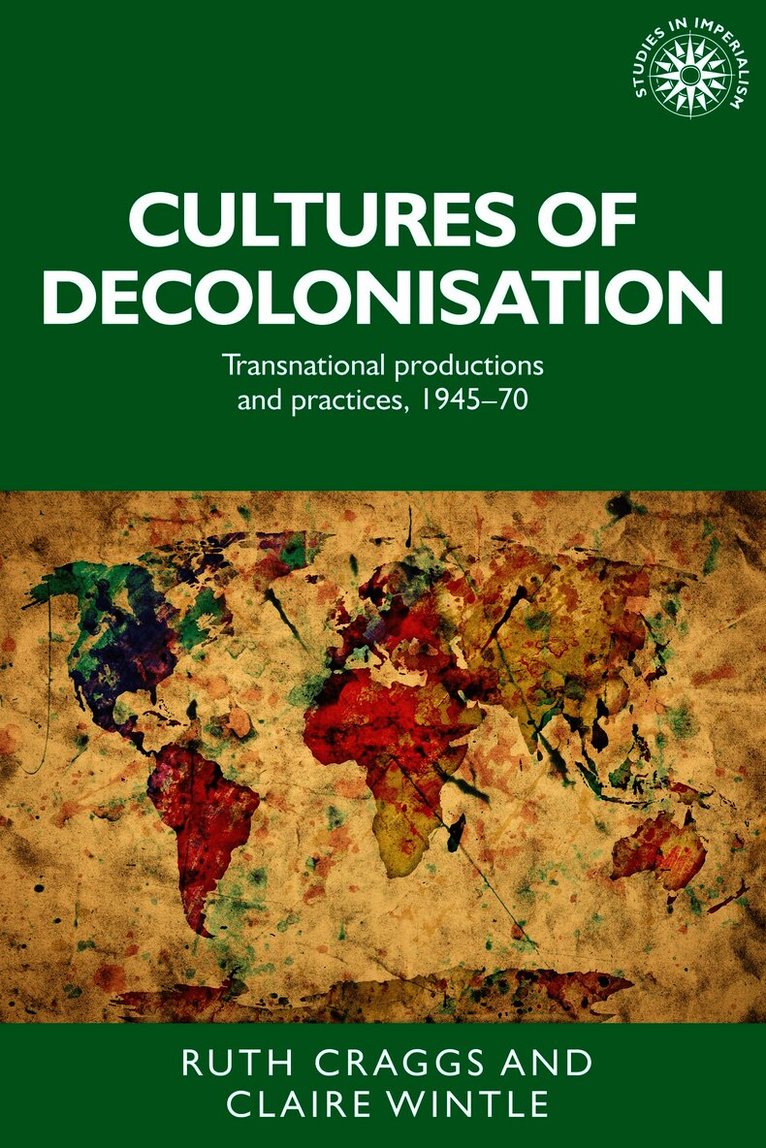
Cultures of decolonisation
Transnational productions and practices, 194570
Inbunden, Engelska, 2016
1 271 kr
Skickas inom 5-8 vardagar
Cultures of decolonisation combines studies of visual, literary and material cultures in order to explore the complexities of the 'end of empire' as a process. Where other accounts focus on high politics and constitutional reform, this volume reveals the diverse ways in which cultures contributed to wider political, economic and social change. This book demonstrates the transnational character of decolonisation, thereby illustrating the value of comparison - between different cultural forms and diverse places - in understanding the nature of this wide-reaching geopolitical change. Individual chapters focus on architecture, theatre, museums, heritage sites, fine art and interior design, alongside institutions such as artists' groups, language agencies and the Royal Mint, across Africa, Asia, the Caribbean and Europe. Offering a range of disciplinary perspectives, these contributions provide revealing case studies for those researching decolonisation across the humanities and social sciences.
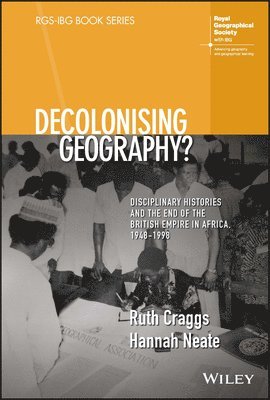
Decolonising Geography? Disciplinary Histories and the End of the British Empire in Africa, 1948-1998
Inbunden, Engelska, 2023
800 kr
Skickas inom 7-10 vardagar
DECOLONISING GEOGRAPHY? “This book presents an extraordinarily sensitive account of geography’s histories in five African countries subjected to British colonial rule. Craggs and Neate draw together political and imaginative processes of decolonisation, through an innovative biographical approach that humanizes and enlivens the story of our academic discipline. It will be an invaluable resource for those seeking a deeper understanding of decolonisation, its recent trajectories and far-reaching implications, on the African continent.”—Shari Daya, Affiliate Associate Professor in Environmental and Geographical Science, University of Cape Town “By placing the experiences, ideas, and practices of African geographers in the center of their analyses, Craggs and Neate provide an unprecedented account of historical and contemporary decolonizing struggles within Geography and the academy. This book should be required reading for all those looking to decolonize the discipline and dislodge it from its Global North histories, institutions, and ideologies.”—Mona Domosh, Professor of Geography, The Joan P. and Edward J. Foley Jr. 1933 Professor, Dartmouth College “This meticulous work explores how colonialism, decolonization and postcolonialism shaped African geography and geographers. It sheds light on efforts to ‘Africanize’ the discipline, a process which I was both witness to and a participant in.”—Stanley Okafor, Professor of Geography (Retired), University of Ibadan How did a generation of academic geographers engage with constitutional decolonisation during the end of the British empire in Africa? In Decolonising Geography? Disciplinary Histories and the End of the British Empire in Africa, 1948-1998, Ruth Craggs and Hannah Neate explore how the teaching, research, administration and activism of geographers in Africa shaped the discipline and the post-colonial geopolitics of the continent. The authors follow the professional lives of individual geographers to provide fresh insights into decolonisation in the former British Empire in Africa, drawing from extensive archival research and more than 40 oral history interviews with geographers in Ghana, Nigeria, South Africa, Tanzania and the UK. Decolonising Geography is a must-read for any reader in the UK and Africa with an interest in the relationships between geography and decolonisation.
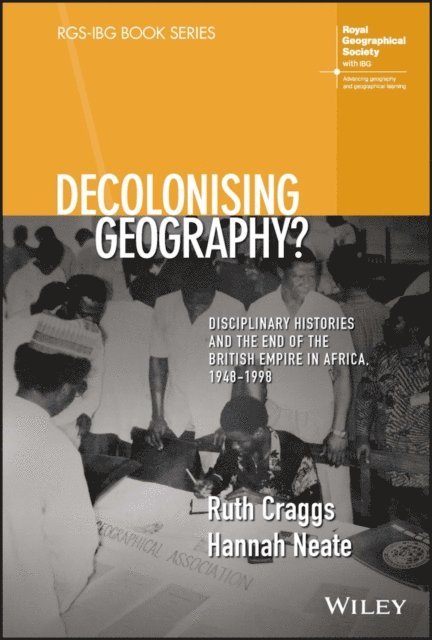
Decolonising Geography? Disciplinary Histories and the End of the British Empire in Africa, 1948-1998
Häftad, Engelska, 2023
337 kr
Skickas inom 7-10 vardagar
DECOLONISING GEOGRAPHY? “This book presents an extraordinarily sensitive account of geography’s histories in five African countries subjected to British colonial rule. Craggs and Neate draw together political and imaginative processes of decolonisation, through an innovative biographical approach that humanizes and enlivens the story of our academic discipline. It will be an invaluable resource for those seeking a deeper understanding of decolonisation, its recent trajectories and far-reaching implications, on the African continent.”—Shari Daya, Affiliate Associate Professor in Environmental and Geographical Science, University of Cape Town “By placing the experiences, ideas, and practices of African geographers in the center of their analyses, Craggs and Neate provide an unprecedented account of historical and contemporary decolonizing struggles within Geography and the academy. This book should be required reading for all those looking to decolonize the discipline and dislodge it from its Global North histories, institutions, and ideologies.”—Mona Domosh, Professor of Geography, The Joan P. and Edward J. Foley Jr. 1933 Professor, Dartmouth College “This meticulous work explores how colonialism, decolonization and postcolonialism shaped African geography and geographers. It sheds light on efforts to ‘Africanize’ the discipline, a process which I was both witness to and a participant in.”—Stanley Okafor, Professor of Geography (Retired), University of Ibadan How did a generation of academic geographers engage with constitutional decolonisation during the end of the British empire in Africa? In Decolonising Geography? Disciplinary Histories and the End of the British Empire in Africa, 1948-1998, Ruth Craggs and Hannah Neate explore how the teaching, research, administration and activism of geographers in Africa shaped the discipline and the post-colonial geopolitics of the continent. The authors follow the professional lives of individual geographers to provide fresh insights into decolonisation in the former British Empire in Africa, drawing from extensive archival research and more than 40 oral history interviews with geographers in Ghana, Nigeria, South Africa, Tanzania and the UK. Decolonising Geography is a must-read for any reader in the UK and Africa with an interest in the relationships between geography and decolonisation.
Del 135 - Studies in Imperialism
Cultures of Decolonisation
Transnational Productions and Practices, 1945–70
Häftad, Engelska, 2018
434 kr
Skickas inom 5-8 vardagar
Cultures of decolonisation combines studies of visual, literary and material cultures in order to explore the complexities of the ‘end of empire’ as a process. Where other accounts focus on high politics and constitutional reform, this volume reveals the diverse ways in which cultures contributed to wider political, economic and social change.The book demonstrates the transnational character of decolonisation, thereby illustrating the value of comparison – between different cultural forms and diverse places – in understanding the nature of this wide-reaching geopolitical change. Individual chapters focus on architecture, theatre, museums, heritage sites, fine art and interior design, alongside institutions such as artists’ groups, language agencies and the Royal Mint, across Africa, Asia, the Caribbean and Europe.
1 341 kr
Skickas inom 5-8 vardagar
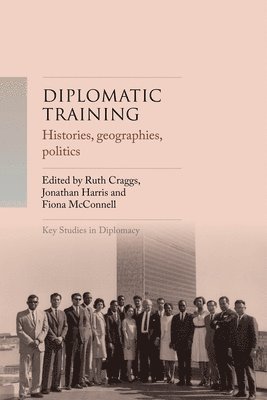
Despite the essential role diplomatic training plays in the everyday workings of international relations, international law and in the various multilateral organisations, this practice has received little critical attention in the humanities, social and political sciences. Bringing together detailed accounts of the histories, development and contemporary practices of diplomatic training with insights from key practitioners, this edited collection places training centrally within our understanding of international relations. It argues that diplomatic training both reflects and reproduces hegemonic power relations, whilst at the same time offering opportunities to contest them, and imagine alternative futures. The book includes a substantive introduction, nine full-length chapters from a range of disciplinary and regional perspectives drawing on archival research, oral history, interviews, and ethnographic methods, and four ‘interventions’: reflection pieces from trainers and directors of training programmes. It offers a globe-spanning, interdisciplinary account of the politics of diplomatic training and appeals to both scholarly and practitioner audiences.