• Fri frakt över 249 kr
  • •
  • Snabba leveranser
  • •
  • Billiga böcker
Kundservice

Du är på sajten för privatpersoner.

Företag, bibliotek eller offentlig verksamhet?

Du handlar på classic.bokus.com, där alla dina funktioner finns intakta.
Till classic.bokus.com
Bokus logotyp. Gå till startsidan.
  • Erbjudanden
  • Nyheter
  • Student
  • Topplistor
  • Barn & ungdom
  • Bokus Play
  • E-böcker
  • Pocketböcker
  • Spel & pussel

10% studentrabatt med kod TERM26

Sidfot

Mina sidor

    Hjälp

    • Kundservice
    • Vanliga frågor och svar
    • Frakt och leverans
    • Retur vid ångerrätt
    • Reklamera vara
    • Betalning
    • Köpvillkor
    • Allmänna villkor
    • Information om webbplatsens tillgänglighet

    Om Bokus

    • Om oss
    • Pressrum
    • För studenter
    • För företag
    • För bibliotek och offentlig verksamhet
    • För leverantörer
    • Hållbarhet

    Populärt

    • Aktuella erbjudanden
    • Presentkort
    • Studentlitteratur
    • Nya böcker
    • Topplistor
    • Signerade böcker
    • Engelska böcker

    Inspiration

    • Boktips
    • BookTok
    • Populära bokserier
    • Barnbokskaraktärer
    • Populära författare
    Logotyp för Bokus
    Följ oss på Facebook (extern länk)Följ oss på Instagram (extern länk)Följ oss på YouTube (extern länk)Följ oss på TikTok (extern länk)
    bokus @ CookiesAnpassa cookiesIntegritetspolicyKöpvillkor
    Till Citymail hemsida (extern länk)Till Budbee hemsida (extern länk)Till Postnord hemsida (extern länk)Till Schenker hemsida (extern länk)Till Early Bird hemsida (extern länk)Till Walleys hemsida (extern länk)
    1. Samhälle och politik
    2. Politik och statsskick

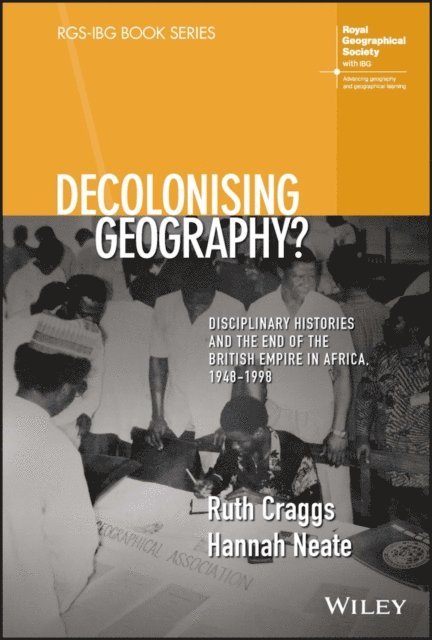
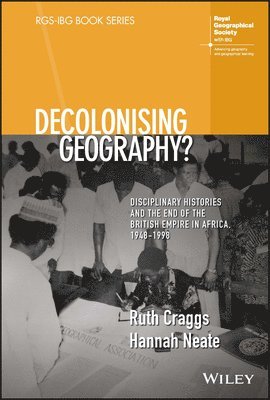
    Decolonising Geography? Disciplinary Histories and the End of the British Empire in Africa, 1948-1998

    AvRuth Craggs,Hannah Neate

    Häftad, Engelska, 2023

    Del i serien RGS-IBG Book Series

    349 kr

    Beställningsvara. Skickas inom 5-8 vardagar. Fri frakt över 249 kr.

    Fler format och utgåvor

    Inbunden

    828 kr

    Beskrivning

    DECOLONISING GEOGRAPHY? “This book presents an extraordinarily sensitive account of geography’s histories in five African countries subjected to British colonial rule. Craggs and Neate draw together political and imaginative processes of decolonisation, through an innovative biographical approach that humanizes and enlivens the story of our academic discipline. It will be an invaluable resource for those seeking a deeper understanding of decolonisation, its recent trajectories and far-reaching implications, on the African continent.”—Shari Daya, Affiliate Associate Professor in Environmental and Geographical Science, University of Cape Town “By placing the experiences, ideas, and practices of African geographers in the center of their analyses, Craggs and Neate provide an unprecedented account of historical and contemporary decolonizing struggles within Geography and the academy. This book should be required reading for all those looking to decolonize the discipline and dislodge it from its Global North histories, institutions, and ideologies.”—Mona Domosh, Professor of Geography, The Joan P. and Edward J. Foley Jr. 1933 Professor, Dartmouth College “This meticulous work explores how colonialism, decolonization and postcolonialism shaped African geography and geographers. It sheds light on efforts to ‘Africanize’ the discipline, a process which I was both witness to and a participant in.”—Stanley Okafor, Professor of Geography (Retired), University of Ibadan How did a generation of academic geographers engage with constitutional decolonisation during the end of the British empire in Africa? In Decolonising Geography? Disciplinary Histories and the End of the British Empire in Africa, 1948-1998, Ruth Craggs and Hannah Neate explore how the teaching, research, administration and activism of geographers in Africa shaped the discipline and the post-colonial geopolitics of the continent. The authors follow the professional lives of individual geographers to provide fresh insights into decolonisation in the former British Empire in Africa, drawing from extensive archival research and more than 40 oral history interviews with geographers in Ghana, Nigeria, South Africa, Tanzania and the UK. Decolonising Geography is a must-read for any reader in the UK and Africa with an interest in the relationships between geography and decolonisation.

    Produktinformation

    • Utgivningsdatum:2023-11-10
    • Mått:152 x 229 x 16 mm
    • Vikt:425 g
    • Format:Häftad
    • Språk:Engelska
    • Serie:RGS-IBG Book Series
    • Antal sidor:288
    • Förlag:John Wiley & Sons Inc
    • ISBN:9781119549307

    Utforska kategorier

    • Politik och statsskick inom Samhälle och politik

    Mer om författaren

    RUTH CRAGGS is Reader in Political and Historical Geography at King’s College London. At the time of writing HANNAH NEATE was Senior Lecturer in Human Geography at Manchester Metropolitan University.

    Innehållsförteckning

    • List of Figures and Table viiiAcknowledgements x1. Decolonisation and Geography in Africa 1Introduction 1African Decolonisation 3Periodisation 3Decolonisation, Education, and the Place of African Universities 5Contributions 10Historicising Current Debates 10Decolonising Geography's Histories 13Professional Lives and Histories of Decolonisation 16Biographical Methods 19Sources 20Case Studies 24Structure 302. 'New, Interesting, and Even Exciting Opportunities': Geography and the Founding of Colonial Universities in Africa 42Introduction 42Asquith Colleges and the 'Imperial Family of Universities' 44Geography at the Asquith Colleges: Colonial Networks 46Early Faculty 47Building a Department 54Teaching and Researching Geography 58Campus Relations 60Conclusion 663. Shifting the Centre: Africanising Geography in Decolonisation 73Introduction 73African Geography Students in Britain 76Shifting Higher Education Structures 82Africanisation of Staff 89Africanisation of Research, Curriculum, and Teaching 95Conclusion 1034. International Networks, Decolonisation, and the Cold War 110Introduction 110Diversifying Influences and Americanisation 113Looking to America 113American Orbits 115The Quantitative Revolution in Africa 117Other Eastern and Non-aligned Networks 121Eastern Bloc Connections 121Moving the Centre 122Radical Geography and Underdevelopment 125Conclusion 131Mobility -- for Some 131Decolonisation or Incorporation? 132Innovation 1345. Geography and National Development: Knowing, Planning, and Exploiting Resources for Independent Africa 142Introduction 142Geography and African Development 145Producing Development Experts 146Knowing New Nations (and Resources) through the Census 150Research for Rural Development in Tanzania 154BRALUP and Applied Research 154Research for Ujamaa 156Between Commitment and Critique 159Regional Development Planning and New Urban Spaces in Nigeria 161Rebalancing After War 161Akin Mabogunje and the Geographer as Consultant 162Conclusion 1676. Geography, Apartheid and Anti-Apartheid Activism in South Africa 175Introduction 175Departmental Spaces, Geography and the Contestation of Apartheid 177The Tearoom 178Conference Spaces 179contents viiTeaching Spaces 180Campus Politics and Activism 183Campus Protests 183Geographers as Activists Beyond Campus 187Geographical Research and Apartheid 190Research for (Separate) Development in South Africa 190Apartheid: An Absent Subject 192Growing Critique 195People's Geography 196Decolonising South African Geography 198Working for Transformation 200Challenging Geography's White Institutions 200Consultancy and Critique 205Conclusion 2077. Legacies of Decolonisation in African and British Geography 217Introduction 217Leaving Africa 219Pastures New 219Reluctance and Compulsion 221Isolation and Creativity 225Growing Isolation 225Solidarity and Creativity 228Legacies in the UK 229Textbook Africa 230Area Studies, Development Studies, and Development Geography 232African Connections, Colonial Nostalgia 235Conclusion 2418. Decolonising Geography Past and Present? 250Introduction 250Decolonisation, its Histories and Geographies 250Peopling the Historiography of Decolonisation 250Decolonising Geography's Histories 251Learning from the Past 253To What Extent was Geography Decolonised in the period 1948--1998? 253What Does This Mean for Decolonisation Struggles Today? 257Conclusion 264Index 269