Ruth Livesey - Böcker
Visar alla böcker från författaren Ruth Livesey. Handla med fri frakt och snabb leverans.
4 produkter
4 produkter
1 125 kr
Skickas inom 7-10 vardagar
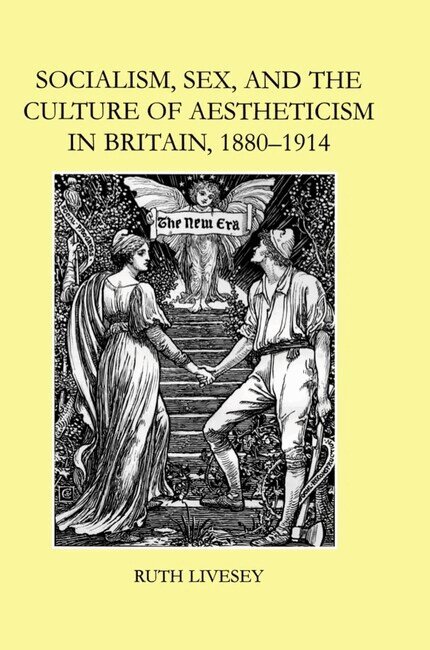
This book brings to life the growth of the socialist movement among men and women artists and writers in late nineteenth-century Britain. For these campaigners, socialism was inseparable from a desire for a new beauty of life; beauty that also, for many, required them rejecting the sexual conventions of the Victorian era.From the early 1880s and well into the twentieth century, the efforts of these writers and activists existed in critical tension with other contemporary developments in literary culture. Livesey maps the ongoing dialogue between socialist writers like William Morris, decadent aesthetes such as Oscar Wilde and defining figures of early modernism including Virginia Woolf and Roger Fry. She concludes that socialist writers developed a distinct political aesthetic in which the love of beauty was to act as a force for revolutionary change. The book draws on archival research and extensive study of socialist periodicals, together with readings of works by writers including Morris, Wilde, Schreiner, George Bernard Shaw, Isabella Ford, Carpenter, Alfred Orage, Woolf and Fry. Livesey uncovers the lasting influence of socialist writers of the 1880s on the emergence of British literary modernism and by tracing the lives of neglected writers and activists such as Clementina Black and Dollie Radford, she provides a vivid evocation of an era in which revolution seemed imminent and the arts a vital route to that future.
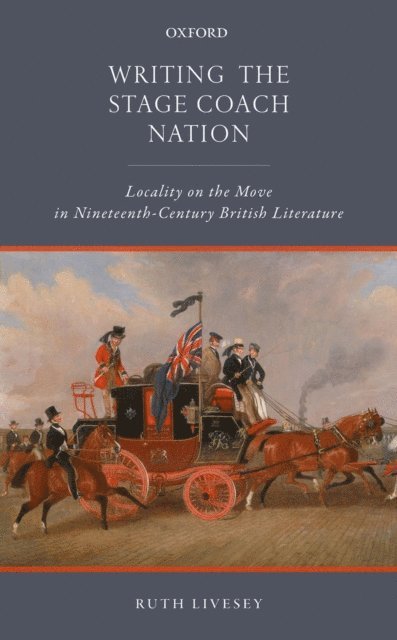
Writing the Stage Coach Nation
Locality on the Move in Nineteenth-Century British Literature
Inbunden, Engelska, 2016
1 380 kr
Skickas inom 5-8 vardagar
Why is it that so many of the best-loved novels of the Victorian era take place not in the steam-powered railway present in which they were published, but in the very recent past? Most works by Dickens, Brontë, Eliot, and Hardy set action neither in the present nor in a definitively historical epoch but rather in a 'just' past of collective memory, a vanishing but still tangible world moving by stage and mail coach. It is easy to overlook the fact that Jane Eyre, Bleak House, and Middlemarch, for example, are in this sense historical novels, recreating places and times that are just slipping from the horizon of here and now. Ruth Livesey brings to the surface the historical consciousness of such novels of the 'just' past and explores how they convey an idea of a national belonging that can be experienced through a sense of local place. The journey by public coach had long been an analogy for the form of the novel as it took shape in the eighteenth century; smooth engineered roads and the rapid circulation of print was one means by which Britain was reimagined as a modern, peaceable, and communicative nation in the aftermath of the Napoleonic wars. But by the later 1840s the end of the stage coach was assured and that made it a highly charged figure of a lost national modernity. In its halts, relays, stops at inns, and crossing points, the stage and mail coach system offered a different experience of mobility and being-in-place--passages of flight and anchoring points--from the vectors of the railway that radiated out from industrial and urban centres. This book opens by examining the writing of the stage coach nation in Walter Scott's fiction and in the work of the radical journalists William Hazlitt and William Cobbett. Livesey suggests that in turning to the 'just' past of the stage coach imaginary, later novels by Dickens, Brontë, and Eliot reach out to the possibility of a nation knitted together by the affect of strongly felt local belonging. This vision is of a communicative nation at its liveliest when the smooth passage of characters and words are interrupted and overset, delivering readers and protagonists to local places, thick with the presence of history writ small.
662 kr
Skickas inom 10-15 vardagar
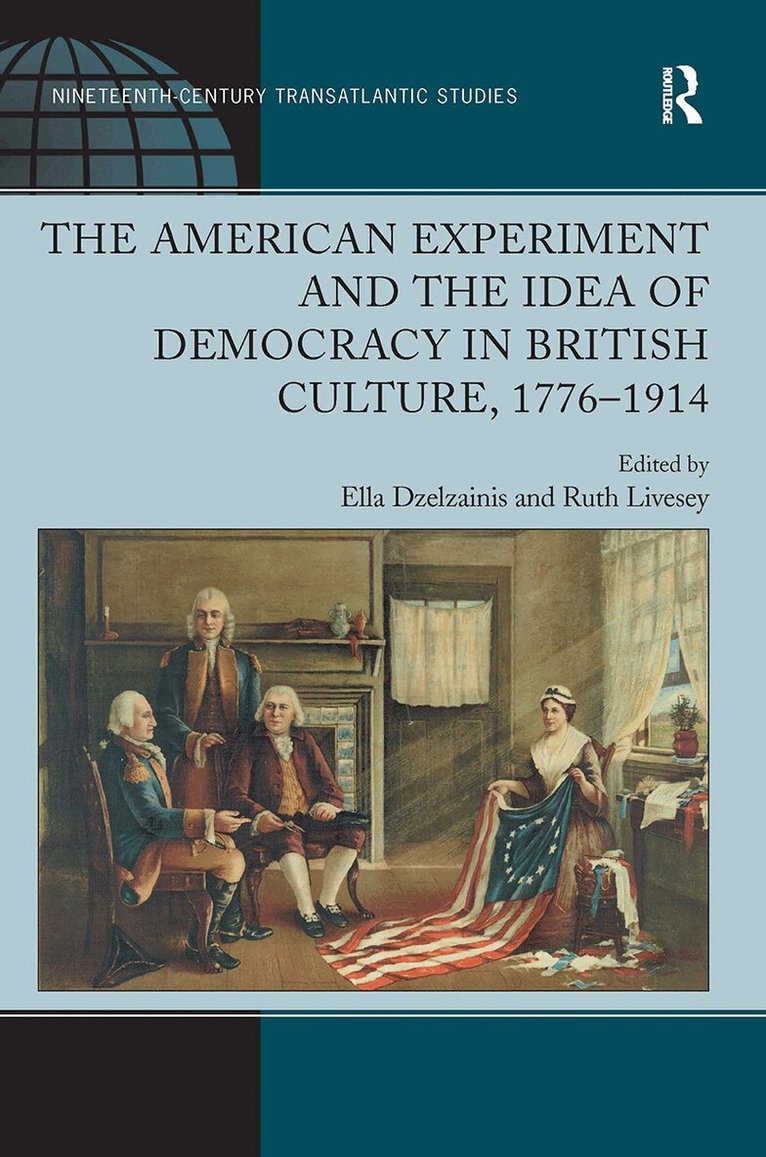
In nineteenth-century Britain, the effects of democracy in America were seen to spread from Congress all the way down to the personal habits of its citizens. Bringing together political theorists, historians, and literary scholars, this volume explores the idea of American democracy in nineteenth-century Britain. The essays span the period from Independence to the First World War and trace an intellectual history of Anglo-American relations during that period. Leading scholars trace the hopes and fears inspired by the American model of democracy in the works of commentators, including Thomas Paine, Mary Wollstonecraft, Alexis de Tocqueville, Charles Dickens, John Stuart Mill, Richard Cobden, Charles Dilke, Matthew Arnold, Henry James and W. T. Stead. By examining the context of debates about American democracy and notions of ’culture’, citizenship, and race, the collection sheds fresh light on well-documented moments of British political history, such as the Reform Acts, the Abolition of Slavery Act, and the Anti-Corn Law agitation. The volume also explores the ways in which British Liberalism was shaped by the American example and draws attention to the importance of print culture in furthering radical political dialogue between the two nations. As the comprehensive introduction makes clear, this collection makes an important contribution to transatlantic studies and our growing sense of a nineteenth-century modernity shaped by an Atlantic exchange. It is an essential reference point for all interested in the history of the idea of democracy, its political evolution, and its perceived cultural consequences.
2 478 kr
Skickas inom 10-15 vardagar
In nineteenth-century Britain, the effects of democracy in America were seen to spread from Congress all the way down to the personal habits of its citizens. Bringing together political theorists, historians, and literary scholars, this volume explores the idea of American democracy in nineteenth-century Britain. The essays span the period from Independence to the First World War and trace an intellectual history of Anglo-American relations during that period. Leading scholars trace the hopes and fears inspired by the American model of democracy in the works of commentators, including Thomas Paine, Mary Wollstonecraft, Alexis de Tocqueville, Charles Dickens, John Stuart Mill, Richard Cobden, Charles Dilke, Matthew Arnold, Henry James and W. T. Stead. By examining the context of debates about American democracy and notions of ’culture’, citizenship, and race, the collection sheds fresh light on well-documented moments of British political history, such as the Reform Acts, the Abolition of Slavery Act, and the Anti-Corn Law agitation. The volume also explores the ways in which British Liberalism was shaped by the American example and draws attention to the importance of print culture in furthering radical political dialogue between the two nations. As the comprehensive introduction makes clear, this collection makes an important contribution to transatlantic studies and our growing sense of a nineteenth-century modernity shaped by an Atlantic exchange. It is an essential reference point for all interested in the history of the idea of democracy, its political evolution, and its perceived cultural consequences.