• Fri frakt över 249 kr
  • •
  • Snabba leveranser
  • •
  • Billiga böcker
Kundservice

Du är på sajten för privatpersoner.

Företag, bibliotek eller offentlig verksamhet?

Du handlar på classic.bokus.com, där alla dina funktioner finns intakta.
Till classic.bokus.com
Bokus logotyp. Gå till startsidan.
  • Erbjudanden
  • Nyheter
  • Student
  • Topplistor
  • Barn & ungdom
  • Bokus Play
  • E-böcker
  • Pocketböcker
  • Spel & pussel

10% rabatt på allt med kod NYSTART10 →

Sidfot

Mina sidor

    Hjälp

    • Kundservice
    • Vanliga frågor och svar
    • Frakt och leverans
    • Retur vid ångerrätt
    • Reklamera vara
    • Betalning
    • Köpvillkor
    • Allmänna villkor
    • Information om webbplatsens tillgänglighet

    Om Bokus

    • Om oss
    • Pressrum
    • För studenter
    • För företag
    • För bibliotek och offentlig verksamhet
    • För leverantörer
    • Hållbarhet

    Populärt

    • Aktuella erbjudanden
    • Presentkort
    • Studentlitteratur
    • Nya böcker
    • Topplistor
    • Signerade böcker
    • Engelska böcker

    Inspiration

    • Boktips
    • BookTok
    • Populära bokserier
    • Barnbokskaraktärer
    • Populära författare
    Logotyp för Bokus
    Följ oss på Facebook (extern länk)Följ oss på Instagram (extern länk)Följ oss på YouTube (extern länk)Följ oss på TikTok (extern länk)
    bokus @ CookiesAnpassa cookiesIntegritetspolicyKöpvillkor
    Till Citymail hemsida (extern länk)Till Budbee hemsida (extern länk)Till Postnord hemsida (extern länk)Till Schenker hemsida (extern länk)Till Early Bird hemsida (extern länk)Till Walleys hemsida (extern länk)
    1. Skönlitteratur
    2. Litteraturvetenskap
    3. Litteraturvetenskap

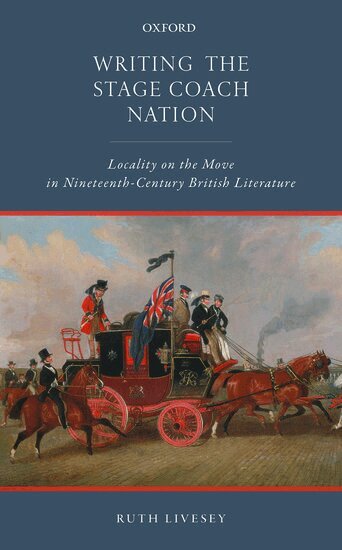
    Writing the Stage Coach Nation

    Locality on the Move in Nineteenth-Century British Literature

    AvRuth Livesey

    Inbunden, Engelska, 2016

    1 485 kr

    Beställningsvara. Skickas inom 5-8 vardagar. Fri frakt över 249 kr.

    Fler format och utgåvor

    E-bok

    1 225 kr

    E-bok

    1 225 kr

    Beskrivning

    Why is it that so many of the best-loved novels of the Victorian era take place not in the steam-powered railway present in which they were published, but in the very recent past? Most works by Dickens, Brontë, Eliot, and Hardy set action neither in the present nor in a definitively historical epoch but rather in a 'just' past of collective memory, a vanishing but still tangible world moving by stage and mail coach. It is easy to overlook the fact that Jane Eyre, Bleak House, and Middlemarch, for example, are in this sense historical novels, recreating places and times that are just slipping from the horizon of here and now. Ruth Livesey brings to the surface the historical consciousness of such novels of the 'just' past and explores how they convey an idea of a national belonging that can be experienced through a sense of local place. The journey by public coach had long been an analogy for the form of the novel as it took shape in the eighteenth century; smooth engineered roads and the rapid circulation of print was one means by which Britain was reimagined as a modern, peaceable, and communicative nation in the aftermath of the Napoleonic wars. But by the later 1840s the end of the stage coach was assured and that made it a highly charged figure of a lost national modernity. In its halts, relays, stops at inns, and crossing points, the stage and mail coach system offered a different experience of mobility and being-in-place--passages of flight and anchoring points--from the vectors of the railway that radiated out from industrial and urban centres. This book opens by examining the writing of the stage coach nation in Walter Scott's fiction and in the work of the radical journalists William Hazlitt and William Cobbett. Livesey suggests that in turning to the 'just' past of the stage coach imaginary, later novels by Dickens, Brontë, and Eliot reach out to the possibility of a nation knitted together by the affect of strongly felt local belonging. This vision is of a communicative nation at its liveliest when the smooth passage of characters and words are interrupted and overset, delivering readers and protagonists to local places, thick with the presence of history writ small.

    Produktinformation

    • Utgivningsdatum:2016-09-15
    • Mått:137 x 222 x 19 mm
    • Vikt:420 g
    • Format:Inbunden
    • Språk:Engelska
    • Antal sidor:258
    • Förlag:OUP OXFORD
    • ISBN:9780198769439

    Utforska kategorier

    • Litteraturvetenskap inom Skönlitteratur

    Mer om författaren

    Ruth Livesey is Reader in Nineteenth-Century Literature and Thought in the Department of English, Royal Holloway, University of London. She is the author of Socialism, Sex, and the Culture of Aestheticism in Britain, 1880-1914 (OUP, 2007), and co-editor of The American Experiment and the Idea of Democracy in British Culture, 1776-1914 (Ashgate, 2013). She was an editor of Journal of Victorian Culture from 2008 to 2015.

    Recensioner i media

    ...overall, an excellent and intricately considered work. Livesey's impressive study makes a convincing case for the integration of the stage and mail coach into critical understandings of nineteenth-century transport.

    Innehållsförteckning

    • Acknowledgements List of Illustrations Introduction: Writing the Stage Coach Nation 1: Walter Scott and the Stage Coach Nation 2: Radicalism on the Cross Roads: William Hazlitt and William Cobbett 3: Radicalism on the Cross Roads: William Hazlitt and William Cobbett 4: Halting at the Fingerpost: Dickens, Martin Chuzzlewit, and the Railway Future 5: Communicating with Jane Eyre: Stage Coach, Mail, and the Tory Nation 6: Driving Back with George Eliot: Locality and National Memory in Felix Holt, the Radical Conclusion: The Empty Road in Dickens and Hardy Bibliography Index