Ruth Scodel - Böcker
Visar alla böcker från författaren Ruth Scodel. Handla med fri frakt och snabb leverans.
7 produkter
7 produkter
349 kr
Skickas inom 7-10 vardagar
The Homeric poems were not intended for readers, but for a listening audience. Traditional in their basic elements, the stories were learned by oral poets from earlier poets and recreated at every performance. Individual nuances, tailored to the audience, could creep into the stories of the Greek heroes on each and every occasion when a bard recited the epics. For a particular audience at a particular moment, "tradition" is what it believes it has inherited from the past--and it may not be particularly old. The boundaries between the traditional and the innovative may become blurry and indistinct. By rethinking tradition, we can see Homer's methods and concerns in a new light. The Homeric poet is not naive. He must convince his audience that the story is true. He must therefore seem disinterested, unconcerned with promoting anyone's interests. The poet speaks as if everything he says is merely the repetition of old tales. Yet he carefully ensures that even someone who knows only a minimal amount about the ancient heroes can follow and enjoy the performance, while someone who knows many stories will not remember inappropriate ones. Pretending that every detail is already familiar, the poet heightens suspense and implies that ordinary people are the real judges of great heroes.Listening to Homer transcends present controversies about Homeric tradition and invention by rethinking how tradition functions. Focusing on reception rather than on composition, Ruth Scodel argues that an audience would only rarely succeed in identifying narrative innovation. Homeric narrative relies on a traditionalizing, inclusive rhetoric that denies the innovation of the oral performance while providing enough information to make the epics intelligible to audiences for whom much of the material is new. Listening to Homer will be of interest to general classicists, as well as to those specializing in Greek epic and narrative performance. Its wide breadth and scope will also appeal to those non-classicists interested in the nature of oral performance.Ruth Scodel is Professor of Greek and Latin, University of Michigan, and former president of the American Philological Association. "Ruth Scodel's Listening to Homer proves it is still possible to explore the workings of epic without recourse to a battery of jargon or technicalities. This is not a 'one big idea' book but a rich . . . set of reflections; it makes refreshing reading . . . ."---Greece & Rome "This is an important book, putting the receiving rather than the sending side of the performance of the Homeric epics center stage. The many observations on narrative technique are often new and worthwhile."---Irene J.F. de Jong, Gnomon
1 440 kr
Skickas inom 7-10 vardagar
This volume presents a companion text to ancient Greek poet Apollonius of Rhodes, author of the epic poem Argonautica, which stands on a level of importance with other major ancient epics like the Aeneid or the Odyssey. Ruth Scodel and her contributors examine Apollonius’ work from three points of view—his literary influences and impact on contemporary writers, the actual work of Apollonius, and his later reception in Latin. This companion volume seeks to help readers with varied reasons to be interested in Apollonius—whether they are interested in Latin poets whom he influenced, or in patronage, or narrative method.A Companion to Apollonius of Rhodes aims to help contemporary readers appreciate what is most characteristic of Apollonius’ epic—its fascination with ritual and myth, gods who act without the direction of Zeus, frequent distanced narration, the portrayal of characters in situations where there are no good choices. It includes thorough analyses of the poem’s relationship to contemporary art with illustrations and treats familiar topics, such as Jason’s leadership, with nuance. Contributors include Benjamin Acosta-Hughes, Annemarie Ambühl, Anja Bettenworth, Keyne Cheshire, Christopher Chinn, James Clauss, Adele Teresa Cozzoli, Kristopher Fletcher, Alexander Hollmann, Regina Höschele, Niklas Holzberg, Alison Keith, Adolf Köhnken†, Anatole Mori, William H. Race, Norman Sandridge, Selina Stewart, Stefanie Stürner, and Graham Zanker.
457 kr
Skickas inom 7-10 vardagar
This book provides an accessible introduction for students and anyone interested in increasing their enjoyment of Greek tragic plays. Whether readers are studying Greek culture, performing a Greek tragedy, or simply interested in reading a Greek play, this book will help them to understand and enjoy this challenging and rewarding genre. An Introduction to Greek Tragedy provides background information, helps readers appreciate, enjoy and engage with the plays themselves, and gives them an idea of the important questions in current scholarship on tragedy. Ruth Scodel seeks to dispel misleading assumptions about tragedy, stressing how open the plays are to different interpretations and reactions. In addition to general background, the book also includes chapters on specific plays, both the most familiar titles and some lesser-known plays - Persians, Helen and Orestes - in order to convey the variety that the tragedies offer readers.
2 648 kr
Skickas inom 3-6 vardagar
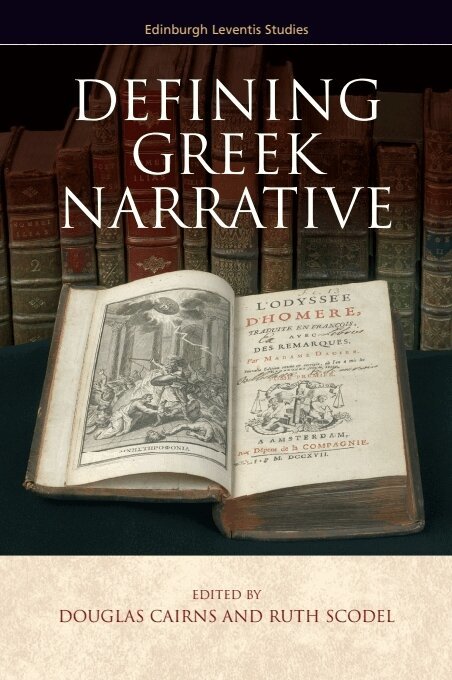
The ‘Classic’ narratology that has been widely applied to classical texts is aimed at a universal taxonomy for describing narratives. More recently, ‘new narratologies’ have begun linking the formal characteristics of narrative to their historical and ideological contexts. This volume seeks such a rethinking for Greek literature. It has 2 closely related objectives: to define what is characteristically Greek in Greek narratives of different periods and genres, and to see how narrative techniques and concerns develop over time. The 15 distinguished contributors explore questions such as: how is Homeric epic like and unlike Gilgamesh and the Hebrew Bible? What do Greek historians consistently fail to tell us, having learned from the tradition what to ignore? How does lyric modify narrative techniques from other genres?This study will appeal to students and scholars of classics as well comparative literature and literary theory
196 kr
Skickas inom 11-20 vardagar
1 472 kr
Skickas inom 11-20 vardagar
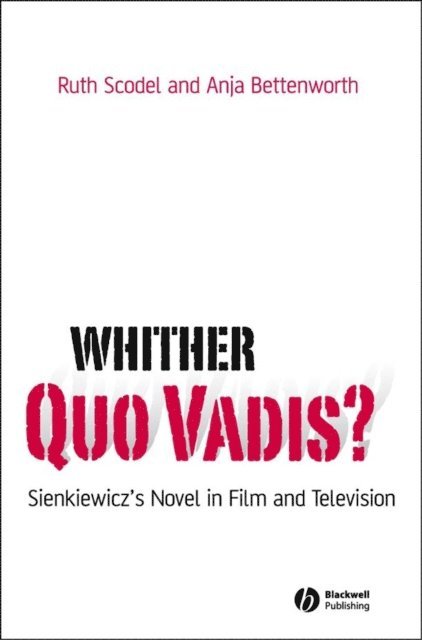
Whither Quo Vadis? offers an engaging account of how the Roman world and its history are represented in film and the way in which the different adaptations reflect the shifting historical situations and ideological concerns of their own times. Explores five surviving film adaptations – Guazzoni's of 1912; D’Annunzio/Jacoby of 1925; Mervyn LeRoy's of 1951; the Italian TV mini-series of 1985 by Franco Rossi; and Kawalerowicz’s 2001 Polish version Examines how these different versions interpret, select from, and modify the novel and the ancient sources on which it is based Offers an exceptionally clear view of how films have presented ancient Rome and how modern conditions determine its reception Looks at rare and archival material which has not previously received close scholarly attention
915 kr
Skickas inom 7-10 vardagar
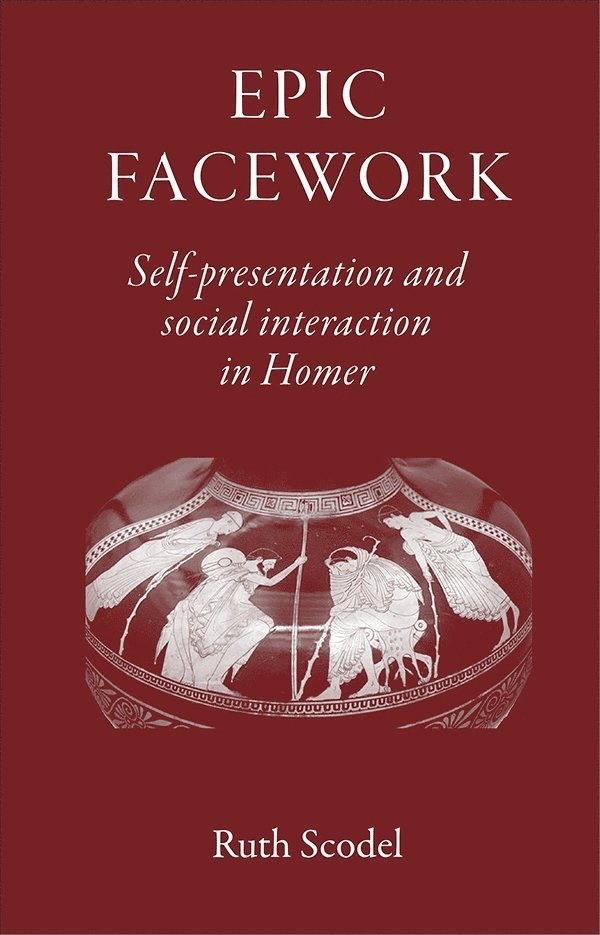
Homer's characters are often very far from an unreflecting struggle for status at others' expense. Rather than being a 'zero-sum game', their negotiations can be of an impressive delicacy, designed to protect the 'face' of the other. Gifts and visible deference are important measures of honour, but characters also care about what others really feel. This sensitive study reveals that at the beginnings of (surviving) Greek literature Homer's audience is expected to appreciate psychology and self-control of a very high order. Literary analysts, historians, anthropologists and indeed archaeologists will have much to learn here about the general level of sophistication of the historic and prehistoric societies which generated such deeply civilized poetry.