• Fri frakt över 249 kr
  • •
  • Snabba leveranser
  • •
  • Billiga böcker
Kundservice

Du är på sajten för privatpersoner.

Företag, bibliotek eller offentlig verksamhet?

Du handlar på classic.bokus.com, där alla dina funktioner finns intakta.
Till classic.bokus.com
Bokus logotyp. Gå till startsidan.
  • Erbjudanden
  • Nyheter
  • Student
  • Topplistor
  • Barn & ungdom
  • Bokus Play
  • E-böcker
  • Pocketböcker
  • Spel & pussel

10% rabatt på allt med kod NYSTART10 →

Sidfot

Mina sidor

    Hjälp

    • Kundservice
    • Vanliga frågor och svar
    • Frakt och leverans
    • Retur vid ångerrätt
    • Reklamera vara
    • Betalning
    • Köpvillkor
    • Allmänna villkor
    • Information om webbplatsens tillgänglighet

    Om Bokus

    • Om oss
    • Pressrum
    • För studenter
    • För företag
    • För bibliotek och offentlig verksamhet
    • För leverantörer
    • Hållbarhet

    Populärt

    • Aktuella erbjudanden
    • Presentkort
    • Studentlitteratur
    • Nya böcker
    • Topplistor
    • Signerade böcker
    • Engelska böcker

    Inspiration

    • Boktips
    • BookTok
    • Populära bokserier
    • Barnbokskaraktärer
    • Populära författare
    Logotyp för Bokus
    Följ oss på Facebook (extern länk)Följ oss på Instagram (extern länk)Följ oss på YouTube (extern länk)Följ oss på TikTok (extern länk)
    bokus @ CookiesAnpassa cookiesIntegritetspolicyKöpvillkor
    Till Citymail hemsida (extern länk)Till Budbee hemsida (extern länk)Till Postnord hemsida (extern länk)Till Schenker hemsida (extern länk)Till Early Bird hemsida (extern länk)Till Walleys hemsida (extern länk)
    1. Skönlitteratur
    2. Litteraturvetenskap
    3. Litteraturvetenskap

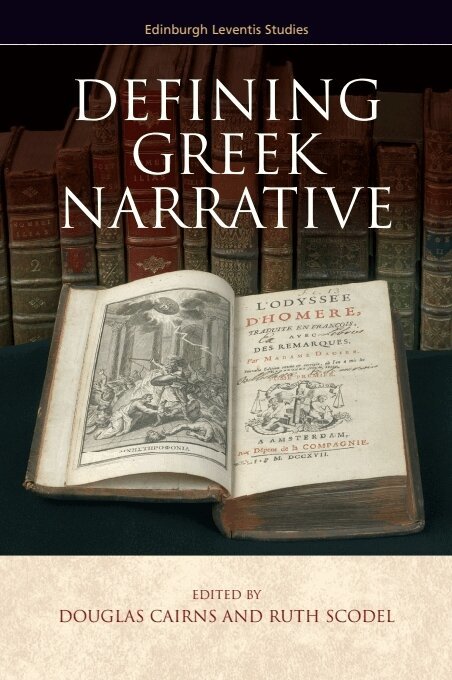
    Defining Greek Narrative

    AvDouglas Cairns,Ruth Scodel

    Inbunden, Engelska, 2014

    Del i serien Edinburgh Leventis Studies

    2 661 kr

    Beställningsvara. Skickas inom 3-6 vardagar. Fri frakt över 249 kr.

    Beskrivning

    The ‘Classic’ narratology that has been widely applied to classical texts is aimed at a universal taxonomy for describing narratives. More recently, ‘new narratologies’ have begun linking the formal characteristics of narrative to their historical and ideological contexts. This volume seeks such a rethinking for Greek literature. It has 2 closely related objectives: to define what is characteristically Greek in Greek narratives of different periods and genres, and to see how narrative techniques and concerns develop over time. The 15 distinguished contributors explore questions such as: how is Homeric epic like and unlike Gilgamesh and the Hebrew Bible? What do Greek historians consistently fail to tell us, having learned from the tradition what to ignore? How does lyric modify narrative techniques from other genres?This study will appeal to students and scholars of classics as well comparative literature and literary theory

    Produktinformation

    • Utgivningsdatum:2014-03-24
    • Mått:156 x 234 x 27 mm
    • Vikt:734 g
    • Format:Inbunden
    • Språk:Engelska
    • Serie:Edinburgh Leventis Studies
    • Antal sidor:392
    • Förlag:Edinburgh University Press
    • ISBN:9780748680108

    Utforska kategorier

    • Litteraturvetenskap inom Skönlitteratur

    Mer om författaren

    Douglas Cairns (FRSE, FBA, MAE) is Professor of Classics in the University of Edinburgh. He is the author of Aidôs: The Psychology and Ethics of Honour and Shame in Ancient Greek Literature (1993), Bacchylides: Five Epinician Odes (2010) and Sophocles: Antigone (2016). His most recent edited volumes include A Cultural History of the Emotions in Antiquity (2019), Emotions through Time: From Antiquity to Byzantium (with M. Hinterberger, A. Pizzone and M. Zaccarini, 2022), Contempt, Ancient and Modern (2023), and In the Mind, in the Body, in the World: Emotions in Early China and Ancient Greece (with C. Virág, 2024). Ruth Scodel is D. R. Shackleton Bailey Collegiate Professor of Greek and Latin at the University of Michigan. She has written Credible Impossibilities: Conventions and Strategies of Verisimilitude in Homer and Greek Tragedy (1999), Listening to Homer (2002), Epic Facework (2008), (with Anja Bettenworth) Whither Quo Vadis? Sienkiewicz's Novel in Film and Television, and An Introduction to Greek Tragedy (2010).

    Recensioner i media

    This collection is unparalleled, whether as individual essays or as a whole. We could of course isolate this or that article according to personal interest, but the whole book is an exceptional opportunity to cross narrative Greek literature in all its genres, from Homer to Heliodorus, from epic to lyricism, to tragedy, to historiography and the novel, and to extend it towards the ancient Orient (Bible, Mesopotamia) and even Japan until modern times. The authors' reflections and arguments are of consistently high quality, and the bibliographic arsenal (especially Anglophone) is well supplied. (Translated from French)

    Innehållsförteckning

    • Preface; Notes on Contributors; 1. Introduction, Ruth Scodel; Section 1: Defining the Greek Tradition; 2. Beyond Auerbach: The Poetics of Visualisation in the Gilgamesh Epic and Homer, Johannes Haubold; 3. Homeric Battle Narrative and the Ancient Near East, Adrian Kelly; 4. Narrative Focus and Elusive Thought in Homer, Ruth Scodel; 5. Structure as Interpretation in the Homeric Odyssey, Erwin Cook; Section 2: the Development of the Greek Tradition; 6. Exemplarity and Narrative in the Greek Tradition, Douglas Cairns; 7. ‘Where do I begin?’: An Odyssean Narrative Strategy and its Afterlife, Richard Hunter; 8. Greek Scholia on Plot, René Nünlist; 9. Who, Sappho? Alex Purves; 10. Greek Occasions, Greek Sung Narratives, Lucia Athanassaki; 11. Narrative on the Tragic Stage, P. E. Easterling; 12. Stock Situations, Topoi, and the Greekness of Greek Historiography, Lisa Hau; 13. Helidorus the Hellene; J. R. Morgan; Section 3: Beyond Greece; 14. Livy Reading Polybius: Adapting Greek Narrative to Roman History, Dennis Pausch; 15. Pamela and Plato: Ancient and Modern Epistolary Narratives, A. D. Morrison; 16. The Anonymous Traveller: Greek Heritage or Narrative Universal? Irene de Jong.